
Rajnath warns against 'perimeter fallacy' in national security
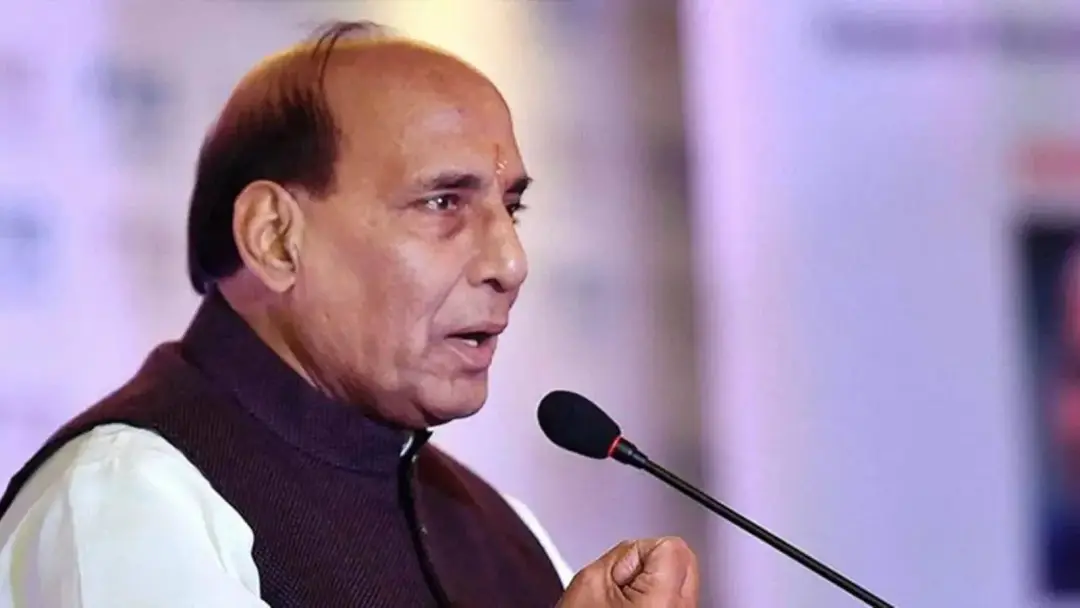
Defence Minister Rajnath Singh said on Thursday that viewing national security solely as the protection of geographical boundaries would amount to a 'perimeter fallacy', citing drones, cyber-attacks, lone wolf attacks and disinformation as modern challenges also linked to economic and energy security. Speaking at a News18 defence summit, he said India has moved beyond 'strategic containment' and 'deterrence by denial' to 'deterrence by punishment', and any terror attack from Pakistani soil would be treated as an act of war. He said the defence budget rose from about Rs 2.50 lakh crore in FY 2013-14 to Rs 7.85 lakh crore in FY 2026-27.
Source
Indian Express — India · read the original report ↗
Desk check · compared with the source
What the desk checked (5)
- Viewing national security only as protection of geographical boundaries is a 'perimeter fallacy' — Attributed directly to Defence Minister Rajnath Singh in the source.
- India's approach has moved beyond 'strategic containment' and 'deterrence by denial' towards 'deterrence by punishment' — Quoted statement by Rajnath Singh; no independent corroboration in source.
- Defence budget rose from about Rs 2.50 lakh crore in FY 2013-14 to Rs 7.85 lakh crore in FY 2026-27 — Figures appear in the source as cited by the minister.
- Defence R&D allocation rose over 112 percent, from about Rs 13,700 crore in FY 2014-15 to over Rs 29,000 crore — Figure appears in source, attributed to the minister.
- Any terror attack originating from Pakistani soil will be treated as an 'Act of War' against India — Direct quote from the minister; policy statement, not independently verified.
Analysts’ view opinion
This is a political message delivered in the register of a defence speech. By framing the 'perimeter fallacy', Rajnath Singh stretches national security beyond borders to the economy, energy, technology and indigenous manufacturing — which conveniently places much of the government's overall record under a security umbrella. The sequencing of surgical strikes, Balakot and Operation Sindoor, the comparison with the 2013-14 budget, and the swipe at post-independence 'some leaders' together build an unmistakable then-versus-now narrative.
- The jump from Rs 2.50 lakh crore (FY 2013-14) to Rs 7.85 lakh crore (FY 2026-27) is not just a figure; the choice of baseline year makes it a comparison between governments.
- The remark that some post-independence leaders treated strength and peace as mutually exclusive is an indirect critique the opposition may well contest.
- 'Deterrence by punishment' and treating any terror attack from Pakistani soil as an 'Act of War' signal resolve domestically, but also raise the bar for how the government must respond to any future incident.
- Foregrounding the suspension of the Indus Waters Treaty and lines like 'terrorism and trade cannot coexist' converts hard diplomatic steps into accessible political language.
- The stress on indigenisation, start-ups and R&D allocations knits the 'self-reliance' economic agenda into the national security agenda.
What to watch — Watch how far this 'holistic security' framing travels onto campaign platforms, and whether the opposition counters on the gap between budget growth and actual procurement or readiness.
These are one minister's claims in a speech; the story does not independently verify the budget or production figures, carry any opposition response, or explain how the 'Act of War' doctrine would be operationalised.
Deep dive
Research brief · 8 facts · 5 dates · exam-readyThe brief
Context
Defence Minister Rajnath Singh, speaking at a defence summit organised by News18 on Thursday, argued that national security can no longer be understood only as the defence of geographical borders — a view he called the "perimeter fallacy". He listed drones and UAVs, cyber-attacks, lone wolf attacks and disinformation campaigns as contemporary threats, and linked national security to economic and energy security. He said India's doctrine has shifted from "strategic containment" and "deterrence by denial" to "deterrence by punishment", citing the surgical strikes, the Balakot air strike and Operation Sindoor, and declared that any terror attack originating from Pakistani soil would be treated as an "Act of War". He also detailed budgetary and indigenisation trends in defence.
Key facts
- Rajnath Singh said treating national security only as protection of geographical boundaries amounts to a 'perimeter fallacy'.
- Defence budget rose nearly three-fold, from about Rs 2.50 lakh crore in FY 2013-14 to Rs 7.85 lakh crore in FY 2026-27.
- Defence production has surged to a high of approximately Rs 1.80 lakh crore.
- Defence R&D allocation rose by more than 112 per cent over 12 years, from about Rs 13,700 crore in FY 2014-15 to over Rs 29,000 crore.
- 25 per cent of the defence R&D budget has been opened up for industry, start-ups and academia.
- Over 5,500 items have been included across more than 10 Positive Indigenisation Lists.
- 15 Industry-Academia Centres of Excellence have been established; DRDO conventional missile technology transferred to Indian industries.
- India successfully tested Multiple Independently Targetable Re-entry Vehicle (MIRV) technology with the Agni-5 missile; indigenous UAVs cited include Rustom, Ghatak and Nagastra.
Timeline
- FY 2013-14Defence budget stood at approximately Rs 2.50 lakh crore.
- FY 2014-15Defence R&D allocation was approximately Rs 13,700 crore.
- Events cited by the Minister (dates not stated in the source)Surgical strikes, Balakot air strike and Operation Sindoor; Indus Waters Treaty suspended.
- FY 2026-27Defence budget at Rs 7.85 lakh crore, as cited by the Minister.
- Thursday (year not stated in the source)Rajnath Singh addresses News18 defence summit, warns of 'perimeter fallacy'.
Who has a stake
- Ministry of Defence / Defence Minister Rajnath Singh — Articulating a holistic security doctrine spanning borders, cyber, economy and energy, and defending budget and indigenisation record.
- Armed forces — Continuous modernisation and new capabilities in drones, AI, cyber, electronic warfare, space and quantum technology.
- Pakistan — Told that any terror attack from its soil will be treated as an 'Act of War'; no distinction between terrorists and sponsors.
- Domestic defence industry, start-ups and academia — 25% of R&D budget opened up, technology transfers from DRDO, 15 Industry-Academia Centres of Excellence, simplified licensing.
- Ordnance factories and Defence PSUs — Described as undergoing complete transformation, with DPSUs registering profits.
- Multilateral groupings (QUAD, I2U2, BIMSTEC, BRICS, SCO) — Platforms through which India pursues a free, open, rule-based Indo-Pacific and expanded diplomatic reach.
Why it matters
The statement signals a formal doctrinal shift — from denying an adversary gains to punishing them — and extends the definition of national security to economic resilience, energy supply chains and the information domain. It also ties security to self-reliance, with indigenisation lists, R&D funding and technology transfer presented as the means to build capability. For citizens, it frames development and security as mutually reinforcing rather than competing priorities.
UPSC angle
Prelims pointers
- 'Perimeter fallacy' — Rajnath Singh's term for equating national security only with defence of geographical boundaries.
- Doctrinal shift stated: beyond 'strategic containment' and 'deterrence by denial' towards 'deterrence by punishment'.
- I2U2 grouping = India, Israel, UAE and USA; other forums cited: QUAD, BIMSTEC, BRICS, SCO.
- Indigenous UAVs named: Rustom, Ghatak, Nagastra; BrahMos cited as indigenously developed missile.
- MIRV (Multiple Independently Targetable Re-entry Vehicle) technology tested by India with Agni-5.
- Three Ts of war per the Minister: terrain, technology and thinking; 'Mission Sudarshan Chakra' under development.
Mains framing
India's security discourse is being recast from a territorial to a multi-domain frame: the Defence Minister's 'perimeter fallacy' argument holds that drones and UAVs, cyber-attacks, lone wolf attacks and disinformation, alongside threats to the economy and energy supply chains, now sit alongside conventional arms and artillery as core challenges. The causes are technological — new domains such as AI, cyber, electronic warfare, space and quantum — and strategic, with cross-border terrorism prompting a declared move from 'strategic containment' and 'deterrence by denial' to 'deterrence by punishment', backed by the surgical strikes, Balakot and Operation Sindoor, the position that terrorism cannot coexist with talks or trade, the suspension of the Indus Waters Treaty, and the statement that any terror attack from Pakistani soil will be an 'Act of War'. The implications are institutional: a defence budget rising from about Rs 2.50 lakh crore in FY 2013-14 to Rs 7.85 lakh crore in FY 2026-27, production near Rs 1.80 lakh crore, R&D up over 112 per cent to above Rs 29,000 crore, a quarter of R&D opened to industry, start-ups and academia, 5,500-plus items on more than 10 Positive Indigenisation Lists, and 15 Industry-Academia Centres of Excellence. The stated way forward is balance — capability without diplomacy risks confrontation and a security dilemma, diplomacy without capability signals weakness — pursued through 'Design in India', 'Develop in India', 'Manufacture in India' and active multilateralism via QUAD, I2U2, BIMSTEC, BRICS and SCO.
Key terms
- Perimeter fallacy
- The error, per Rajnath Singh, of viewing national security solely as safeguarding geographical boundaries.
- Deterrence by punishment
- Deterring an adversary by threatening retaliatory costs, as distinct from 'deterrence by denial' which seeks to block gains.
- Operation Sindoor
- Indian operation cited by the Minister as demonstrating drone warfare capability and use of indigenous BrahMos missiles.
- Positive Indigenisation List
- Lists of defence items reserved for domestic manufacture; over 5,500 items across more than 10 such lists so far.
- MIRV
- Multiple Independently Targetable Re-entry Vehicle — missile technology, tested by India on Agni-5, possessed by very few countries.
- I2U2
- Grouping of India, Israel, UAE and USA for cooperation in new areas, as cited by the Minister.
Practice questions
- What does the 'perimeter fallacy' mean in the context of contemporary national security, and how do non-territorial threats such as cyber-attacks, disinformation and energy supply disruption reshape defence planning?
- Distinguish between 'deterrence by denial' and 'deterrence by punishment'. Examine the implications of India declaring that any terror attack originating from Pakistani soil will be treated as an 'Act of War'.
- Assess how budgetary expansion, indigenisation lists and industry-academia partnerships contribute to self-reliance in defence, using the figures cited by the Defence Minister.
Grounded only in the source report — figures and dates are the source's, not inferred.