
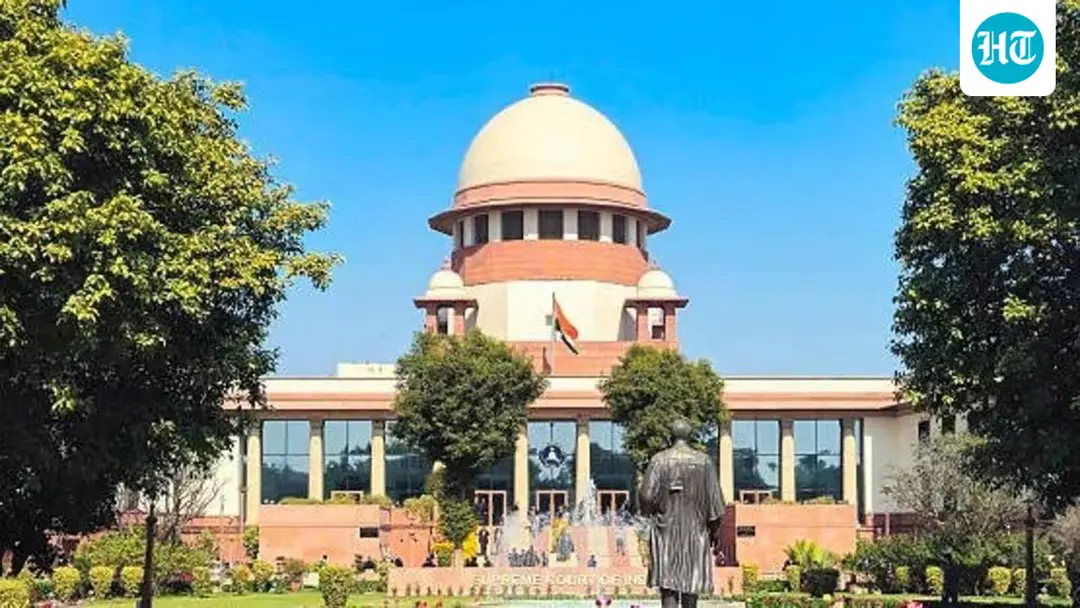
Supreme Court commutes death sentence in stepdaughter rape, murder case
The Supreme Court on Thursday commuted the death sentence of Waris, convicted of raping and murdering his six-year-old stepdaughter in Madhya Pradesh in 2018, to imprisonment for the remainder of his natural life without remission. The bench headed by Justice Vikram Nath upheld the conviction but noted the 56-year-old had no other criminal antecedents, maintained good conduct in jail and showed possibility of reform. It said a protector turning predator was a high-order aggravating circumstance.
Source
Hindustan Times — India · read the original report ↗
Desk check · compared with the source
What the desk checked (5)
- The Supreme Court commuted the death sentence of Waris to life imprisonment for the remainder of his natural life without remission. — Attributed to the bench, with the operative order quoted in the source.
- The bench was headed by Justice Vikram Nath and also comprised Justices Sandeep Mehta and Vijay Bishnoi. — Named in the source; internally consistent.
- The 6-year-old stepdaughter was throttled to death on April 21, 2018 in Madhya Pradesh. — Date and place appear in the source; no case number or court record cited.
- The convict, aged 56, had no criminal antecedents and maintained good conduct during eight years in jail. — Presented as findings of the court based on a Mitigation Investigation Report and medical board examination at Central Jail, Ujjain.
- Section 376AB IPC, introduced by the Criminal Law (Amendment) Act, 2018, prescribes a minimum 20 years and maximum death for rape of a girl under 12. — Legal description as stated in the source; not independently checked.
Analysts’ view opinion
This is a judicial ruling, but its political echoes are unmistakable. Over the past decade, the death penalty for child rape has been advanced across the political spectrum as a moral benchmark — the Criminal Law (Amendment) Act, 2018 is the clearest example. Against that backdrop, the Supreme Court's decision to convert death into life imprisonment without remission is another test for "tough sentencing" politics, even as the court narrowed the space for critics by upholding the conviction and locking in incarceration for the convict's natural life.
- The fact that the crime coincided with the political moment that created a death-penalty option for the rape of girls under 12 highlights the gap between legislative intent and judicial application.
- Constituencies that have made harsher punishment a platform staple may find this outcome unsatisfying, while those arguing against capital punishment and for reformative sentencing will read it as vindication.
- The "no remission" direction is politically significant — it pre-empts the familiar charge that the convict will eventually walk free.
- The court's note that the trial court pronounced conviction and sentence on the same day can be read as an institutional caution against the political appetite for speed in such trials.
- The bench's "protector turned predator" framing supplies strong language that makes it harder to cast the verdict as leniency.
What to watch — Watch for how the Madhya Pradesh government, opposition parties and child-protection groups respond, and whether any review plea or fresh demand for legislative change emerges.
The story records no reaction from any political party or government official, so the political consequences discussed here are analytical inference from the ruling, not reported fact.
Deep dive
Research brief · 8 facts · 6 dates · exam-readyThe brief
Context
In 2018, a six-year-old girl in Madhya Pradesh was raped over months by her stepfather, Waris, and throttled to death on April 21, 2018 when he suspected she had told her mother. The trial court sentenced him to death in December 2018 for murder (Section 302 IPC) and rape of a child under 12 (Section 376AB IPC), a sentence the high court confirmed. On appeal, a Supreme Court bench headed by Justice Vikram Nath upheld the conviction but commuted the death sentence to imprisonment for the remainder of his natural life without remission, after weighing aggravating circumstances against mitigating factors including his conduct in jail and possibility of reform.
Key facts
- The Supreme Court on Thursday commuted the death sentence of Waris, 56, to imprisonment for the remainder of his natural life with no remission.
- The bench comprised Justice Vikram Nath, Justice Sandeep Mehta and Justice Vijay Bishnoi.
- The victim, a six-year-old girl, was raped for months by her stepfather and throttled to death on April 21, 2018 in Madhya Pradesh.
- Waris was charged under Section 376AB IPC and relevant provisions of the Protection of Children from Sexual Offences (POCSO) Act; he was also convicted under Section 302 IPC for murder.
- Section 376AB IPC, introduced by the Criminal Law (Amendment) Act, 2018, punishes rape of a woman under 12 years with a minimum of 20 years and a maximum of death.
- The Criminal Law (Amendment) Act, 2018 was introduced in Parliament on April 21, 2018 - the same day the child was killed.
- By December 2018 the trial court sentenced him to death, but pronounced conviction and sentence on the same day, so no material for individualised sentencing assessment was considered.
- The Supreme Court ordered a psychological evaluation and received a Mitigation Investigation Report; a medical board at Central Jail, Ujjain found him physically and mentally fit.
Timeline
- Months before April 2018The six-year-old girl was repeatedly raped by her stepfather Waris at home in Madhya Pradesh.
- April 21, 2018Suspecting the child had disclosed the abuse to her mother, Waris throttled her to death; the same day, the Criminal Law (Amendment) Act, 2018 was introduced in Parliament.
- By December 2018The trial court convicted and sentenced Waris to death for offences under Sections 302 and 376AB IPC, pronouncing conviction and sentence on the same day.
- After trialThe High Court confirmed the death sentence.
- During Supreme Court proceedingsThe court directed a psychological evaluation, received a Mitigation Investigation Report and had a medical board examine him at Central Jail, Ujjain.
- Thursday (judgment day)The Supreme Court upheld the conviction but commuted the death sentence to life imprisonment for the remainder of his natural life without remission.
Who has a stake
- Waris, the 56-year-old convict — Escapes execution but will remain in prison for the whole of his natural life with no possibility of remission.
- The victim's mother — Key prosecution witness; the child's dying declaration was made to her and was relied upon by the court.
- Supreme Court bench (Justices Vikram Nath, Sandeep Mehta, Vijay Bishnoi) — Applied the aggravating-mitigating balance and individualised sentencing standards in a capital case.
- Trial court and High Court, Madhya Pradesh — Their death sentence was set aside; the trial court was faulted for pronouncing conviction and sentence on the same day.
- Child victims and families — The ruling frames betrayal by a guardian as a high-order aggravating circumstance affecting the security of familial relations.
- Prison authorities, Central Jail, Ujjain — Their records of conduct and the medical board's findings shaped the mitigation assessment.
Why it matters
The judgment shows how Indian courts handle capital sentencing in child rape-murder cases: conviction can stand while the death sentence is replaced by life without remission when mitigating material points to possible reform. It also underlines a procedural safeguard - that conviction and sentencing should not be pronounced on the same day, since individualised mitigation material must be considered. At the same time, the court records that a guardian turning predator is an aggravating circumstance of the highest order.
UPSC angle
Prelims pointers
- Section 376AB IPC, inserted by the Criminal Law (Amendment) Act, 2018, punishes rape of a woman under 12 years with minimum 20 years and maximum death.
- Section 302 IPC deals with punishment for murder; the convict was sentenced under both 302 and 376AB.
- POCSO Act: Protection of Children from Sexual Offences Act, invoked along with IPC provisions in this case.
- The Supreme Court bench was headed by Justice Vikram Nath, with Justices Sandeep Mehta and Vijay Bishnoi.
- Mitigation Investigation Report: document on the convict's background used by the Supreme Court in capital sentencing.
- Commutation here means imprisonment for the remainder of natural life with no remission, not a fixed-term life sentence.
Mains framing
The case illustrates the tension in capital sentencing between the gravity of crimes against children and the constitutional requirement of individualised, reform-sensitive punishment. The aggravating circumstances were stark - a six-year-old raped over months inside her home, killed by a stepfather to silence her, with evidence that three former wives had left him owing to his violence - and the Supreme Court explicitly called the transformation of protector into predator an aggravating circumstance of a high order that damages the security of the familial relation on which every child's safety depends. Yet the court found the sentencing process defective because the trial court pronounced conviction and sentence on the same day, leaving no room for material on the accused's background; on appeal the court commissioned a psychological evaluation, a Mitigation Investigation Report detailing a deprived childhood and eight years on death row, and a medical board examination at Central Jail, Ujjain. Balancing the absence of criminal antecedents, a clean jail disciplinary record and satisfactory conduct against the horror of the offence, the court chose life imprisonment for the whole of natural life without remission - a middle path that removes the possibility of premature release while abandoning execution. The way forward suggested by the reasoning is strict adherence to separate sentencing hearings, routine use of mitigation investigation and psychological reports in capital cases, and reliance on reasoned commutation rather than reflexive death sentences, while keeping child protection frameworks such as POCSO and Section 376AB IPC robust.
Key terms
- Commutation of sentence
- Substituting a lesser punishment for a harsher one; here death was replaced by imprisonment for the remainder of natural life.
- Section 376AB IPC
- Offence created by the Criminal Law (Amendment) Act, 2018 for rape of a woman under 12, punishable with 20 years minimum up to death.
- POCSO Act
- Protection of Children from Sexual Offences Act, the special law covering sexual offences against children, invoked in this case.
- Dying declaration
- A statement by a person about the circumstances of their death; here the child's disclosure to her mother was relied on by the court.
- Mitigation Investigation Report
- A report on a convict's background - childhood, upbringing, conduct in prison - used to assess mitigating circumstances in capital sentencing.
- Life imprisonment without remission
- Incarceration for the whole remainder of natural life, on which no remission may be granted.
Practice questions
- Discuss how the Supreme Court balances aggravating and mitigating circumstances in capital sentencing, with reference to the commutation of the death sentence in the Madhya Pradesh stepdaughter rape-murder case.
- Why is a separate sentencing hearing, distinct from the pronouncement of conviction, considered essential in death penalty cases? Examine in light of this judgment.
- Critically evaluate the adequacy of Section 376AB IPC and the POCSO Act in addressing sexual offences committed against children by family members or guardians.
Grounded only in the source report — figures and dates are the source's, not inferred.