
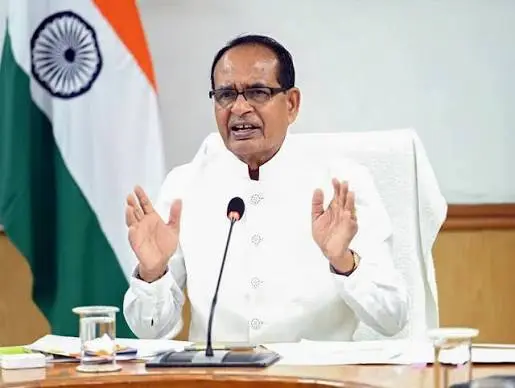
Chouhan addresses southern states agriculture conference in Hyderabad
Union Agriculture and Farmers' Welfare Minister Shivraj Singh Chouhan addressed the Regional Agriculture Conference for Southern States in Hyderabad. Discussions covered the impact of El Niño, crop diversification and measures for the upcoming Rabi season. He outlined three objectives: food security for over 140 crore people, farmers' livelihoods and nutritional security. Chouhan said coconut exports rose from ₹4,349 crore to ₹7,038 crore in a year, a 62% growth. He said the Centre's first instalment for 2 lakh houses under PMAY-G was handed to Telangana.
Source
Agriculture — Shivraj Singh Chouhan · read the original report ↗
Desk check · compared with the source
What the desk checked (5)
- Union Agriculture Minister Shivraj Singh Chouhan addressed the Regional Agriculture Conference for Southern States in Hyderabad. — Stated in source; attributed to the minister's address, no independent confirmation possible.
- India's coconut exports rose from ₹4,349 crore to ₹7,038 crore in one year, a 62% growth. — Figures appear in source, attributed to Chouhan; the stated percentage is roughly consistent with the two figures.
- The first instalment from the Centre for 2 lakh houses under PMAY-G has been handed to the Telangana Chief Minister. — Attributed to Chouhan; Chief Minister not named in source.
- The Rabi conference was expanded from one day to two days to allow states more time to present concerns. — Attributed to Chouhan; no supporting document cited.
- A new coconut promotion scheme announced in the Budget is set to become operational. — Attributed to Chouhan; no scheme name, outlay or date given in source.
Analysts’ view opinion
Beyond the speeches, the economic logic here is the disaggregation of production planning ahead of the Rabi season — region-specific rather than one national plan. The cited jump in coconut exports from ₹4,349 crore to ₹7,038 crore in a year (62%) alongside the emphasis on FTA-driven market access points to a strategy of steering southern horticulture towards export-linked value addition. But with El Niño and climate uncertainty in the frame, translating that into farm-gate income requires spending on quality compliance, cold chains and plantation renewal — none of which is costless.
- The headline export growth figure is striking, but the story does not break down how much came from volume versus prices or global demand in a single year.
- Replacing 60–70-year-old coconut palms can lift long-run yields, yet new trees take years to bear — who absorbs the farmer's income gap in that transition period is the key cost question.
- FTAs open markets, but the first gainers are typically organised growers, exporters and aggregators able to meet international standards; without FPOs and infrastructure, small and marginal farmers risk being left behind.
- Crop diversification can raise incomes, yet it must be balanced against the stated food-security goal, since a shift towards cash and export crops can affect grain supply and prices.
- The first instalment for 2 lakh PMAY-G houses in Telangana is effectively a rural construction stimulus, supporting local jobs and demand for materials like cement, sand and steel.
What to watch — Watch Rabi seed and fertiliser availability, water storage in an El Niño context, and the actual budgetary outlay and rollout pace of the announced coconut, cashew and cocoa schemes — that is what will decide whether the rhetoric becomes farm income.
The story establishes policy intent and one export number; it does not establish scheme allocations, disbursal timelines, the cost of plantation rejuvenation, or any measured impact on farmers' net incomes.
Deep dive
Research brief · 8 facts · 5 dates · exam-readyThe brief
Context
Ahead of the Rabi sowing season, the Union Ministry of Agriculture and Farmers' Welfare has moved from a single national Rabi conference to region-wise conferences so that agro-climatic diversity can be factored into planning. Union Agriculture, Farmers' Welfare and Rural Development Minister Shivraj Singh Chouhan addressed the Regional Agriculture Conference for Southern States in Hyderabad, which brought together the Centre, southern states and Union Territories, ICAR institutions, agricultural experts and progressive farmers. The deliberations covered the impact of El Niño, crop diversification and preparations for the coming Rabi season, alongside horticulture potential in spices, coffee, cashew, cocoa and sandalwood. Chouhan also announced the release of the Centre's first instalment for 2 lakh houses in Telangana under PMAY-G.
Key facts
- Chouhan addressed the Regional Agriculture Conference for Southern States in Hyderabad; agenda included El Niño impact, crop diversification and Rabi season measures.
- Three stated objectives for Indian agriculture: food security for a population of more than 140 crore, farmers' livelihoods, and nutritional security.
- India's coconut exports rose from ₹4,349 crore to ₹7,038 crore in one year — a growth of 62%.
- A new scheme for promotion of coconut announced in the Budget is set to become operational; promotion schemes for cashew and cocoa are also coming.
- The national Rabi conference was expanded from one day to two days to give each state more space to present concerns and suggestions.
- The Centre's first instalment for construction of 2 lakh houses under PMAY-G was handed over to the Chief Minister of Telangana.
- Chouhan flagged that coconut trees aged 60–70 years yield fewer and poorer quality coconuts, urging phased replanting.
- Chouhan said India has signed several Free Trade Agreements enabling market access for fruits, vegetables and grains, and called for a detailed study of them.
Timeline
- Earlier practiceIndia held a single national Rabi conference for the whole country.
- Recent changeRabi conference extended from one day to two days; regional conferences introduced for region-specific planning.
- Budget (year not stated in the source)New scheme for promotion of coconut announced; now set to become operational.
- Preceding the conferenceCentre handed over the first instalment for 2 lakh PMAY-G houses to the Chief Minister of Telangana.
- Day of the eventChouhan addresses the Southern Regional Agriculture Conference in Hyderabad; presentations, best-practice sharing and farmer interaction planned.
Who has a stake
- Union Ministry of Agriculture and Farmers' Welfare — Frames the Rabi roadmap, runs regional conferences and promotion schemes for coconut, cashew and cocoa.
- Southern states and UTs (including Telangana, Andhra Pradesh) — Hold land and farmers; must present region-specific challenges, review outdated Acts and prepare for new schemes.
- Coconut, cashew and cocoa growers — Stand to gain from the new promotion schemes, plantation rejuvenation and rising exports.
- Farmers generally — Incomes, livelihood security and access to international markets opened by FTAs.
- ICAR institutions and agricultural experts — Provide technical inputs for region-specific, resilient agriculture planning.
- Telangana PMAY-G beneficiaries — 2 lakh houses to begin construction; those with kutcha houses identified in the survey to be covered in later phases.
Why it matters
India's agro-climatic diversity means a single national crop plan cannot serve Jammu and Kashmir, Gujarat, the Northeast and the southern states alike; regional conferences are an attempt to build Rabi strategy state by state. With El Niño risks, the need for crop diversification and new export windows through FTAs, the quality of Centre-State coordination directly shapes food and nutritional security for over 140 crore people. The sharp jump in coconut exports shows how commodity-specific promotion can translate into farmer incomes if states prepare in advance.
UPSC angle
Prelims pointers
- Regional Agriculture Conference for Southern States held in Hyderabad; Union Minister — Shivraj Singh Chouhan (Agriculture, Farmers' Welfare and Rural Development).
- Coconut exports: ₹4,349 crore to ₹7,038 crore in one year; 62% growth.
- Three objectives outlined: food security for 140 crore-plus, farmers' livelihoods, nutritional security.
- PMAY-G: first instalment released for 2 lakh houses in Telangana.
- Rabi conference expanded from one day to two days; regional format adopted for agro-climatic diversity.
- Southern horticulture strengths cited: spices, coffee, cashew, cocoa, sandalwood.
Mains framing
India's crop planning has historically been centralised through national Kharif and Rabi conferences, but differences in agro-climatic zones, water availability and soil conditions across states limit the usefulness of a uniform plan. The shift to regional conferences — with the Rabi conference extended to two days — reflects an attempt to make planning federal and region-specific, with the Centre explicitly stating that land and farmers are with the states while it provides support. The southern conference's agenda — El Niño impact, crop diversification, Rabi preparedness, and horticulture in spices, coffee, cashew, cocoa and coconut — links climate risk management with income diversification. Two policy levers stand out: commodity-specific promotion schemes (the Budget-announced coconut scheme, plus cashew and cocoa) combined with rejuvenation of ageing 60–70 year old plantations; and export orientation, where FTAs require domestic production to be aligned to international quality standards across the value chain. The stated way forward is regulatory review — Chouhan's formulation that "rules are meant for people" — with states repealing outdated Acts and procedures and the Centre reforming at its level, alongside cross-state adoption of best practices. Implementation capacity, timely scheme operationalisation and credible quality certification remain the tests.
Key terms
- Rabi season
- The winter cropping season for which the conference discussed preparedness measures.
- El Niño
- Climate phenomenon whose impact on southern agriculture was a focus of the conference deliberations.
- PMAY-G
- Pradhan Mantri Awas Yojana-Gramin; rural housing scheme under which 2 lakh houses were sanctioned for Telangana with the first instalment released.
- Free Trade Agreements (FTAs)
- Trade pacts India has signed that, per the minister, open market access for Indian fruits, vegetables and grains.
- ICAR
- Indian Council of Agricultural Research; its institutions participated as stakeholders in the regional conference.
- Annadata / Jeevandata
- Terms used by the minister for the farmer as provider of food and, by extension, of life.
Practice questions
- Why is region-specific crop planning better suited to India's agriculture than a single national Rabi or Kharif plan? Discuss with reference to the Southern Regional Agriculture Conference.
- Examine how commodity-specific promotion schemes and Free Trade Agreements can together raise farmer incomes, using the example of India's coconut exports.
- "Rules are meant for people; people are not meant for rules." Critically evaluate the role of regulatory review by states in improving agricultural service delivery.
Grounded only in the source report — figures and dates are the source's, not inferred.