
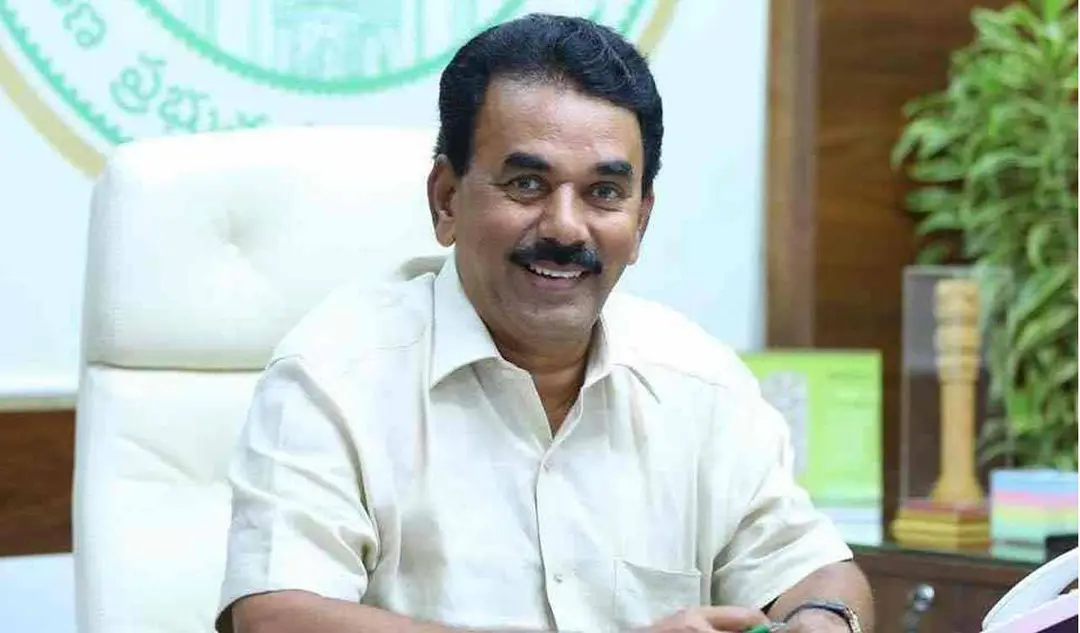
Jupally defends Jurala water management amid farmers' protests
Excise Minister Jupally Krishna Rao defended the Telangana government's Jurala water release decision, admitting water scarcity in the project's ayacut. At a press conference in Hyderabad on Monday, he said farmers were repeatedly advised to grow semi-dry crops due to El Nino. About 3 TMCft of silt had accumulated in Jurala and 2 TMCft was stored for drinking water, with inflows below 300 cusecs. The State has sought an additional Rs 20,000 crore from the Centre for drought relief.
Source
Telangana Today · read the original report ↗
Desk check · compared with the source
What the desk checked (5)
- About 3 TMCft of silt has accumulated in Jurala and 2 TMCft is stored for drinking water needs. — Figures appear in source, attributed to Excise Minister Jupally Krishna Rao; no independent data cited.
- Current inflow into Jurala is less than 300 cusecs. — Attributed to the minister at a Monday press conference; no official gauge record given in source.
- Karnataka is spending Rs 70,000 crore solely on land acquisition for the Almatti project. — Claim made by the minister; no Karnataka government source or document cited in the source text.
- Telangana has asked the Centre for an additional Rs 20,000 crore to tackle drought. — Attributed to the minister; no Centre response recorded in source.
- Kalwakurthy lift irrigation motors stopped only for a few hours on a single day. — Minister's counter to BRS charges; contested political claim, unverified in source.
Analysts’ view opinion
The farmers' agitation over Jurala water releases has become a politically awkward test for the Congress government in the Palamuru belt. Excise Minister Jupally Krishna Rao's framing — conceding scarcity, attributing it to El Nino, pinning structural gaps on the previous BRS government, and asking the Centre for drought funds — amounts to a three-way defensive strategy. In effect, the immediate shortfall is assigned to nature, the infrastructure shortfall to the opposition, and the fiscal shortfall to Delhi.
- By publicly admitting water scarcity, the Minister avoids appearing to dismiss protesting farmers while shifting responsibility from government decisions to weather conditions.
- Asking why no additional reservoir was built near Jurala for its 5.50 lakh-acre ayacut is an attempt to put BRS on the defensive over long-term neglect, though its traction with Palamuru farmers is untested.
- Prioritising drinking water is a politically safer argument because it speaks to both urban and rural voters, but it offers little comfort to cultivators facing crop loss this season.
- Invoking the Supreme Court stay on Almatti and talks with the Karnataka Chief Minister is aimed at preserving the government's image as a defender of Telangana's water share.
- The demand for an extra Rs 20,000 crore works both ways politically: credit if funds arrive, and a grievance against the Centre if they do not.
What to watch — Watch whether inflows from upstream improve, and whether the protests widen from ayacut villages into a broader political campaign that BRS can frame as anti-farmer governance.
The story offers no independent verification of the Minister's water, silt or Kalwakurthy motor claims, and does not establish the scale of the protests or how BRS and the Centre will respond.
Deep dive
Research brief · 8 facts · 4 dates · exam-readyThe brief
Context
Farmers in the ayacut of the Jurala Project on the Krishna river in Telangana have been protesting, demanding the release of irrigation water amid deficient rainfall. Excise Minister Jupally Krishna Rao, at a Hyderabad press conference, defended the Congress government's decision to hold back water, citing drinking water needs, silt accumulation and low inflows attributed to El Nino. He also blamed the previous BRS government for not building additional reservoirs in Palamuru and referred to the continuing Supreme Court litigation over Karnataka's Almatti project.
Key facts
- Excise Minister Jupally Krishna Rao admitted water scarcity in the Jurala Project ayacut at a press conference in Hyderabad on Monday (report published 21 September 2026).
- About 3 TMCft of silt had accumulated in Jurala, while another 2 TMCft was being stored to meet drinking water needs.
- Current inflow into Jurala was less than 300 cusecs.
- The Jurala ayacut covers 5.50 lakh acres, according to the Minister's question on why no additional reservoir was built near Jurala.
- Telangana has asked the Centre for an additional Rs 20,000 crore to tackle the drought.
- The Minister said Karnataka was spending Rs 70,000 crore solely on land acquisition for the Almatti project.
- The Congress government approached the Supreme Court on the Almatti issue and the stay order remains in effect; the legal battle continues.
- Water released to the Nagarjunasagar Project was solely for power generation, the Minister claimed; Kalwakurthy lift irrigation motors stopped only for a few hours on a single day.
Timeline
- Since the beginning of the seasonGovernment repeatedly advised farmers to cultivate semi-dry, drought-resistant crops due to deficient rainfall linked to El Nino.
- Not stated in the source (recent)Farmers began protests demanding release of water from the Jurala Project.
- Monday (before publication on 21 September 2026)Jupally Krishna Rao defended the Jurala water release decision at a press conference in Hyderabad.
- OngoingMonsoon season continues; State in talks with Karnataka Chief Minister for water release from Almatti and Narayanpur; Supreme Court stay on Almatti in effect.
Who has a stake
- Farmers in the Jurala ayacut (5.50 lakh acres) — Loss of irrigation water for standing/planned crops; pressed to shift to semi-dry, drought-resistant crops.
- Telangana Congress government / Excise Minister Jupally Krishna Rao — Must balance drinking water security against farmer demands, and defend its water management politically.
- Previous BRS government / BRS as opposition — Blamed for not building additional reservoirs in Palamuru; has levelled charges over Kalwakurthy lift irrigation operations.
- Government of Karnataka — Controls upstream Almatti and Narayanpur projects; spending Rs 70,000 crore on Almatti land acquisition; faces Supreme Court stay.
- Union government — Requested by Telangana for an additional Rs 20,000 crore in drought relief.
- Supreme Court — Hearing the Almatti dispute; its stay order currently governs the contested project.
Why it matters
The dispute shows how a deficient monsoon converts water allocation into a political flashpoint, forcing a government to choose between irrigation and drinking water. It also links a local ayacut agitation to a larger inter-State Krishna water contest with Karnataka over Almatti, now before the Supreme Court, and to Telangana's demand for central drought funds.
UPSC angle
Prelims pointers
- Jurala Project lies in Telangana; Almatti and Narayanpur are upstream projects in Karnataka on the Krishna system.
- TMCft (thousand million cubic feet) and cusecs are the units used for storage and inflow respectively; Jurala inflow was below 300 cusecs.
- Ayacut means the command area served by an irrigation project; Jurala's ayacut is 5.50 lakh acres.
- El Nino was cited as the cause of deficient rainfall driving the crop advisory for semi-dry crops.
- Telangana sought an additional Rs 20,000 crore from the Centre for drought management.
- Kalwakurthy lift irrigation scheme and Nagarjunasagar Project also figure in the Telangana water row.
Mains framing
The Jurala row illustrates the governance dilemma of water prioritisation in a drought year: with inflows below 300 cusecs, roughly 3 TMCft lost to silt and 2 TMCft reserved for drinking water, the State argues that releasing storage without fresh flood inflows would trigger a drinking water crisis, while farmers in a 5.50 lakh acre ayacut face crop loss. Causes cited are climatic (El Nino-driven deficient rainfall), infrastructural (silt accumulation and the absence of an additional reservoir near Jurala in Palamuru, which the ruling party blames on the previous BRS regime) and inter-State (dependence on releases from Karnataka's Almatti and Narayanpur, with the Almatti dispute pending in the Supreme Court under a stay). Implications include intensified farmer agitation, sharpened Centre-State and State-State bargaining, and reliance on the requested Rs 20,000 crore central drought assistance. The way forward suggested by the source lies in judicious use of available storage, early crop advisories favouring drought-resistant crops, negotiation with the Karnataka Chief Minister for upstream releases, pursuing the legal remedy on Almatti, and creating additional storage and addressing siltation so that command areas are less exposed to monsoon failure.
Key terms
- Jurala Project
- Telangana irrigation project whose ayacut of 5.50 lakh acres is at the centre of the farmers' protests over water release.
- Ayacut
- The command area of land irrigated by a particular project or canal system.
- TMCft
- Thousand million cubic feet, the standard unit for reservoir storage; 3 TMCft of silt and 2 TMCft of drinking water stock were cited at Jurala.
- Cusec
- Cubic feet per second, the unit for water flow; Jurala's inflow was less than 300 cusecs.
- Almatti and Narayanpur projects
- Upstream projects in Karnataka from which Telangana hopes for releases; Almatti is subject to a Supreme Court stay.
- El Nino
- Climatic phenomenon blamed by the Minister for deficient rainfall and the resulting advisory to grow semi-dry crops.
Practice questions
- Drought years turn water allocation into a political contest. Examine, with reference to the Jurala dispute, how States should prioritise between drinking water and irrigation needs.
- Discuss the institutional mechanisms available for resolving inter-State river water disputes in India, using Telangana's Almatti litigation against Karnataka as a reference point.
- How do siltation and inadequate storage capacity undermine the resilience of irrigation command areas to monsoon failure? Suggest measures.
Grounded only in the source report — figures and dates are the source's, not inferred.