
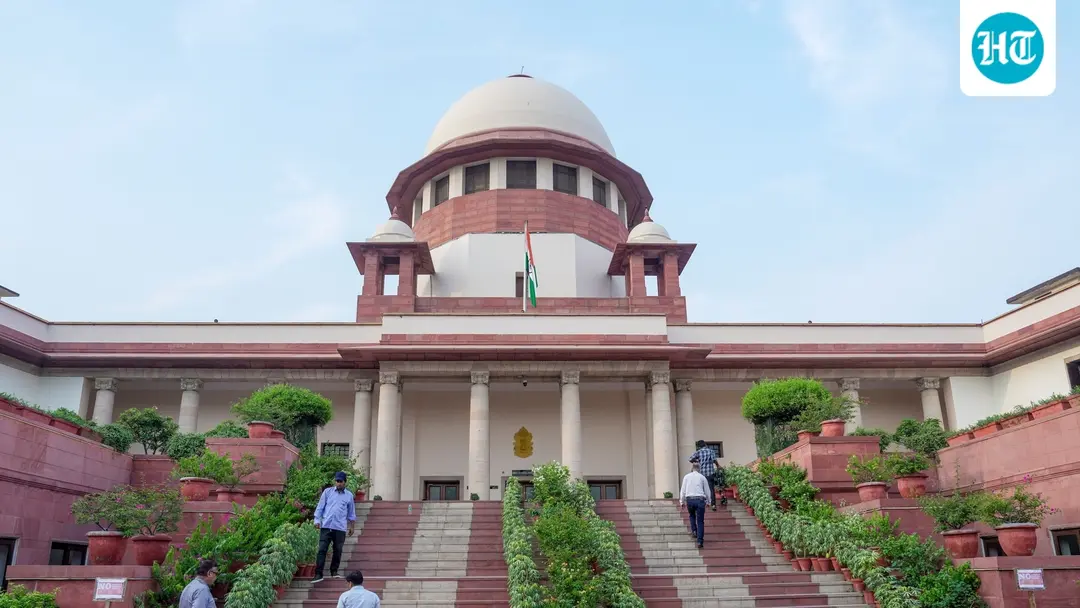
Collegium clears 12 permanent judges for four high courts
The Supreme Court Collegium has approved the appointment of 12 additional judges as permanent judges in the Andhra Pradesh, Kerala, Uttarakhand and Gauhati High Courts. The collegium, comprising Chief Justice Surya Kant and Justices Vikram Nath and B V Nagarathna, took the decision at a meeting held on September 23. Five judges each were cleared for Andhra Pradesh and Kerala, while Justice Subhash Upadhyay was approved for Uttarakhand and Justice Kaushik Goswami for Gauhati.
Source
Hindustan Times — India · read the original report ↗
Desk check · compared with the source
What the desk checked (5)
- SC Collegium approved 12 additional judges as permanent judges in Andhra Pradesh, Kerala, Uttarakhand and Gauhati High Courts — Figure and court names appear in the source and match the listed names (5+5+1+1)
- Collegium comprised Chief Justice Surya Kant and Justices Vikram Nath and B V Nagarathna — Stated in source without external attribution; composition repeated twice in the text
- The meeting was held on Wednesday / on September 23 — Source gives both descriptions; internally imprecise, editor should verify the date
- Names of the five Andhra Pradesh judges approved — Quoted directly from an official collegium statement cited in the source
- Kerala approvals: P Krishna Kumar, KV Jayakumar, Muralee Krishna S, Jobin Sebastian, PV Balakrishnan; Uttarakhand: Subhash Upadhyay; Gauhati: Kaushik Goswami — Names appear in source; no source given beyond the collegium resolutions
Analysts’ view opinion
On the surface this is routine administration — additional judges being confirmed as permanent. Politically, though, it is the next move in the long tug-of-war over judicial appointments: the Collegium has signed off, and the ball is now with the Union government. The story's own reference to 25 Collegium recommendations pending with the government turns the speed of implementation into a political question in itself.
- Confirming sitting additional judges is usually the least contested category of appointment, so open friction with the government is less likely here.
- Five names each for Andhra Pradesh and Kerala means meaningful stability on two benches that handle heavy state-related litigation.
- The story's reference to Justice Dipankar Datta's remarks signals that the debate over who really controls judicial appointments is far from settled.
- A Collegium under a new Chief Justice moving quickly creates indirect pressure on the executive over files already stuck in the pipeline.
- Any noticeable delay in notification could become a talking point for opposition parties inside and outside Parliament.
What to watch — Watch how quickly the Union Law Ministry notifies these 12 names — and whether the other pending recommendations start moving with them.
The story does not establish the government's response, any timeline for notification, or whether any name faces objection — Collegium approval is not the final appointment.
Deep dive
Research brief · 8 facts · 2 dates · exam-readyThe brief
Context
The Supreme Court Collegium — the body of senior-most judges that recommends appointments and elevations in the higher judiciary — has cleared 12 additional judges for confirmation as permanent judges in four High Courts. Additional judges are appointed for a fixed term and must be separately confirmed as permanent judges, a proposal that originates in the High Court and is processed by the Collegium before the government acts on it. The decision was taken at a meeting on September 23 by a Collegium of Chief Justice Surya Kant and Justices Vikram Nath and B V Nagarathna. The story also notes, via linked reports, that 25 Collegium recommendations for High Court judges are pending with the government.
Key facts
- The Supreme Court Collegium approved 12 additional judges for appointment as permanent judges in the Andhra Pradesh, Kerala, Uttarakhand and Gauhati High Courts.
- The Collegium met on September 23 (Wednesday) to take the decision.
- The Collegium comprised Chief Justice Surya Kant and Justices Vikram Nath and B V Nagarathna.
- Five additional judges were cleared for the Andhra Pradesh High Court: Justices Maheswara Rao Kuncheam @ Kuncham, Thoota Chandra Dhana Sekar @ T.C.D. Sekhar, Challa Gunaranjan, Avadhanam Hari Haranadha Sarma and Dr Yadavalli Lakshmana Rao.
- Five were cleared for the Kerala High Court: Justices P Krishna Kumar, K V Jayakumar, Muralee Krishna S, Jobin Sebastian and P V Balakrishnan.
- Justice Subhash Upadhyay, an additional judge, was approved as a permanent judge of the Uttarakhand High Court.
- Justice Kaushik Goswami, an additional judge, was approved as a permanent judge of the Gauhati High Court.
- A linked report cited in the story notes that 25 Collegium recommendations for appointing High Court judges are pending with the government.
Timeline
- September 23 (Wednesday)Supreme Court Collegium meets and approves proposals to make 12 additional judges permanent in four High Courts.
- Reported subsequentlySeparate resolutions issued for Andhra Pradesh, Kerala, Uttarakhand and Gauhati High Courts; statement listing names made public.
Who has a stake
- Supreme Court Collegium (CJI Surya Kant, Justices Vikram Nath and B V Nagarathna) — Constitutional role of recommending High Court appointments and confirmations of additional judges.
- The 12 additional judges concerned — Confirmation as permanent judges, ending fixed-tenure uncertainty in their service.
- Andhra Pradesh and Kerala High Courts — Five permanent judges each, affecting continuity of benches and case disposal.
- Uttarakhand and Gauhati High Courts — One permanent judge each — Justices Subhash Upadhyay and Kaushik Goswami respectively.
- Union Government — Must process Collegium recommendations; 25 recommendations for HC judges are reported pending with it.
- Litigants and the public — Judicial strength and stability of High Court benches affect pendency and access to justice.
Why it matters
Confirming additional judges as permanent judges stabilises High Court benches and reduces uncertainty in judicial strength at a time when, as the story's linked reports note, 25 Collegium recommendations remain pending with the government. The episode also keeps in focus the unresolved friction over who effectively controls judicial appointments, highlighted by Justice Dipankar Datta's remark that courts play second fiddle to the government in appointing judges.
UPSC angle
Prelims pointers
- Additional judges of High Courts are appointed for a fixed term and must be separately confirmed as permanent judges on Collegium recommendation.
- Collegium that met on September 23 for these appointments: CJI Surya Kant, Justice Vikram Nath, Justice B V Nagarathna.
- High Courts covered: Andhra Pradesh (5), Kerala (5), Uttarakhand (1), Gauhati (1) — total 12.
- Uttarakhand HC: Justice Subhash Upadhyay; Gauhati HC: Justice Kaushik Goswami.
- As per linked reports in the story, 25 Collegium recommendations for High Court judges were pending with the government.
- A separate report noted the Collegium was to recommend five judges for appointment as High Court Chief Justices.
Mains framing
The confirmation of 12 additional judges as permanent judges in four High Courts illustrates both the routine functioning and the structural strain in India's judicial appointments system. Appointments flow through the Collegium — here CJI Surya Kant with Justices Vikram Nath and B V Nagarathna — whose recommendations must then be acted upon by the executive; the story's own linked reporting that 25 recommendations for High Court judges are pending with the government points to delay as the system's chronic weakness, with consequences for bench strength, continuity of part-heard matters and pendency. The additional-judge device, under which judges serve a fixed term before confirmation, adds a layer of tenure insecurity that critics link to concerns about judicial independence, a theme echoed in Justice Dipankar Datta's observation that courts play second fiddle to the government in appointing judges. A constructive way forward, on the evidence available here, lies in timely and transparent processing of Collegium resolutions and in ensuring that confirmations of additional judges are not left to drift; the source does not detail any specific reform proposal beyond these recommendations.
Key terms
- Supreme Court Collegium
- Body of the Chief Justice of India and senior-most Supreme Court judges that recommends appointments and elevations in the higher judiciary.
- Additional judge
- A High Court judge appointed for a fixed term, whose continuation as a permanent judge requires a separate recommendation and approval.
- Permanent judge
- A High Court judge holding office on a regular, non-temporary basis after confirmation.
- Pending recommendations
- Collegium proposals forwarded to the government but not yet notified — reported as 25 in the case of High Court judges.
- High Court Chief Justice recommendations
- Separate Collegium exercise, reported in the story, to recommend five judges for appointment as High Court Chief Justices.
Practice questions
- Discuss the working of the Collegium system in appointing High Court judges. What are the consequences of executive delay in acting on its recommendations?
- 'The practice of appointing additional judges for a fixed term affects judicial independence.' Examine this statement with reference to the confirmation of additional judges as permanent judges.
- Examine how vacancies and delayed confirmations in High Courts contribute to judicial pendency, and suggest institutional correctives.
Grounded only in the source report — figures and dates are the source's, not inferred.