
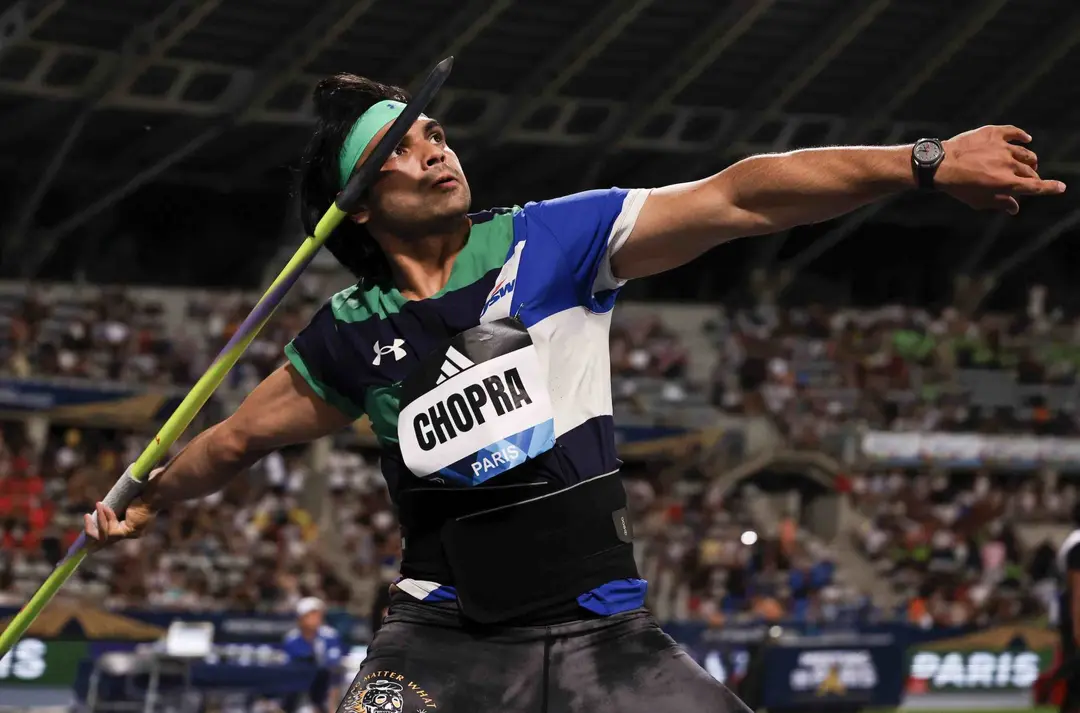
Column urges India to reward performances, not only medals
India must reward performances that lead to medals rather than medals alone if it is to progress in measurable sports such as athletics and swimming, writes Rupinder Singh. The column notes Neeraj Chopra as the only Indian man with two Olympic medals, and suggests states honour recent feats: Kerala for Anju Sojan breaking a 22-year-old record, Maharashtra for Sarvesh Kushare clearing 2.30 m, Uttarakhand for Snam Barwal breaking Shivnath Singh's 48-year-old marathon mark, Tamil Nadu for Vishal's sub-45-second 400 m, and Delhi for Tejaswin Shankar passing 8000 points.
Source
Sportspersons (India) · read the original report ↗
Desk check · some claims need care
What the desk checked (5)
- Neeraj Chopra is the only Indian man to win two Olympic medals in measurable sports such as athletics and swimming — Stated by the author as fact; no source or data citation given in the text.
- Anju Sojan broke a 22-year-old record previously held by Anju Bobby George — Figure appears in source; the source implies the record belonged to Anju Bobby George but does not name the event or mark.
- Sarvesh Kushare became India's first man to clear over 2.30 m in the high jump — Appears in source without attribution or date.
- Snam Barwal broke Shivnath Singh's 48-year-old marathon record — Appears in source; no timing or venue details or attribution provided.
- Vishal broke 45 seconds in the 400 m and Tejaswin Shankar became the first Indian above 8000 points — Both appear in source as unattributed statements of fact; the decathlon event is implied but not named.
Analysts’ view opinion
The core argument in Rupinder Singh's piece is that an incentive system keyed only to medals ignores the performances that eventually produce medals — a gap that is sharpest in measurable sports like athletics and swimming. The work that precedes an Olympic podium — breaking national records, crossing key technical barriers — currently earns no financial recognition. The examples cited are not just statistics; each is a meaningful benchmark in its discipline.
- In measurable sports, progress can be tracked precisely in seconds, centimetres and points, which means improvement can be identified long before a medal arrives.
- Sarvesh Kushare clearing 2.30 m in the high jump, Vishal breaking 45 seconds in the 400 m and Tejaswin Shankar passing 8000 points are the kind of benchmarks that signal proximity to international competitiveness.
- Anju Sojan breaking a 22-year-old record and Snam Barwal breaking Shivnath Singh's 48-year-old marathon mark represent movement after decades of stagnation.
- Since states have already budgeted money for medallists, the piece suggests rewarding performances would be a reprioritisation rather than a new burden.
- In fairness, a medal-only policy has its own logic — it is clear and hard to dispute; a performance-based system would need carefully drawn, defensible benchmarks.
What to watch — Watch whether any state association or government moves to announce cash incentives tied to national records or specific qualifying marks.
This is the argument of an opinion piece — the story does not detail existing incentive schemes, whether these athletes have already been recognised, or any response from the authorities.
Deep dive
Research brief · 8 facts · 3 dates · exam-readyThe brief
Context
A column by Rupinder Singh argues that Indian sports authorities reward only medals and ignore the performances that build towards medals, especially in "measurable" sports such as athletics and swimming where results are recorded in times, distances and points. It notes that in athletics India has only one man, Neeraj Chopra, with two Olympic medals, and that swimming may be about 20 years away from that level. The column lists five recent national-record or landmark performances and names the states that could have rewarded those athletes. It frames this as a practical step towards India's stated ambition of becoming a sporting world power, rather than pinning hopes on 2036.
Key facts
- The column argues India rewards only medals and ignores performances that ultimately lead to medals, in measurable sports like athletics and swimming.
- Neeraj Chopra is described as the only Indian man to win two Olympic medals in measurable sports; he won javelin gold at Tokyo 2021.
- In swimming, the column estimates India is about 20 years away from comparable results.
- Anju Sojan broke a 22-year-old record; the column says Anju Bobby George and Kerala could have rewarded her.
- Sarvesh Kushare became India's first man to clear over 2.30 m in the high jump; Maharashtra is named as the state that could reward him.
- Snam Barwal broke Shivnath Singh's 48-year-old marathon record; Uttarakhand is named as the state that could reward him.
- Vishal broke 45 seconds in the 400 m; Tamil Nadu is named as the state that could reward him.
- Tejaswin Shankar became the first Indian above 8000 points; Delhi is named as the state that could reward him.
Timeline
- Tokyo 2021Neeraj Chopra wins Olympic gold in the javelin, described in the column as delighting all of India.
- Not dated in the sourceRecent landmark performances cited: Anju Sojan's record, Sarvesh Kushare over 2.30 m, Snam Barwal's marathon record, Vishal's sub-45s 400 m, Tejaswin Shankar above 8000 points.
- 2036The year by which, the column says, India claims it will become a sporting world power — which the writer contrasts with immediate, proactive rewards.
Who has a stake
- Indian athletes in measurable sports — Recognition and financial reward for record-breaking performances that currently go unrewarded because they are not medals.
- State governments (Kerala, Maharashtra, Uttarakhand, Tamil Nadu, Delhi) — They have budgeted money to pay medallists and could redirect some of it to reward landmark performances by their athletes.
- Indian sports authorities — Their medal-only reward policy is the central criticism; changing it is presented as a low-cost, high-impact reform.
- Anju Bobby George / Kerala — Named as able to easily have rewarded Anju Sojan for breaking a 22-year-old record.
- The next generation of athletes — Rewarding performances would, the column argues, inspire younger athletes and build a pipeline.
Why it matters
In measurable sports, national records and performance thresholds are the visible steps between obscurity and the Olympic podium; ignoring them means the incentive system only kicks in at the very end of a long pipeline. The column argues that with medal money already budgeted and few medals being won, rewarding breakthrough performances is a cheap, immediate way to support athletes and inspire successors, instead of waiting for a 2036 target.
UPSC angle
Prelims pointers
- Neeraj Chopra won javelin gold at the Tokyo Olympics (held 2021) and is cited as the only Indian man with two Olympic medals in measurable sports.
- Sarvesh Kushare: first Indian man to clear over 2.30 m in the high jump.
- Snam Barwal broke Shivnath Singh's 48-year-old Indian marathon record.
- Tejaswin Shankar: first Indian to cross 8000 points (decathlon scoring).
- Vishal broke the 45-second barrier in the 400 m.
- 2036 is the horizon year the column cites for India's sporting world-power ambition.
Mains framing
India's sports incentive architecture is medal-centric: states budget cash awards for Olympic, Asian and Commonwealth medallists, but in measurable disciplines like athletics and swimming the intermediate milestones — national records, qualifying marks, barrier-breaking times and points — carry no reward. The column's argument is that this inverts the development logic: in a country where, in these sports, only Neeraj Chopra has two Olympic medals and swimming is perhaps two decades away, the performances that precede medals are precisely what need funding and recognition. Concrete instances offered include Anju Sojan breaking a 22-year-old record, Sarvesh Kushare becoming the first Indian over 2.30 m, Snam Barwal erasing Shivnath Singh's 48-year-old marathon mark, Vishal going under 45 seconds in the 400 m, and Tejaswin Shankar crossing 8000 points — each attributable to a home state (Kerala, Maharashtra, Uttarakhand, Tamil Nadu, Delhi) that could act without new money, since medal funds are already budgeted. The implications are twofold: material support at the stage when athletes most need it, and a demonstration effect on the next generation. The way forward suggested is proactive, performance-linked state recognition now, rather than deferring world-power status to a 2036 milestone.
Key terms
- Measurable sports
- Disciplines like athletics and swimming where performance is objectively recorded in time, distance, height or points, not judged or scored subjectively.
- Performance-based reward
- Cash or recognition given for records and benchmark marks achieved, as opposed to awards given only for winning medals.
- High jump 2.30 m barrier
- A benchmark height in men's high jump; Sarvesh Kushare is cited as the first Indian man to clear over it.
- 8000 points
- A landmark multi-event (decathlon) score; Tejaswin Shankar is cited as the first Indian to go above it.
- Sub-45-second 400 m
- A classic elite threshold in the one-lap sprint; Vishal is cited as having broken 45 seconds.
Practice questions
- Should Indian states extend cash awards from medallists to record-breaking performances in measurable sports? Examine with reference to recent athletics landmarks.
- "India's sports incentive system rewards outcomes but not the pipeline that produces them." Critically analyse this statement.
- Discuss how performance-linked recognition in athletics and swimming could shape India's ambition of becoming a sporting world power by 2036.
Grounded only in the source report — figures and dates are the source's, not inferred.