
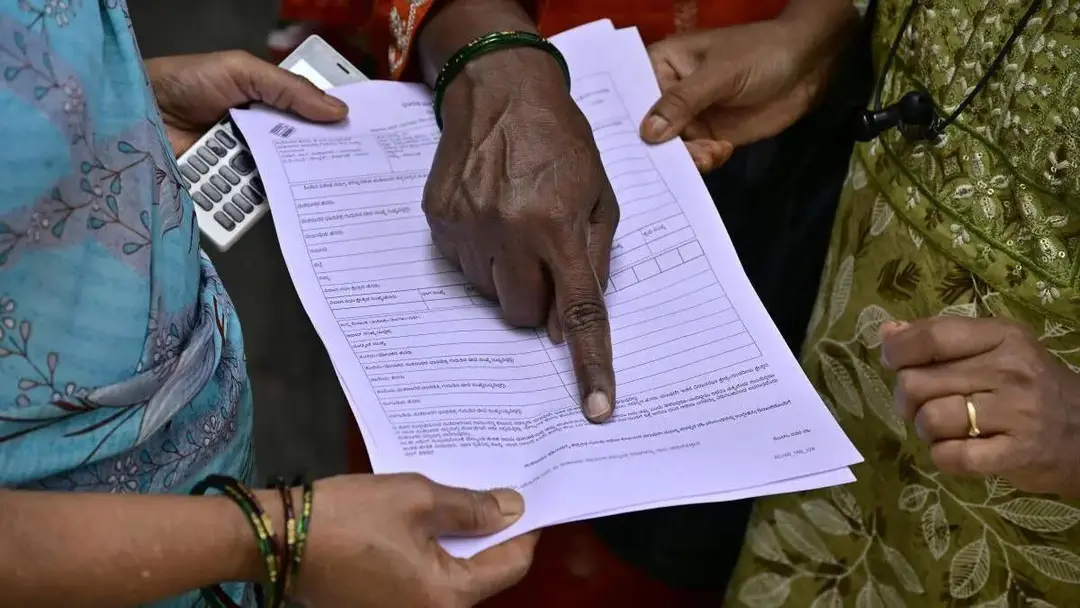
Only 6.66 lakh Form-6 applications against 80.62 lakh deletions
More than 80.62 lakh names were deleted from the draft electoral roll as shifted or absent, but only 6.66 lakh Form-6 applications for inclusion in the final roll have been received so far, a figure that also includes new voters. Between June 16 and September 17, 6,42,670 applications came in, and 24,328 on September 19. Voters cited unawareness of the September 23 deadline and online glitches. Total ASDDO deletions stand at 1.07 crore.
Source
The Hindu — National · read the original report ↗
Desk check · compared with the source
What the desk checked (5)
- More than 80.62 lakh names were deleted from the draft roll as shifted or absent, out of 1.07 crore ASDDO deletions. — Figures appear in the source; no issuing authority named beyond the report itself.
- Only 6.66 lakh Form-6 applications have been received so far, including from new voters. — Figure appears in source; sub-totals of 24,328 on September 19 and 6,42,670 between June 16 and September 17 are given.
- Deadline for filing Form-6 is September 23. — Stated in source in the context of voters saying they were unaware of it; no order cited.
- Bihar had 7.89 crore electors before SIR and about 7.42 crore in the final roll, with 21.53 lakh added via Form-6. — Comparative figures appear in source; source itself notes the data does not show how many added were restored deletions.
- Voters reported online glitches and lack of awareness about their ASDDO status. — Attributed to voters interviewed by The Hindu; anecdotal and not quantified.
Analysts’ view opinion
This looks like an administrative exercise but it is politically combustible: against 80.62 lakh deletions, only 6.66 lakh Form-6 applications have come in, which points to a possibly large net fall in the final roll. Because voters themselves say the deletions fell heavily on those who move homes for rent or work reasons, the argument over who loses votes will dominate the political conversation. Bihar's precedent — a final roll about 47 lakh smaller than before the SIR — gives the opposition a ready talking point and leaves the administration and ruling side carrying the burden of explanation.
- Fewer than one in 10 of those marked shifted or absent have applied for inclusion, a ratio that invites political scrutiny of the process itself.
- Voters citing ignorance of the September 23 deadline, confusion over the form, and repeated online glitches shifts the criticism towards outreach and system capacity.
- The 24,328 applications received on the single campaign day of September 19 suggest numbers respond sharply to BLO-led outreach, strengthening demands for an extension or another drive.
- With voters saying address changes are routine given rising rents and job shifts, the claim that urban and migrant households are disproportionately affected will gain political traction.
- Since Form-6 can still be filed after the final roll is published, this remains a correctable problem rather than a closed chapter.
What to watch — Watch for whether the deadline is extended or another outreach drive is ordered, how large the net drop in the final roll turns out to be, and how parties mobilise around claims and objections.
The story does not establish how many of those added via Form-6 were voters deleted from the draft roll and later restored, nor does it show which party stands to gain or lose from the deletions.
Deep dive
Research brief · 8 facts · 5 dates · exam-readyThe brief
Context
During a Special Intensive Revision (SIR) of electoral rolls, a large number of names were dropped from the draft roll under the ASDDO categories — absent, shifted, dead, duplicate or otherwise ineligible. Voters marked as shifted or absent were told to file Form-6, the application for inclusion in the electoral roll, before the claims-and-objections deadline of September 23. The Hindu's figures show that Form-6 applications received so far are a tiny fraction of the deletions, suggesting low net additions in the final roll. The city/State concerned is not stated in the source, but the pattern is compared with Bihar, where SIR was first conducted.
Key facts
- More than 80.62 lakh names were deleted from the draft roll after being marked as shifted or absent.
- Only 6.66 lakh Form-6 applications have been received so far — less than one in 10 of those marked shifted or absent; this figure also includes new voters.
- 6,42,670 Form-6 applications were received between June 16 and September 17.
- 24,328 Form-6 applications came in on September 19, during the second campaign when BLOs were told to help the public with inclusion and correction.
- Total ASDDO deletions stand at 1.07 crore, of which the shifted/absent categories (80.62 lakh) are the largest share.
- More than 15 lakh were marked absent because they were not present during the enumeration phase; the rest had different addresses in the current and previous rolls.
- Bihar had 7.89 crore electors before SIR; 21.53 lakh eligible electors were added through Form-6, but the final roll had about 7.42 crore — nearly 47 lakh fewer than before SIR.
- The deadline for the claims and objections stage was September 23; Form-6 can still be filed after the final rolls are published.
Timeline
- June 16 to September 176,42,670 Form-6 applications received during this period.
- September 1924,328 Form-6 applications received during the second campaign, with BLOs deployed to assist with inclusion and correction.
- By the time of reportingCumulative Form-6 applications stand at 6.66 lakh against 80.62 lakh shifted/absent deletions.
- September 20, 2026Report published.
- September 23Deadline cited by voters for filing claims/objections and Form-6 for the final roll.
Who has a stake
- Voters marked absent or shifted — Risk of losing their place in the final electoral roll; many said they did not know of the deadline or how to file Form-6.
- Election Commission machinery conducting SIR — Credibility of the revision rests on whether genuine electors deleted from the draft roll are restored through claims and Form-6.
- Booth Level Officers (BLOs) — Instructed during the second campaign to help the public with inclusion and correction, but only 24,328 applications came in on September 19.
- Voters wrongly placed in ASDDO list — Say they returned the enumeration form as directed yet were categorised as absent/shifted, and were unaware of it.
- Urban migrant and tenant populations — Rising rents and changing jobs make single-address continuity difficult, exposing them to 'shifted' deletions.
- Bihar electorate (precedent) — Final roll fell to about 7.42 crore from 7.89 crore despite 21.53 lakh Form-6 additions.
Why it matters
The electoral roll determines who can vote, so a gap of this scale — 6.66 lakh applications against 80.62 lakh shifted/absent deletions out of 1.07 crore total — means large numbers of possibly genuine electors may not appear in the final roll. Voters citing unawareness of the September 23 deadline and online glitches points to a process failure rather than genuine ineligibility. Bihar's precedent, where the roll shrank by nearly 47 lakh despite 21.53 lakh Form-6 additions, suggests deletions are not being offset by fresh inclusions.
UPSC angle
Prelims pointers
- Form-6 is the application form for inclusion of a new name in the electoral roll.
- ASDDO deletions in the ongoing SIR total 1.07 crore; shifted/absent alone account for over 80.62 lakh.
- Form-6 applications received so far: 6.66 lakh, including new voters.
- Bihar was the first State where SIR was conducted: 7.89 crore electors before, about 7.42 crore in the final roll.
- BLOs (Booth Level Officers) were deployed in a second campaign on September 19 to assist inclusion and correction.
- Form-6 can be filed even after final rolls are published, per the source.
Mains framing
The Special Intensive Revision has produced deletions on a scale that fresh inclusions are not matching: 1.07 crore ASDDO deletions, of which more than 80.62 lakh are marked shifted or absent, against just 6.66 lakh Form-6 applications that also include new voters. The causes reported by voters are procedural rather than substantive — ignorance of the September 23 deadline, no knowledge of how to fill Form-6, repeated glitches on the online route, and no clarity on whether their own names figured in the ASDDO list; over 15 lakh were marked absent merely for not being present during enumeration, while others were flagged for address mismatch in a context where rising rents and job changes make stable addresses hard to maintain. Some claim they were wrongly categorised despite returning the enumeration form as instructed. The implication is a final roll with low net additions, echoing Bihar where the electorate fell by nearly 47 lakh despite 21.53 lakh Form-6 additions, and where the data do not even establish how many additions were restorations of wrongly excluded electors. The way forward suggested by the reporting itself lies in deadline awareness, functioning BLO-assisted and online channels, and transparency about who has been placed in which deletion category — since Form-6 remains open even after final publication.
Key terms
- Form-6
- Application for inclusion of a name in the electoral roll; those deleted as shifted or absent were asked to file it.
- SIR (Special Intensive Revision)
- The intensive electoral roll revision exercise, first conducted in Bihar, involving enumeration, draft roll and claims/objections.
- ASDDO
- The deletion category list under which names were removed from the draft roll; in this exercise it totals 1.07 crore deletions.
- BLO (Booth Level Officer)
- Ground-level election official; BLOs were instructed during the second campaign to help voters with inclusion and correction.
- Claims and objections process
- The post-draft-roll window in which voters seek inclusion, deletion or correction before the final roll is published.
- Draft roll
- The provisional electoral roll published after enumeration, from which the 80.62 lakh shifted/absent names were deleted.
Practice questions
- Critically examine whether intensive electoral roll revisions risk excluding genuine voters, using the gap between 1.07 crore deletions and 6.66 lakh Form-6 applications.
- How do urban migration, tenancy and address changes complicate the maintenance of accurate electoral rolls? Suggest procedural safeguards.
- Evaluate the adequacy of the claims and objections mechanism in restoring wrongly deleted electors, with reference to the Bihar SIR outcome.
Grounded only in the source report — figures and dates are the source's, not inferred.