
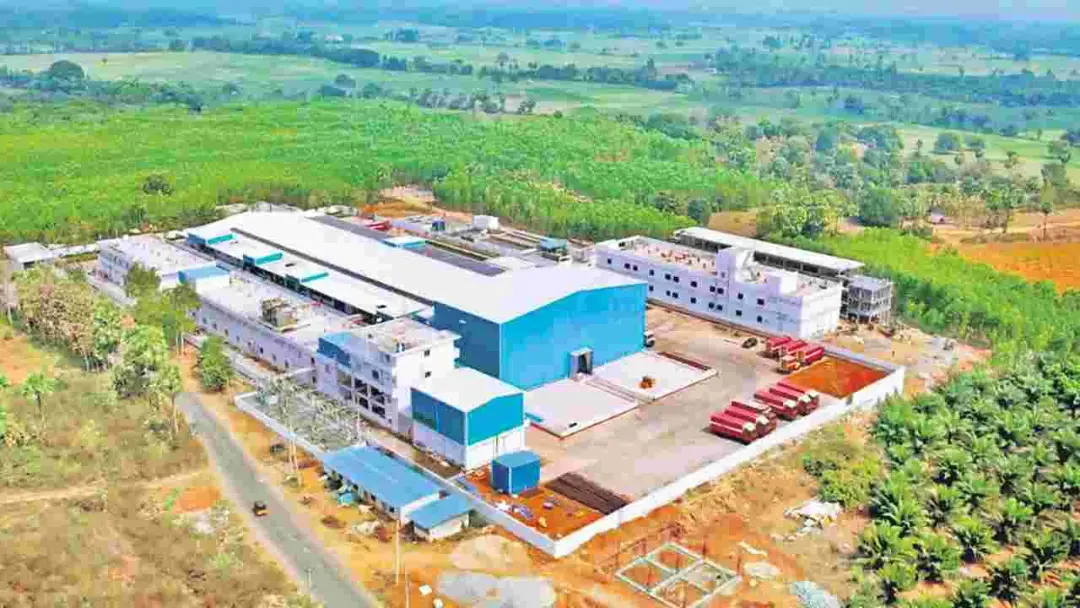
PCB prepares action against shrimp factories in Kakinada district
The Andhra Pradesh Pollution Control Board is preparing action over effluent pollution from Veerabhadra Aqua Exports shrimp factories linked to former YSRCP MLA Dwarampudi Chandrasekhara Reddy in Kakinada district. Following residents' complaints, Deputy Chief Minister Pawan Kalyan reviewed the issue at the collectorate on July 2. Inspections found the Lampakalova unit discharging untreated effluent into farmland and the Gurajanapalli unit running at double capacity. Show-cause notices were issued on July 3. The company denied the allegations.
Source
Kakinada City — MLA & నియోజకవర్గం · read the original report ↗
Desk check · some claims need care
What the desk checked (5)
- PCB inspections found Lampakalova unit releasing untreated effluent directly into farmland and Gurajanapalli unit operating at double sanctioned capacity — Attributed in the source to district PCB officials' inspection findings; no official document cited.
- Deputy CM Pawan Kalyan reviewed the complaints with district officials at Kakinada Collectorate on July 2 and ordered a report in 24 hours from PCB EE Sandeep Reddy — Specific date and official named in the source; not independently verifiable here.
- Show-cause notices were issued on July 3 and the company replied denying pollution and over-capacity operation — Dates and the company's denial appear in the source; the reply is characterised as false by the report, which is the publication's own assessment.
- Factories violating norms are to be sealed, with orders expected from the Visakhapatnam zonal office in two or three days — Presented as 'it is learnt' — unattributed, no named official.
- The factories, named Veerabhadra Aqua Exports, belong to former YSRCP MLA Dwarampudi Chandrasekhara Reddy — Stated in the source without documentary attribution; potentially contentious ownership claim.
Analysts’ view opinion
This is more than a pollution file; it is a political signal about how regulatory machinery moves after a change of government. By personally holding a review at the Kakinada collectorate and demanding a report within 24 hours, Deputy CM Pawan Kalyan lifted a set of local complaints into a state-level political story involving a former YSRCP MLA's company. With the company flatly denying the allegations, the case now sits between two competing framings: environmental enforcement versus political targeting.
- With power having changed hands after the elections, regulatory action against a firm linked to an opposition leader will inevitably be read through a political lens.
- Pawan Kalyan's personal involvement reinforces a hands-on, pro-farmer, pro-local image that can help Jana Sena deepen its footing in Kakinada district.
- The allegation that untreated effluent flowed into farmland speaks directly to agrarian voters, which makes it a potent local political issue.
- It is awkward for the YSRCP: defending the business risks looking like a shield for environmental neglect, while distancing itself leaves its own leader exposed — a 'vendetta politics' counter-charge is the likelier response.
- Because the company has rejected the findings outright, the dispute could shift to technical verification and legal challenge, prolonging the political narrative.
What to watch — Watch whether the Visakhapatnam zonal office actually issues seizure-type orders, how the YSRCP frames the action, and whether comparable scrutiny is applied to units linked to other parties.
The story records inspection findings and the company's denial only; it does not establish that violations have been legally proven, what final action will follow, or that political motive drove the crackdown.
Deep dive
Research brief · 8 facts · 6 dates · exam-readyThe brief
Context
Residents of Kakinada district in Andhra Pradesh complained about effluent pollution from two shrimp processing units run under the name Veerabhadra Aqua Exports, linked to former YSRCP MLA Dwarampudi Chandrasekhara Reddy. After Deputy Chief Minister Pawan Kalyan reviewed the complaints with district officials at the Kakinada collectorate on July 2, the Andhra Pradesh Pollution Control Board (PCB) inspected the Gurajanapalli and Lampakalova units and found violations. Show-cause notices were issued on July 3, but the company denied wrongdoing, and the PCB is now preparing further action, including possible sealing of the units.
Key facts
- The State Pollution Control Board (PCB) is preparing action over effluent pollution from shrimp factories of former YSRCP MLA Dwarampudi Chandrasekhara Reddy in Kakinada district.
- Two units operate under the name Veerabhadra Aqua Exports: one at Gurajanapalli in Kakinada Rural constituency and one at Lampakalova in Prathipadu constituency.
- Deputy CM Pawan Kalyan reviewed the complaints with district officials at the Kakinada collectorate on July 2 and questioned why no inspections had been done.
- Pawan Kalyan directed PCB Executive Engineer Sandeep Reddy to submit a report within 24 hours.
- Inspections found the Lampakalova unit releasing large volumes of untreated effluent directly into crop fields.
- The Gurajanapalli unit was found running at double the sanctioned capacity, in a very congested area amid heavy pollution.
- PCB issued show-cause notices on July 3 asking why action should not be taken.
- Special teams from the PCB zonal manager's office in Visakhapatnam also inspected and concluded pollution levels were high and the company acted with complete irresponsibility.
Timeline
- Before July 2, 2024Local residents send multiple complaints to Deputy CM Pawan Kalyan about pollution from the shrimp factories.
- July 2, 2024Pawan Kalyan reviews the issue with district officials at the Kakinada collectorate; orders PCB EE Sandeep Reddy to report within 24 hours.
- After the reviewDistrict PCB officials inspect the Gurajanapalli and Lampakalova units and record violations; Visakhapatnam zonal special teams also inspect.
- July 3, 2024PCB issues show-cause notices to the factories.
- After the noticesThe company replies denying the charges, claiming it runs below capacity and treats its effluent.
- Reported July 18-19, 2024PCB is set to begin action within two or three days; orders expected from the Visakhapatnam zonal office.
Who has a stake
- Andhra Pradesh Pollution Control Board (PCB) — Statutory regulator that inspected the units, issued show-cause notices and is preparing action, reportedly including sealing the factories.
- Veerabhadra Aqua Exports — Faces possible sealing and penalties; denies discharging untreated effluent and claims it operates within rules.
- Dwarampudi Chandrasekhara Reddy, former YSRCP MLA — The shrimp factories are linked to him, giving the enforcement action a political dimension.
- Deputy Chief Minister Pawan Kalyan — Received residents' complaints, pulled up officials and set the 24-hour report deadline that triggered inspections.
- Residents and farmers of Gurajanapalli and Lampakalova — Complainants whose crop fields and drains are reportedly receiving untreated effluent.
- PCB Visakhapatnam zonal office — Sent special inspection teams; the enforcement orders are expected to be issued from here.
Why it matters
Coastal Andhra's aquaculture and seafood processing boom brings export earnings but also untreated effluent that can damage farmland, drains and groundwater in densely settled areas. The case tests whether a pollution regulator will act against a politically connected unit after inspections record violations such as running at double the sanctioned capacity. It also shows how citizen complaints escalated to ministerial review can trigger regulatory enforcement.
UPSC angle
Prelims pointers
- Andhra Pradesh Pollution Control Board (PCB) is the state regulator acting against the shrimp units in Kakinada district.
- The two Veerabhadra Aqua Exports units are at Gurajanapalli (Kakinada Rural constituency) and Lampakalova (Prathipadu constituency).
- Show-cause notices to the factories were issued on July 3; the collectorate review by Deputy CM Pawan Kalyan was on July 2.
- Violations recorded: untreated effluent discharged into crop fields (Lampakalova) and operation at double sanctioned capacity (Gurajanapalli).
- Enforcement orders were expected from the PCB zonal office in Visakhapatnam.
Mains framing
The Kakinada shrimp factory case illustrates the regulatory gap in India's aquaculture processing sector: units sited in congested settlements were found discharging untreated effluent into farm drains and fields, and one was operating at double its sanctioned capacity, yet action followed only after residents' complaints reached the Deputy Chief Minister and a 24-hour reporting deadline was imposed on the PCB's executive engineer. The episode points to weak routine monitoring, the deterrent value of consent conditions being eroded when capacity limits go unchecked, and the complication of political linkage, since the units are associated with a former MLA. That the company responded to show-cause notices with a blanket denial, contradicted by both district and Visakhapatnam zonal inspection teams, underlines why escalation to sealing was being considered. The way forward suggested by the facts is continuous and verifiable monitoring of effluent treatment and actual throughput against sanctioned capacity, time-bound disposal of show-cause proceedings, siting norms that keep polluting units away from crop land and habitations, and a transparent complaint-redressal channel so that enforcement does not depend on ministerial intervention.
Key terms
- Pollution Control Board (PCB)
- State regulatory body that inspects polluting units, issues show-cause notices and can order closure or sealing.
- Show-cause notice
- A formal notice asking a unit to explain why regulatory action should not be taken against it for recorded violations.
- Effluent (vyartha jalalu)
- Liquid waste water from a factory, which must be treated before discharge; here allegedly released untreated into crop fields.
- Sanctioned capacity
- The production limit permitted in a unit's consent; the Gurajanapalli unit was found running at double this level.
- Veerabhadra Aqua Exports
- The shrimp processing company, linked to former YSRCP MLA Dwarampudi Chandrasekhara Reddy, whose two units were inspected.
- Zonal office, Visakhapatnam
- PCB regional office that sent special inspection teams and from which enforcement orders were expected to be issued.
Practice questions
- Discuss how aquaculture and seafood processing units in coastal Andhra Pradesh affect farmland and water bodies, and evaluate the adequacy of state pollution control enforcement in such cases.
- Examine the role of citizen complaints and executive intervention in triggering environmental regulatory action, using the Kakinada shrimp factory case as an illustration.
- What institutional reforms can ensure that industrial units operate within sanctioned capacity and effluent norms without depending on political or ministerial pressure?
Grounded only in the source report — figures and dates are the source's, not inferred.