
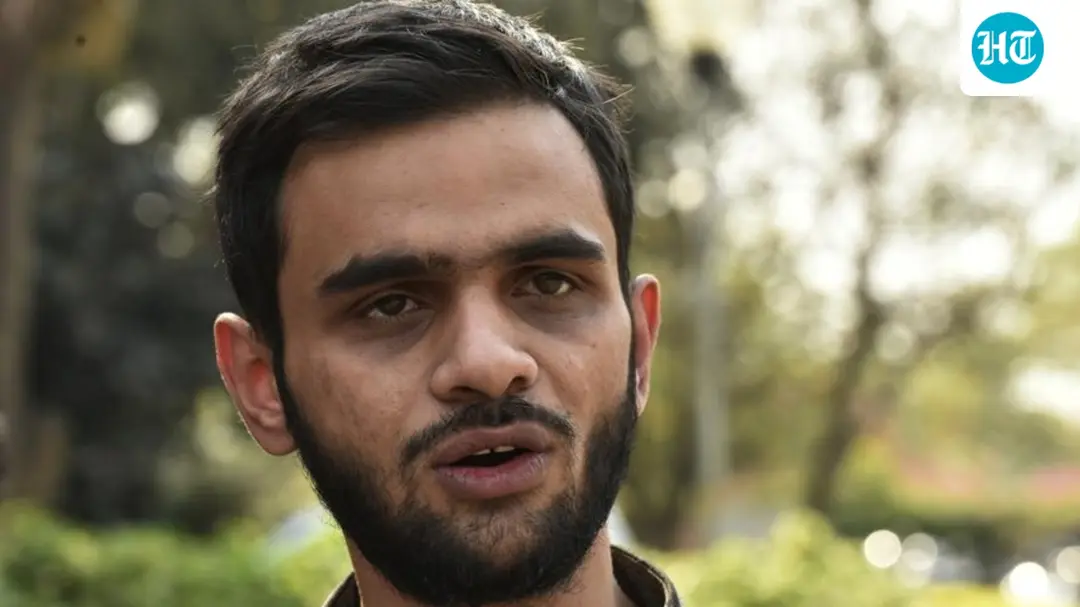
CBFC flags Umar Khalid documentary screening at IIIT-Hyderabad
The CBFC on Thursday flagged a proposed screening of a documentary on jailed activist Umar Khalid at IIIT-Hyderabad, saying on X that public exhibition of an uncertified film violates the Cinematograph Act unless a specific exemption is obtained. "Prisoner No. 626710 is Present", directed by Lalit Vachani, was proposed by a group of students at the KRB Auditorium at 8 pm on Friday. IIIT-Hyderabad said neither the institute nor its recognised student bodies organised or hosted the screening.
Source
Hindustan Times — India · read the original report ↗
Desk check · compared with the source
What the desk checked (5)
- CBFC said public screening of an uncertified documentary violates the Cinematograph Act unless a specific exemption is obtained. — Directly quoted from CBFC's post on X, as cited in the source.
- IIIT-Hyderabad said neither the institute nor its recognised student bodies organised or hosted any uncertified film screening. — Attributed to an official written statement from the institute.
- Students have decided to cancel the screening planned for 8 pm Friday at the KRB Auditorium. — Attributed only to unnamed 'sources'; time and venue appear in the source text.
- A screening of the same documentary at NLSIU Bengaluru, set for September 14, was postponed after ABVP opposition. — Figure and sequence appear in the source; committee cited 'logistical and security considerations'.
- Umar Khalid was arrested in September 2020 and charged under the UAPA in the northeast Delhi riots conspiracy case. — Stated as background in the source; no external verification performed.
Analysts’ view opinion
This is less a dispute about one documentary than a snapshot of how campuses have become contested political terrain. Days after an ABVP objection led to the same film's screening being postponed at NLSIU Bengaluru, the CBFC — which functions under the Union Information and Broadcasting Ministry — publicly tagged IIIT-Hyderabad on X and raised a statutory point, signalling a shift in method. With the institute distancing itself and sources saying students have cancelled the event, the outcome was achieved without any confrontation on the ground.
- The CBFC's argument is framed purely in legal terms, but a public post tagging the institute carries an unmistakable political signal as well.
- The move marks a shift from student-group pressure, as at NLSIU, to regulatory intervention — a far harder form of objection to protest against.
- IIIT-Hyderabad's statement is classic institutional risk management: it distances itself from liability without formally banning anything.
- By invoking 'Political Prisoners' Day' and the anniversary of Jatindra Nath Das, organisers sought to frame the event as civil-liberties discourse, while opponents cast such screenings as political propaganda on campus.
- A pattern of such episodes hands the opposition a ready free-speech and censorship argument, while the government's side can defend it as routine enforcement of law.
What to watch — Watch whether organisers seek a formal exemption and reschedule, whether the same pattern repeats at other campuses, and how student bodies or courts respond.
The story does not establish who prompted the CBFC's intervention or whether any political motivation was involved, and the reported cancellation rests on unnamed sources rather than an official confirmation.
Deep dive
Research brief · 8 facts · 5 dates · exam-readyThe brief
Context
The Central Board of Film Certification (CBFC), which functions under the Union Information and Broadcasting Ministry, publicly objected to a proposed campus screening of "Prisoner No. 626710 is Present", a documentary by Lalit Vachani on jailed activist Umar Khalid, at IIIT-Hyderabad. The CBFC said on X that public exhibition of a film not certified by it violates the Cinematograph Act unless a specific exemption is sought. IIIT-Hyderabad distanced itself, saying neither the institute nor its recognised student bodies organised or hosted any screening of an uncertified film. The episode follows a similar proposed screening at NLSIU Bengaluru that was postponed after opposition from the ABVP.
Key facts
- CBFC on Thursday flagged the proposed screening of the Umar Khalid documentary at IIIT-Hyderabad, tagging the institute on X and saying authorities "may take note for necessary action".
- CBFC's position: public screening of a documentary not certified by it violates the Cinematograph Act unless a specific exemption has been sought under the Act.
- The documentary "Prisoner No. 626710 is Present" is directed by filmmaker Lalit Vachani.
- The screening was proposed by a group of students at IIIT-H's KRB Auditorium at 8 pm on Friday; sources said the students have now decided to cancel it.
- IIIT-H said neither the institute nor any recognised student club, cell or organisation had organised or hosted any screening of a CBFC-uncertified film.
- At NLSIU Bengaluru, the same documentary's screening, organised by the student-run Law and Society Committee, was scheduled for September 14 to mark Political Prisoners' Day and six years of Khalid's incarceration.
- ABVP, affiliated to the RSS, demanded cancellation of the NLSIU screening, alleging it would amount to using the campus for political propaganda; the committee postponed it citing "logistical and security considerations".
- Umar Khalid, a former JNU research scholar, was arrested in September 2020 in the alleged larger conspiracy case behind the northeast Delhi riots and has been charged under the UAPA; he remains in custody.
Timeline
- 1929Revolutionary Jatindra Nath Das, a comrade of Bhagat Singh, died after a prolonged hunger strike in Lahore jail; the IIIT-H invitation referred to his death anniversary.
- September 2020Umar Khalid arrested in connection with the alleged larger conspiracy behind the northeast Delhi riots; charged under UAPA and other provisions.
- September 14NLSIU Bengaluru screening of the documentary, marking Political Prisoners' Day and six years of Khalid's incarceration, was scheduled; postponed after ABVP opposition.
- ThursdayCBFC flagged the proposed IIIT-Hyderabad screening on X; IIIT-H issued a statement distancing itself.
- Friday, 8 pmScreening was proposed at IIIT-H's KRB Auditorium; sources said students have now decided to cancel it.
Who has a stake
- CBFC — Statutory certifying body under the I&B Ministry; asserting that uncertified films cannot be publicly exhibited without exemption under the Cinematograph Act.
- IIIT-Hyderabad administration — Institutional reputation and campus event processes; says the activity was not organised by it or its recognised student bodies.
- Students proposing the screening — Ability to hold campus film screenings and commemorative events; reportedly cancelled the proposed screening.
- ABVP (RSS-affiliated) — Opposed the NLSIU screening, alleging campus was being used for political propaganda.
- NLSIU Law and Society Committee — Organised the Bengaluru screening; postponed it citing logistical and security considerations, saying it would be held later in the trimester.
- Umar Khalid and filmmaker Lalit Vachani — Subject and maker of the documentary; its public circulation and reach are at issue.
Why it matters
The case tests where film certification rules end and campus academic or commemorative expression begins, since the CBFC's reading would require exemption even for a documentary shown to a student audience. It also shows how contested political subjects — here an undertrial charged under the UAPA — draw both regulatory scrutiny and student-organisation opposition, with two screenings shelved within days.
UPSC angle
Prelims pointers
- CBFC functions under the Union Ministry of Information and Broadcasting.
- Cinematograph Act: public exhibition of an uncertified film requires a specific exemption under the Act, per CBFC.
- Documentary: "Prisoner No. 626710 is Present", directed by Lalit Vachani.
- Umar Khalid, former JNU research scholar, arrested September 2020 in the northeast Delhi riots conspiracy case; charged under UAPA.
- ABVP is affiliated to the RSS; it sought cancellation of the NLSIU Bengaluru screening.
- Jatindra Nath Das, comrade of Bhagat Singh, died in Lahore jail in 1929 after a prolonged hunger strike.
Mains framing
The IIIT-Hyderabad episode brings together three strands: statutory film certification, university autonomy and the politics of campus speech. The CBFC's intervention rests on the Cinematograph Act's bar on public exhibition of uncertified films absent a specific exemption — a provision framed for commercial exhibition but here invoked against a proposed student screening, raising questions about what constitutes "public" exhibition on a campus and how exemption procedures apply to documentaries and film-society style events. The institute's response, disclaiming organisational involvement while noting that students and faculty may interact with people in their individual capacities, illustrates how administrations manage regulatory and reputational risk by drawing a line between official and personal activity. The NLSIU precedent, where the ABVP's objection preceded a postponement on "logistical and security considerations", shows how organised opposition can achieve the same outcome as regulation. A balanced way forward would involve clarity on exemption pathways for non-commercial and educational screenings, transparent institutional procedures for approving campus events, and protection of both lawful assembly and the certification regime's legitimate objects — without either side substituting pressure for process.
Key terms
- CBFC
- Central Board of Film Certification, the statutory film certifying body functioning under the Union Information and Broadcasting Ministry.
- Cinematograph Act
- Law under which films are certified; per CBFC, public screening of an uncertified film needs a specific exemption sought under the Act.
- UAPA
- Unlawful Activities (Prevention) Act, the anti-terror law under which Umar Khalid has been charged in the Delhi riots conspiracy case.
- ABVP
- Akhil Bharatiya Vidyarthi Parishad, the RSS-affiliated student organisation that demanded cancellation of the NLSIU screening.
- Political Prisoners' Day
- Occasion cited in both the NLSIU and IIIT-H screening plans; the IIIT-H invitation also invoked Jatindra Nath Das's death anniversary.
- Prisoner No. 626710 is Present
- Lalit Vachani's documentary centred on Umar Khalid, whose proposed campus screenings were flagged and shelved.
Practice questions
- Does the requirement of CBFC certification for "public exhibition" extend to non-commercial screenings on university campuses? Discuss with reference to the Cinematograph Act as invoked in the IIIT-Hyderabad case.
- Examine the tension between institutional autonomy and external pressure in regulating campus events, drawing on the NLSIU and IIIT-Hyderabad documentary screenings.
- How do statutory certification powers and student-organisation activism together shape the space for political documentary film in India? Illustrate with recent examples from the source.
Grounded only in the source report — figures and dates are the source's, not inferred.