
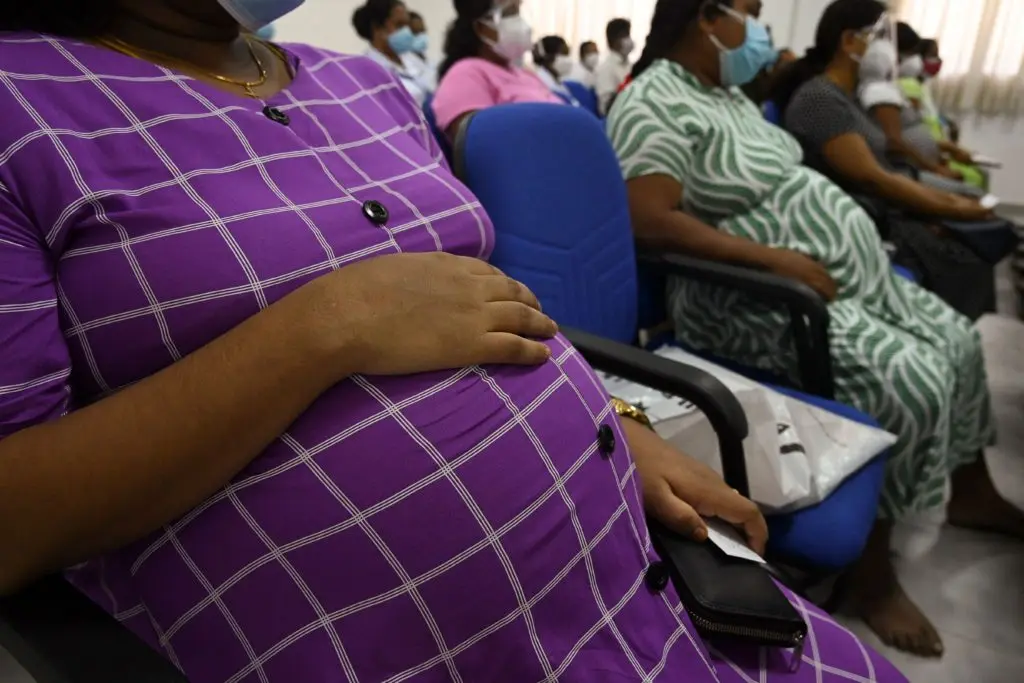
Amnesty urges Sri Lanka to ensure nutrition for pregnant women
Amnesty International has called on Sri Lanka's government to ensure adequate nutrition for all pregnant and breastfeeding women amid the economic crisis. Its briefing, 'Foregoing Meals to Make-Do', is based on interviews with 45 people in low-income areas of Colombo. Women reported skipping meals, inconsistent supply of Thriposha supplements, and inability to redeem government food vouchers in February 2023 due to a lack of state funds. Deputy Regional Director for South Asia Dinushika Dissanayake said poverty rates doubled in a year.
Source
Sri Lanka · read the original report ↗
Desk check · compared with the source
What the desk checked (5)
- Amnesty International interviewed 45 people, including healthcare workers, civil society members and pregnant and breastfeeding women in Colombo settlements. — Figure and methodology stated in the source briefing 'Foregoing Meals to Make-Do'.
- Poverty rates in Sri Lanka doubled within a year due to the economic crisis. — Attributed to Amnesty's Deputy Regional Director for South Asia Dinushika Dissanayake; no independent data cited in source.
- Government food vouchers for pregnant and breastfeeding women could not be redeemed in February 2023 due to a lack of state funds. — Attributed to women interviewed by Amnesty; not confirmed by authorities in source.
- State hospitals faced shortages, with non-essential surgeries delayed and patients asked to buy medicine privately. — Attributed to health workers and an unnamed doctor quoted in the briefing.
- Amnesty wrote to three ministries and received no response before publication. — Stated by Amnesty in the source; ministries' position not represented.
Analysts’ view opinion
Amnesty's briefing points to more than a humanitarian problem — it is a window into how an economic crisis erodes a state's internal stability and its long-term human capital. Compromised nutrition for pregnant and breastfeeding women, inconsistent Thriposha supply, and food vouchers that could not be redeemed in February 2023 for want of state funds are all markers of weakening state capacity, in a country that sits at a strategically significant point in the Indian Ocean. If the claim that poverty doubled in a year holds, it raises the risk of social discontent and deepens dependence on external financial support.
- An inability to deliver basic health and nutrition services is a recognised indicator of declining state capacity, often treated as an early warning sign for internal instability.
- The reported shortages of medicines and equipment in state hospitals expose the fragility of import-dependent sectors tied to foreign exchange availability.
- Amnesty warns of long-term consequences for mothers and children — a human-capital cost with strategic implications for a generation's productivity.
- Because Sri Lanka has ratified accords such as CEDAW and the ICESCR, the issue enters the frame of international obligations and can become a pressure point with donors and creditors.
- Amnesty's call for the international community to assist the government signals scope for competing offers of aid and influence among neighbours and multilateral institutions.
What to watch — Watch for any response from the Sri Lankan government, budget allocations for food vouchers and Thriposha supply, and whether donors or multilateral lenders announce targeted support for nutrition and medicine imports.
The briefing rests on interviews with 45 people in low-income areas of Colombo; the story does not establish a nationwide picture, does not show that this will translate into security or political instability, and carries no government response.
Deep dive
Research brief · 8 facts · 4 dates · exam-readyThe brief
Context
Sri Lanka's economic crisis — marked by falling incomes, loss of livelihoods, inflation and a devalued rupee — has eroded households' ability to buy food and strained the public health system. Amnesty International's research briefing 'Foregoing Meals to Make-Do' examines how this has hit access to nutrition for pregnant and breastfeeding women living below the poverty line in Colombo. Based on 45 interviews in informal settlements and tenement blocks, it documents skipped meals, erratic supply of the state 'Thriposha' supplement and food vouchers that could not be redeemed. Amnesty says Sri Lanka is bound by ratified treaties such as CEDAW and the ICESCR to guarantee adequate food and healthcare for such women.
Key facts
- Amnesty International interviewed 45 people for the briefing, including healthcare workers, civil society members, and pregnant and breastfeeding women in Colombo.
- All interviewees live in informal settlements and tenement blocks in Colombo and come from a variety of ethnic and religious backgrounds.
- Dinushika Dissanayake, Amnesty's Deputy Regional Director for South Asia, said poverty rates have doubled in the space of a year due to the crisis.
- In February 2023, women told Amnesty that government food vouchers for pregnant and breastfeeding women could not be redeemed due to a lack of state funds.
- Supply of the government 'Thriposha' food supplement was reported as inconsistent.
- Some women reduced daily meals from three to two; one breastfeeding woman said she ate a biscuit and tea instead of lunch.
- In almost all households interviewed, consumption of meat, vegetables, fruit and milk had drastically reduced; weekly meat or fish became once a month or only when money allowed.
- Health workers said they stopped, delayed or postponed non-essential surgeries; a doctor said drugs are rationed for emergency cases as future supplies are uncertain.
Timeline
- Preceding year (as stated by Amnesty)Poverty rates in Sri Lanka double amid the economic crisis, per Dinushika Dissanayake.
- February 2023Pregnant and breastfeeding women report to Amnesty that government food vouchers cannot be redeemed due to a lack of state funds.
- Before publicationAmnesty writes to the Ministries of Women, Health and Public Administration; no response received.
- Day of release (date not stated in the source)Amnesty International publishes the briefing 'Foregoing Meals to Make-Do' and urges the government to ensure adequate nutrition.
Who has a stake
- Pregnant and breastfeeding women below the poverty line in Colombo — Skipping meals and cutting nutrients, risking nutrient deficiencies that can affect foetal development and long-term maternal and child health.
- Government of Sri Lanka (Ministries of Women, Health, Public Administration) — Obligation to fund maternal nutrition programmes, vouchers and Thriposha supply, and to meet international human rights commitments.
- Amnesty International — Documenting rights violations and pressing the government and international community to act.
- Public health workers and state hospitals — Facing shortages of medicine and equipment; rationing drugs, reusing equipment, postponing non-essential procedures.
- Households of the urban poor — Unemployment among women and irregular husbands' incomes leave families unable to afford meat, fish, milk, fruit and vegetables.
- International community — Amnesty says it must support the government so that pregnant and breastfeeding women can access adequate food and nutrition.
Why it matters
Maternal undernutrition during pregnancy and breastfeeding has consequences that outlast an economic crisis, shaping the health of the next generation. The briefing shows how a fiscal collapse translates into concrete rights failures — vouchers that cannot be redeemed, supplements that do not arrive, hospitals without medicines — in a country long known for strong maternal health indicators. It also tests whether treaty obligations under CEDAW and the ICESCR are honoured when state funds run dry.
UPSC angle
Prelims pointers
- Amnesty International briefing title: 'Foregoing Meals to Make-Do', on maternal nutrition in Sri Lanka's economic crisis.
- Thriposha: government-funded food supplement in Sri Lanka; supply reported inconsistent during the crisis.
- Dinushika Dissanayake is Amnesty International's Deputy Regional Director for South Asia.
- Sri Lanka has ratified CEDAW and the ICESCR, which require ensuring adequate food and healthcare for pregnant and breastfeeding women.
- February 2023: government food vouchers for pregnant and breastfeeding women could not be redeemed for want of state funds.
- Amnesty's evidence base: 45 interviews in informal settlements and tenement blocks of Colombo.
Mains framing
Sri Lanka's economic crisis illustrates how macroeconomic distress becomes a human rights question: falling incomes, lost livelihoods, inflation and rupee devaluation have cut the purchasing power of the urban poor, while the fiscal squeeze has simultaneously weakened the state programmes meant to cushion them — inconsistent Thriposha supplies and food vouchers that, in February 2023, could not be redeemed for lack of state funds. Amnesty's 45 interviews in Colombo's informal settlements record women 'filling their stomach' rather than eating varied nutrients, cutting three meals to two, and near-elimination of meat, fish, milk, fruit and vegetables — deprivation that raises the risk of nutrient deficiencies affecting foetal development. The health system's parallel collapse compounds this: postponed procedures, rationed drugs, reused equipment and referrals to private pharmacies whose prices are out of reach. The way forward, as argued in the briefing, lies in the government urgently meeting its ratified obligations under CEDAW and the ICESCR by guaranteeing adequate, affordable, good-quality nutrition for pregnant and breastfeeding women, restoring transparency and responsiveness (Amnesty's letters to three ministries went unanswered), and international support to sustain such safety nets. Any protection of maternal nutrition during fiscal consolidation is essentially a decision to shield the most irreversible forms of harm.
Key terms
- Thriposha
- A government-funded food supplement in Sri Lanka distributed to groups including pregnant and breastfeeding women; its supply became inconsistent.
- CEDAW
- Convention on the Elimination of All Forms of Discrimination Against Women, ratified by Sri Lanka, requiring adequate healthcare and food for pregnant and breastfeeding women.
- ICESCR
- International Covenant on Economic, Social and Cultural Rights, ratified by Sri Lanka, covering rights to food and health.
- Food vouchers
- Government-programme entitlements usually offered to pregnant and breastfeeding women; reported unredeemable in February 2023 due to lack of state funds.
- Tenement blocks / informal settlements
- Low-income urban housing in Colombo where all the women interviewed for the Amnesty briefing live.
- Amnesty International
- Global human rights organisation that produced the research briefing and wrote to three Sri Lankan ministries.
Practice questions
- Examine how economic crises translate into violations of the rights to food and health, using the case of maternal nutrition in Sri Lanka.
- Discuss the adequacy of state nutrition safety nets such as supplement distribution and food vouchers when public finances collapse. What safeguards can protect such schemes?
- How binding are international human rights commitments like CEDAW and the ICESCR on a state facing severe fiscal stress? Critically comment.
Grounded only in the source report — figures and dates are the source's, not inferred.