
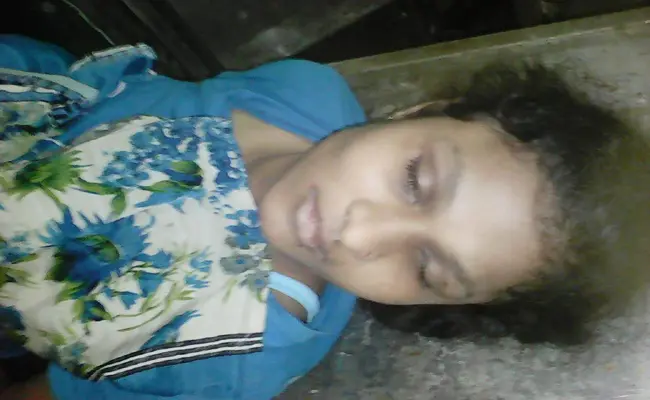
Woman dies by suicide after quarrel with sister in Peravali
A 20-year-old woman, Pikki Bharathi, died by suicide on Saturday in Peravali village of Peravali mandal, West Godavari district, after a quarrel with her sister over a cellphone. Her parents, Pikki Tatalu and Ruthi of Nakkapalli in Payakaraopeta mandal, Visakhapatnam district, had moved to Peravali three years ago for work and had gone to their eldest daughter's house in Hyderabad. Medical staff at a private hospital in Tanuku confirmed her death. SI Jagadeeswara Rao is investigating.
Source
West Godavari — నేరాలు · read the original report ↗
Desk check · some claims need care
What the desk checked (5)
- A 20-year-old woman, Pikki Bharathi, died by suicide in Peravali village on Saturday after a quarrel with her sister over a cellphone. — Stated in source as a reported incident; no direct quote or named official attribution for the cause.
- The family, originally from Nakkapalli in Visakhapatnam district, moved to Peravali three years ago for work and had recently quit jobs at Ravali Spinning Mill. — Background detail appears in source; no source cited for the family history.
- The parents had gone to their eldest daughter's house in Hyderabad, leaving the two daughters at home. — Appears in source without attribution.
- Hospital staff at a private hospital in Tanuku confirmed Bharathi was already dead on arrival. — Attributed in source to medical staff.
- Peravali SI Jagadeeswara Rao is investigating the case. — Named police official cited in source; standard attributed reporting.
Analysts’ view opinion
Because this is an unnatural death following a family quarrel, the legal process here does not begin with an accusation — it begins with an inquiry. The steps police are ordinarily required to follow in such cases — an inquest record, post-mortem, examination of the scene, statements from family members — are what will establish the cause of death and whether it was suicide. The story says the sub-inspector is investigating; it does not state that anyone has been charged.
- In unnatural-death cases the immediate police step is usually an inquiry into cause of death, not a case alleging an offence against a named person.
- The quarrel between the sisters is described in the story, but the existence of a quarrel alone does not establish criminal liability; an abetment allegation would require proof of deliberate instigation.
- Indian law has moved away from treating attempted suicide as something to be punished, and the legal emphasis in such situations tends to be on establishing cause and supporting the family rather than penalising.
- As the deceased was an adult (20), special juvenile provisions would not apply, but investigators still carry a duty to protect the dignity and privacy of the deceased and of the surviving sister.
- Sensitivity norms for reporting such deaths — avoiding method detail and avoiding blame framing of family members — are themselves part of the rights conversation around these cases.
What to watch — Watch whether, after the post-mortem and inquest, police close this as an unnatural death or move to any further proceedings.
The story does not establish the officially determined cause of death, whether a post-mortem was conducted, or whether any case has been registered against anyone — so it settles nothing about the final legal position.
Deep dive
Research brief · 8 facts · 5 dates · exam-readyThe brief
Context
A 20-year-old woman, Pikki Bharathi, died by suicide on Saturday in Peravali village of Peravali mandal (West Godavari district) after a quarrel with her younger sister Rani over a cellphone while their parents were away. The family — Pikki Tatalu and Ruthi, natives of Nakkapalli in Payakaraopeta mandal, Visakhapatnam district, with four children — had migrated to Peravali three years earlier for work and were employed at the local Ravali Spinning mill, jobs they had recently quit. They were preparing to move to Hyderabad for work and had gone ahead to their eldest daughter's house there, leaving the two daughters at home in an apartment near the spinning mill. The case is being investigated by Peravali Sub-Inspector Jagadeeswara Rao.
Key facts
- Pikki Bharathi, aged 20, died by suicide by hanging from a ceiling fan with her dupatta (chunni) in a room of her home in Peravali village, Peravali mandal, on Saturday.
- The immediate trigger was a quarrel with her sister Rani over a cellphone, which escalated to the point of the two hitting each other.
- The parents, Pikki Tatalu and Ruthi, are from Nakkapalli village, Payakaraopeta mandal, Visakhapatnam district, and have four children.
- The couple moved to Peravali three years ago for work and were employed at the local Ravali Spinning industry, but had recently quit those jobs.
- The parents had gone to their eldest daughter's house in Hyderabad, leaving Bharathi and Rani at home and asking them to follow later.
- Rani, thinking her sister had gone to sleep after the quarrel, knocked on the room door after cooking; getting no response, she screamed in fear.
- Spinning mill staff and local residents gathered; Bharathi was taken by auto to a private hospital in Tanuku, where medical staff confirmed she was already dead.
- Peravali Sub-Inspector (SI) Jagadeeswara Rao is investigating the case.
Timeline
- Three years before the incidentPikki Tatalu and Ruthi migrate from Nakkapalli (Visakhapatnam district) to Peravali for work and join the local Ravali Spinning industry.
- Recently (before the incident)The couple quit their spinning mill jobs and begin preparations to move to Hyderabad for work.
- Before SaturdayThe parents travel to their eldest daughter's home in Hyderabad, leaving daughters Bharathi (20) and Rani at the Peravali apartment and asking them to come later.
- SaturdayA quarrel over a cellphone between Bharathi and Rani escalates into a physical fight; Bharathi goes into a room and hangs herself from the fan with her chunni.
- Saturday, laterRani finds no response from the room, raises an alarm; locals and mill staff help take Bharathi by auto to a private hospital in Tanuku, where she is declared dead.
Who has a stake
- Pikki Bharathi (20), the deceased — Lost her life in a moment of impulse following a domestic quarrel over a cellphone.
- Rani, the sister — Party to the quarrel and the first to discover the death; faces trauma and the burden of the incident.
- Pikki Tatalu and Ruthi, the parents — Migrant workers who left their daughters alone while shifting to Hyderabad for work; have lost a daughter.
- Peravali police / SI Jagadeeswara Rao — Responsible for investigating the circumstances of the unnatural death.
- Ravali Spinning industry staff and Peravali residents — First responders who gathered and helped shift the woman to hospital in Tanuku.
- Private hospital, Tanuku — Medical staff who examined and confirmed that the woman was already dead on arrival.
Why it matters
The death shows how an ordinary domestic argument, in this case over a cellphone, can turn fatal in an impulsive moment, especially among young people left without adult supervision. It also reflects the vulnerability of families that migrate repeatedly in search of work — from Visakhapatnam district to Peravali and then towards Hyderabad — leaving children in unfamiliar surroundings. Such cases underline the need for accessible mental health support and suicide prevention awareness at the village level.
UPSC angle
Prelims pointers
- Incident location: Peravali village, Peravali mandal, West Godavari district, Andhra Pradesh.
- Native place of the family: Nakkapalli village, Payakaraopeta mandal, Visakhapatnam district.
- The victim was taken to a private hospital in Tanuku, where death was confirmed.
- The investigating officer is Peravali Sub-Inspector (SI) Jagadeeswara Rao.
- The parents had worked at the Ravali Spinning industry in Peravali after migrating three years ago.
Mains framing
The Peravali case, in which a 20-year-old woman died by suicide after a quarrel with her sister over a cellphone, illustrates the intersection of youth mental health, impulsive self-harm and the stresses of internal labour migration. The immediate cause was a trivial domestic dispute that escalated into a physical fight in the absence of the parents, who had migrated three years earlier from Visakhapatnam district for work at a spinning mill and had gone ahead to Hyderabad in search of fresh employment, leaving two daughters alone. The implications are twofold: first, impulsive suicides among young adults often follow minor triggers, pointing to gaps in emotional coping support, counselling access and awareness of helplines in rural areas; second, repeated migration for livelihood can weaken family supervision and social support networks for young people. A way forward, grounded in the facts of this case, would involve community-level suicide prevention awareness, counselling access for young people in industrial and migrant settlements, sensitisation of local residents and workplace staff who are often the first responders, and prompt, sensitive police investigation as being conducted by the Peravali SI.
Key terms
- Mandal
- An administrative sub-division below the district level in Andhra Pradesh; here Peravali mandal and Payakaraopeta mandal.
- Sub-Inspector (SI)
- A police officer typically in charge of a police station or investigation at the local level; SI Jagadeeswara Rao is investigating this case.
- Ravali Spinning industry
- The local spinning mill in Peravali where the deceased woman's parents worked after migrating, before recently quitting.
- Distress migration for work (upadhi)
- Movement of families from one place to another in search of livelihood; this family moved from Nakkapalli to Peravali and then towards Hyderabad.
- Impulsive suicide
- Self-harm committed in a momentary fit of distress or anger, as described in this incident following a quarrel.
Practice questions
- Trivial domestic disputes can trigger impulsive suicides among young adults. Discuss the role of community-level mental health support and awareness in preventing such deaths, with reference to rural Andhra Pradesh.
- How does repeated migration of families in search of livelihood affect the safety and emotional well-being of children and young adults left behind? Examine with examples.
- Examine the role of local police and first responders, including neighbours and workplace staff, in handling cases of unnatural death in villages.
Grounded only in the source report — figures and dates are the source's, not inferred.