
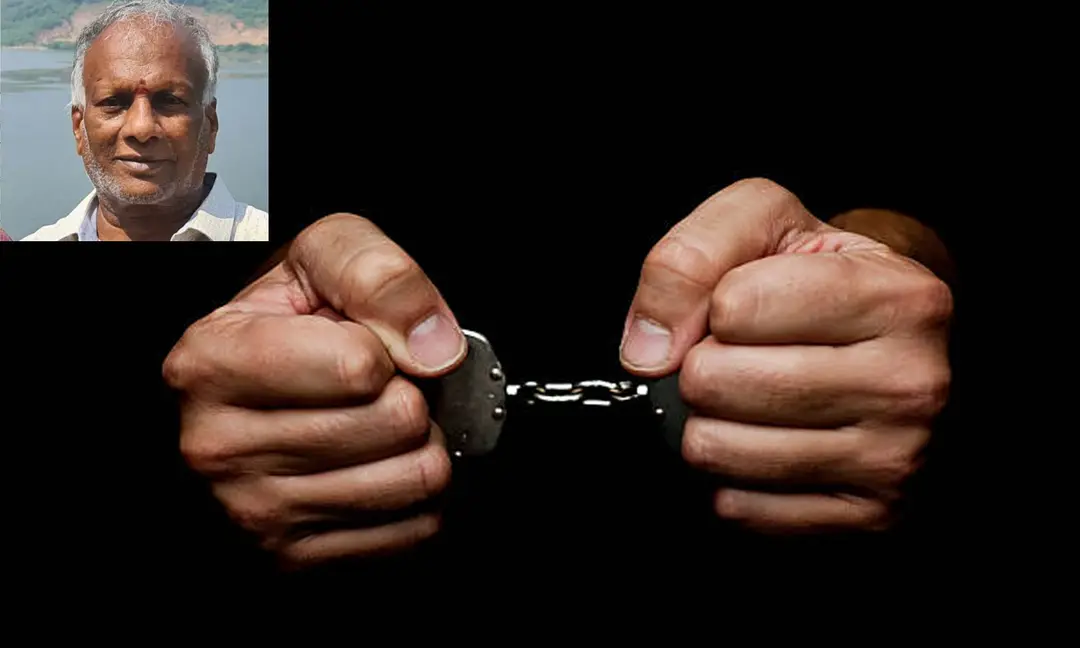
Four arrested in Mogalthuru moneylender murder case
West Godavari police have solved the murder of moneylender Grandhi Bobby in Mogalthuru and arrested four people. Narasapuram DSP M Sudhakar Rao said on Wednesday that 8 kg of silver, Rs 20,000 in cash and a car were seized from the accused, and 450 grams of gold pledged with financing firms would be recovered. Police said the gang killed Bobby on June 15 and looted his house; the decomposed body found on June 17 was assumed to be a natural death. A drunken brawl at Perupalem Beach exposed the crime.
Source
West Godavari — news · read the original report ↗
Desk check · compared with the source
What the desk checked (5)
- Four people were arrested for the murder of moneylender Grandhi Bobby in Mogalthuru. — Attributed to West Godavari police and DSP M Sudhakar Rao's Wednesday briefing.
- Police seized 8 kg of silver, Rs 20,000 cash and a car; 450 grams of pledged gold to be recovered. — Figures stated by the DSP in the source; not independently verifiable here.
- The gang murdered Bobby on June 15 and the body was found on June 17 after neighbours reported a foul smell. — Dates appear in source, attributed to police; internally consistent.
- The crime came to light after a drunken confession during a brawl at Perupalem Beach. — Reported in source as per police account; no direct quote or document cited.
- Accused named as Mamidisetti Kalyan Kumar, Meka Lakshmi Varaprasad, Chintalapudi Santosh and a man known as Donga Sai. — Names appear in source as police-identified accused; treat as allegations pending trial.
Analysts’ view opinion
This looks like an investigative success, but how strong it is in court is a separate question. Because the body was found decomposed and the death was initially treated as natural, the primary scene and medical evidence may well be compromised — which puts the chain of custody over the seized silver, cash, car and pledged gold at the centre of the case. The drunken disclosure may have opened the door for investigators, but such a statement is unlikely to carry evidentiary weight on its own at trial.
- Confessions made to police generally carry no probative value in themselves; only the part that leads to the discovery of material objects tends to have limited use.
- Since the death was first read as natural, medical and scene evidence pointing to homicide could be weakened — likely to be a central line of defence argument.
- In combined murder-and-robbery cases, recovering stolen property and tying it to the accused is often the prosecution's backbone, making the pledged gold and the financing firms' records important.
- The accused retain basic rights too — notice of arrest, access to counsel, production before a magistrate within 24 hours, and the presumption of innocence, since a police briefing is not a finding of guilt.
- The son having settled customers' accounts from his own money, and the missing account books, could spill into civil and financial disputes alongside the criminal case.
What to watch — Watch the remand report and the sections invoked in the chargesheet, whether it is filed within the statutory 90-day window, and how the pledged gold is recovered from the financing firms with court permission.
This story reflects only the investigation stage as stated by police; the sequence of the crime and the role of each accused remains unproven in court, and post-mortem findings or chargesheet details are not established here.
Deep dive
Research brief · 8 facts · 6 dates · exam-readyThe brief
Context
Grandhi Bobby, a widower who lived alone in a rented house in Mogalthuru village of West Godavari district, ran a small money-lending business against pledged gold and silver items. When his decomposed body was found on June 17, the death was presumed natural because of the state of the body. A drunken brawl at Perupalem Beach, where one of the men blurted out details of the crime, revealed it was a murder; his son then approached the Narasapuram police, and four persons have now been arrested.
Key facts
- West Godavari police have solved the murder of Mogalthuru moneylender Grandhi Bobby and arrested four people.
- Narasapuram DSP M Sudhakar Rao briefed reporters on Wednesday that 8 kg of silver, Rs 20,000 in cash and a car were seized from the accused.
- 450 grams of gold pledged by the accused with two corporate financing firms is to be recovered soon, the DSP said.
- Police say the gang murdered Bobby on June 15 and looted cash and jewellery from his house.
- On June 17, neighbours noticed a foul smell and informed Bobby's son Pavan Kumar, who lives in Hyderabad; the body had decomposed and natural death was assumed.
- The alleged plan was hatched by Mamidisetti Kalyan Kumar of the same village, a regular visitor who pledged small items with Bobby.
- The three others named are Meka Lakshmi Varaprasad of Bhimavaram, Chintalapudi Santosh of Ananthapalli in Nallajerla mandal, and a Mogalthuru man known as Donga Sai.
- After the death, Pavan settled accounts with pledge customers from his own money, but gold, silver and the account books remained missing.
Timeline
- June 15The gang allegedly murdered Grandhi Bobby and looted cash and jewellery from his house in Mogalthuru.
- June 17Neighbours noticed a foul smell, informed son Pavan Kumar in Hyderabad; the decomposed body was assumed to be a natural death.
- After the death (date not stated in the source)Pavan settled accounts with customers who had pledged items, paying from his own money; gold, silver and account books were missing.
- Later (date not stated in the source)During a drunken brawl at Perupalem Beach, one individual blurted out crime details, revealing the death was a murder.
- After the revelationPavan approached Narasapuram police; a case was registered, suspects were questioned and arrests followed.
- WednesdayNarasapuram DSP M Sudhakar Rao briefed reporters on the seizures and the arrest of four accused.
Who has a stake
- Grandhi Bobby (deceased) — Moneylender who lived alone; allegedly murdered on June 15 and his house looted.
- Pavan Kumar, Bobby's son — Hyderabad-based son who repaid pledge customers from his own money and filed the complaint that reopened the case as murder.
- Narasapuram police and DSP M Sudhakar Rao — Investigating agency that registered the case, made four arrests and must recover the pledged gold.
- Four accused (Kalyan Kumar, Lakshmi Varaprasad, Santosh, Donga Sai) — Face prosecution in the murder and robbery case; property seized from them.
- Two corporate financing firms — Hold 450 grams of gold pledged by the accused, which police say will be recovered.
- Customers who pledged gold and silver with Bobby — Their pledged items and account books went missing; accounts were settled by Bobby's son.
Why it matters
The case shows how a violent crime can be misread as a natural death when a body is found decomposed and no complaint is filed, and how informal, unregulated money-lending against gold and silver leaves lenders and borrowers exposed. It also highlights the role of chance disclosure and family complaints in triggering an investigation, and the use of corporate financing firms to convert looted gold into cash.
UPSC angle
Prelims pointers
- Mogalthuru and Narasapuram are in West Godavari district, Andhra Pradesh; Bhimavaram and Nallajerla mandal are also named in the case.
- Narasapuram DSP M Sudhakar Rao announced the arrests at a press briefing on Wednesday.
- Seizures: 8 kg silver, Rs 20,000 cash and a car; 450 grams of gold pledged with two financing firms yet to be recovered.
- Alleged date of murder: June 15; body found after neighbours reported a foul smell on June 17.
- Four accused named: Mamidisetti Kalyan Kumar, Meka Lakshmi Varaprasad, Chintalapudi Santosh and a man known as Donga Sai.
- The victim, Grandhi Bobby, was a widower who lent money against gold and silver items from a rented house.
Mains framing
The Mogalthuru case illustrates two vulnerabilities in rural and semi-urban India. First, elderly persons living alone who run informal money-lending businesses holding gold and silver become soft targets; here a regular pledge customer allegedly noticed the victim lived alone and recruited three accomplices to rob and kill him on June 15. Second, investigative and procedural gaps: a decomposed body discovered on June 17 was assumed to be a natural death, and the crime surfaced only because one of the men blurted out details during a drunken brawl at Perupalem Beach, after which the son complained and four arrests followed. The ease with which the accused pledged 450 grams of looted gold with two corporate financing firms points to weak verification at the point of gold-backed lending. The way forward suggested by the facts is careful scrutiny of unexplained deaths of persons living alone, tighter checks on pledged gold in financing institutions so stolen jewellery cannot be monetised, and prompt recovery and restitution of pledged items so that borrowers and the victim's family, who repaid customers from his own money, are not left to absorb the loss.
Key terms
- Moneylender (pledge-based lending)
- A private lender who advances cash against gold or silver items kept as security, as Grandhi Bobby did in Mogalthuru.
- DSP (Deputy Superintendent of Police)
- District-level police officer rank; M Sudhakar Rao holds this post for Narasapuram and briefed the media on the case.
- Corporate financing firms
- Companies that lend against gold; the accused allegedly pledged 450 grams of looted gold with two such firms.
- Mandal
- An administrative sub-district unit in Andhra Pradesh; Ananthapalli falls in Nallajerla mandal.
- Presumed natural death
- A death treated as non-suspicious without a criminal case; the decomposed body found on June 17 was initially so assumed.
Practice questions
- How do informal money-lending practices in rural India create security and regulatory risks for both lenders and borrowers? Discuss with reference to the Mogalthuru case.
- Examine the procedural safeguards needed when unexplained or decomposed deaths of persons living alone are reported, so that homicides are not misclassified as natural deaths.
- What due-diligence obligations should gold-loan and financing companies have while accepting pledged jewellery, and how would this help curb property crime?
Grounded only in the source report — figures and dates are the source's, not inferred.