
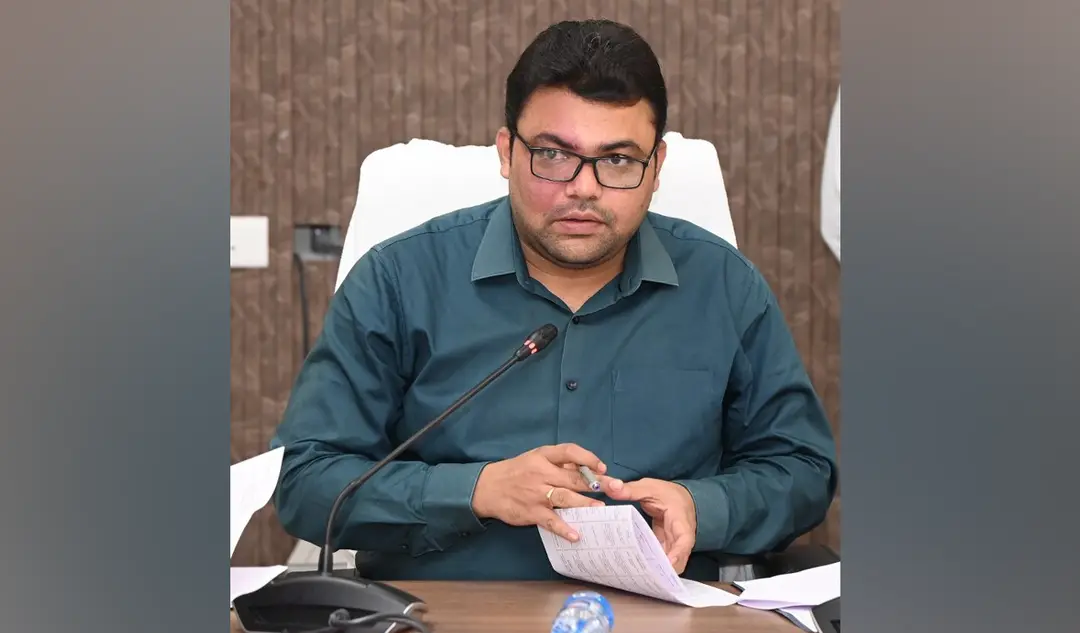
Kummera infant death: Collector submits report to BC Commission
Nagarkurnool District Collector B Santosh submitted a report on February 28 to the Telangana Commission for Backward Classes on the death of a two-month-old baby at Kummera village. It said A1 Srinivas Reddy, A2 Madhusudan Reddy and A3 Srikanth Reddy were arrested on February 23 and remanded, while six accused are absconding. The baby died on February 21 and a suspicious death case was registered on mother Mounika's suspicion. The father Ganesh received Rs 1 lakh, an outsourcing job and a two-bedroom house allotment.
Source
Nagarkurnool — politics · read the original report ↗
Desk check · some claims need care
What the desk checked (5)
- Three accused — Srinivas Reddy, Madhusudan Reddy and Srikanth Reddy — were arrested on February 23 and remanded to judicial custody; six others absconding. — Attributed to Collector B Santosh's report submitted on February 28; police confirmation not independently cited in source.
- A two-month-old baby was declared dead at Nagarkurnool Hospital around 7 am on February 21 and a suspicious death case was registered based on the mother's suspicion. — Figure and sequence appear in the Collector's report as reproduced in the source; cause of death not stated.
- Rs 1 lakh was given to the baby's father Ganesh on February 25 from the District Administrative Fund, along with an outsourcing job and a two-bedroom house allotment. — Attributed to the Collector's report; house allotment described as in progress.
- Nearly 20,000 devotees attended the Kummera Mallanna Jatara from February 17 to 20. — Figure appears in source as an estimate in the report; no independent count given.
- Mounika has not submitted caste certificates; the Mahammadabad Tahsildar reported her mother belongs to the Pichchaguntla (Vamsaraj) community listed under BC-A, Serial No. 18. — Attributed to the Tahsildar via the Collector's report; caste of the mother not yet formally confirmed.
Analysts’ view opinion
At this stage the legal character of the case is still undefined — police have registered it as a "suspicious death", which means the cause of death remains a question for the investigation, post-mortem and forensic findings to settle. The Collector's report is an administrative document; it neither establishes guilt nor carries penal force, and the BC Commission itself has recommendatory rather than punitive powers. The compensation, job and house extended to the family are welfare measures distinct from criminal liability and should not be read as any admission of wrongdoing.
- Three accused were arrested on February 23 and remanded to judicial custody; remand is pre-trial detention, not a finding of guilt, and they retain the right to seek bail.
- Six accused are described as absconding, where the usual procedural path runs through warrants, proclaimed-offender proceedings or anticipatory bail applications.
- The report notes cross-complaints filed by both sides on February 18 — in such cross-cases courts typically examine the sequence of events and motive independently.
- The report states Mounika has not yet produced caste certificates, while the Tahsildar found her mother belongs to the Pichchaguntla (Vamsaraj) community listed under BC-A — caste determination is central to which statutory protections or special provisions apply.
- The report itself says the baby's earlier treatment at Niloufer Hospital from December 21 to January 21 has no connection to this incident, though medical history can still become contested ground in establishing cause of death.
What to watch — Watch whether the sections invoked are altered once post-mortem and forensic reports come in, what steps follow against the six absconding accused, and how courts rule on bail for those already arrested.
The story does not establish what caused the infant's death, what role the accused played, or that this has been determined to be a caste-motivated attack — it reports the contents of an administrative report only.
Deep dive
Research brief · 8 facts · 10 dates · exam-readyThe brief
Context
A two-month-old baby died in Kummera village of Telangana's Nagarkurnool district on February 21, during the period of the Kummera Mallanna Jatara, amid a dispute between two groups that had already led to cross-complaints at Nagarkurnool Police Station. The Telangana Commission for Backward Classes, whose chairman G Niranjan visited the village on February 24, sought a report from the District Collector. Collector B Santosh submitted a detailed report on February 28 covering the arrests, the sequence of events from February 18 to 21, the family's caste status and the compensation extended.
Key facts
- Nagarkurnool District Collector B Santosh submitted his report on the Kummera village incident to the Telangana Commission for Backward Classes on February 28.
- Three accused — A1 Srinivas Reddy, A2 Madhusudan Reddy and A3 Srikanth Reddy — were arrested on February 23 and remanded to judicial custody; six other accused are absconding.
- The two-month-old baby was brought to Nagarkurnool Hospital by mother Mounika around 6 am on February 21, said to be unresponsive; the duty doctor declared the baby dead around 7 am.
- The case was registered as a suspicious death case at Nagarkurnool Police Station based on the suspicion expressed by the mother, Mounika.
- On February 25 the district administration gave Rs 1 lakh to the baby's father Ganesh from the District Administrative Fund, plus an outsourcing job at Nagarkurnool Government Medical College and a two-bedroom house allotment.
- Nearly 20,000 devotees took part in the Kummera Mallanna Jatara from February 17 to 20.
- On February 18, U Srinivas Reddy complained against Chandrakala, Bauramma and Ganesh at 8.30 pm; Ganesh filed a counter-complaint against Srinivas Reddy and six others at 9.30 pm the same day.
- Mounika has not submitted caste certificates; the Mahammadabad Tahsildar reported her mother Balakrishnamma belongs to the Pichchaguntla (Vamsaraj) community, listed under BC-A, Serial No. 18.
Timeline
- December 21, 2025The baby is born; admitted to Nagarkurnool Hospital and later referred to Niloufer Hospital, Hyderabad.
- December 21, 2025 to January 21, 2026The baby receives treatment at Niloufer Hospital; the report says this has no connection with the current incident.
- February 17 to 20Kummera Mallanna Jatara held, with nearly 20,000 devotees participating.
- February 18, 8.30 pmU Srinivas Reddy lodges a complaint at Nagarkurnool Police Station against Chandrakala, Bauramma and Ganesh.
- February 18, 9.30 pmGanesh lodges a counter-complaint against Srinivas Reddy and six others.
- February 21, 6 am to 7 amMounika brings the unresponsive two-month-old to Nagarkurnool Hospital; the duty doctor declares the baby dead; suspicious death case registered.
- February 23Police arrest A1 Srinivas Reddy, A2 Madhusudan Reddy and A3 Srikanth Reddy and remand them to judicial custody.
- February 24BC Commission Chairman G Niranjan and Members visit Kummera village and gather details.
- February 25District administration extends Rs 1 lakh to the baby's father Ganesh from the District Administrative Fund.
- February 28Collector B Santosh submits the detailed report to the Telangana Commission for Backward Classes.
Who has a stake
- Mounika and Ganesh (parents of the deceased infant) — Loss of their two-month-old child; recipients of Rs 1 lakh, an outsourcing job and a two-bedroom house; Mounika's suspicion is the basis of the police case.
- Nagarkurnool District Collector B Santosh — Responsible for the fact-finding report to the BC Commission and for the compensation and welfare measures extended to the family.
- Telangana Commission for Backward Classes (Chairman G Niranjan) — Sought and received the report; examining whether the incident involved a Backward Class family and whether the response was adequate.
- The nine accused (three arrested, six absconding) — Face criminal proceedings; A1 Srinivas Reddy, A2 Madhusudan Reddy and A3 Srikanth Reddy are in judicial custody.
- Nagarkurnool Police — Registered cross-complaints from February 18 and the suspicious death case; must trace the six absconding accused.
- Mahammadabad Tahsildar — Directed to ascertain Mounika's caste status; reported her mother's Pichchaguntla (Vamsaraj) BC-A classification.
Why it matters
The death of an infant amid a village dispute during a jatara has drawn in not just the police but a statutory Backward Classes body, showing how caste status can shape official scrutiny and relief in criminal cases. The Collector's report also illustrates the administrative response template — compensation, employment and housing — deployed alongside a criminal investigation. With six accused still absconding and the mother's caste yet to be certified, both accountability and the classification questions remain open.
UPSC angle
Prelims pointers
- Telangana Commission for Backward Classes is chaired by G Niranjan; it sought the Kummera report from the District Collector.
- Nagarkurnool District Collector: B Santosh; report submitted February 28.
- Pichchaguntla (Vamsaraj) community is listed under BC-A at Serial No. 18 in Telangana's list.
- Relief to the baby's father Ganesh: Rs 1 lakh from the District Administrative Fund, an outsourcing job at Nagarkurnool Government Medical College and a two-bedroom house.
- Kummera Mallanna Jatara ran February 17-20 with nearly 20,000 devotees.
- Niloufer Hospital, Hyderabad treated the infant from December 21, 2025 to January 21, 2026 — unrelated to the current incident per the report.
Mains framing
The Kummera case shows how a local dispute during a religious jatara escalated into cross-complaints and, within days, the death of a two-month-old infant registered as a suspicious death on the mother's suspicion. Two institutional responses ran in parallel: a criminal investigation, in which three accused were arrested and remanded on February 23 while six remain absconding, and a socio-administrative inquiry by the Telangana Commission for Backward Classes, which visited the village on February 24 and obtained a Collector's report by February 28. The case highlights three governance issues — the need for prompt police action on early warning signs, since cross-complaints were already on record from February 18; the reliance on ex gratia relief (Rs 1 lakh, an outsourcing job, a two-bedroom house) as the administration's immediate remedy; and the procedural difficulty of establishing caste status, with Mounika yet to furnish certificates and the Tahsildar's finding resting on her mother's Pichchaguntla (Vamsaraj) BC-A classification. The way forward, on the source's own terms, lies in tracing the absconding accused, completing a transparent inquiry into the cause of death, and settling the caste verification through the revenue machinery so that entitlements and commission oversight rest on documented facts rather than presumption.
Key terms
- Telangana Commission for Backward Classes
- State body, chaired by G Niranjan, that sought a report from the Nagarkurnool Collector on the Kummera incident.
- Suspicious death case
- A case registered when the cause of death is unexplained; here registered at Nagarkurnool Police Station on the mother Mounika's suspicion.
- BC-A
- A sub-category of Telangana's Backward Classes list; Pichchaguntla (Vamsaraj) is at Serial No. 18 in it.
- District Administrative Fund
- Fund from which the Nagarkurnool administration paid Rs 1 lakh to the baby's father Ganesh on February 25.
- Remand to judicial custody
- Court-ordered detention of arrested persons; the three arrested accused were so remanded on February 23.
- Kummera Mallanna Jatara
- Village religious fair held February 17-20 drawing nearly 20,000 devotees, during which the disputes occurred.
Practice questions
- Examine the role of statutory bodies such as State Commissions for Backward Classes in monitoring criminal incidents involving marginalised families. What are the limits of their powers?
- Discuss how ex gratia compensation, employment and housing grants function as an administrative response to crimes against vulnerable groups. Does such relief substitute for, or complement, criminal justice?
- In cases where caste status determines statutory oversight and entitlements, what procedural safeguards should govern caste verification by revenue authorities?
Grounded only in the source report — figures and dates are the source's, not inferred.