
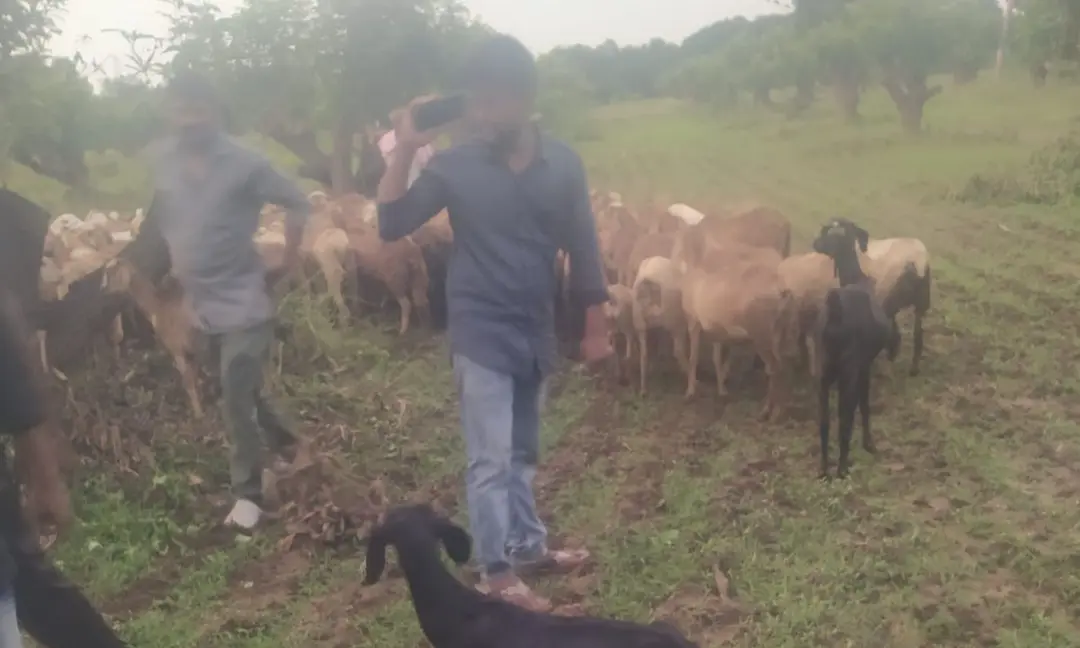
21 sheep die after eating poisoned bran in Palakurthy
Twenty-one sheep died after eating bran mixed with poison pellets at Bommera village in Palakurthy mandal of Jangaon district. The flock, belonging to farmers Sudigela Raju and Junnu Venkanna, had gone to a grazing area near the village. Veterinary officers conducted post-mortems and said lab tests found traces of poison-laced bran in the animals' stomachs. Officials found unidentified persons had scattered it in the open grazing land to hunt birds. The farmers sought government assistance for their losses, and an investigation has begun.
Source
Jangaon — వార్తలు · read the original report ↗
Desk check · compared with the source
What the desk checked (5)
- 21 sheep died after eating bran mixed with poison pellets at Bommera village, Palakurthy mandal. — Figure and location appear in source; cause attributed to veterinary doctors' findings.
- Post-mortem and lab tests found traces of poison-laced bran in the sheep's stomachs. — Attributed in source to veterinary officers who conducted the post-mortem; no report document cited.
- Unidentified persons scattered poisoned bran in open grazing land to hunt birds. — Presented as an official finding but the culprits remain unidentified; unverified attribution.
- The sheep belonged to farmers Sudigela Raju and Junnu Venkanna. — Names appear in source; no direct quotes attributed to them.
- Officials have launched an investigation and villagers demanded punishment for those responsible. — Stated in source without naming any specific department or officer.
Analysts’ view opinion
This reads as a crime story, but its real weight is economic: two households have seen their main productive asset wiped out in a single day. Sheep rearing is a cash-flow lifeline for small and marginal families, so losing 21 animals means losing not just sale value but years of future lambs, milk and wool. The cost here falls entirely on the herders while nobody gains — a textbook negative externality.
- Livestock is capital, not just income, so a flock loss damages a multi-year earnings stream rather than one season's revenue.
- For herders dependent on open grazing land, hazards like poisoned bait are a hidden operating cost, and buying substitute feed would push costs higher still.
- The burden is unevenly distributed: those who spread the poison bore no cost, the farmers bear all of it, and any state compensation would shift it onto public funds.
- Where insurance or compensation cover is thin, shocks like this typically push affected families toward borrowing; the story does not say whether any cover existed here.
- Twenty-one animals will not move district-level mutton or milk prices — this is severe at the household level but limited in macro terms.
What to watch — Watch whether the government extends compensation and at what scale, and whether the investigation plus any curbs on poisoned bait in open grazing areas reduce the risk of repeat losses.
The story does not establish the monetary value of the loss, whether the farmers held any insurance, whether compensation will be granted, or who was responsible — that remains for the investigation.
Deep dive
Research brief · 8 facts · 4 dates · exam-readyThe brief
Context
In Bommera village of Palakurthy mandal, Jangaon district (Telangana), 21 sheep died on the spot after grazing on bran laced with poison pellets that had been scattered in an open grazing area. The bran had reportedly been spread by unidentified persons to hunt birds, and the grazing flock ate it mistaking it for feed. Veterinary officers conducted post-mortems and lab tests confirmed traces of poison-pellet-mixed bran in the animals' stomachs. The affected shepherd-farmers, Sudigela Raju and Junnu Venkanna, have sought government relief, and officials have launched an investigation.
Key facts
- 21 sheep died on the spot at Bommera village, Palakurthy mandal, Jangaon district, after eating bran mixed with poison pellets.
- The flock belonged to two village farmers, Sudigela Raju and Junnu Venkanna, and had gone as usual to a grazing (fodder) area near the village.
- Veterinary officers reached the spot after the farmers informed them and conducted post-mortems on the dead sheep.
- Lab tests confirmed traces of bran containing poison pellets in the stomachs of the sheep.
- Officials identified that unidentified persons had scattered poison-pellet-laced bran in open grazing land to hunt birds.
- The affected farmers said the deaths caused them irreparable financial loss and appealed to the government to help them.
- Officials have begun an intensive investigation into who laid the poison pellets and who is behind them.
- Villagers are demanding that those responsible be identified and punished severely.
Timeline
- Before the incident (undated)Unidentified persons scatter bran mixed with poison pellets in open grazing land near Bommera village to hunt birds.
- Day of incidentThe sheep flock of Sudigela Raju and Junnu Venkanna goes to the grazing area as usual; 21 sheep collapse and die one after another.
- Soon afterFarmers alert authorities; veterinary officers reach the spot and perform post-mortems.
- After lab testsDoctors confirm poison-pellet-laced bran in the sheep's stomachs; officials start an investigation and farmers seek government aid.
Who has a stake
- Farmers Sudigela Raju and Junnu Venkanna — Lost 21 sheep, their main livelihood asset; seeking government compensation for the financial loss.
- Bommera villagers — Shaken by the mass death of animals; demanding identification and strict punishment of the culprits.
- Veterinary officers / animal husbandry department — Conducted post-mortems and lab tests that established poisoning as the cause of death.
- Bird hunters (unidentified persons) — Suspected of scattering poison-laced bran in open grazing land; under investigation.
- District officials / investigating authorities — Must trace those who laid the poison and act on villagers' demand for punishment.
- State government — Faces the farmers' appeal for assistance to cover the loss of their flock.
Why it matters
Sheep rearing is a livelihood asset built up over years, and the sudden loss of 21 animals can wipe out a small farmer's working capital in a single day. The incident also shows how illegal bird hunting using poison bait in open, shared grazing lands endangers livestock, wildlife and, potentially, the food chain. It raises questions about grazing land safety, enforcement against poisoning-based poaching, and quick relief mechanisms for shepherd families.
UPSC angle
Prelims pointers
- Incident location: Bommera village, Palakurthy mandal, Jangaon district (Telangana).
- 21 sheep died after consuming bran (tavudu) mixed with poison pellets.
- Cause established through post-mortem and laboratory examination by veterinary officers.
- Poison bait was reportedly laid in open grazing land to hunt birds.
- Owners of the flock: farmers Sudigela Raju and Junnu Venkanna, who have sought government assistance.
Mains framing
The Bommera episode illustrates how a small-holder livestock economy remains exposed to risks that lie outside the farmer's control. The proximate cause was poison-pellet-laced bran scattered in an open grazing area to hunt birds; the sheep, grazing as they do every day, ate it as feed and 21 died on the spot, a conclusion confirmed by post-mortem and lab tests showing poisoned bran in their stomachs. The implications run in several directions: an immediate livelihood shock to two farming families who say the loss is irreparable and who are seeking state assistance; an enforcement failure around the use of poison for hunting birds on common grazing land; and a broader risk to animals, birds and the surrounding ecology from indiscriminate baiting. The way forward suggested by the source is limited but clear: an intensive official investigation into who laid the pellets and who backed them, strict punishment as villagers are demanding, and government support for the affected farmers. Beyond that, the case argues for vigilance over common grazing lands and swift veterinary response, since only prompt post-mortem and laboratory testing established the cause of death here.
Key terms
- Poison pellets (vishapu gulikalu)
- Toxic pellets mixed into bait; here mixed with bran and scattered to kill birds, which instead killed grazing sheep.
- Bran (tavudu)
- A milling by-product commonly used as cattle and sheep feed; used as the carrier for the poison in this case.
- Post-mortem
- Examination of a carcass to establish cause of death; done here on the dead sheep by veterinary officers.
- Open grazing land (pasugrasa pradesham)
- Commonly used village land where flocks graze daily; the site where the poisoned bran was scattered.
- Palakurthy mandal
- Administrative block in Jangaon district where Bommera village, the site of the incident, is located.
Practice questions
- Discuss how livestock rearing risks, such as poisoning incidents on common grazing lands, affect the livelihood security of small farmers and shepherds, with reference to the Bommera case.
- What institutional measures are needed to prevent the use of poison bait for hunting birds in open grazing areas, and how should compensation be delivered to affected livestock owners?
- Examine the role of veterinary services and laboratory testing in establishing accountability in cases of mass animal deaths.
Grounded only in the source report — figures and dates are the source's, not inferred.