
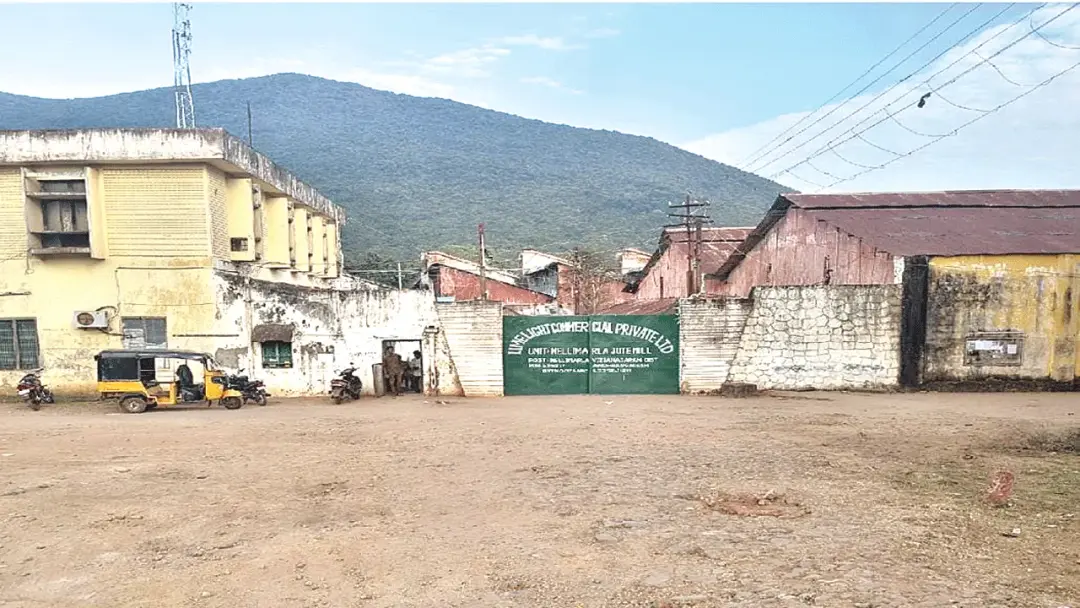
Silkworm rearing centre in Rajam lies unused for nine years
The silkworm rearing centre at Vastrapuri Colony in Rajam, Vizianagaram district, opened on October 10, 1993 by then minister Dharmana Prasada Rao, shut down nine years ago. Set up on two acres, it once employed around 30 people. Staff retirements, no fresh appointments and lack of funds left it unused. The well's motor was stolen and the land is reportedly being encroached. Sericulture Assistant Director Salman Raju said repairs will follow fund sanction.
Source
Andhra Jyothy (ఆంధ్రజ్యోతి) · read the original report ↗
Desk check · some claims need care
What the desk checked (5)
- The silkworm rearing centre in Rajam's Vastrapuri Colony was opened on October 10, 1993 by then Youth Welfare, Sports and Self-Employment Minister Dharmana Prasada Rao on two acres allotted by the government. — Specific date, minister's name and land extent appear in the source; no document cited.
- The centre shut down completely nine years ago after staff retirements, non-replacement of posts and lack of funds. — Stated as reporting in the source; no official attribution given.
- Valuable land is being encroached, private persons are building beyond the fence and the well's motor was stolen. — Unattributed claims based on the reporter's account; no police or revenue source quoted.
- Around 70 officers and staff once worked in the sericulture department across the district; staff are now shared between Vizianagaram and Parvathipuram Manyam districts. — Attributed to Sericulture Assistant Director Salman Raju.
- Officials have reported the matter to the government and will take up repairs once funds are sanctioned. — Attributed quote from Salman Raju; forward-looking statement, not verifiable.
Analysts’ view opinion
This is less a story about a decaying building than about the collapse of a small regional value chain. Public capital sunk into two acres of land, a building, a well and a borewell has been earning zero returns for nine years, and the asset itself is now eroding through theft of the pump motor and creeping encroachment. Saving the relatively modest cost of recruitment and maintenance appears to have cost the far larger economic benefit of mulberry cultivation, farmer income and daily-wage work in the area.
- The story says up to 30 people worked at the centre and the sericulture department had around 70 staff across the district — so the loss shows up mainly as rural employment and skilled technical jobs.
- The losers are clear: farmers in Rajam, Regidi, Santhakaviti and Vangara, who lost both a mulberry leaf market and technical support; the only apparent gainers are those encroaching on the land.
- Sericulture is a labour-intensive allied activity that can yield year-round cash income from small holdings, so its decline closes off an income-diversification option for small and marginal farmers.
- Not replacing retired staff looks like a cheap way to trim the salary bill, but with repairs now needed, that saving may prove illusory once fresh capital spending is required.
- The official position that repairs will follow if funds are sanctioned suggests the cost-benefit case for revival has not yet been settled — while protecting the land has become the more urgent priority.
What to watch — Watch whether funds are actually sanctioned, or whether encroachment advances far enough to make the two acres effectively lost, and whether low-cost steps like survey, boundary demarcation and fencing are taken meanwhile.
The story does not quantify the income or output lost, how many farmers were affected, or what revival would cost, nor does it establish how far wider market shifts in silk rearing contributed to the decline.
Deep dive
Research brief · 8 facts · 5 dates · exam-readyThe brief
Context
A government silkworm rearing centre at Vastrapuri Colony in Rajam, Vizianagaram district (Andhra Pradesh), was set up on two acres and inaugurated on October 10, 1993 by the then Youth Welfare, Sports and Self-Employment Minister Dharmana Prasada Rao. It supported mulberry cultivation and sericulture-based livelihoods in Rajam, Regidi, Santhakaviti and Vangara. The centre functioned well for years but closed completely nine years ago after staff retired without replacements, contract workers were removed and maintenance funds dried up. Today it lies overgrown and unused, its well motor stolen and parts of the valuable land reportedly encroached upon.
Key facts
- The silkworm rearing centre at Vastrapuri Colony, Rajam, was inaugurated on October 10, 1993 by then Minister for Youth Welfare, Sports and Self-Employment Dharmana Prasada Rao.
- The government allotted two acres for the centre, including space for mulberry cultivation, a well and a borewell.
- About 30 people worked at the centre when it was functioning; earlier the sericulture department had up to 70 officers and staff across the district.
- In the early years the centre had one supervisor, inspectors and four technical assistants; most retired or were transferred out.
- The centre shut down completely nine years ago due to lack of modern facilities, no fresh recruitment against retirements, and shortage of funds.
- The motor in the well has been stolen, and private persons are reportedly crossing the fence and putting up constructions on the land.
- One technical assistant is understood to have been appointed for office supervision, but the posted staff are not to be found on site; nearby residents use the building for personal purposes.
- Sericulture Assistant Director (Vizianagaram) Salman Raju said the matter has been reported to the government and repairs will be taken up as soon as funds are sanctioned.
Timeline
- October 10, 1993Centre inaugurated at Vastrapuri Colony, Rajam, on two acres by then Minister Dharmana Prasada Rao, with building, well and borewell.
- Following yearsCentre functions well with around 30 workers; mulberry cultivation encouraged in Rajam, Regidi, Santhakaviti and Vangara; leaves taken to Seethampeta for sale.
- GraduallyStaff retire or get transferred, contract staff removed, no new appointments; maintenance funds stop.
- Nine years agoCentre closes down completely and falls into disuse.
- As of September 20, 2026 (report date)Land overgrown with bushes, well motor stolen, encroachments reported; AD Sericulture says a revival plan is prepared, awaiting funds.
Who has a stake
- Sericulture Department, Vizianagaram — Owns and must protect the two-acre asset; faces acute staff shortage and has to share staff with Parvathipuram Manyam district.
- Mulberry farmers of Rajam, Regidi, Santhakaviti and Vangara — Lost the encouragement and technical support the centre once provided for silk rearing.
- Local poor and daily workers — Employment that the centre once generated is gone.
- District administration — Expected to step in to prevent encroachment and restore the centre, as the report urges.
- Salman Raju, AD Sericulture, Vizianagaram — Has reported the issue to government, prepared a revival plan and promised land protection and priority for mulberry cultivation.
- Encroachers / private persons nearby — Reportedly building beyond the fence and using the centre's building for personal purposes.
Why it matters
A functioning public sericulture centre once linked small farmers in four mandals to silk rearing and gave the poor steady work; its collapse shows how a modest asset can be lost not to policy change but to unfilled posts and unspent maintenance funds. The stolen motor and creeping encroachment mean two acres of government land are at risk even before any revival begins. The case is a small, concrete illustration of a wider problem in agriculture-allied departments: schemes survive on paper while field infrastructure decays.
UPSC angle
Prelims pointers
- Silkworm rearing centre, Vastrapuri Colony, Rajam, Vizianagaram district; inaugurated October 10, 1993 on two acres.
- Inaugurated by Dharmana Prasada Rao, then Minister for Youth Welfare, Sports and Self-Employment.
- Mulberry leaves grown at the centre were taken to Seethampeta for sale.
- Mulberry cultivation was promoted in Rajam, Regidi, Santhakaviti and Vangara areas.
- Sericulture staff are shared between Vizianagaram and Parvathipuram Manyam districts due to shortage.
- Assistant Director of Sericulture, Vizianagaram: Salman Raju.
Mains framing
The Rajam silkworm rearing centre illustrates how allied-agriculture infrastructure erodes through administrative neglect rather than deliberate closure. Set up in 1993 on two acres with a building, well and borewell, it supported mulberry cultivation across Rajam, Regidi, Santhakaviti and Vangara and employed around 30 people, with leaves marketed at Seethampeta. Decline followed three linked failures: no modernisation as sericulture practices changed, no recruitment against retirements and transfers (with contract staff removed), and no maintenance funds — culminating in complete closure nine years ago. The consequences go beyond lost livelihoods: the well's motor was stolen, staff posted to guard the site are absent, residents use the building privately and private constructions have crossed the fence, so a public asset is passing into encroachment. The department's own account of 70 officers and staff earlier, and of staff now being adjusted between Vizianagaram and Parvathipuram Manyam districts, points to a structural vacancy problem. The way forward, on the department's stated plan, is fund sanction for repairs, special measures to protect the land from encroachment, restoring staff, and reprioritising mulberry cultivation so that the centre again serves farmers rather than standing as what the report calls an idol brought out only for festivals.
Key terms
- Sericulture
- The rearing of silkworms and cultivation of their food plants to produce raw silk; here a state department activity.
- Silkworm rearing centre
- A government facility providing space, technical staff and facilities for silkworm rearing and support to local growers.
- Mulberry cultivation
- Growing mulberry plants whose leaves feed silkworms; the centre had land earmarked for it on its two acres.
- Assistant Director (AD), Sericulture
- District-level officer of the sericulture department; in Vizianagaram, Salman Raju, who reported the centre's condition to government.
- Technical Assistant / ASO
- Field-level departmental posts at the centre; the report says posted staff are not to be found on site.
Practice questions
- Examine how staff vacancies and lack of maintenance funds undermine publicly owned agricultural infrastructure, using the Rajam silkworm rearing centre as an example.
- What measures can district administrations take to protect government land such as the two-acre Rajam sericulture site from encroachment?
- Discuss the role of state sericulture centres in supporting small farmers' incomes and rural employment, and what their closure implies for allied agriculture.
Grounded only in the source report — figures and dates are the source's, not inferred.