
TVS Charitable Trust adopts boys' hostel in Kavali
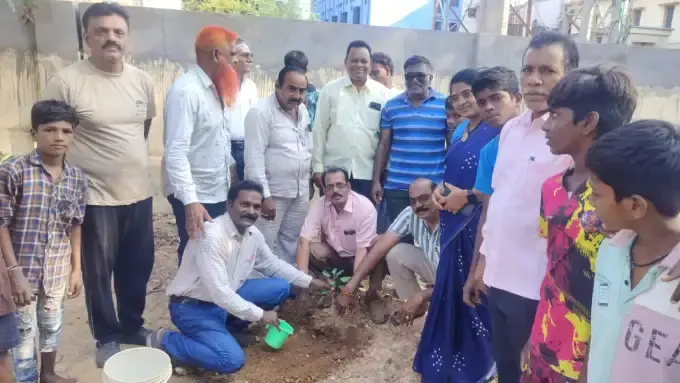
TVS Charitable Trust president Thota Venkateswara Rao has adopted the Vengalarao Nagar BC boys' hostel in Kavali town. On Sunday, items needed by the students were handed over to hostel warden Bandi Chalapathi Rao, after which saplings were planted on the premises. Jana Vignana Vedika president Thota Venkateswarlu said efforts would be made to provide basic facilities for students. Vedika general secretary Harinath and Red Cross vice-president Harinarapareddy attended. Welfare officer Bandi Koti Chalapathi Rao thanked participants.
Source
Nellore — స్థానికం · read the original report ↗
Desk check · compared with the source
What the desk checked (4)
- TVS Charitable Trust president Thota Venkateswara Rao adopted the Vengalarao Nagar boys' hostel in Kavali — Stated in source and attributed to the named trust president; figure/date appears in source (Sunday event).
- Essential items for students were handed over to hostel warden Bandi Chalapathi Rao — Appears in source as reported detail; no independent verification possible.
- Jana Vignana Vedika president Thota Venkateswarlu said efforts would be made to provide basic facilities at the BC boys' hostel — Directly attributed quote-based statement in source.
- Jana Vignana Vedika general secretary Harinath and Red Cross vice-president Harinarapareddy attended; saplings were planted — Names and activity appear in source; no source given beyond the report itself.
Analysts’ view opinion
On the surface this is a modest charitable gesture, but the fact that it involves a BC boys' hostel places it on politically sensitive ground. When a private trust has to 'adopt' a government welfare hostel to provide basic facilities, it indirectly signals public dissatisfaction with how such hostels are run. In Kavali and Nellore district politics, where the BC vote matters, visibility at events like this carries real social capital for leaders and organisations alike.
- The BC boys' hostel at the centre of the story gives the event symbolic social and political weight beyond its small scale.
- A private trust stepping in can be read positively as civic partnership, but it also hands opposition voices an argument about gaps in state provision.
- The presence of Jana Vignana Vedika and Red Cross representatives signals a non-party civic framing, even as such platforms build public goodwill.
- With elected representatives in Kavali recently appearing at education-related functions, welfare and education venues are becoming arenas of local political competition.
- Handing over goods and planting saplings deliver immediate optics; the real test is whether the promised long-term infrastructure follows.
What to watch — Watch how the welfare department and local elected representatives respond — whether this adoption is promoted as a replicable model or becomes a talking point in criticism of hostel management.
The story does not establish the duration, cost or terms of the adoption, nor any party or government involvement, and offers no evidence of political motive.
Deep dive
Research brief · 7 facts · 2 dates · exam-readyThe brief
Context
In Kavali town of Nellore district, Andhra Pradesh, the Vengalarao Nagar BC (Backward Classes) boys' hostel has been "adopted" by a private philanthropic body, the TVS Charitable Trust. Government-run BC welfare hostels house students from backward class families, and civil society groups often step in to supplement basic facilities. The adoption event, reported on 27 September 2026, involved handing over items needed by students and planting saplings on the hostel premises.
Key facts
- TVS Charitable Trust president Thota Venkateswara Rao adopted the Vengalarao Nagar boys' hostel in Kavali town.
- The report was published on 27 September 2026 at 13:16 IST by the Andhra Pradesh District Team.
- On Sunday, valuable items needed by students were handed over to hostel warden Bandi Chalapathi Rao.
- Saplings were planted on the hostel premises after the handover.
- Jana Vignana Vedika president Thota Venkateswarlu said efforts would be made to provide basic facilities to students of the BC boys' hostel.
- Jana Vignana Vedika general secretary Harinath and Red Cross vice-president Harinarapareddy took part in the programme.
- Hostel welfare officer Bandi Koti Chalapathi Rao thanked all participants.
Timeline
- Sunday (as reported)Items needed by students handed over to the hostel warden; saplings planted at the Vengalarao Nagar BC boys' hostel, Kavali.
- 27 September 2026Report of the adoption of the hostel by TVS Charitable Trust published.
Who has a stake
- Students of Vengalarao Nagar BC boys' hostel, Kavali — Stand to receive items and basic facilities promised under the adoption.
- TVS Charitable Trust (president Thota Venkateswara Rao) — Has taken on responsibility for supporting the hostel after adopting it.
- Jana Vignana Vedika (president Thota Venkateswarlu, general secretary Harinath) — Pledged to work for provision of basic facilities to hostel students.
- Hostel warden Bandi Chalapathi Rao and welfare officer Bandi Koti Chalapathi Rao — Responsible for receiving and using the donated items for students' welfare.
- Red Cross (vice-president Harinarapareddy) — Participated in the programme as a partner civil society body.
Why it matters
Welfare hostels are the main channel through which poor Backward Class students stay in education, and gaps in their basic facilities directly affect attendance and learning. Adoption of a hostel by a charitable trust shows how private and civil society actors supplement state welfare delivery at the local level, while also signalling where public provision falls short.
UPSC angle
Prelims pointers
- Kavali town is in Nellore district, Andhra Pradesh; the adopted hostel is at Vengalarao Nagar.
- BC hostels are welfare residential facilities for Backward Class students, run with a warden and a welfare officer.
- Jana Vignana Vedika is a people's science organisation; its Kavali-level president named in the story is Thota Venkateswarlu.
- TVS Charitable Trust president Thota Venkateswara Rao adopted the hostel; report dated 27 September 2026.
- Red Cross representatives also participated in the hostel adoption programme.
Mains framing
Residential welfare hostels for Backward Class students are a key instrument of educational equity, but their functioning often depends on adequate basic facilities that local administrations struggle to sustain. The Kavali case, where the TVS Charitable Trust adopted the Vengalarao Nagar BC boys' hostel and handed over items to the warden while Jana Vignana Vedika promised to work for basic facilities, illustrates the growing role of trusts, science movements and bodies like the Red Cross in filling such gaps. The positive side is quick, visible local support—material aid plus greening of the premises through sapling planting. The risk is that philanthropy substitutes for, rather than supplements, institutional accountability: donations are episodic, unaudited and dependent on individual initiative, whereas hostel infrastructure needs recurring budget lines and inspection. A workable way forward, on the evidence in the source, is to treat adoption as a partnership with clear commitments, keep welfare officers and wardens accountable for the use of donated material, and ensure that the state's own responsibility for hostel facilities is not diluted. The source does not state any government scheme or policy framework for such adoptions.
Key terms
- TVS Charitable Trust
- The philanthropic trust, headed by Thota Venkateswara Rao, that has adopted the Kavali BC boys' hostel.
- BC hostel
- A government welfare residential hostel for Backward Class students, managed by a warden and a welfare officer.
- Jana Vignana Vedika
- A people's science organisation whose local office-bearers took part and pledged support for hostel facilities.
- Hostel adoption
- An arrangement where a trust or organisation takes responsibility for supplying needs and facilities at a hostel.
- Red Cross
- Humanitarian organisation; its vice-president Harinarapareddy attended the Kavali hostel programme.
Practice questions
- Examine the role of charitable trusts and civil society organisations in supplementing state welfare hostel provision for Backward Class students. Can such adoption models be scaled?
- "Philanthropy can supplement but not substitute public accountability in welfare delivery." Discuss with reference to the adoption of a BC boys' hostel in Kavali.
- What institutional mechanisms would ensure that donated material and adoption commitments in welfare hostels translate into sustained improvement in students' living conditions?
Grounded only in the source report — figures and dates are the source's, not inferred.