
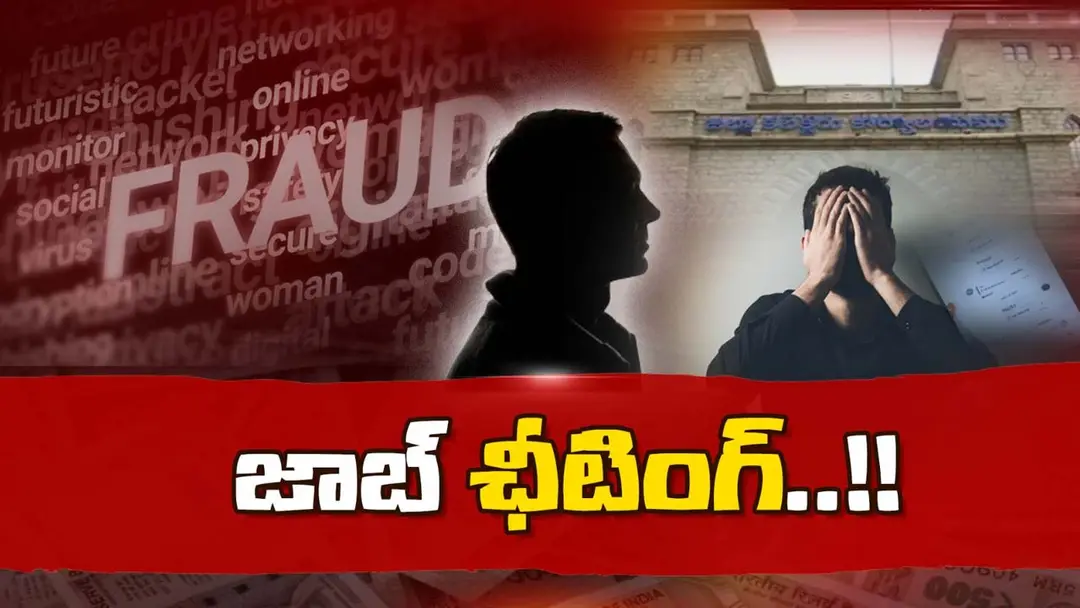
Broker accused of job fraud, fake appointment letters in Guntur
A job fraud case has come to light in Guntur district. Victims said a broker named Nagarjuna promised them jobs at the Collectorate and collected up to about Rs 4 lakh from each of them. When they pressed him, he allegedly forged the Joint Collector's signature and handed over fake appointment letters. Chiranjeevi and Poorna of Narsipatnam filed a grievance complaint and were advised to approach police, who warned people against paying money for government jobs.
Source
Guntur — ఉద్యోగాలు · read the original report ↗
Desk check · some claims need care
What the desk checked (4)
- A broker named Nagarjuna collected up to Rs 4 lakh each from unemployed youths promising jobs at the Guntur Collectorate. — Figure and name appear in the source; no investigating officer or document is cited.
- He forged the Joint Collector's signature and issued fake appointment letters. — Stated in the source as fact with no attribution to police or district administration.
- Chiranjeevi and Poorna of Narsipatnam were among those cheated and filed a grievance complaint. — Victims named in source; complaint reportedly lodged at the grievance cell, no official confirmation quoted.
- Police advise people not to pay money to anyone promising government jobs. — Attributed generally to police; no named officer given.
Analysts’ view opinion
This is not simply a money-cheating complaint — if a joint collector's signature was indeed forged to issue fake appointment letters, the allegations touch several distinct offences: cheating, forgery, and using a forged document as genuine. Legally that matters, because it moves the matter beyond a private financial dispute into an attack on the authenticity of government documents, which widens the scope of any investigation. The immediate legal point in this story is procedural: a grievance-cell petition is not the same thing as a police FIR.
- A grievance-cell complaint cannot by itself trigger a criminal investigation, so the officials' advice to approach the police is a routine and procedurally correct step.
- The alleged conduct — collecting money, forging a signature, and handing over fake letters — could be treated as separate offences rather than a single act of cheating.
- Because a senior officer's signature is alleged to have been forged, an official complaint or verification from the concerned office would considerably strengthen the investigative case alongside the victims' complaint.
- Preserving the fake letters and proof of payment (transfer records, witnesses) is central to evidence protection and directly affects the complainants' ability to press their rights.
- However serious the allegations, the named broker retains the presumption of innocence; what exists so far are victims' allegations, not findings of any court.
What to watch — Watch whether an FIR is formally registered, whether the collectorate lodges its own complaint over the alleged forgery, and whether more victims come forward and expand the case.
The story does not establish whether an FIR has been registered, how many victims or what total amount is involved, or what the accused says in response — these remain unverified allegations.
Deep dive
Research brief · 8 facts · 5 dates · exam-readyThe brief
Context
A job-fraud case has surfaced in Andhra Pradesh's Guntur district, where a broker identified as Nagarjuna allegedly promised unemployed youths jobs in the district Collectorate. According to the victims, he collected up to about Rs 4 lakh from each person and, when they pressed him for results, forged the Joint Collector's signature to hand over fake appointment letters. Two victims from Narsipatnam, Chiranjeevi and Poorna, have petitioned the Guntur Collectorate's grievance cell and were told to file a police complaint. Police have publicly warned that anyone demanding money for a government job is a fraudster.
Key facts
- A broker named Nagarjuna allegedly lured unemployed youths in Guntur district with promises of jobs in the Collectorate.
- The accused allegedly collected up to about Rs 4 lakh from each victim.
- After stalling victims for many days, he allegedly forged the Joint Collector's signature and issued fake appointment letters.
- Chiranjeevi and Poorna, residents of Narsipatnam, say they were cheated and are now making rounds of the Guntur district Collectorate.
- The victims lodged a complaint at the grievance (Grievance Day) cell; officials advised them to approach the police.
- Police have warned people not to trust anyone asking for money in the name of government jobs, saying such persons are certainly fraudsters.
- The source notes the fraud pattern: the accused answers calls promptly before money is paid, then switches off the phone or gives excuses.
- The source does not state the number of victims, the total amount collected, or whether an FIR has been registered.
Timeline
- Not dated in the sourceBroker Nagarjuna approaches unemployed youths promising Collectorate jobs and collects up to about Rs 4 lakh from each.
- Over subsequent daysHe allegedly keeps the victims waiting and evades them when they demand jobs or refunds.
- SubsequentlyHe allegedly forges the Joint Collector's signature and hands over fake appointment letters.
- Recently (date not stated)Victims Chiranjeevi and Poorna of Narsipatnam file a grievance complaint at the Guntur Collectorate.
- After the grievanceOfficials advise them to approach the police; police issue a public warning against paying money for government jobs.
Who has a stake
- Victims Chiranjeevi and Poorna (Narsipatnam) — Say they lost money to the broker and are now seeking redress through the Collectorate and police.
- Unemployed youths in Guntur district — Primary targets of such job rackets; risk losing large sums of family savings.
- Nagarjuna, the accused broker — Faces allegations of cheating and forgery of a Joint Collector's signature.
- Guntur district administration / Joint Collector — Official signature allegedly forged and Collectorate's name misused; grievance cell handling complaints.
- Police — Have to investigate once a complaint is filed; issuing public warnings against job-fraud brokers.
Why it matters
Government jobs carry enormous social prestige and security, and that aspiration is repeatedly exploited by brokers who promise appointments that only public recruitment bodies can make. The alleged forgery of a Joint Collector's signature shows the fraud goes beyond simple cheating to misuse of official authority, which can shake public trust in district administration. For aspirants and families, the case is a reminder that recruitment to government posts happens only through notified, transparent processes.
UPSC angle
Prelims pointers
- The case is from Guntur district, Andhra Pradesh; victims are from Narsipatnam.
- Alleged modus operandi: promise of Collectorate jobs, collection of up to Rs 4 lakh per person, then fake appointment letters.
- The accused allegedly forged the signature of the Joint Collector, a senior district-level revenue officer.
- Victims first used the Collectorate's grievance mechanism before being directed to the police.
- Police advisory: any demand for money for a government job indicates fraud.
- Number of victims, total money involved and FIR status are not stated in the source.
Mains framing
Job-fraud rackets like the alleged Guntur case thrive at the intersection of high unemployment, the social premium attached to government service, and information asymmetry about how public recruitment actually works. The reported method — repeated promises, delays, evasion after money changes hands, and finally fake appointment letters bearing a forged Joint Collector's signature — combines cheating with forgery and impersonation of official authority, damaging the credibility of the district administration itself. Victims' difficulty in getting traction, having to move from the Collectorate grievance cell to the police, suggests that redress is slow and depends on the persistence of complainants who have already lost savings. The way forward suggested by the story is largely preventive: sustained police messaging that no genuine government post is sold for money, prompt registration and investigation of complaints, and greater public awareness that appointments flow only from notified recruitment processes and verifiable official channels. Wider institutional responses beyond these are not stated in the source.
Key terms
- Joint Collector
- A senior revenue officer in a district administration whose signature was allegedly forged on the fake appointment letters.
- Collectorate
- The district administration's headquarters office, where the accused falsely promised jobs.
- Grievance cell / Grievance Day
- Forum where citizens submit complaints to district officials; the victims filed their complaint here.
- Forgery
- Falsely making or signing a document, here allegedly imitating the Joint Collector's signature on appointment letters.
- Broker (job middleman)
- A person who claims influence to secure jobs and collects money from aspirants, as alleged against Nagarjuna.
Practice questions
- Job-fraud rackets targeting unemployed youth persist despite repeated police warnings. Examine the social and administrative factors behind this, using the Guntur case as an illustration.
- How does forgery of a senior official's signature aggravate an ordinary cheating case, both legally and in terms of public trust in district administration?
- Suggest preventive and redress measures that district administrations and police can adopt to protect job aspirants from middlemen promising government appointments.
Grounded only in the source report — figures and dates are the source's, not inferred.