
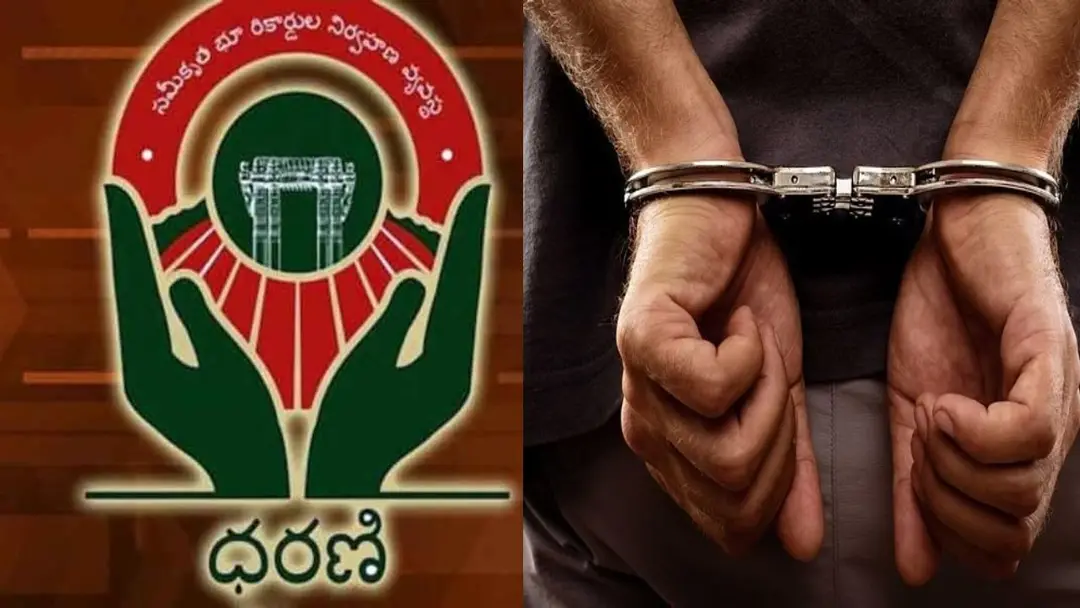
Two Dharani portal staff arrested for land record irregularities
Irregularities by Dharani portal employees have come to light at the Rangareddy district Collectorate. Officials found that two employees used digital signatures to remove applications relating to lands on the prohibited list from the portal. More than 90 applications were deleted from the prohibited list in 28 days, enabling large-scale land transfers. The activity took place while the Collector and local officials were on election duty. Officials acted against the employees, complained to police, and both were arrested.
Source
Rangareddy — ఉద్యోగాలు · read the original report ↗
Desk check · some claims need care
What the desk checked (5)
- Two Dharani portal employees at the Rangareddy Collectorate committed irregularities using digital signatures. — Figure and allegation appear in the source but no official or police source is named.
- More than 90 applications relating to prohibited-list lands were removed from the portal in 28 days. — Figures appear in the source; attributed vaguely to officials, no document or spokesperson cited.
- Officials removed the employees from duty, complained to police, and the employees were arrested. — Stated as fact in the source; no police statement, FIR number or names provided.
- Congress criticised the Dharani portal during the Telangana assembly election campaign and promised to replace it with Bhumata; Revanth Reddy alleged the poor's lands were diverted. — Political context attributed to Congress and Revanth Reddy; presented as previously known, not newly sourced.
- The irregularities surfaced on the second day of the new Congress government, with CM Revanth Reddy holding a cabinet meeting and power sector reviews. — Timeline claim internal to the source; no date given, so treat the 'second day' framing as the writer's.
Analysts’ view opinion
This is not an ordinary service-discipline matter — using digital signatures to strip applications off the prohibited-lands list is the kind of conduct that typically attracts layered charges: forgery of records, criminal breach of trust by a public servant, loss to the state, and tampering with electronic records. The arrest is only the first procedural step; the harder legal question is the validity of the land transfers that flowed from those 90-plus applications and how they can be unwound. The prohibited list functions as a statutory shield, so the fact that it could be edited from inside raises questions about audit trails and dual-authorisation controls in the system itself.
- Misuse of a digital signature is legally distinct from plain fraud, since it also raises electronic-record tampering questions under IT law — though the story does not say which sections were invoked.
- Registrations or transfers effected after the removals do not become void automatically; reversing them would need specific administrative orders or revenue/civil proceedings.
- Third-party purchasers' rights are in play — if any bought in good faith, altering records without notice and a hearing (natural justice) could itself spawn fresh litigation.
- Criminal prosecution and departmental action can run in parallel, but an arrest is not a conviction: the accused retain rights to bail, defence and a fair trial.
- The detail that the collector and local officers were on election duty points to a broader accountability question about supervision and system access controls, not just individual wrongdoing.
What to watch — Whether the probe stops with these two employees or widens to beneficiaries, intermediaries and higher-level approvals — and whether formal orders are issued restoring the removed entries to the prohibited list.
The story does not establish the specific charges in the FIR, the extent or value of land affected, or whether any outside beneficiaries or senior officials were involved; the allegations remain to be tested in court.
Deep dive
Research brief · 8 facts · 5 dates · exam-readyThe brief
Context
Dharani is Telangana's integrated land records portal, through which mutations, registrations and land transfers are processed; lands that cannot be legally transferred are kept on a "prohibited list" within the portal. At the Rangareddy district Collectorate, officials found that two Dharani portal employees used digital signatures to delete applications concerning prohibited-list lands, enabling large-scale transfers. The manipulation happened when the Collector and local officials were away on election duty during the Telangana Assembly polls. The employees were removed from duty, a police complaint was filed, and both were arrested.
Key facts
- Two Dharani portal employees at the Rangareddy district Collectorate were found to have committed irregularities using digital signatures.
- More than 90 applications were removed from the prohibited list in a span of 28 days.
- Officials identified that the deletions enabled land transfers (badalayimpu) on a large scale.
- The irregularities occurred while the District Collector and local officials were engaged in election duty.
- Officials acted against the employees, then lodged a complaint with the police, who arrested them.
- During the Telangana Assembly election campaign, the Congress attacked Dharani as a hotbed of irregularities harming farmers.
- Congress promised to replace the Dharani portal with a system called 'Bhumata'; Revanth Reddy alleged poor people's lands were diverted in Dharani's name.
- The land irregularities surfaced on the second day after the Congress government was formed in Telangana.
Timeline
- Telangana Assembly election campaignCongress criticises the Dharani portal as riddled with irregularities and promises to replace it with 'Bhumata'.
- Period of election duty (28-day window)Two Dharani portal employees delete over 90 prohibited-list applications using digital signatures, enabling large-scale land transfers.
- Day the Congress government took chargeRevanth Reddy assumes charge as Chief Minister, holds a Cabinet meeting and reviews the power department, flagging irregularities.
- Second day of the new governmentThe Dharani portal land irregularities at Rangareddy come to light; employees removed, complaint lodged, and both arrested by police.
- The day of the reportAnother review of the electricity department was scheduled by the Chief Minister.
Who has a stake
- Rangareddy district Collectorate / District Collector — Custodian of land records; irregularities occurred under its portal operations while officials were on election duty.
- Two Dharani portal employees — Accused of misusing digital signatures to delete prohibited-list applications; removed from duty and arrested.
- Police — Received the official complaint and made the arrests; responsible for the investigation.
- Farmers and poor landholders — Alleged victims of land diversion and losses through Dharani-related manipulation.
- Telangana government under CM Revanth Reddy — Committed to replacing Dharani with 'Bhumata' and to acting on irregularities in land and power departments.
- Congress and BRS — Dharani was a central election issue, with Congress alleging it enabled irregularities under the previous BRS government.
Why it matters
The prohibited list is the last legal safeguard preventing sale or transfer of assigned, government and disputed lands; deleting entries with insider digital signatures can convert protected land into tradable land. That more than 90 such entries went in 28 days, while supervising officers were on election duty, points to weak audit trails and oversight in a fully digital land records system on which lakhs of farmers depend.
UPSC angle
Prelims pointers
- Dharani is Telangana's online land records and registration portal; it maintains a 'prohibited list' of non-transferable lands.
- Rangareddy district Collectorate: site of the reported Dharani portal irregularities.
- Over 90 applications were deleted from the prohibited list in 28 days using employees' digital signatures.
- Congress's poll promise: replace Dharani with a new system named 'Bhumata'.
- Revanth Reddy became Telangana Chief Minister and held a Cabinet meeting on assuming charge; he also reviewed the power department.
Mains framing
The Rangareddy case illustrates how digitisation of land records, without equally strong access controls and audit mechanisms, can create new avenues for fraud rather than eliminate old ones. Here, insiders with digital signature authority allegedly deleted over 90 entries from the prohibited list in 28 days, enabling large-scale transfers of land that law had placed beyond transfer, at a time when the Collector and local officials were diverted to election duty. The causes are structural: concentration of editing powers in a few operators, supervision gaps during election deployment, and the high market value of peri-urban land around Hyderabad that makes prohibited-list entries lucrative to remove. The implications extend beyond crime to land titling credibility, litigation and loss for assignees and small farmers, and they feed a live political contest, with Congress having campaigned against Dharani and promised 'Bhumata' in its place. A way forward, consistent with what the source shows, lies in stricter accountability for digital signature use, real-time logs and alerts for prohibited-list changes, independent verification before deletions, and prompt criminal action of the kind already initiated by officials and police.
Key terms
- Dharani portal
- Telangana's integrated online land records and registration platform used for mutations and land transactions.
- Prohibited list
- List within Dharani of lands barred from sale or transfer; removal from it allows transactions to proceed.
- Digital signature
- Electronic authentication credential whose misuse here allowed employees to delete portal entries.
- Bhumata
- System the Congress promised to introduce in place of the Dharani portal.
- Election duty
- Deployment of the Collector and local officials for Assembly poll work, during which supervision at the Collectorate weakened.
Practice questions
- How can digital land records systems be designed so that insider misuse of digital signatures is detected in real time? Discuss with reference to the Dharani prohibited-list case.
- Digitisation of land records reduces discretion but does not by itself remove corruption. Critically examine in the Indian context.
- What safeguards should govern administrative continuity in district offices when senior officials are deployed on election duty?
Grounded only in the source report — figures and dates are the source's, not inferred.