
Bamboo harvesting to begin in Alluri district from October
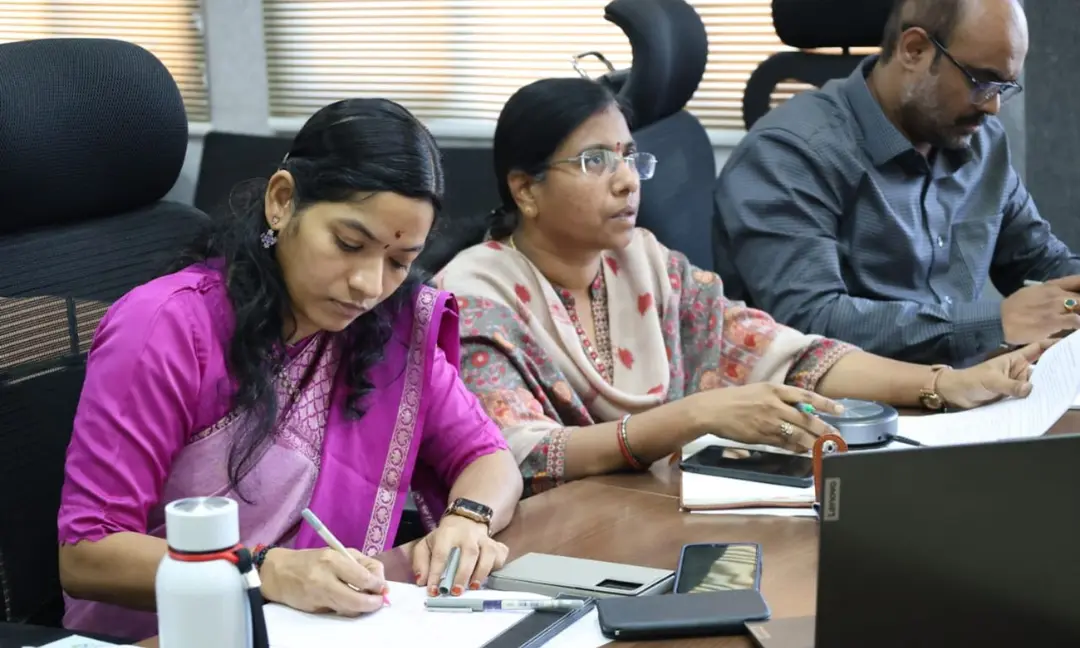
Officials have decided to start bamboo harvesting in Alluri Sitharama Raju district from the first week of October. A video conference chaired by the SERP CEO on Wednesday was attended by the PCCF, district collectors, DFOs and PD-DRDAs. Under the DAY-NRLM Bamboo Subsector Programme, Andhra Pradesh has a target of 35,000 farmers for 2026-27, with 5,000 farmers across 11 mandals in Alluri district. So far 3,504 farmers have enrolled and 1,54,100 saplings been distributed.
Source
Alluri Sitharama Raju — వార్తలు · read the original report ↗
Desk check · compared with the source
What the desk checked (5)
- Andhra Pradesh has a target of 35,000 farmers for 2026-27 under the DAY-NRLM Bamboo Subsector Programme, with 5,000 farmers across 11 mandals in Alluri Sitharama Raju district. — Figures appear in source, attributed to the programme review; no document cited.
- 3,504 farmers enrolled and 1,54,100 of 2,10,240 required saplings distributed; 1,454 farmers completed planting. — Figures appear in source and are internally consistent, dated September 30, 2026 in the text.
- The video conference was held Wednesday under the SERP CEO, with PCCF, district collectors, DFOs and PD-DRDAs participating. — Attributed to the official meeting; no exact date given.
- Bamboo harvesting will begin in the first week of October. — Stated as a review decision in the source; no formal order referenced.
- DFO Paderu Umamaheswari and DFO Chintapalli Y.L. Narasimha Rao are coordinating forest department activities, under Collector T. Nishanthi's guidance. — Named officials as given in source; roles not independently verifiable here.
Analysts’ view opinion
This is less a plantation scheme than a value-chain experiment. The real economic gain for tribal and small farmers lies in processing bamboo locally rather than selling it raw — that is where the margin sits. But the gap between 3,504 registrations, 1,54,100 of 2,10,240 saplings distributed and only 1,454 farmers having completed planting shows that against a 5,000-farmer target this is still an early-stage programme, and with no clarity on price, offtake or the number of processing units, the income impact cannot yet be quantified.
- The margin in bamboo sits in value addition — incense sticks, strips, flooring, furniture, pellets — not in selling raw culms.
- Harvesting, grading, splitting, drying, treatment, packing and transport are labour-intensive, so the jobs effect is likely larger in processing than in cultivation.
- Bamboo is a perennial crop with delayed cash flow, meaning marginal farmers need an income bridge in the interim; the story does not describe any such arrangement.
- References to sapling shortfalls and replacement of damaged plants flag supply-side risk — processing units only work if raw material arrives steadily.
- Coordination across Forest Department, SERP and DRDA implies transaction costs and permission timelines that also shape the price finally reaching the farmer.
What to watch — After the October harvest, watch who buys, at what price, and how many primary processing units are actually operating — that will determine whether the income promise materialises.
The story establishes no farmer-level price, income estimate, budget outlay, number of processing units or committed market buyers; these remain targets rather than outcomes.
Deep dive
Research brief · 8 facts · 4 dates · exam-readyThe brief
Context
Andhra Pradesh is implementing a bamboo-based livelihood programme under DAY-NRLM's Bamboo Subsector Programme in tribal districts, aimed at giving tribal families, small, marginal and economically weaker farmers a steady source of income and employment. A video conference chaired by the CEO of the Society for Elimination of Rural Poverty (SERP) on Wednesday reviewed progress in Alluri Sitharama Raju, Polavaram and Parvathipuram Manyam districts. Officials decided that bamboo harvesting in Alluri district will begin in the first week of October, with the Forest Department, SERP and DRDA coordinating cutting, collection, transport and processing. The emphasis is on not selling bamboo as mere raw material but converting it into value-added products through Primary Processing Units.
Key facts
- Bamboo harvesting in Alluri Sitharama Raju district is to begin from the first week of October, as decided in the SERP CEO-chaired video conference held on Wednesday.
- Under the DAY-NRLM Bamboo Subsector Programme, Andhra Pradesh has a target of 35,000 farmers for 2026-27.
- Alluri Sitharama Raju district's target is 5,000 farmers across 11 mandals.
- As of September 30, 2026, 3,504 farmers in Alluri district had enrolled in the programme.
- Against a total requirement of 2,10,240 saplings, 1,54,100 saplings have been distributed so far.
- A total of 1,454 farmers have completed planting bamboo saplings.
- Bamboo varieties being promoted include Bambusa tulda and Dendrocalamus longispathus.
- The video conference was attended by the PCCF, SERP ex-officio Secretary to Government, collectors of Alluri Sitharama Raju, Polavaram and Parvathipuram Manyam districts, DFOs and PD-DRDAs.
Timeline
- 2026-27 (target year)DAY-NRLM Bamboo Subsector Programme sets a target of 35,000 farmers for Andhra Pradesh; 5,000 for Alluri district across 11 mandals.
- By September 30, 20263,504 farmers enrolled in Alluri district; 1,54,100 of 2,10,240 required saplings distributed; 1,454 farmers complete planting.
- Wednesday (date not stated in the source)Video conference chaired by SERP CEO reviews harvesting readiness, sustainable use, value addition and market linkage.
- First week of OctoberBamboo harvesting to begin in Alluri Sitharama Raju district.
Who has a stake
- Tribal families, small, marginal and marginal-land farmers in Alluri district — Stand to gain steady income and employment from bamboo cultivation, harvesting, processing and marketing.
- SERP (Society for Elimination of Rural Poverty) — Its CEO chaired the review; SERP coordinates programme implementation with the Forest Department and DRDA.
- Forest Department (PCCF, DFO Paderu Smt. Umamaheswari, DFO Chintapalli Sri Y.L. Narasimha Rao) — Coordinates bamboo cultivation, management and harvesting operations as per rules in their jurisdictions.
- District Collector Smt. T. Nishanthi, Alluri Sitharama Raju — Guiding effective implementation, development of local processing units, value addition and market access.
- District Rural Development Agencies (PD-DRDAs) of Alluri, Polavaram and Parvathipuram Manyam — Responsible for farmer enrolment, sapling distribution and completion of planting targets.
Why it matters
Bamboo is one of the few resources that tribal households in Andhra Pradesh's agency areas can cultivate and harvest on their own land, and converting it from raw material into boards, furniture, agarbatti sticks and biomass pellets locally decides whether that income stays in the district. The programme's design — cultivation to harvesting to primary processing to marketing — tests whether a rural livelihoods mission can build a full value chain rather than a plantation drive. With only 1,454 of 3,504 enrolled farmers having planted, execution gaps will determine whether the October harvest translates into actual earnings.
UPSC angle
Prelims pointers
- DAY-NRLM Bamboo Subsector Programme: AP target 35,000 farmers for 2026-27; Alluri Sitharama Raju district target 5,000 farmers in 11 mandals.
- SERP (Society for Elimination of Rural Poverty) is the implementing agency in Andhra Pradesh; its CEO chaired the review video conference.
- Bamboo species promoted under the programme: Bambusa tulda and Dendrocalamus longispathus.
- Alluri district status: 3,504 farmers enrolled; 1,54,100 of 2,10,240 saplings distributed; 1,454 farmers completed planting.
- Primary Processing Units convert bamboo into split bamboo, strips, sticks and pellets instead of selling raw bamboo.
- Districts covered in the review: Alluri Sitharama Raju, Polavaram and Parvathipuram Manyam.
Mains framing
Bamboo-based livelihoods in Andhra Pradesh's agency districts illustrate the shift from treating forest produce as raw material extraction to building a local value chain. Tribal, small and marginal farmers historically capture only the lowest margin in bamboo trade; the DAY-NRLM Bamboo Subsector Programme responds by enrolling farmers for cultivation (Bambusa tulda, Dendrocalamus longispathus), supplying saplings, and then organising harvesting, grading, splitting, drying, treatment, pelletisation, packing, transport and marketing through Primary Processing Units — generating employment at each stage. In Alluri Sitharama Raju district the target is 5,000 farmers in 11 mandals out of the state's 35,000, but with 3,504 enrolled, 1,54,100 of 2,10,240 saplings distributed and only 1,454 farmers having planted, the binding constraints are sapling shortages, replacement of damaged saplings and speed of planting. Implications include convergence demands across the Forest Department, SERP and DRDA for regulated harvesting, collection and transport. The way forward, as reviewed by officials, lies in closing the sapling gap, completing planting with enrolled farmers, starting harvesting from the first week of October under rules, and anchoring processing units locally so that value addition and market linkage, not raw sale, determine tribal incomes.
Key terms
- DAY-NRLM
- Deendayal Antyodaya Yojana - National Rural Livelihoods Mission, under whose Bamboo Subsector Programme the farmer targets are set.
- SERP
- Society for Elimination of Rural Poverty, Andhra Pradesh's rural livelihoods body whose CEO chaired the review conference.
- PCCF
- Principal Chief Conservator of Forests, the senior-most forest official who attended the video conference.
- PD-DRDA
- Project Director, District Rural Development Agency, the district-level officer executing rural livelihood schemes.
- Primary Processing Units
- Local units that convert harvested bamboo into split bamboo, strips, sticks and pellets instead of selling it raw.
- Bamboo Value Chain
- The full sequence from cultivation and harvesting to primary processing, value addition, product making and marketing.
Practice questions
- Examine how value-chain based interventions such as the DAY-NRLM Bamboo Subsector Programme can raise tribal incomes more effectively than raw forest produce sale. Illustrate with the Alluri Sitharama Raju experience.
- Convergence between the Forest Department, SERP and DRDA is central to bamboo harvesting in agency areas. Discuss the administrative challenges of such multi-agency livelihood programmes.
- The gap between farmer enrolment, sapling distribution and actual planting is a recurring problem in plantation-based livelihood schemes. Suggest measures to close it, using the data from Alluri district.
Grounded only in the source report — figures and dates are the source's, not inferred.