
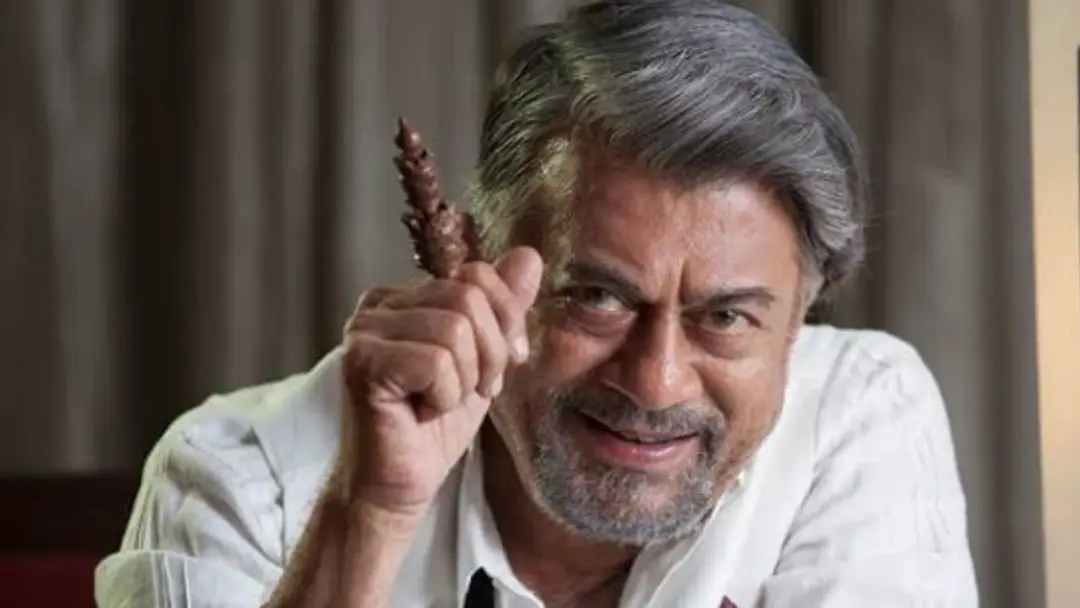
Anant Nag conferred Dadasaheb Phalke Award for cinema
Kannada actor Anant Nag has been selected for the Dadasaheb Phalke Award, which will be presented to him at the 72nd National Film Awards ceremony on September 22 at Kevadia, Gujarat. Nag, 78, who received the Padma Bhushan last year, has acted in at least 300 films across South Indian languages and Hindi over a career spanning five decades. He is the second Kannada artist to receive the honour after Dr Rajkumar. Prime Minister Narendra Modi congratulated him on X.
Source
Indian Express — Cities · read the original report ↗
Desk check · compared with the source
What the desk checked (5)
- Anant Nag has been conferred the Dadasaheb Phalke Award, to be presented at the 72nd National Film Awards on September 22 at Kevadia, Gujarat. — Figure, date and venue appear in source; no awarding authority document cited.
- Prime Minister Narendra Modi congratulated Nag in a post on X on Wednesday. — Directly attributed to Modi's X post and quoted verbatim in the source.
- Nag has acted in at least 300 films and won five Filmfare Awards and five Karnataka State Best Actor Awards. — Figures appear in source without attribution; source also separately says he received four state best actor awards, an internal inconsistency.
- He is the second Kannada artist after Dr Rajkumar to get the award and the seventh Indian to hold both Padma Bhushan and Phalke. — Stated in source with no source given; internally consistent with the Padma Bhushan claim.
- Born September 4, 1948 in Mumbai; brother Shankar Nag died in a road accident on September 30, 1990. — Dates appear in source and are internally consistent with the stated age of 78.
Analysts’ view opinion
At a time when action heroes and high-energy dance numbers were pulling crowds, Anant Nag filled halls by playing the ordinary man — and this award recognises exactly that. His selection signals that the industry still values naturalistic acting, range and comic timing over star image. Five decades, at least 300 films, and a journey from parallel cinema to mass-market comedy make for an unusually broad case, and being only the second Kannada artist after Dr Rajkumar to receive the honour is a landmark for that industry.
- Nag's career is a distinct model of stardom: he drew audiences with everyman roles even as action and dance-driven films dominated the trend.
- His range — from Shyam Benegal, Girish Karnad and M S Sathyu-era parallel cinema to commercial hits like Ganeshana Maduve — gives the selection unusually wide acceptance across industry constituencies.
- Malgudi Days extended his reach to television audiences, which makes broad public warmth toward the honour more likely, not just applause from film circles.
- Following Filmfare and multiple state best actor awards and last year's Padma Bhushan, the Phalke completes a recognition arc that moved steadily from regional to national.
- Because Nag has publicly backed the BJP and PM Modi, the usual political-lens debate that accompanies state honours could surface here too — though his body of work and long awards record give the choice independent standing.
What to watch — Watch the 72nd National Film Awards ceremony on September 22 at Kevadia, Gujarat, and how the Kannada and wider South Indian film fraternity responds to the honour.
The story does not establish how the selection was made, what the jury weighed, or whether his political affiliations had any bearing on it.
Deep dive
Research brief · 8 facts · 10 dates · exam-readyThe brief
Context
The Dadasaheb Phalke Award, India's highest honour in cinema, has been conferred on Kannada actor Anant Nag, to be presented at the 72nd National Film Awards ceremony on September 22 at Kevadia, Gujarat. Nag, 78, built a five-decade career of naturalistic acting across parallel cinema and mainstream Kannada comedies, at a time when action stars and dance numbers dominated theatres. He is the second Kannada artist after Dr Rajkumar to receive the award, and had received the Padma Bhushan in 2025.
Key facts
- Anant Nag will receive the Dadasaheb Phalke Award at the 72nd National Film Awards ceremony on September 22 at Kevadia, Gujarat.
- He has acted in at least 300 films across South Indian languages and Hindi in a career spanning more than five decades.
- He is the second Kannada artist to get the award after Dr Rajkumar, and the seventh Indian to hold both the Padma Bhushan and the Dadasaheb Phalke Award.
- Born Anant S Nagarakatte on September 4, 1948, in Mumbai; family roots in Shirali, Uttara Kannada district, Karnataka.
- Awards include five Filmfare Awards, five Karnataka State Best Actor Awards, Karnataka Rajyotsava Award, Karnataka Sahitya Academy Award and the Karnataka State Lifetime Achievement Award.
- He debuted in Kannada cinema in 1973 with Sankalpa and also appeared in Shyam Benegal's Ankur the same year.
- He played the lead in the 1986 television series Malgudi Days, which earned national acclaim and awards.
- He was a member of the Karnataka Legislative Council from 1988 to 1994 and later Bengaluru Development Minister after being elected from Malleshwaram.
Timeline
- September 4, 1948Born Anant S Nagarakatte in Mumbai, Maharashtra.
- 1973Kannada film debut with Sankalpa; also appeared in Shyam Benegal's Ankur, winning early recognition at Karnataka State Film Awards.
- 1970s-80sCentral figure of parallel cinema (Nishant, Bhumika, Manthan, Kaliyug) and joint films with brother Shankar Nag.
- 1986Played the lead role in the television series Malgudi Days.
- 1987Married film actress Gayathri, who later retired from acting.
- 1988-1994Served in the Karnataka Legislative Council after joining the Janata Party in the 1980s.
- September 30, 1990Brother Shankar Nag died in a road accident; Sanket Studio losses left Nag repaying debts for years.
- 1996Distanced himself from active politics after an attempted attack by miscreants while taking his daughter to school.
- 2010Authored the Kannada biographical book Nanna Thamma Shankara (My Brother Shankara).
- 2011-12Received the D Vishnuvardhan Award for lifetime achievement.
Who has a stake
- Anant Nag — Recipient of India's highest cinema honour after a five-decade, 300-film career.
- Kannada film industry — Gets only its second Dadasaheb Phalke awardee after Dr Rajkumar, recognition for its experimental era.
- Union government / National Film Awards — Confers the award at the 72nd National Film Awards ceremony at Kevadia, Gujarat.
- Prime Minister Narendra Modi — Publicly congratulated Nag, calling the honour 'richly deserved'.
- Parallel cinema fraternity (Shyam Benegal, Girish Karnad, M S Sathyu, Satyadev Dubey, Amol Palekar) — Directors and theatre stalwarts whose work shaped Nag's naturalistic style.
- Nag family — Late brother Shankar Nag's shared legacy, Sanket Studio debts, wife Gayathri and daughter Aditi.
Why it matters
The award recognises an actor who made the ordinary person a bankable screen hero, bridging Shyam Benegal's parallel cinema and mass Kannada comedy at a time when action and dance dominated. It is only the second Phalke honour for Kannada cinema after Dr Rajkumar, spotlighting the experimental golden era the Nag brothers helped create. It also marks the rare instance of an Indian artist holding both the Padma Bhushan and the Dadasaheb Phalke Award.
UPSC angle
Prelims pointers
- Dadasaheb Phalke Award: India's highest honour in cinema; presented at the National Film Awards ceremony.
- 72nd National Film Awards ceremony: September 22, at Kevadia, Gujarat.
- Anant Nag is the second Kannada artist to win the Phalke Award, after Dr Rajkumar.
- Padma Bhushan is India's third-highest civilian award; Nag received it in 2025.
- Nag's parallel cinema credits with Shyam Benegal: Ankur, Nishant, Bhumika, Manthan, Kaliyug.
- Nag was a Karnataka Legislative Council member (1988-1994) and later Bengaluru Development Minister.
Mains framing
The conferment of the Dadasaheb Phalke Award on Anant Nag is a lens on how Indian cinema's 'middle path' actors shaped the industry's cultural range. Trained in Mumbai theatre under Satyadev Dubey, Girish Karnad and Amol Palekar, and acting across Konkani, Kannada, Marathi and Hindi plays, Nag entered films in 1973 with Sankalpa and Ankur, and became central to the parallel cinema movement through Benegal's Nishant, Bhumika, Manthan and Kaliyug, while simultaneously drawing mass audiences with Kannada comedies such as Ganeshana Maduve and Gauri Ganesha. His trajectory also shows the vulnerability of creative enterprise: after his brother Shankar Nag's death in a 1990 road accident, Sanket Studio's losses left him repaying debts for years, illustrating why institutional support for film infrastructure matters. His brief political career, from the Janata Party and the Legislative Council to the Bengaluru Development Ministry, ended in 1996 after a security scare. Recognising such careers, alongside honours like the Padma Bhushan, signals that state patronage of the arts should reward versatility and regional-language contribution, not box-office scale alone.
Key terms
- Dadasaheb Phalke Award
- India's highest honour in cinema, presented at the National Film Awards ceremony; Nag receives it at the 72nd edition.
- Padma Bhushan
- India's third-highest civilian award; conferred on Anant Nag in 2025 for contributions to the arts.
- Parallel cinema
- Realist, socially engaged film movement of the 1970s-80s; Nag starred in Shyam Benegal's Nishant, Bhumika, Manthan and Kaliyug.
- Malgudi Days
- Landmark 1986 television series in which Nag played the lead role; it won national acclaim and awards.
- Sanket Studio
- Studio the Nag brothers invested heavily in; it incurred large losses after Shankar Nag's death in 1990.
- Karnataka Legislative Council
- Upper house of the Karnataka legislature, where Nag served from 1988 to 1994.
Practice questions
- Discuss the contribution of parallel cinema to Indian film culture, with reference to actors and directors who bridged art-house and popular cinema.
- How do national honours such as the Dadasaheb Phalke Award and the Padma awards shape public recognition of regional-language cinema in India?
- Anant Nag's career combined acting, theatre and elected public office. Examine the relationship between cinema and politics in South India.
Grounded only in the source report — figures and dates are the source's, not inferred.