
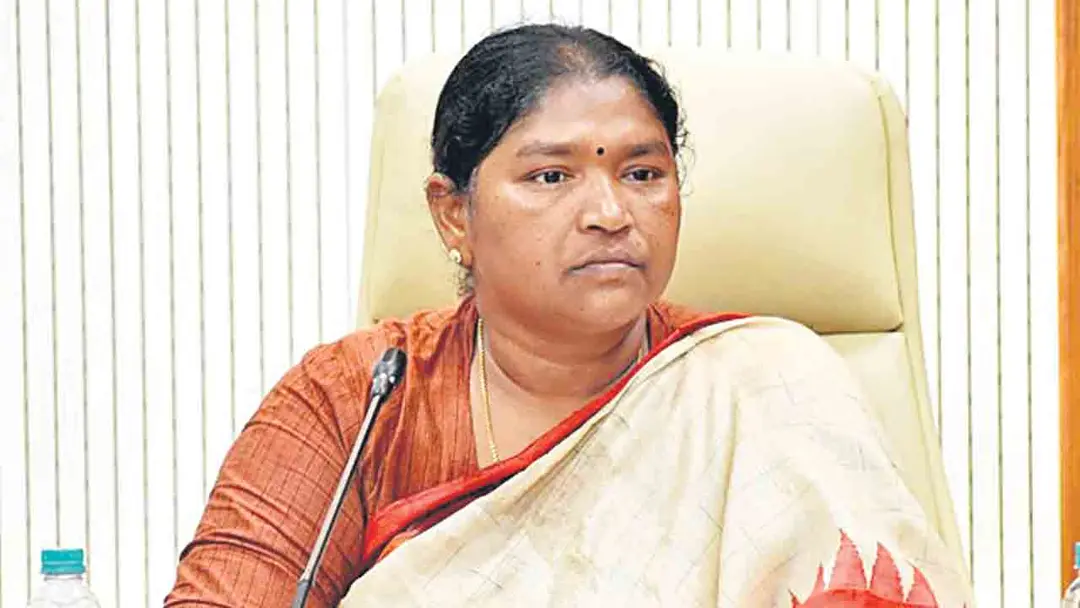
Rs 33.62 crore released to 58 poll-pending panchayats: Seethakka
Panchayati Raj and Rural Development Minister Seethakka said on Monday that the state government has released Rs 33.62 crore to 58 gram panchayats where elections were not held due to court cases and other reasons. Though Central Finance Commission funds were not received for want of elections, the state arranged alternative funds so development works do not stall. At a review in the Panchayati Raj Commissioner's office, she directed a strong village-level action plan for El Nino conditions, saying every panchayat would be made a model panchayat.
Source
Namasthe Telangana · read the original report ↗
Desk check · compared with the source
What the desk checked (5)
- State government released Rs 33.62 crore to 58 gram panchayats where elections were not held — Attributed to Panchayati Raj and Rural Development Minister Seethakka; figure appears in source.
- Elections were not held in these panchayats due to court cases and other reasons — Attributed to the minister; no case details given in source.
- Central Finance Commission funds were not received because elections were not held, so the state provided alternative funds — Attributed to the minister speaking to reporters on Monday; no supporting documentation cited.
- Minister directed preparation of a strong village-level action plan to tackle El Nino conditions — Stated as said at a review meeting in the Panchayati Raj Commissioner's office on Monday.
- Government aims to develop every panchayat as a model panchayat — Attributed to the minister; aspirational statement, not independently verifiable.
Analysts’ view opinion
By releasing Rs 33.62 crore to 58 panchayats where elections have not been held, the state government appears to be converting an awkward governance gap into a political opportunity. The framing — that central Finance Commission money stopped but the state stepped in with alternative funds — is a bid to keep the government visible even in villages without elected sarpanches. At the same time, the unanswered question of why those 58 elections have not happened remains a ready-made line of attack for the opposition.
- In panchayats without elected sarpanches, spending decisions effectively sit with the administrative machinery, shifting local power from elected representatives to officials.
- The 'centre's funds stopped, the state paid' narrative gives the government a favourable storyline in the wider centre-state funding contest.
- The pledge to turn every panchayat into a 'model panchayat' reads as a broad rural-outreach message aimed at village voters.
- Attributing the delay to court cases shifts responsibility to the judicial process, while the opposition is likely to frame it as an administrative failure.
- The directive for village-level El Nino action plans signals that the government sees agrarian distress as politically costly.
What to watch — Watch whether the government moves to clear the way for polls in these 58 panchayats, and whether the opposition raises questions over how the released funds are spent.
The story does not establish where these 58 panchayats are, when elections might be held, who will supervise the spending, or how the opposition has responded.
Deep dive
Research brief · 8 facts · 2 dates · exam-readyThe brief
Context
Telangana's Panchayati Raj and Rural Development Minister Danasari Anasuya (Seethakka) announced that the state has released Rs 33.62 crore to 58 gram panchayats where elections could not be held because of court cases and other reasons. Since these panchayats have no elected bodies, Central Finance Commission grants did not reach them, so the state government arranged alternative funds to keep village development works going. She made the announcement to reporters on Monday and separately chaired a review at the Panchayati Raj Commissioner's office on preparing for El Nino conditions.
Key facts
- Rs 33.62 crore released by the Telangana government to gram panchayats where elections were not held, as stated by Minister Seethakka.
- 58 gram panchayats are affected, with elections pending due to court cases and other reasons.
- Central Finance Commission funds did not reach these panchayats because elections were not held.
- The state government arranged alternative funds so that village development works do not come to a halt.
- Seethakka is the Minister for Panchayati Raj and Rural Development in Telangana.
- The announcement was made to reporters on Monday; the report is datelined Hyderabad, September 21.
- At a review meeting in the Panchayati Raj Commissioner's office on Monday, the Minister directed that a strong village-level action plan be prepared to face El Nino conditions.
- The Minister said the government's goal is to shape every panchayat into a model panchayat.
Timeline
- Monday, September 21 (Hyderabad dateline)Minister Seethakka tells reporters that Rs 33.62 crore has been released to 58 poll-pending gram panchayats.
- Same day (Monday)Review meeting at the Panchayati Raj Commissioner's office; Minister directs a strong village-level action plan for El Nino and sets the model panchayat goal.
Who has a stake
- 58 gram panchayats without elected bodies — Lost access to Central Finance Commission funds; now depend on state-arranged alternative funds of Rs 33.62 crore for development works.
- Telangana Panchayati Raj and Rural Development Department (Minister Seethakka) — Responsible for releasing funds, preparing El Nino action plans and turning every panchayat into a model panchayat.
- Panchayati Raj Commissioner's office — Venue and administrative machinery for the review and for implementing village-level action plans.
- Central Finance Commission — Its grants were withheld from panchayats where elections were not held.
- Rural residents of the affected villages — Continuity of local development works and preparedness against El Nino-linked conditions.
Why it matters
Finance Commission grants to local bodies are tied to having elected panchayats, so villages stuck in litigation risk losing development money altogether. Telangana's decision to substitute Rs 33.62 crore from state resources shows how states bridge that gap, while the El Nino action plan signals that village institutions are now expected to handle climate-linked stress.
UPSC angle
Prelims pointers
- Rs 33.62 crore released by Telangana to 58 gram panchayats where elections were not held.
- Seethakka is Telangana's Minister for Panchayati Raj and Rural Development.
- Central Finance Commission funds were not received by these panchayats because elections had not been held.
- State government provided alternative funds to prevent stalling of village development works.
- Minister directed a village-level action plan to tackle El Nino impact, at a review in the Panchayati Raj Commissioner's office.
- Stated government goal: make every panchayat a model panchayat.
Mains framing
The episode illustrates a structural weakness in India's third tier of governance: when panchayat elections are delayed by court cases or other reasons, the absence of an elected body can cut off Central Finance Commission grants, leaving villages without funds for basic development. In Telangana, 58 gram panchayats fell into this category, prompting the state to release Rs 33.62 crore from alternative sources so works would not stall — a stopgap that protects service delivery but does not restore democratic representation or accountability at the village level. The situation also intersects with climate risk: the Minister's direction to build a strong village-level action plan for El Nino conditions assumes functional local institutions capable of planning and executing responses. The way forward suggested by the story's own logic is timely resolution of the disputes holding up elections, so that panchayats regain both elected leadership and their rightful share of devolved funds, alongside capacity-building to realise the stated goal of turning every panchayat into a model panchayat.
Key terms
- Gram panchayat
- The elected village-level unit of local self-government; 58 of them in Telangana have pending elections.
- Central Finance Commission funds
- Grants devolved to local bodies; in this case not received by panchayats because elections were not held.
- Panchayati Raj and Rural Development Department
- Telangana department headed by Minister Seethakka that handles village governance and rural development funds.
- El Nino
- Climate phenomenon whose expected impact prompted the Minister to order a strong village-level action plan.
- Model panchayat
- The government's stated aim of developing every panchayat into an exemplary, well-functioning local body.
Practice questions
- Why do delays in panchayat elections affect the flow of Central Finance Commission grants, and how should states respond when such delays occur?
- Examine the role of gram panchayats in preparing village-level action plans for climate events such as El Nino.
- Discuss the implications of substituting state funds for withheld central devolution to local bodies, using the Telangana case of Rs 33.62 crore for 58 gram panchayats.
Grounded only in the source report — figures and dates are the source's, not inferred.