
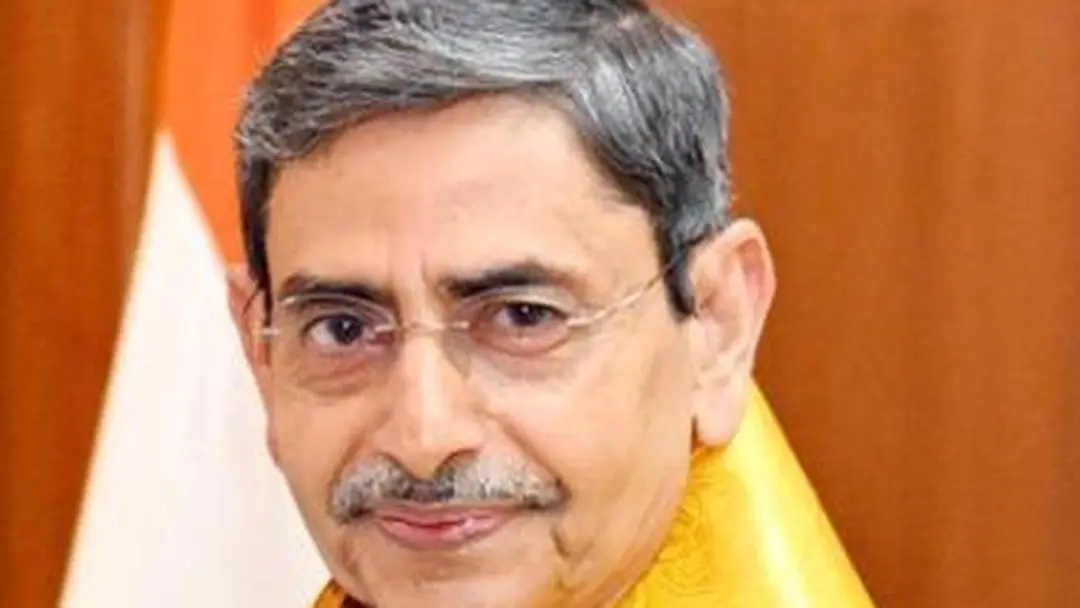
Academics write to Governor against inter-university faculty transfers
Fourteen academicians have written to West Bengal Governor and Chancellor R.N. Ravi opposing the West Bengal Universities and Colleges (Administration and Regulation) Amendment Bill, 2026. Officials said the Bill adds a provision to Section 14A of the 2017 Act permitting inter-university transfer of teaching and non-teaching staff. The signatories said such transfers would disturb teaching and research balance and end institutional autonomy. The Cabinet approved the Bill on September 8 and the Assembly passed it on September 10.
Source
The Hindu — National · read the original report ↗
Desk check · some claims need care
What the desk checked (5)
- 14 academicians wrote to Governor R.N. Ravi opposing the Amendment Bill — Attributed to the letter quoted in the source; signatories partly named.
- The Bill was passed by the West Bengal Assembly on September 10 and approved by the State Cabinet on September 8 — Dates appear in the source; no document or official statement cited.
- The Bill adds a provision to Section 14A of the 2017 Act allowing inter-university transfer of teaching and non-teaching staff — Attributed to unnamed 'officials' in the source.
- Chief Minister Suvendu Adhikari said 'so-called pundits' would be sent to newly established institutions — Quoted in source but the designation is internally questionable; editor must verify before publication.
- Some new universities have no full-time teachers at all — Claim made by the letter writers; not independently sourced.
Analysts’ view opinion
On paper this is a one-clause administrative tweak, but the real policy question is bigger: should staff shortages in new universities be fixed by recruitment or by redistributing people from existing institutions. By inserting a provision into Section 14A of the 2017 Act allowing inter-university transfer of teaching and non-teaching staff "as and when required", the State gains flexibility that the 14 signatories read as centralisation. The government's case is not weak either — institutions reportedly with no full-time teachers need relief now; the risk is that a stopgap quietly substitutes for permanent recruitment, leaving both ends worse off.
- The design weakness is discretion: the story does not indicate what criteria, time limits or appeal route govern the phrase "as and when required".
- The immediate beneficiaries appear to be under-staffed new universities, while the adjustment cost falls on established departments and their research students.
- The implementation problem is institutional rather than logistical — labs, libraries and principal-investigator-linked grants are place-bound and do not travel with a transferred faculty member.
- Cabinet approval on September 8 and Assembly passage in a special session on September 10 was a lawful but compressed sequence that left little room for stakeholder consultation.
- Routing the objection through the Governor in his capacity as Chancellor revives the familiar State–Raj Bhavan contest over authority in higher education.
What to watch — Watch whether the Chancellor assents, withholds or seeks clarification, and whether rules are framed spelling out transfer criteria and safeguards.
The story does not establish what safeguards or criteria will govern transfers, how many staff could be affected, or how the government has responded to the academics' objections.
Deep dive
Research brief · 8 facts · 4 dates · exam-readyThe brief
Context
The West Bengal Assembly has passed the West Bengal Universities and Colleges (Administration and Regulation) (Amendment) Bill, 2026, which inserts a provision in Section 14A of the 2017 parent Act to permit inter-university transfer of teaching and non-teaching staff "as and when required", according to officials. The stated intent, as articulated in the Assembly, is to staff newly established universities that lack faculty. Fourteen academics from West Bengal and elsewhere have written to Governor R.N. Ravi, who is Chancellor of all State universities, arguing that such transfers would damage teaching, research and institutional autonomy. The letter urges that new universities be built through planned recruitment and funding instead.
Key facts
- Fourteen academicians wrote to West Bengal Governor and Chancellor R.N. Ravi opposing the West Bengal Universities and Colleges (Administration and Regulation) (Amendment) Bill, 2026.
- The Bill adds one provision to Section 14A of the existing 2017 Act allowing inter-university transfer of both teaching and non-teaching employees as and when required, officials said.
- The State Cabinet approved the Bill on September 8; the West Bengal Assembly passed it on September 10.
- The Bill was tabled by Higher Education Minister Jagannath Chattopadhyay during a special session of the State Assembly.
- Signatories include Jadavpur University Professor Emeritus Amita Chatterjee, former Palit Professor of Physics (Calcutta University) Amitava Raychaudhuri and former IIM Calcutta Economics Professor Anup Sinha.
- Other signatories include Jadavpur University Raja Ramanna Professor Anupam Basu and former Rabindra Bharati University Vice-Chancellor Sabya Sachi Basu Ray Choudhury.
- The letter says all or most new universities are grossly lacking in staff, infrastructure and facilities, and some have no full-time teachers at all.
- The academics warn that research funding for major projects is often linked to the presence of expert faculty serving as principal investigators, so interdisciplinary and multi-institutional projects could be 'especially jeopardised'.
Timeline
- 2017The West Bengal Universities and Colleges (Administration and Regulation) Act, whose Section 14A is now being amended, is the existing parent law.
- September 8, 2026The State Cabinet approves the Amendment Bill.
- September 10, 2026The West Bengal Assembly passes the Bill during a special session, tabled by Higher Education Minister Jagannath Chattopadhyay.
- September 22, 2026Report published on the letter by 14 academics to the Governor opposing the Bill.
Who has a stake
- Governor and Chancellor R.N. Ravi — As Chancellor of all State universities, he is the addressee of the academics' letter and the authority they urge to consider academic autonomy.
- West Bengal government / Higher Education Minister Jagannath Chattopadhyay — Piloted the Bill; seeks a mechanism to move staff across universities as and when required.
- Chief Minister Suvendu Adhikari — Said in the Assembly that through the legislation 'so-called pundits' will be sent to newly established institutions that would benefit.
- Established universities and their faculty — Risk losing specialised faculty, disturbing structural balance, teaching and research programmes.
- New universities — Lack staff, infrastructure and facilities; some have no full-time teachers; may receive transferred faculty instead of fresh recruitment.
- Research students and scholars — Young researchers could be left without recourse if supervising specialised faculty are transferred; labs and libraries may lie underused.
Why it matters
The Bill touches the core question of who controls staffing in State universities, and whether centralised administrative transfer power is compatible with institutional and academic autonomy. The academics' warning that laboratories, libraries and funded research projects are built around specific expert faculty highlights how personnel decisions directly shape research output. It also spotlights the underlying problem the Bill responds to: new universities operating with severe staff and infrastructure deficits, some with no full-time teachers at all.
UPSC angle
Prelims pointers
- The West Bengal Universities and Colleges (Administration and Regulation) (Amendment) Bill, 2026 amends Section 14A of the 2017 Act.
- The amendment permits inter-university transfer of teaching and non-teaching employees as and when required.
- Cabinet approval: September 8, 2026; passed by West Bengal Assembly: September 10, 2026.
- The Governor of West Bengal, R.N. Ravi, is ex officio Chancellor of all State universities.
- The Bill was tabled by Higher Education Minister Jagannath Chattopadhyay in a special Assembly session.
- Fourteen academicians signed the letter of protest, including Amita Chatterjee, Amitava Raychaudhuri, Anup Sinha and Anupam Basu.
Mains framing
The controversy over West Bengal's 2026 amendment to Section 14A of the Universities and Colleges (Administration and Regulation) Act, 2017 poses a classic tension between administrative efficiency and institutional autonomy in higher education. The State's stated rationale, as voiced in the Assembly, is to staff newly created universities that presently lack teachers; the academics' counter is that each university is a distinct institution with its own academic structure, programmes and requirements, so moving staff would impair the structural balance of both the sending and receiving institutions and hamper teaching and research programmes that "cannot be readily revised or interchanged". Their specific objections are substantive rather than sentimental: specialised faculty attract research scholars, laboratories and libraries are developed around those specialisations, and major research funding is often tied to expert faculty serving as principal investigators, so transfers could leave research students without recourse, material resources underused, and interdisciplinary or multi-institutional projects jeopardised. Their proposed way forward is that new universities be developed through due planning, sufficient funding and extensive recruitment of permanent staff at all levels rather than sporadic transfers from established institutions, with the Governor-Chancellor urged to weigh the fundamental issue of academic autonomy against centralised administrative control.
Key terms
- Section 14A, WB Universities and Colleges (Administration and Regulation) Act, 2017
- The provision of the existing State law to which the 2026 amendment adds a clause enabling inter-university staff transfers.
- Inter-university transfer
- Moving teaching and non-teaching employees from one university to another, permitted 'as and when required' under the amendment.
- Chancellor
- Titular head of State universities; in West Bengal the Governor, R.N. Ravi, holds this office for all universities.
- Principal Investigator
- The lead expert faculty member on a research project, to whose presence major research funding is often linked.
- Institutional autonomy
- A university's freedom to decide its own academic affairs, which the academics say centralised administrative control would end.
- Professor Emeritus
- Honorary title for a retired senior professor retained by a university; held by signatory Amita Chatterjee at Jadavpur University.
Practice questions
- Does empowering State governments to transfer faculty across universities strengthen equitable access to teachers or erode academic autonomy? Discuss with reference to the West Bengal Amendment Bill, 2026.
- Examine the role of the Governor as Chancellor of State universities in mediating disputes between State governments and the academic community.
- New universities in India often begin with acute shortages of permanent faculty and infrastructure. Critically evaluate transfer of existing faculty versus planned recruitment and funding as solutions.
Grounded only in the source report — figures and dates are the source's, not inferred.