
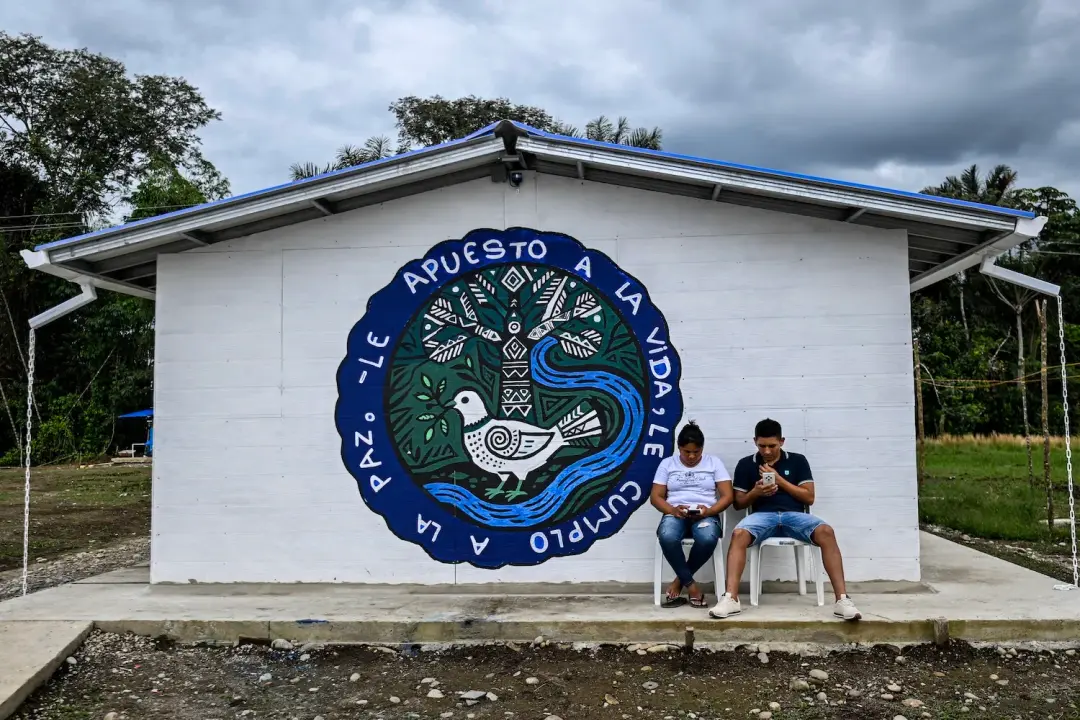
Ex-FARC fighters fear Colombia peace deal rollback under new president
In Colombia's Putumayo region, the Comuccom cooperative of nearly 100 former FARC fighters and their families says it fears the 2016 peace agreement is being undermined. President Abelardo de la Espriella, who replaced Gustavo Petro on Aug. 7, has intensified military operations and on Sept. 7 ended talks with armed groups. ACLED recorded at least 84 deaths in August clashes. The reincorporation agency ARN, monitoring over 10,000 ex-combatants, faces a 37 percent budget cut.
Source
Foreign Policy · read the original report ↗
Desk check · compared with the source
What the desk checked (5)
- Colombian President Abelardo de la Espriella replaced Gustavo Petro on Aug. 7 and closed remaining talks with criminal groups on Sept. 7. — Dates and actions stated directly in the source; no external document cited.
- At least 84 people died in August in clashes between security forces and armed groups, the highest monthly toll since 2018. — Attributed in the source to global monitor ACLED.
- Almost 500 former FARC members have been killed since 2016, including 46 in Putumayo. — Figure appears in source without an attributed institutional source.
- The Agency for Reincorporation and Normalization, monitoring more than 10,000 ex-combatants, faces a 37 percent cut in the 2027 budget approved on Sept. 14. — Figures appear in source, referenced to the government budget proposal and congressional approval.
- Putumayo had more than 44,000 hectares of coca as of 2024 and Colombia produces an estimated 70 percent of world cocaine supply. — Presented as estimates in the source with no monitoring body named.
Analysts’ view opinion
This is not merely a change of government in Bogotá — it is a signal that the entire security architecture resting on implementation of the 2016 accord is under strain. With reincorporation funding cut, talks with armed groups halted and military operations escalating, the story points to a rising risk of re-armament among former fighters. The government's case is not weak either — armed factions are expanding again and a harder line is defensible; but forced coca eradication without an alternative livelihood plan risks generating new confrontations.
- Putumayo is strategically pivotal — a coca production enclave with access to trafficking routes to Brazil and Ecuador, which is why new armed factions have moved into the vacuum left by demobilization.
- A 37 percent budget cut to the ARN, plus a freeze on its funding for the rest of 2026, could weaken the very machinery sustaining more than 10,000 ex-combatants; if monthly stipends stop, dissident recruitment pitches become more effective.
- Shutting down negotiations on Sept. 7 closes the mediated track, though the government can point to the story's own record that only one of nine Total Peace negotiations produced tangible results.
- The 84 deaths recorded in August — the highest monthly toll since ACLED began tracking Colombia in 2018 — plus a judicial order to suspend bombings where minors may be present, will invite growing legal and international scrutiny.
- Even though the state is legally bound to implement the accord until 2030, proposals to abolish key peace institutions could affect ties with partners such as the UN and EU and, more broadly, the credibility of negotiated settlements elsewhere.
What to watch — Watch escalation in areas where forced eradication resumes, whether ARN stipend payments continue, and any early signs of ex-combatants returning to armed groups.
The story does not establish that ex-combatants are re-arming at scale; the halt to stipends is reported as a fear rather than a confirmed decision, and how many of August's dead were civilians is not specified.
Deep dive
Research brief · 8 facts · 10 dates · exam-readyThe brief
Context
Colombia's 2016 peace agreement between the government of Juan Manuel Santos and the FARC, once Latin America's largest left-wing guerrilla group, ended more than five decades of armed conflict and created a transitional justice framework plus a reincorporation programme for demobilized fighters. In Putumayo, a coca-growing region with trafficking routes to Brazil and Ecuador, nearly 100 ex-FARC fighters and their families run the Comuccom cooperative on municipal land at La Granja de Paz. New President Abelardo de la Espriella, who replaced Gustavo Petro on Aug. 7 and is an open critic of the accord, has intensified military operations, ended talks with armed groups and proposed deep cuts to peace institutions. Ex-combatants fear a rollback that would leave them in limbo amid renewed expansion of armed factions.
Key facts
- Comuccom (Cooperativa Multiactiva Comunitaria del Comun) comprises nearly 100 former FARC fighters and their families, running fishponds, a plant nursery, an apiary and a daycare in Puerto Guzman, Putumayo.
- Puerto Guzman municipality loaned the land to the cooperative in 2019 under a reincorporation programme created by the 2016 peace agreement; each ex-combatant received about $2,400 in reincorporation funds.
- At least 84 people died in confrontations between security forces and armed groups in August, the highest monthly toll since ACLED began collecting Colombia data in 2018.
- Another 24 people, including three minors, died in an operation in Guaviare this month, prompting a judge to order suspension of bombings where minors may be present.
- Almost 500 former FARC members have been killed since 2016, including 46 in Putumayo alone.
- The Agency for Reincorporation and Normalization (ARN), which monitors more than 10,000 ex-combatants, faces a 37 percent cut in the 2027 budget; its 2026 funding is already frozen.
- Putumayo had more than 44,000 hectares of coca as of 2024; Colombia produces an estimated 70 percent of the world's cocaine supply.
- Ex-combatants receive a monthly stipend of about $600 tied to individual reincorporation progress and administered by the ARN.
Timeline
- Early 1980sThe left-wing Patriotic Union (UP) emerges from peace negotiations between the FARC and the Colombian government.
- 1986-1990After UP's strong showing in regional and local elections, the government allied with paramilitaries to kill more than 6,000 UP members, supporters and accused sympathizers.
- Early 2000sPresident Alvaro Uribe oversees a military offensive against the FARC; he was later accused of war crimes and of sponsoring militias.
- Nov. 24, 2016President Juan Manuel Santos and FARC leader Timoleon Jimenez sign the peace agreement at the Colon Theater in Bogota (second signing).
- 2017The FARC demobilizes; future Comuccom members settle in La Carmelita, a government-designated transition zone in Putumayo.
- 2018-2022Implementation of the peace agreement slows considerably under President Ivan Duque.
- 2019Puerto Guzman's municipal council approves the land loan for La Granja de Paz, backed by then-mayor Rodrigo Rivera Ramirez.
- 2021Attackers storm the home of former combatant Maria A. and shoot her husband dead.
- 2022Comuccom founder Jorge Santofimio Yepes is killed, presumably by a FARC dissident faction; four others including children are injured. Petro's Total Peace talks begin.
- March 24, 2024A member of the Carlos Patino Front, a FARC dissident group, is photographed patrolling coca crops in Micay Canyon.
Who has a stake
- Comuccom cooperative members — Nearly 100 ex-FARC fighters and families whose homes, fishponds, apiary and daycare on loaned land depend on continued reincorporation support and security.
- President Abelardo de la Espriella — Critic of the 2016 accord; pursuing militarized security, coca eradication and up to 40 percent cuts in state spending.
- Agency for Reincorporation and Normalization (ARN) — Monitors over 10,000 ex-combatants and pays their roughly $600 monthly stipends; faces a 37 percent cut and frozen 2026 funds.
- FARC dissident groups and armed factions — Expanding in Putumayo's coca and trafficking corridors; recruit or threaten ex-combatants who refuse to join.
- Coca farmers, including ex-combatants — Dependent on more than 44,000 hectares of coca in Putumayo; forced eradication without alternatives risks confrontation.
- Transitional justice tribunal created by the accord — Faces threatened funding cuts; hundreds of ex-combatants await final decisions before its mandate expires in 2033.
- Former President Gustavo Petro — His Total Peace initiative's talks, of which only those with the Border Commandos had tangible results, have been terminated.
- International donors (UN, EU) — Funded cooperative projects; their investment in reincorporation is at risk if state support collapses.
Why it matters
Colombia's accord is a global reference point for negotiated ends to long insurgencies, and its unravelling would test whether demobilized fighters can be safely reintegrated. With nearly 500 ex-FARC members already killed, budget cuts and a return to militarized eradication risk pushing former combatants back to armed groups and deepening the cocaine economy. The government is legally bound to implement the agreement until 2030, making the clash between legal obligation and political will the central question.
UPSC angle
Prelims pointers
- The Colombia-FARC peace agreement was signed in 2016 (second signing Nov. 24, 2016, Bogota) by President Juan Manuel Santos and FARC leader Timoleon Jimenez.
- FARC: Revolutionary Armed Forces of Colombia, once Latin America's largest left-wing guerrilla group; demobilized in 2017.
- ARN (Agency for Reincorporation and Normalization) monitors more than 10,000 ex-combatants; 2027 budget cut of 37 percent.
- ACLED recorded at least 84 deaths in August clashes, the highest monthly toll since its Colombia data began in 2018.
- Colombia produces an estimated 70 percent of the world's cocaine supply; Putumayo had over 44,000 hectares of coca in 2024.
- The Colombian government is legally obligated to implement the peace agreement until 2030; the peace tribunal's mandate expires in 2033.
Mains framing
A decade after Colombia's 2016 accord ended over 50 years of conflict, the transitional model is under strain from three directions: renewed territorial expansion by armed factions, including FARC dissidents, into power vacuums left by demobilization in coca-rich Putumayo; the killing of almost 500 former combatants since 2016, which erodes trust in state guarantees; and now a political turn under President de la Espriella, who has ended Total Peace negotiations, intensified offensives that ACLED links to at least 84 deaths in August, and proposed cutting the ARN's budget by 37 percent while abolishing peace-implementation offices. Earlier slowdowns under Ivan Duque, and the historical memory of the massacre of more than 6,000 Patriotic Union members and of the Uribe-era offensive, show that reversals of political commitment carry lethal consequences for demobilized populations. The Comuccom experience also shows what works: collective land access under agrarian reform, pooled reincorporation payments, and support from the UN and EU, alongside state protection details. The way forward, on the source's evidence, lies in honouring the legal obligation to implement the accord until 2030, sustaining ARN stipends and reincorporation projects, ensuring judicial oversight of military operations such as the court order on bombings where minors may be present, and pairing any coca eradication with viable income alternatives for farmers.
Key terms
- Comuccom
- Cooperativa Multiactiva Comunitaria del Comun, a cooperative of nearly 100 ex-FARC fighters and families farming La Granja de Paz in Puerto Guzman, Putumayo.
- ARN
- Agency for Reincorporation and Normalization; monitors more than 10,000 ex-combatants and administers their roughly $600 monthly stipend.
- Total Peace
- Gustavo Petro's initiative to negotiate with armed and criminal groups from 2022; of nine talks only those with the Border Commandos yielded tangible results.
- La Carmelita
- Government-designated land in Putumayo where several hundred ex-fighters settled after the FARC's 2017 demobilization.
- Patriotic Union (UP)
- Left-wing party born of early-1980s FARC-government talks; over 6,000 members and sympathizers were killed after 1986-90 electoral gains.
- ACLED
- Global conflict monitor that has collected data on Colombia since 2018; recorded at least 84 deaths in August clashes.
Practice questions
- Ten years after the Colombia-FARC accord, what does the Colombian experience reveal about the conditions required for successful demobilization, disarmament and reintegration? Discuss.
- Examine how changes of government affect the implementation of negotiated peace agreements, using the shift from Gustavo Petro's Total Peace to Abelardo de la Espriella's militarized approach.
- Forced eradication of coca without alternative livelihoods can deepen conflict. Critically evaluate this proposition in the context of Putumayo.
Grounded only in the source report — figures and dates are the source's, not inferred.