
Surendra Koli, acquitted in Nithari killings case, dies by suicide
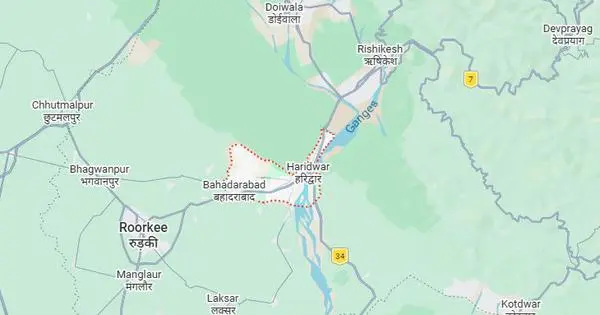
Surendra Koli, acquitted last year in the 2005-'06 Nithari killings case, died by suicide on Friday, NDTV India reported. He was convicted by the Supreme Court in February 2011, but moved a curative petition after the Allahabad High Court acquitted him in October 2023 in 12 cases. In November, the Supreme Court acquitted him in the last pending murder and rape case. Koli spent nearly 19 years in jail and later ran a tea stall in Uttarakhand's Haridwar, India Today reported.
Source
Scroll.in · read the original report ↗
Desk check · some claims need care
What the desk checked (5)
- Surendra Koli died by suicide on Friday. — Attributed to NDTV India; no police or official confirmation given in the source.
- The Allahabad High Court acquitted Koli in October 2023 in 12 cases linked to the Nithari killings. — Stated as fact in the source with dates; no court order cited.
- The Supreme Court acquitted him in November in the last pending murder and rape case after a curative petition, following his February 2011 conviction. — Appears in source; year of the November acquittal is not specified.
- Koli spent nearly 19 years in jail and later ran a tea stall in Haridwar, Uttarakhand. — Jail duration stated in source; tea stall detail attributed to India Today.
- Body parts of children and young adults were traced to Moninder Singh Pandher's Nithari house in December 2006 and police found 19 skeletons; Pandher was also acquitted in October 2023. — Figures and CBI allegations appear in the source as reported background.
Analysts’ view opinion
Surendra Koli's case traces one of the most unusual paths in Indian criminal justice — convicted by the Supreme Court in 2011, acquitted by the Allahabad High Court in 12 cases in 2023, and finally cleared by the Supreme Court in the last murder and rape case through a curative petition. It illustrates both how narrow curative jurisdiction is and why it exists as the last door to correct a possible miscarriage in a final judgment. An acquittal arriving after nearly 19 years in custody puts the spotlight on India's legal vacuum around compensation and rehabilitation for those wrongly imprisoned.
- Relief through a curative petition after a Supreme Court conviction is exceptionally rare and is normally reserved for grave procedural or natural-justice failures.
- Acquittals across more than a dozen cases against one accused raise systemic questions about the quality of investigation, evidence collection and reliance on confessional material.
- An acquittal does not mean no crime occurred — the unresolved question of justice for the Nithari victims' families remains the harder half of this story.
- India has no statutory framework for compensating wrongful incarceration, and this episode revives the Article 21 debate on life, liberty and dignity.
- The death ends the individual case but not the broader legal issues of accountability for investigative lapses and what remains available to the victims' side.
What to watch — Watch for the police report on the death, whether any magisterial or official inquiry follows, and whether any legal avenues remain open in the Nithari victims' cases.
The story does not establish the circumstances or contributing factors behind the death, nor the detailed judicial reasoning in the acquittals or whether any action followed against the investigating agencies.
Deep dive
Research brief · 8 facts · 7 dates · exam-readyThe brief
Context
The Nithari killings refer to a case that surfaced in December 2006 when body parts of children and young adults were traced to Moninder Singh Pandher's house in Nithari village, Noida; police later found 19 skeletons at the premises. The CBI took over the investigation and alleged that Pandher's domestic worker Surendra Koli had raped and killed women and girls, eaten their body parts and in one case cooked them. Koli was convicted by the Supreme Court in February 2011, but was acquitted by the Allahabad High Court in October 2023 in 12 cases and by the Supreme Court in November in the last pending murder and rape case. After nearly 19 years in jail, he moved to Haridwar in Uttarakhand and ran a tea stall; he died by suicide on Friday.
Key facts
- Surendra Koli, acquitted last year in the 2005-'06 Nithari killings case, died by suicide on Friday, as reported by NDTV India.
- Koli had been convicted by the Supreme Court in February 2011.
- The Allahabad High Court acquitted Koli in October 2023 in 12 cases related to the Nithari killings.
- Koli filed a curative petition in the Supreme Court, which in November acquitted him in the last pending murder and rape case.
- Koli spent nearly 19 years in jail.
- After acquittal, Koli moved to Uttarakhand's Haridwar, where he ran a tea stall, India Today reported.
- The killings came to light in December 2006 when body parts of children and young adults were traced to Moninder Singh Pandher's house in Noida's Nithari village.
- Police later discovered 19 skeletons in the house; Moninder Singh Pandher was also acquitted by the High Court in October 2023.
Timeline
- 2005-'06Period to which the Nithari killings pertain.
- December 2006Body parts of children and young adults traced to Moninder Singh Pandher's house in Nithari village, Noida; police later find 19 skeletons.
- February 2011Supreme Court convicts Surendra Koli.
- October 2023Allahabad High Court acquits Koli in 12 cases and also acquits Pandher.
- November (last year)Supreme Court, on Koli's curative petition, acquits him in the last pending murder and rape case.
- After acquittalKoli moves to Haridwar, Uttarakhand, and runs a tea stall.
- FridayKoli dies by suicide, NDTV India reports.
Who has a stake
- Surendra Koli — Pandher's domestic worker; convicted in 2011, acquitted in 2023 and last year; spent nearly 19 years in jail; died by suicide.
- Moninder Singh Pandher — Owner of the Nithari house where remains were found; acquitted by the Allahabad High Court in October 2023.
- Families of the victims — Children and young adults whose body parts and 19 skeletons were found; outcome of the cases ended in acquittals.
- Central Bureau of Investigation — Took over the case and made the allegations of rape, killing and cannibalism against Koli; its investigation did not survive in court.
- Allahabad High Court and Supreme Court — Courts that convicted, then acquitted; the Supreme Court reversed its own 2011 conviction via curative petition.
Why it matters
One of India's most notorious crime cases ended with the acquittal of both accused, and now with the death by suicide of the man who spent nearly 19 years in jail before being cleared. It raises hard questions about investigation quality, the reversal of a Supreme Court conviction through a curative petition, and the absence of closure for victims' families.
UPSC angle
Prelims pointers
- Nithari killings relate to 2005-'06; came to light in December 2006 in Nithari village, Noida.
- Police discovered 19 skeletons at Moninder Singh Pandher's house.
- Surendra Koli was convicted by the Supreme Court in February 2011.
- Allahabad High Court acquitted Koli in 12 cases and Pandher in October 2023.
- Supreme Court acquitted Koli in the last pending murder and rape case in November, on a curative petition.
- The Central Bureau of Investigation (CBI) took over the Nithari investigation.
Mains framing
The Nithari case, from the discovery of body parts and 19 skeletons at a Noida house in December 2006 to the acquittal of both Surendra Koli and Moninder Singh Pandher in 2023 and the Supreme Court's curative-petition acquittal of Koli in November, illustrates how a high-profile prosecution can collapse in appellate scrutiny after a man has served nearly 19 years in prison. That a conviction affirmed by the Supreme Court in February 2011 was later undone through the extraordinary remedy of a curative petition points to weaknesses in investigation and evidence-gathering in a case handled by the CBI, and to the cost of prolonged incarceration for the accused. Koli's death by suicide after running a tea stall in Haridwar, and the families' unresolved loss, underline that acquittal alone does not deliver justice or rehabilitation. The way forward, on the facts available, lies in strengthening forensic and investigative rigour in grave crimes, speedier appellate resolution, and support for those released after long imprisonment; the source does not state any specific policy measures announced.
Key terms
- Nithari killings
- Case pertaining to 2005-'06, in which body parts and 19 skeletons were found at a house in Nithari village, Noida, from December 2006.
- Curative petition
- The remedy Koli used to approach the Supreme Court again after his 2011 conviction; it led to his acquittal in the last pending case.
- Central Bureau of Investigation (CBI)
- Agency that took over the Nithari case and alleged Koli raped and killed women and girls and ate their body parts.
- Moninder Singh Pandher
- Owner of the Nithari house where the remains were found; acquitted by the Allahabad High Court in October 2023.
- Acquittal
- Court's clearing of the accused; Koli was acquitted in 12 cases in October 2023 and in the final murder and rape case in November.
Practice questions
- The Nithari case saw a Supreme Court conviction of 2011 reversed through a curative petition in 2025. What does this reveal about investigative standards and appellate remedies in India's criminal justice system?
- Discuss the consequences of prolonged pre- and post-conviction incarceration for persons later acquitted, with reference to Surendra Koli's nearly 19 years in jail.
- How should the criminal justice system balance the rights of the accused with closure for victims' families in cases that end in acquittal after long trials?
Grounded only in the source report — figures and dates are the source's, not inferred.