
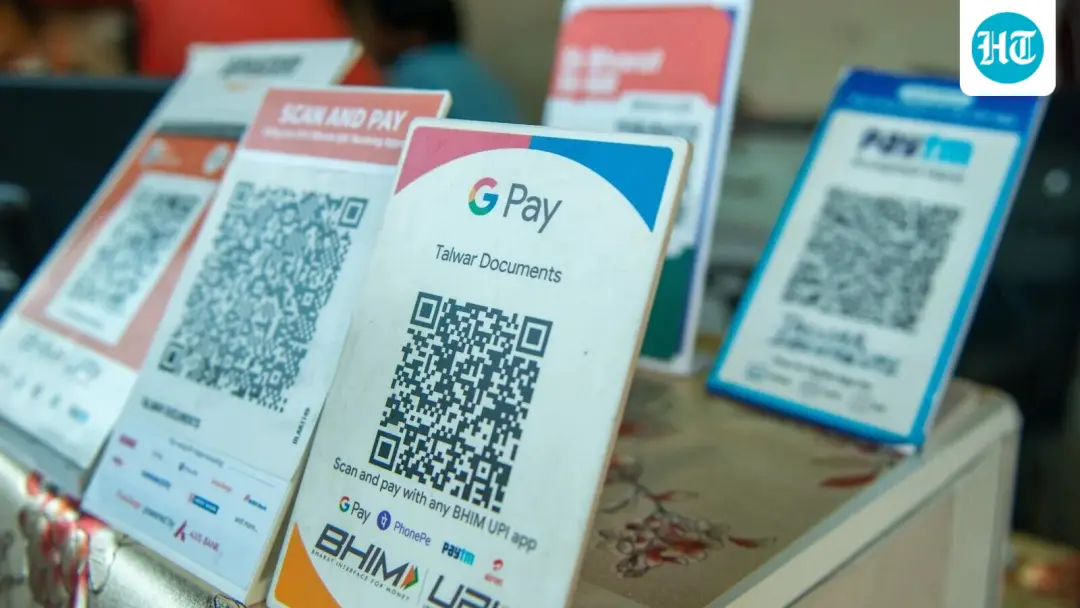
UPI AutoPay recurring payments excluded from new 0.4% MDR
Automated recurring payments made through UPI AutoPay mandates are not covered by the new Merchant Discount Rate framework. Utility and mobile bills, EMIs, insurance premiums, OTT subscriptions and mutual fund SIPs will not attract the 0.4% MDR merely because they exceed ₹2,000. Under the new rules, 0.4% MDR applies to specified merchant transactions above ₹2,000, capped at ₹300 for transactions of ₹75,000 or more. The government has said MDR is not a charge on customers and person-to-person payments remain free.
Source
Hindustan Times — India · read the original report ↗
Desk check · compared with the source
What the desk checked (5)
- A 0.4% MDR will apply to eligible merchant UPI transactions above ₹2,000. — Figure appears in source and is repeated consistently; attributed to the new MDR framework without a dated official notification.
- For transactions of ₹75,000 or more, MDR is capped at ₹300 per transaction. — Figure appears in source; no specific issuing authority or document cited.
- Automated recurring payments through UPI AutoPay mandates are excluded from the MDR framework. — Stated in source as the central claim; no direct citation or quote provided.
- MDR is not a charge on customers; banks advised to ensure merchants do not pass it on. — Attributed generally to the government; no named official or order referenced.
- Person-to-person UPI payments remain free regardless of amount. — Attributed to the government in the source; consistent throughout the text.
Analysts’ view opinion
Carving UPI AutoPay out of the new 0.4% MDR is an economically sensible design choice: recurring mandates are the low-friction, high-volume backbone of household bill payments and SIPs, and pricing them would have risked pushing subscription and investment collections back to cards or other rails. The cost of the new framework therefore stays concentrated on discrete high-value merchant transactions above ₹2,000, with a ₹300 cap softening the burden at the top end. The government's position is that this is a fee inside the payment ecosystem — acquirers, banks and merchants — not a charge on users, but the economics of who ultimately absorbs it will show up over time in merchant pricing behaviour.
- The exclusion protects the most predictable, automated payment flows — utilities, EMIs, insurance, OTT, mutual fund SIPs — which are exactly the categories where even a small levy could dent adoption.
- By keeping P2P transfers and merchant payments up to ₹2,000 free, the framework limits the levy to a narrow slice of transactions, so the direct headline cost to the economy is contained.
- The ₹300 cap on transactions of ₹75,000 or more means large-ticket payments face a declining effective rate, which keeps high-value commerce on UPI rather than pushing it off-rail.
- The immediate gainers are banks, payment service providers and the wider acquiring ecosystem, which have long argued that zero-MDR UPI was unsustainable to run at scale; the immediate payers are merchants in the specified categories.
- Whether merchants quietly rebuild the cost into shelf prices is the real inflation question — the story notes banks have been advised to prevent pass-through and that apps cannot levy platform or hidden fees, but enforcement is what will decide the outcome for consumers.
What to watch — Watch whether merchants in the affected high-value categories adjust prices or nudge customers toward other payment modes, and how strictly the no-pass-through advisory is enforced.
The story does not establish which merchant categories count as "specified" or "eligible", the revenue involved, how the MDR is split within the payment ecosystem, or whether AutoPay's exemption is permanent.
Deep dive
Research brief · 8 facts · 2 dates · exam-readyThe brief
Context
A new Merchant Discount Rate (MDR) framework has come into effect for certain high-value UPI merchant payments, under which a 0.4% charge applies to eligible merchant transactions above ₹2,000, capped at ₹300 for transactions of ₹75,000 or more. This raised questions about whether recurring payments authorised through UPI AutoPay mandates would also attract the charge. UPI AutoPay, described by NPCI as a facility for recurring e-mandates through UPI-enabled apps, lets users authorise a merchant to automatically collect payments such as utility and mobile bills, EMIs, insurance premiums, OTT subscriptions and mutual fund instalments. The source clarifies these automated recurring mandates fall outside the new MDR framework.
Key facts
- A 0.4% MDR applies to specified/eligible UPI merchant transactions above ₹2,000 under the new framework.
- For transactions of ₹75,000 or more, MDR is capped at ₹300 per transaction.
- Automated recurring payments made through UPI mandates (AutoPay) are not covered by the prescribed MDR framework.
- Example cited: a ₹2,500 monthly OTT subscription paid via AutoPay will not attract an extra 0.4% merely for exceeding ₹2,000.
- Example cited: a ₹5,000 monthly mutual fund SIP through a UPI mandate can continue without the new prescribed MDR.
- Merchant payments of up to ₹2,000 remain outside the MDR framework.
- Person-to-person (P2P) UPI payments remain free regardless of amount, whether ₹500 or ₹50,000.
- Paying a merchant ₹5,000 via UPI does not mean the customer automatically pays an additional ₹20.
Timeline
- Not dated in the sourceNew MDR framework comes into effect for certain high-value UPI merchant payments: 0.4% above ₹2,000, capped at ₹300 for transactions of ₹75,000 or more.
- After the framework's rolloutGovernment clarifies MDR is borne within the merchant payment ecosystem, not by customers, and that P2P payments and AutoPay recurring mandates stay outside it.
Who has a stake
- UPI users with AutoPay mandates — Recurring payments for bills, EMIs, insurance premiums, OTT subscriptions and SIPs above ₹2,000 will not attract the new 0.4% MDR.
- Merchants and service providers — MDR applies to eligible merchant transactions above ₹2,000; banks have been advised to ensure they do not pass the cost to customers.
- NPCI — Operates UPI and describes AutoPay as a facility for recurring e-mandates through UPI-enabled apps.
- Banks and UPI apps — Must ensure no pass-through of MDR to customers and no platform fees or hidden charges on users.
- Government — Has stated MDR is borne within the merchant payment ecosystem and is not a charge on customers; P2P payments remain free.
Why it matters
UPI is the default payment method for everyday spending and automated household commitments, so any perception of new fees affects user trust and digital-payment adoption. Clarifying that AutoPay mandates, P2P transfers and merchant payments up to ₹2,000 stay outside the 0.4% MDR limits the reach of the charge to specified high-value merchant transactions. It also places responsibility on banks and apps to prevent the cost from being passed on as hidden charges.
UPSC angle
Prelims pointers
- MDR under the new UPI framework: 0.4% on eligible merchant transactions above ₹2,000.
- MDR cap: ₹300 per transaction for UPI merchant transactions of ₹75,000 or more.
- UPI AutoPay recurring e-mandates are excluded from the new MDR framework.
- Person-to-person UPI payments remain free irrespective of amount.
- Merchant payments up to ₹2,000 remain outside the MDR framework.
- NPCI describes AutoPay as a facility for recurring e-mandates via UPI-enabled apps.
Mains framing
The extension of a Merchant Discount Rate to high-value UPI merchant payments marks a shift from a fully zero-cost model towards partial cost recovery within the payments ecosystem, while deliberately protecting the most socially sensitive flows. The design is calibrated: 0.4% only on specified merchant transactions above ₹2,000, an absolute cap of ₹300 for transactions of ₹75,000 or more, and exclusions for person-to-person transfers, merchant payments up to ₹2,000 and automated recurring mandates through UPI AutoPay, which cover bills, EMIs, insurance premiums, subscriptions and mutual fund SIPs. The implication is that recurring household and investment commitments are insulated from a fee shock, preserving the habit-formation value of e-mandates, while larger merchant transactions contribute to sustaining infrastructure. The chief risk is leakage in implementation: merchants informally recovering the cost or apps levying platform fees, which is why banks have been advised against pass-through and UPI apps barred from hidden charges. The way forward, on the source's own terms, lies in clear communication to users so that no one assumes every payment above ₹2,000 carries a fee, and in supervisory vigilance to keep the incidence of MDR inside the payment ecosystem rather than on customers.
Key terms
- Merchant Discount Rate (MDR)
- A fee on merchant payment transactions, here 0.4% on eligible UPI merchant payments above ₹2,000, borne within the payment ecosystem and not by customers.
- UPI AutoPay
- A facility to create an electronic mandate authorising a merchant to automatically collect recurring payments from a linked bank account.
- E-mandate
- The standing electronic authorisation given by a user for automatic recurring debits through UPI-enabled apps.
- NPCI
- The body that operates UPI and describes AutoPay as a facility for recurring e-mandates through UPI-enabled apps.
- P2P payment
- Person-to-person UPI transfer, which remains free of MDR or transaction charges regardless of amount.
- SIP
- Systematic Investment Plan; periodic mutual fund instalments that can be paid via a UPI mandate without the new MDR.
Practice questions
- Examine the rationale and likely impact of applying a 0.4% Merchant Discount Rate to high-value UPI merchant transactions while exempting P2P payments and AutoPay mandates.
- "MDR is a cost on the payment ecosystem, not on the customer." Discuss the regulatory safeguards needed to ensure this holds in practice.
- How do recurring e-mandate facilities such as UPI AutoPay shape household bill payment and investment behaviour, and why does their exclusion from MDR matter?
Grounded only in the source report — figures and dates are the source's, not inferred.