
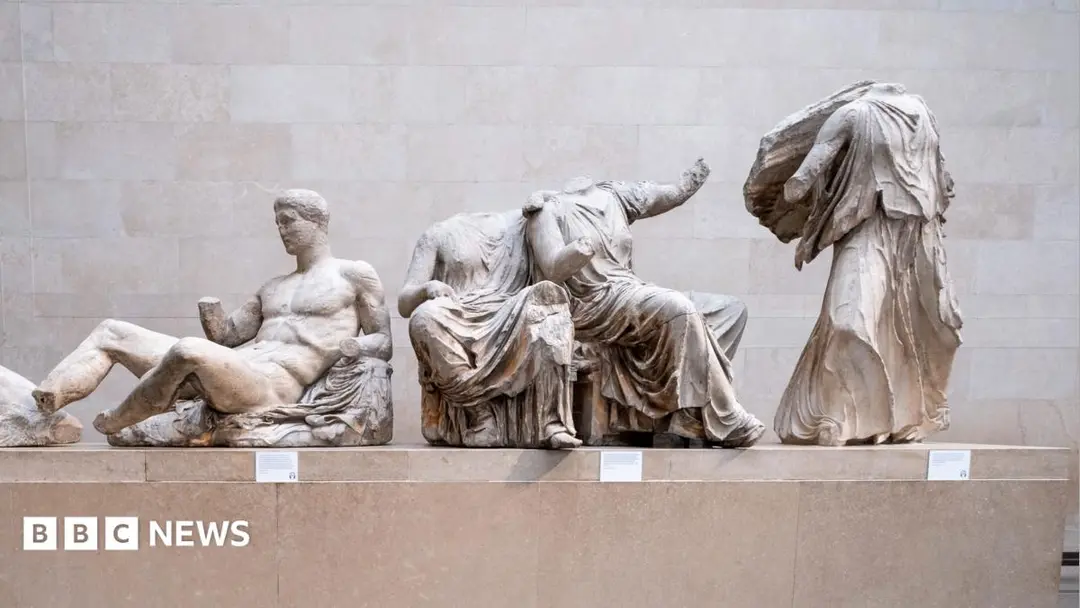
Greek PM urges UK to return Parthenon sculptures permanently
Greek Prime Minister Kyriakos Mitsotakis has urged UK Prime Minister Andy Burnham to find the "political will" to return the Parthenon sculptures permanently. Writing in the Guardian, he rejected the British Museum's suggestion that the Bayeux Tapestry loan could be a template, saying Greece cannot accept any arrangement recognising the museum's ownership. The sculptures, known in the UK as the Elgin Marbles, have been in the British Museum since the 19th Century, and Greece has long disputed the legality of their removal.
Source
BBC — World · read the original report ↗
Desk check · compared with the source
What the desk checked (5)
- Greek PM Kyriakos Mitsotakis urged Andy Burnham to find the 'political will' to return the Parthenon sculptures permanently. — Attributed in source to an article Mitsotakis wrote in the Guardian on Thursday; quotes reproduced as given.
- The sculptures have been in the British Museum since the 19th Century and entered the collection by act of Parliament after an 1816 select committee deemed Lord Elgin's actions legal. — Historical detail stated in the source without external citation; internally consistent.
- British Museum director Nicholas Cullinan suggested the Bayeux Tapestry loan offered hope of a deal with Greece. — Attributed to the named museum director in the source; Mitsotakis's rejection of that template is also quoted.
- Burnham said in 2023 the sculptures should be returned with 'no strings attached' but told the Financial Times last month it is an issue for the British Museum. — Both statements attributed to named outlets and dates in the source; source describes Burnham as having returned to government as prime minister.
- UK law prevents permanent return of British Museum items, though the British Museum Act could be amended. — Presented as the museum's and UK government's position, with the amendment point attributed to campaigners.
Analysts’ view opinion
This looks like a museum row, but it is really an attempt to convert cultural property into diplomatic leverage. Athens is explicitly rejecting the Bayeux Tapestry loan as a template, because a loan would mean conceding the British Museum's ownership — the very point Greece has contested for two centuries. By reframing the issue from a legal question into a test of "political will", Mitsotakis shifts the pressure from the museum to the British government.
- Heritage restitution is increasingly a soft-power currency in bilateral relations, and writing directly in a British newspaper is a deliberate public-diplomacy move aimed at UK opinion.
- London's framing that this "rests" with the museum and with the law lowers its political exposure; Greece's framing presents it as a matter of choice.
- Burnham's shift from calling in 2023 for return with "no strings attached" to saying it is ultimately the museum's issue gives Athens a rhetorical opening it is now using.
- A Greek minister's reported wish for US presidential pressure signals an attempt to internationalise the dispute through a third party, which could create friction between allies.
- The deeper strategic caution for the UK is precedent: any deal conceded to one claimant becomes a reference point for others.
What to watch — Watch for any signal that the UK government is willing to revisit the British Museum Act, or for a creative formula such as a long-term partnership that sidesteps the ownership question.
The story establishes no change in the UK government's position, no active negotiation and no timetable — for now this is a one-sided public appeal.
Deep dive
Research brief · 8 facts · 7 dates · exam-readyThe brief
Context
The Parthenon sculptures — known in Britain as the Elgin Marbles — were carved between 447BC and 432BC for the Temple of Athena (the Parthenon) on the Acropolis in Athens, and were removed in the early 19th Century by British ambassador Lord Elgin with permission from the Ottoman Empire, then the governing authority in Athens. After an 1816 parliamentary select committee found Elgin's actions legal, the sculptures entered the British Museum's collection by an act of Parliament. Greece disputes the legality of the removal and seeks permanent return, while the British Museum and UK government say the law bars permanent deaccessioning, though loans are common. Greek PM Kyriakos Mitsotakis has now written in the Guardian urging UK PM Andy Burnham to find the "political will" to return them for good.
Key facts
- Greek PM Kyriakos Mitsotakis wrote in the Guardian on Thursday urging UK PM Andy Burnham to show "political will" and "courage" to return the Parthenon sculptures.
- The sculptures were created between 447BC and 432BC to decorate the Temple of Athena, now known as the Parthenon, on the Acropolis in Athens.
- Lord Elgin, then British ambassador, was granted permission by the Ottoman Empire to remove some marble statues in the early 19th Century.
- An 1816 parliamentary select committee deemed Elgin's actions legal, and the sculptures entered the British Museum collection by an act of Parliament.
- Mitsotakis said Greece cannot accept any arrangement requiring it to recognise the British Museum's ownership or to 'borrow' parts of its own monument.
- British Museum director Nicholas Cullinan suggested the UK-France Bayeux Tapestry loan arrangement offered hope of a deal with Greece.
- In 2023 Burnham said the sculptures should be returned with "no strings attached"; last month he told the Financial Times "ultimately it's an issue for the British Museum".
- The Parthenon gallery in Athens' Acropolis Museum was deliberately designed with spaces left for the sculptures held in London.
Timeline
- 447BC-432BCThe sculptures are created to decorate the Temple of Athena (the Parthenon) on the Acropolis in Athens.
- Early 19th CenturyLord Elgin, granted permission by the Ottoman authorities in Athens, removes some of the marble statues.
- 1816A British parliamentary select committee deems Elgin's actions legal; the sculptures enter the British Museum collection by act of Parliament.
- 2023Then museum chair George Osborne tells the BBC he wants a "more co-operative arrangement" after a bitter 200-year disagreement; Burnham says the sculptures should go back with "no strings attached".
- Last monthBurnham tells the Financial Times it is "ultimately an issue for the British Museum"; Greece's health minister tells Breitbart News he would like Donald Trump to pressure the UK.
- RecentlyThe Bayeux Tapestry is loaned to the British Museum after decades of rejected requests; director Nicholas Cullinan suggests it could be a model for Greece.
- Thursday (latest)Mitsotakis writes in the Guardian rejecting the Bayeux template and urging permanent return.
Who has a stake
- Kyriakos Mitsotakis, Greek Prime Minister — Seeks permanent reunification of the sculptures; frames return as "a unique act of cultural friendship" rather than a loan.
- Andy Burnham, UK Prime Minister — Once backed return with "no strings attached" and a change in the law; now says the matter rests legally with the British Museum.
- British Museum and director Nicholas Cullinan — Holds the sculptures; says law prevents permanent return but floated the Bayeux Tapestry loan as a possible template.
- UK government — Maintains law bars permanent return; has not signalled amending the British Museum Act is a priority.
- Acropolis Museum, Athens — Its Parthenon gallery was designed with gaps left for the sculptures still in London.
- Campaigners for restitution — Argue the British Museum Act could be amended to permit permanent transfer.
Why it matters
The dispute is a test case for global debates on restitution of cultural property acquired during imperial eras, and on whether loans can substitute for ownership. It also shows how domestic statute — the British Museum Act — can constrain diplomacy, and how leaders' positions can shift once in office.
UPSC angle
Prelims pointers
- Parthenon sculptures, called the Elgin Marbles in the UK, date from 447BC-432BC, from the Temple of Athena on the Acropolis, Athens.
- Lord Elgin removed statues in the early 19th Century with Ottoman permission; an 1816 select committee ruled the removal legal.
- The sculptures entered the British Museum collection through an act of Parliament; the British Museum Act is cited as barring permanent return.
- Bayeux Tapestry: medieval embroidery loaned by France to the British Museum after decades of rejected requests.
- George Osborne, as British Museum chair in 2023, sought a "more co-operative arrangement" with Greece.
- The Acropolis Museum's Parthenon gallery has deliberate gaps for the London-held sculptures.
Mains framing
The Parthenon sculptures dispute illustrates how legal formalism, national identity and cultural diplomacy collide over objects acquired in an imperial context. Britain's position rests on an 1816 select committee finding of legality, an act of Parliament vesting the sculptures in the British Museum, and statutory limits on deaccessioning; Greece contests the lawfulness of the original removal and refuses any arrangement that would have it 'borrow' parts of its own monument or implicitly accept British ownership. Mitsotakis's rejection of the Bayeux Tapestry loan as a template highlights the core difference between a temporary exchange between consenting owners and a contested claim to title, while his analogy of cutting a tapestry in two frames the issue as one of the integrity of a single monument, reinforced by the Acropolis Museum's purpose-built gaps. Burnham's shift from "no strings attached" in 2023 to "it's an issue for the British Museum" shows how political will, not just law, is decisive; campaigners note the British Museum Act could be amended, but the UK government has not signalled priority. A way forward would involve separating the question of ownership from that of display through negotiated cultural cooperation, alongside clarity from the UK on whether legislative change is even on the table.
Key terms
- Parthenon sculptures / Elgin Marbles
- Classical marble sculptures made 447BC-432BC for the Parthenon in Athens, held in the British Museum since the 19th Century.
- British Museum Act
- UK law cited as preventing permanent removal of items from the museum's collection; campaigners say it could be amended.
- Bayeux Tapestry
- Medieval French embroidery recently loaned to the British Museum after decades of refusals; floated as a template for a Greece deal.
- Acropolis Museum
- Athens museum whose Parthenon gallery was designed with empty spaces awaiting the sculptures held in London.
- Lord Elgin
- British ambassador granted Ottoman permission in the early 19th Century to remove marble statues from the Parthenon.
Practice questions
- Should cultural artefacts acquired under colonial or imperial authority be repatriated? Discuss with reference to the Parthenon sculptures dispute.
- "Long-term loans cannot substitute for restitution." Examine this claim in light of Greece's rejection of the Bayeux Tapestry model.
- How do domestic statutes limit a state's ability to conduct cultural diplomacy? Illustrate using the British Museum Act and the Elgin Marbles debate.
Grounded only in the source report — figures and dates are the source's, not inferred.