
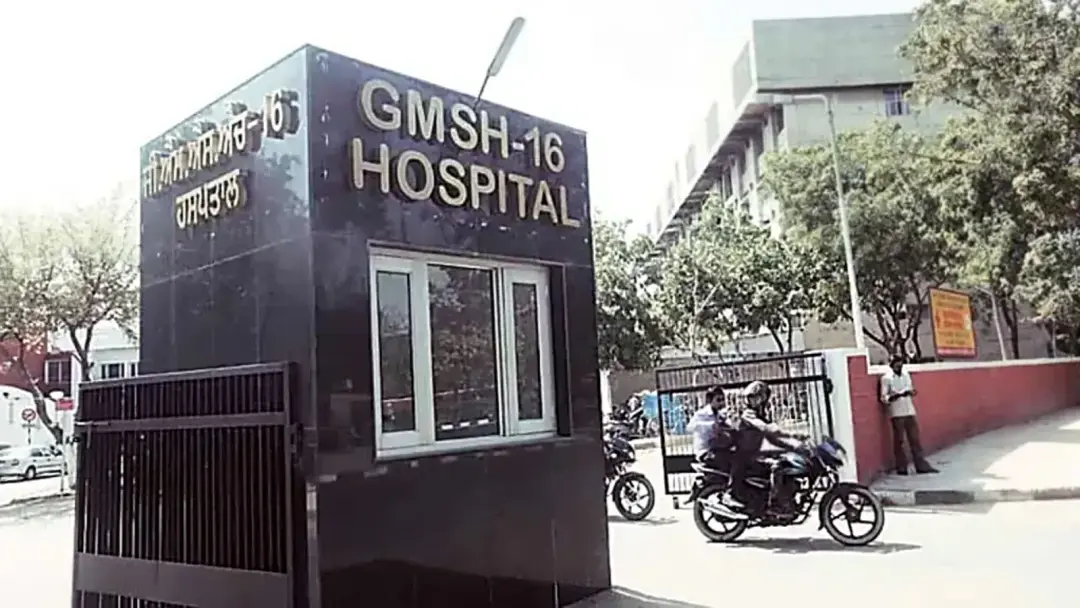
Audit: Rs 38.57 crore patient welfare funds unused at Chandigarh's GMSH-16
A government audit has found that Rs 38.57 crore of the Rs 40.44 crore available under the Rogi Kalyan Samiti at Chandigarh's Government Multi-Speciality Hospital, Sector 16, remained unutilised in 2024-25, with only Rs 1.87 crore spent on patient welfare. It also found 20 fingerprint scanners bought for Rs 20.40 lakh in 2021-22 lay in the store for years. Health Services Director Dr Suman Singh said funds are used as and when they and required permissions are received.
Source
Indian Express — Cities · read the original report ↗
Desk check · compared with the source
What the desk checked (5)
- Rs 38.57 crore of Rs 40.44 crore available under Rogi Kalyan Samiti remained unutilised at GMSH-16 in 2024-25, with only Rs 1.87 crore spent on patient welfare. — Figures appear in source and are attributed to a government audit of GMSH-16; internally consistent.
- 20 fingerprint scanners worth Rs 20.40 lakh procured in 2021-22 lay unused in the hospital store. — Attributed to the audit; source gives supporting dates (one scanner issued May 8, 2023; remaining 19 issued to IT Cell March 19, 2025).
- RKS guidelines require at least two-thirds of revenue from services to be spent on patient welfare. — Stated in source as per RKS guidelines; no document reference given.
- Director Health Services Dr Suman Singh said funds are used as and when they and required permissions are received. — Direct quote attributed to a named official in the source.
- Activist R K Garg, who obtained the audit report, said the findings raise a serious question of accountability. — Named attribution with direct quote; opinion, not verifiable fact.
Analysts’ view opinion
This is not a story about a shortage of money; it is about money sitting still while the people it was meant for went without. The Rogi Kalyan Samiti model was deliberately designed to decentralise spending power to the hospital level so patient needs could be met quickly — and Rs 1.87 crore spent out of Rs 40.44 crore suggests that decentralisation did not work in practice here. The Director, Health Services' explanation that funds are used once money and permissions come through itself points to a structural bottleneck: the approval chain does not move at the speed of patient need.
- RKS guidelines require at least two-thirds of revenue from services to go to patient welfare; the utilisation pattern here is close to the inverse of that norm.
- The intended beneficiaries are economically weaker and marginalised patients, and the unspent heads — medicines, transport, diet, attendant stay — are exactly the out-of-pocket costs that push poor households into distress.
- The fingerprint scanner finding is a procurement-design failure: the audit says the requirement was not realistically assessed, blocking public funds and letting the warranty lapse without productive use.
- Notably, the audit treats non-spending itself as a contravention of rules, which shifts accountability beyond the usual focus on misuse of funds in health governance.
- The activist who obtained the report via disclosure has framed this as a question of fixing responsibility — the key issue is whether this was individual laxity or a flaw in the approval architecture.
What to watch — Watch whether the administration simplifies and time-bounds the RKS approval process, what happens to the unspent balance, and whether responsibility is formally fixed on any authority.
The story does not establish why exactly the money went unspent, whether the balance lapses or carries forward, how many patients were affected, and it makes no allegation of misappropriation.
Deep dive
Research brief · 8 facts · 5 dates · exam-readyThe brief
Context
The Rogi Kalyan Samiti (RKS) is a hospital-level fund mechanism meant to use revenue generated by a government hospital for patient welfare — treatment, transport, diet and attendants' stay — especially for poor and marginalised patients. A government audit of Chandigarh's Government Multi-Speciality Hospital, Sector 16 (GMSH-16) has found that almost all of the RKS money available in 2024-25 lay unspent. The same audit flagged 20 fingerprint scanners bought in 2021-22 that sat in the hospital store for years. The audit report was obtained by activist R K Garg, who has demanded accountability.
Key facts
- Of Rs 40.44 crore available under the Rogi Kalyan Samiti at GMSH-16 in 2024-25, Rs 38.57 crore remained unutilised.
- Only Rs 1.87 crore was spent on patient welfare at GMSH-16 in 2024-25.
- RKS guidelines require at least two-thirds of revenue generated through service provision to be spent on patients' welfare.
- RKS funds can cover treatment, transportation, diet and stay of attendants, especially for economically disadvantaged, vulnerable and marginalised patients.
- 20 fingerprint scanners costing Rs 20.40 lakh were procured in 2021-22 and lay unused in the hospital store.
- Only one scanner was issued — to the Administration Block on May 8, 2023, nearly two years after purchase.
- The remaining 19 scanners lay in the store till March 18, 2025, and were issued to the IT Cell on March 19, 2025.
- The audit said non-utilisation of RKS funds 'defeated the very objective of the scheme' and termed excess procurement irregular and against prescribed rules.
Timeline
- 2021-22GMSH-16 procures 20 fingerprint scanners for Rs 20.40 lakh.
- May 8, 2023One scanner issued to the Administration Block, nearly two years after purchase.
- 2024-25Rs 38.57 crore of Rs 40.44 crore RKS funds remain unutilised; only Rs 1.87 crore spent on patient welfare.
- Till March 18, 2025The remaining 19 scanners continue to lie unutilised in the store.
- March 19, 2025The 19 scanners are issued to the IT Cell.
Who has a stake
- Poor patients at GMSH-16 — Lost access to support for medicines, transport, diet and attendants' stay that RKS funds were meant to cover.
- GMSH-16 (Government Multi-Speciality Hospital, Sector 16) — Its fund utilisation and procurement practices have been flagged as being in contravention of prescribed rules.
- Dr Suman Singh, Director, Health Services, Chandigarh — Handles the institute's functioning; says funds are used as and when funds and required permissions are received, following prescribed protocol.
- Rogi Kalyan Samiti — The scheme's core objective — equitable access to quality healthcare with minimal financial hardship — was found defeated.
- R K Garg, activist — Obtained the audit report; demands fixing of responsibility, explanation and corrective measures.
- Taxpayers / public exchequer — Public money blocked in unused equipment, with warranty period lost without productive use.
Why it matters
Public health financing fails not only when money is scarce but also when available money is not spent: at GMSH-16, Rs 38.57 crore earmarked for the poorest patients stayed idle while patients bore costs of medicines, transport and attendants. The audit also shows how procurement without realistic assessment of need blocks funds and wastes warranty periods. Together, the findings raise questions of accountability in the utilisation of hospital-level welfare funds.
UPSC angle
Prelims pointers
- Rogi Kalyan Samiti (RKS) funds are primarily meant for patient welfare at government hospitals.
- RKS guidelines: at least two-thirds of revenue from service provision must be spent on patients' welfare.
- Permissible RKS uses: treatment, transportation, diet and stay of attendants for poor and marginalised patients.
- GMSH-16 is Chandigarh's Government Multi-Speciality Hospital, Sector 16.
- 2024-25 audit finding: Rs 38.57 crore of Rs 40.44 crore RKS funds unutilised; Rs 1.87 crore spent.
- Dr Suman Singh is Director, Health Services, Chandigarh, and also handles GMSH-16's functioning.
Mains framing
The GMSH-16 audit illustrates a recurring weakness in Indian public health delivery: the absorption gap, where allocated money remains unspent even as intended beneficiaries continue to bear out-of-pocket costs. Rogi Kalyan Samitis were conceived to give hospitals flexible, locally controlled resources — funded largely from user charges — so that treatment, transport, diet and attendant costs of poor patients could be met, with a mandated two-thirds of service revenue going to patient welfare. Yet at GMSH-16 only Rs 1.87 crore of Rs 40.44 crore was used in 2024-25, and the authority responsible attributes this to prescribed protocol and pending permissions — pointing to procedural bottlenecks, unclear delegation of sanction powers and weak internal monitoring rather than a shortage of funds. The parallel finding on 20 fingerprint scanners bought in 2021-22 and issued only by March 2025 shows the mirror-image problem: procurement without realistic assessment of requirement, blocking public money and losing warranty cover. The way forward suggested by the audit and the activist who obtained it lies in fixing responsibility for non-utilisation, requiring clear explanations, simplifying and time-bounding approval procedures, publishing utilisation data, and tying purchases to demonstrated need.
Key terms
- Rogi Kalyan Samiti (RKS)
- Hospital-level patient welfare fund mechanism; guidelines require at least two-thirds of service revenue to be spent on patients' welfare.
- GMSH-16
- Government Multi-Speciality Hospital, Sector 16, Chandigarh — the institution audited.
- Non-utilisation of funds
- Money available but not spent; the audit said it defeated the RKS scheme's objective of minimising patients' financial hardship.
- Irregular procurement
- Buying in excess of actual requirement, which prescribed rules bar; here it blocked funds and lost the warranty period.
- Director, Health Services
- Chandigarh official who also handles GMSH-16's functioning; currently Dr Suman Singh.
Practice questions
- Rogi Kalyan Samitis were designed to make hospital finances responsive to poor patients' needs. Examine why such funds remain unutilised and suggest measures to improve absorption.
- 'Underspending can be as damaging as underfunding in public health.' Discuss with reference to the GMSH-16 audit findings.
- Discuss how audit and RTI-based scrutiny strengthen accountability in public procurement, using the case of the fingerprint scanners at GMSH-16.
Grounded only in the source report — figures and dates are the source's, not inferred.