
NMC clears government medical college in Nirmal district
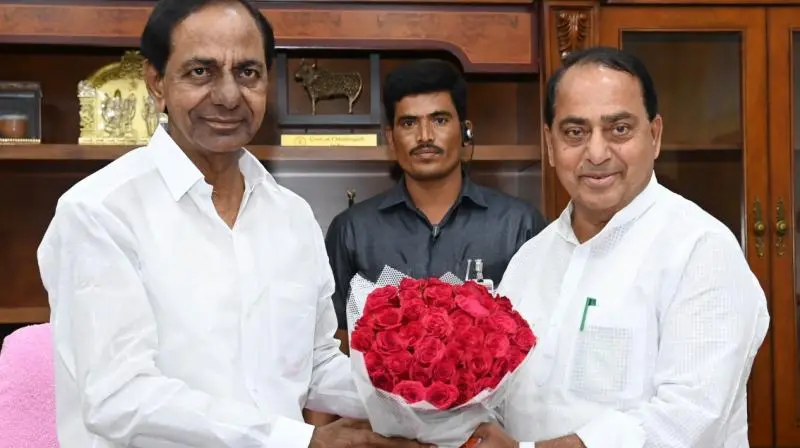
The Medical Assessment and Rating Board (MARB) of the National Medical Council has granted permission to run the government medical college in Nirmal district for the academic year 2023-24 with an intake of 100 students. A letter of intent for 100 MBBS seats was issued. MARB examined infrastructure, laboratories, library, hostels, hospital, faculty experience and publications, nursing and paramedical staff. Minister Indrakaran Reddy thanked Chief Minister K. Chandrashekar Rao for sanctioning the college and providing funds.
Source
Nirmal — politics · read the original report ↗
Desk check · compared with the source
What the desk checked (5)
- NMC's Medical Assessment and Rating Board granted permission to run the government medical college in Nirmal district for 2023-24 with an intake of 100 students. — Attributed to MARB/NMC decision as reported in the source; figure of 100 appears in source.
- A letter of intent for 100 MBBS seats along with permission for the medical college was issued. — Stated in source without naming the issuing officer or document date.
- The state government sanctioned the medical college with suitable land for Nirmal. — Stated in source; no order number or date given.
- MARB examined infrastructure, laboratories, library, hostels, hospital, faculty experience and publications, residents, nursing and paramedical staff. — Described in source as part of the assessment process; no inspection report cited.
- Minister Indrakaran Reddy thanked Chief Minister K. Chandrashekar Rao for sanctioning the college and providing funds. — Attributed to the minister; no direct quote provided in source.
Analysts’ view opinion
The NMC's letter of intent for 100 MBBS seats at Nirmal is best read as a clearance milestone within a wider state strategy of placing a government medical college in each district, rather than as a stand-alone announcement. The regulatory value lies in what MARB actually inspected — laboratories, library, hostels, the attached hospital, faculty experience and publications, and nursing and paramedical staff — which means the college has cleared a paper-and-premises threshold. The harder policy question, which this story does not address, is whether faculty and clinical load can be sustained year after year as successive batches move into clinical years.
- A letter of intent is an entry-level approval tied to one academic year, not a permanent sanction, so annual renewal and compliance remain the operative governance test.
- The scheme's primary beneficiaries are students from underserved districts who gain local access to MBBS seats, and district residents who benefit if the teaching hospital deepens tertiary care.
- The stated sequence — state sanctions land and funds, centre's regulator inspects and permits — is a textbook example of split accountability, where delays or shortfalls can be attributed across two levels of government.
- The recurring implementation risk in district medical colleges everywhere is faculty recruitment and retention, plus adequate patient inflow for clinical training, neither of which a one-time inspection settles.
- Compared with the older model of a few large urban colleges, district-level expansion widens access but spreads scarce teaching talent thinner — a trade-off worth tracking rather than assuming away.
What to watch — Watch whether the 100 seats are actually filled in the 2023-24 counselling cycle and whether renewal for the following year comes without conditions or shortfall notices on faculty and hospital capacity.
The story does not establish the college's current faculty strength, hospital bed capacity, funds actually released, or whether any conditions were attached to the permission.
Deep dive
Research brief · 7 facts · 3 dates · exam-readyThe brief
Context
The Medical Assessment and Rating Board (MARB), the arm of the National Medical Council (NMC) that regulates medical colleges, has cleared a new government medical college in Telangana's Nirmal district for the 2023-24 academic year. The state government had sanctioned the college and allotted suitable land for it, and released funds for building infrastructure. MARB permission, issued as a letter of intent, is the statutory step that allows a new college to admit its first MBBS batch.
Key facts
- MARB of the NMC has granted permission to run the government medical college in Nirmal district for academic year 2023-24.
- The approved annual intake is 100 students.
- A letter of intent for 100 MBBS seats, along with permission for the medical college, was issued.
- The Telangana state government sanctioned the government medical college for Nirmal along with suitable land.
- MARB's assessment covered infrastructure facilities, laboratories, library, hostels and the attached hospital.
- MARB also examined availability of faculty, their experience and publications, plus residents, nursing and paramedical staff.
- Minister Indrakaran Reddy thanked Chief Minister K. Chandrashekar Rao for sanctioning the college and providing funds for infrastructure.
Timeline
- Before the approval (date not stated in the source)State government sanctions a government medical college for Nirmal with suitable land and releases funds for infrastructure.
- Not dated in the sourceMARB inspects infrastructure, laboratories, library, hostels, hospital, faculty and support staff at the Nirmal college.
- For academic year 2023-24MARB grants permission to run the college and issues a letter of intent for 100 MBBS seats.
Who has a stake
- National Medical Council (NMC) and its Medical Assessment and Rating Board (MARB) — Statutory regulator that assesses and permits new medical colleges and their MBBS intake.
- Telangana state government — Sanctioned the college, provided land and funds; expansion of state-run medical education.
- MBBS aspirants in Nirmal and the region — Gain 100 additional government medical seats from 2023-24.
- Minister Indrakaran Reddy — Local political representative who credited the Chief Minister for the sanction and funding.
- Chief Minister K. Chandrashekar Rao — Credited with sanctioning the college and providing infrastructure funds.
- Patients in Nirmal district — The attached teaching hospital expands access to public healthcare locally.
Why it matters
Each new government medical college adds affordable MBBS seats and brings a teaching hospital to a district that previously depended on larger towns for tertiary care. The approval also shows how NMC's regulatory checks on faculty, hospital and infrastructure decide whether state-sanctioned colleges can actually admit students.
UPSC angle
Prelims pointers
- MARB (Medical Assessment and Rating Board) is a board of the National Medical Council that grants permission to run medical colleges.
- Nirmal district government medical college: permitted for academic year 2023-24 with 100 MBBS seats.
- A 'letter of intent' precedes/accompanies permission for a new medical college's MBBS seats.
- MARB assessment parameters include infrastructure, labs, library, hostels, hospital, faculty experience and publications, residents, nursing and paramedical staff.
- Nirmal district is in Telangana; the news was reported from Adilabad.
- State role: sanctioning the college, providing suitable land and infrastructure funds.
Mains framing
The clearance of a government medical college at Nirmal illustrates the two-tier structure of expanding medical education in India: states sanction colleges, provide land and capital funds, while the National Medical Council's Medical Assessment and Rating Board verifies whether the college meets prescribed standards of infrastructure, laboratories, library, hostels, teaching hospital, faculty strength and experience, and nursing and paramedical support before permitting an intake. In this case a letter of intent for 100 MBBS seats was issued for 2023-24. The implications are twofold: additional low-cost government seats reduce dependence on high-fee private education, and the attached teaching hospital strengthens district-level public healthcare in a relatively underserved region. The binding constraint, as MARB's own checklist suggests, is sustaining qualified faculty, resident doctors and functioning hospital services after the first batch is admitted; the way forward lies in timely faculty recruitment, phased infrastructure completion in step with rising student numbers, and continued state funding so that permission granted year to year is not jeopardised. The source does not detail faculty numbers, costs or future intake expansion.
Key terms
- National Medical Council (NMC)
- The national regulator for medical education named in the story as the parent body of MARB.
- Medical Assessment and Rating Board (MARB)
- NMC board that assesses medical colleges and grants permission to run courses and admit students.
- Letter of Intent
- The formal communication issued here for 100 MBBS seats along with permission for the medical college.
- MBBS intake
- The number of students a college may admit annually; fixed at 100 for Nirmal for 2023-24.
- Teaching hospital
- The attached hospital whose facilities MARB examined as part of the college's assessment.
Practice questions
- How does the National Medical Council's assessment and rating mechanism shape the expansion of government medical colleges in India? Discuss with reference to the Nirmal approval.
- Adding MBBS seats is only the first step in improving district healthcare. Examine the challenges of faculty availability and teaching-hospital capacity in newly sanctioned government medical colleges.
- What roles do the state government and the central regulator respectively play in establishing a new medical college? Illustrate using the Nirmal case.
Grounded only in the source report — figures and dates are the source's, not inferred.