
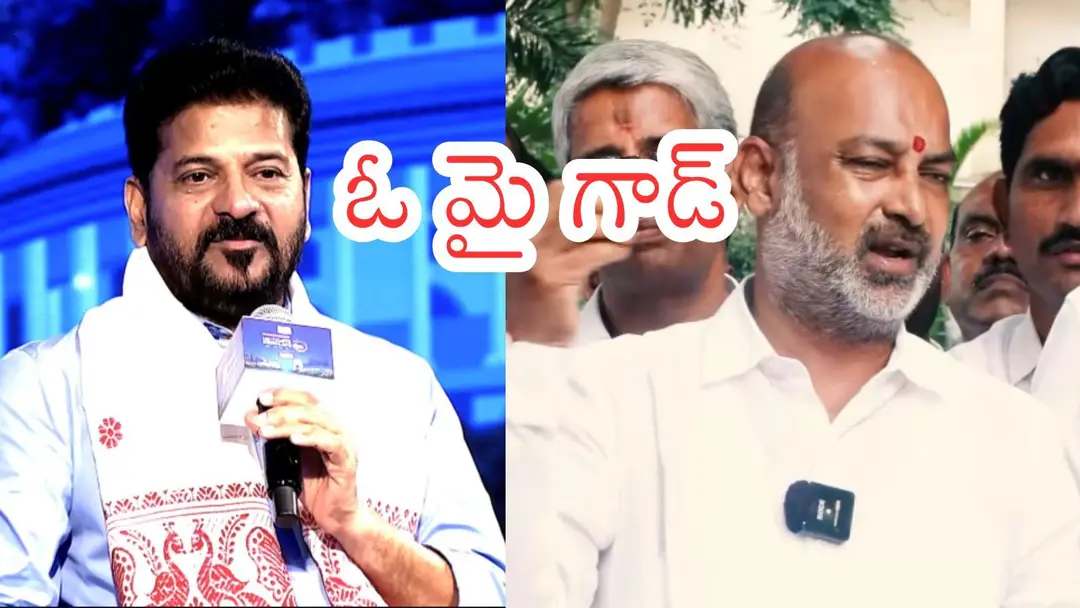
Revanth Reddy's remarks on Rama, Shiva draw BJP criticism
At a media meeting in Delhi, Telangana Chief Minister Revanth Reddy said people of the north are devotees of Rama while those in the south are devotees of Shiva. He said Shiva is the god of the poor and Rama the god of the wealthy, and alleged the BJP was using Rama for political gain. He asked why BJP leaders say only 'Jai Sri Ram' and not 'Hara Hara Mahadeva'. Union Minister Bandi Sanjay and other BJP leaders condemned the remarks, calling the north-south and rich-poor division of gods irresponsible.
Source
Politics · read the original report ↗
Desk check · some claims need care
What the desk checked (5)
- CM Revanth Reddy said at a Delhi media meeting that Shiva is the god of the poor and Rama the god of the wealthy, and that northerners are Rama devotees while southerners are Shiva devotees. — Attributed in the source to Revanth Reddy; no date, venue name or full transcript given.
- Revanth Reddy asked why BJP leaders say only 'Jai Sri Ram' and not 'Hara Hara Mahadeva'. — Attributed to Revanth Reddy in the source; no direct recording or quote source cited.
- Union Minister Bandi Sanjay and other BJP leaders condemned the remarks as shameful and irresponsible for dividing gods along north-south and rich-poor lines. — Attributed to named and unnamed BJP leaders; exact quotes and occasion not specified.
- BJP leaders posted videos of PM Narendra Modi chanting Shiva's name and cited Vemulawada as Dakshina Kashi and Bhadrachalam as Dakshina Ayodhya. — Attributed to BJP leaders in the source; no links, dates or platform details provided.
- Congress alleges BJP came to power at the Centre using the Rama slogan and the Ayodhya temple issue. — Presented as a Congress allegation and partly as the writer's opinion; no specific Congress leader cited.
Analysts’ view opinion
Revanth Reddy's remarks look less like an offhand comment and more like an attempt to build a counter-narrative on terrain the BJP has dominated — faith — by stacking two fault lines, North vs South and rich vs poor, onto a Ram-versus-Shiva frame. But it is a double-edged weapon: it hands the BJP the charge that Congress is dividing Hindu deities, which is why Bandi Sanjay and other leaders hit back immediately, invoking Vemulawada and Bhadrachalam. That he said it in Delhi suggests the message was aimed not only at Telangana voters but at raising his profile within the national Congress conversation.
- A party that brands itself secular is here trying not to vacate religious ground but to translate it into a socio-economic argument through the 'Shiva is the god of the poor' framing.
- For the BJP this is comfortable ground, since the 'insulting/dividing deities' charge can shift debate away from governance and delivery toward religious sentiment.
- By circulating videos of the Prime Minister invoking Shiva, the BJP sought to neutralise the premise that it is wedded to a single deity.
- The North-South framing may resonate with regional identity, but it risks backfiring in parts of Telangana where Ram devotion is strong, as the BJP's Bhadrachalam reference underlines.
- It is also an internal test: whether the Congress leadership embraces or distances itself from this line will shape how much political capital Revanth gains or spends.
What to watch — Watch whether Revanth doubles down or softens the line, how the Congress high command responds, and whether the BJP converts this into a sustained state-wide campaign theme.
The story does not establish the full context of the remarks, whether this was a calculated strategy or an unscripted aside, or how voters themselves are reacting.
Deep dive
Research brief · 8 facts · 3 dates · exam-readyThe brief
Context
Telangana Chief Minister Revanth Reddy, speaking at a media meeting in Delhi, drew a distinction between Rama and Shiva along north-south and rich-poor lines, and accused the BJP of using Rama for political gain. The remarks triggered sharp counters from Union Minister Bandi Sanjay and other BJP leaders, who called the division of deities irresponsible and shameful. The exchange fits a longer pattern in which, as the source notes, parties have been pulled toward religious symbolism since the rise of vote-bank politics — the BJP built a nationwide slogan around Rama and the Ayodhya Ram temple, while the Congress projects itself as secular and is accused by the BJP of appeasing one community.
Key facts
- At a media meeting in Delhi, Telangana CM Revanth Reddy said people of the north are devotees of Rama and people of the south are devotees of Shiva.
- Revanth Reddy said "Shiva is the god of the poor, Rama is the god of the wealthy" and alleged the BJP is using Rama for political gain.
- He asked why BJP leaders say only 'Jai Sri Ram' and never 'Hara Hara Mahadeva'.
- Union Minister Bandi Sanjay and several BJP leaders strongly condemned the remarks.
- BJP leaders called it shameful to divide gods and Hindu traditions into north-south and poor-rich categories, and termed the CM's words irresponsible.
- BJP leaders pointed to Telangana's Vemulawada as 'Dakshina Kashi' and Bhadrachalam as 'Dakshina Ayodhya' to rebut the north-south framing.
- BJP leaders posted videos of Prime Minister Narendra Modi chanting Shiva's name on various occasions.
- Congress alleges the BJP came to power at the Centre by raising a nationwide Rama slogan and by taking up the Ayodhya Ram temple to unite Hindus.
Timeline
- Earlier (as recalled in the source)BJP builds a nationwide slogan around Rama and the Ayodhya Ram temple; Congress declares itself a secular party, BJP counter-alleges Muslim appeasement.
- RecentlyAt a media meeting in Delhi, CM Revanth Reddy makes the Rama-Shiva, north-south, rich-poor remarks.
- After the remarksUnion Minister Bandi Sanjay and other BJP leaders condemn the statement and post videos of PM Modi invoking Shiva.
Who has a stake
- Revanth Reddy, Telangana Chief Minister — Made the remarks; seeks to blunt the BJP's claim over Rama by invoking Shiva, but faces charges of dividing deities.
- Bharatiya Janata Party — Its identification with the 'Jai Sri Ram' slogan and the Ayodhya temple is being politically challenged; it responded with strong counters.
- Bandi Sanjay, Union Minister — Led the BJP's condemnation of the CM's statement as irresponsible and shameful.
- Congress party — Projects itself as secular while alleging BJP used Rama for power; now associated with Revanth's 'Hara Hara Shambho Mahadeva' framing.
- Devotees and temple towns of Telangana — Vemulawada (Dakshina Kashi) and Bhadrachalam (Dakshina Ayodhya) are cited as evidence against a north-south split of faith.
- Political analysts — Argue Hari and Hara, Jesus and Allah are one, that faith is personal, and humanity matters more than divinity.
Why it matters
The row shows how deities are being drawn into electoral competition, with parties seeking to consolidate or capture the Hindu vote bank through religious symbolism rather than policy. Framing gods along regional and class lines risks hardening north-south and rich-poor fault lines in public discourse. It also signals a shift in Congress strategy in Telangana — countering the BJP's Rama plank with a Shiva-centred appeal rather than a purely secular one.
UPSC angle
Prelims pointers
- Revanth Reddy is the Chief Minister of Telangana; the remarks were made at a media meeting in Delhi.
- Bandi Sanjay is a Union Minister who led the BJP's condemnation of the remarks.
- Vemulawada in Telangana is referred to as 'Dakshina Kashi'; Bhadrachalam as 'Dakshina Ayodhya'.
- 'Jai Sri Ram' is the slogan associated with the BJP; 'Hara Hara Mahadeva' invokes Shiva.
- Congress alleges the BJP's rise at the Centre was aided by the Ayodhya Ram temple issue.
- BJP counter-alleges that Congress acts as pro-Muslim while calling itself secular.
Mains framing
The controversy over Telangana CM Revanth Reddy's Rama-Shiva remarks illustrates the deepening entanglement of religious identity with electoral strategy in India. The proximate cause is competition for the Hindu vote: the BJP's long association with the 'Jai Sri Ram' slogan and the Ayodhya temple, and the Congress's search for a counter-idiom that does not cede religious ground, leading Revanth Reddy to cast Shiva as the god of the poor and the south and Rama as the god of the wealthy and the north. The implications are twofold — such framing invites accusations of dividing deities and traditions along regional and class lines, as BJP leaders argued by citing Vemulawada as Dakshina Kashi and Bhadrachalam as Dakshina Ayodhya and by circulating videos of PM Modi invoking Shiva; and it shifts political debate from governance to competitive piety. As the source notes, all gods are equal and humanity matters more than divinity, yet votes push parties to privilege the latter. The way forward suggested within the source is restraint: treating faith as personal, recognising that Hari, Hara, Jesus and Allah point to the same good, and keeping deities out of forced political usage.
Key terms
- Vote-bank politics
- Electoral strategy of consolidating a bloc of voters, here by appealing to religious identity, which the source says drew parties toward spirituality.
- Jai Sri Ram
- Slogan invoking Rama, which the source associates with the BJP's nationwide political mobilisation.
- Hara Hara Mahadeva / Hara Hara Shambho Mahadeva
- Chant invoking Shiva, which Revanth Reddy asks why BJP leaders never use, and which the source sees him adopting.
- Dakshina Kashi
- Term used by BJP leaders for Vemulawada in Telangana, presenting it as a southern counterpart to Kashi.
- Dakshina Ayodhya
- Term used by BJP leaders for Bhadrachalam in Telangana, as a southern counterpart to Ayodhya.
- Ayodhya Ram temple
- Temple issue the Congress alleges the BJP used to unite Hindus and gain power at the Centre.
Practice questions
- Critically examine how the use of religious symbolism in electoral politics affects India's secular framework, with reference to recent political exchanges over deities.
- Do statements dividing deities along regional and economic lines strengthen or weaken social cohesion? Discuss with arguments from both sides.
- Discuss the tension between competitive piety and governance-based political competition in Indian state politics.
Grounded only in the source report — figures and dates are the source's, not inferred.