
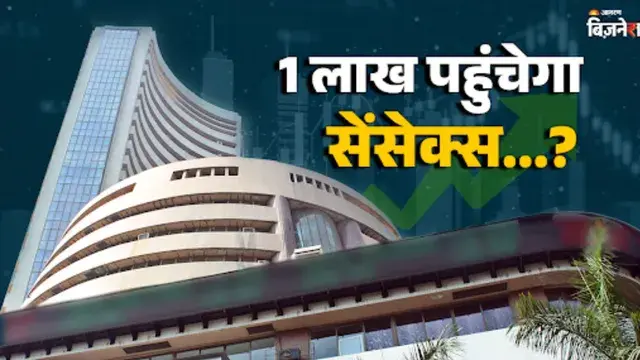
Morgan Stanley sees Sensex at 1 lakh by June 2026
A Morgan Stanley report projects the BSE Sensex could reach 1 lakh by June 2026 in its bull case, assigned a 30% probability. The base case, with 50% probability, puts the index at 89,000, while the bear case, at 20% probability, sees it falling to 70,000. The Sensex was at 84,997.13 on October 29, 2025 and 83,620.91 on November 6. The report cites government and RBI reflation efforts, improving ties with China and positive expectations from an India-US trade deal.
Source
Share market tips · read the original report ↗
Desk check · some claims need care
What the desk checked (4)
- Morgan Stanley projects the Sensex could reach 1 lakh by June 2026 in its bull case, given 30% probability. — Attributed to a Morgan Stanley report in the source; no direct quote or report date provided.
- Base case probability 50% with Sensex at 89,000; bear case probability 20% with Sensex at 70,000. — Figures appear in the source and the three probabilities total 100%, internally consistent.
- Sensex was at 84,997.13 on 29 October 2025 and 83,620.91 on 6 November 2025. — Specific index levels given in source without citing an exchange data source; internally consistent with the reported decline.
- Government and RBI reflation efforts, improving India-China ties and a likely positive India-US trade deal outcome support the upside. — Presented as Morgan Stanley's view; unverifiable here and partly speculative.
Analysts’ view opinion
The only sensible way to read the Morgan Stanley note is as a probability distribution, not a target. Assigning just 30% odds to Sensex at 1 lakh, 50% to a base case of 89,000 and 20% to a bear case of 70,000 says the brokerage sees upside from the current 83,620 level but treats the downside as far from trivial. The growth story here rests on domestic reflation — tax cuts and looser banking rules — which means corporate earnings will only justify these numbers if money actually reaches consumers and credit starts flowing.
- A base case of 89,000 implies only modest gains from today's level — the report's real message is cautious optimism, not a 1-lakh headline.
- Who pays and who gains matters: tax cuts shave government revenue, while the benefit flows to households, consumption-facing companies and banks leveraged to credit growth.
- Two of the three drivers — China ties and a US trade deal — are external and not fully in India's control, which makes the 20% bear-case probability look reasonable rather than alarmist.
- The slide from 29 October to 6 November is within normal correction range; reading a week of movement as a structural trend would be a mistake.
- The gains would be uneven by sector: a trade deal helps export-facing industries, while tax and credit measures favour domestic demand plays.
What to watch — Watch whether tax cuts and banking relaxations actually show up as consumption demand and credit growth in quarterly corporate earnings — if they don't, the bull-case probability shrinks.
This is one brokerage's forecast, and the story does not establish the earnings assumptions behind the targets, which specific tax or banking measures were counted, or the terms of any US trade deal — it is not investment advice.
Deep dive
Research brief · 8 facts · 4 dates · exam-readyThe brief
Context
Global financial firm Morgan Stanley has released a report on the outlook for Indian equities, projecting that the BSE Sensex could touch the 1 lakh mark by June 2026 in its most optimistic scenario. The projection comes after a stretch of weakness in the benchmark index since October 2025, which had worried investors. The report offers three scenarios — bull, base and bear — each with an assigned probability, and argues that the factors that made India underperform other markets have now ended.
Key facts
- Morgan Stanley's bull case sees the Sensex reaching 1 lakh by June 2026, with a 30 per cent probability assigned to this scenario.
- The base case, given a 50 per cent probability, puts the Sensex at 89,000 — neither sharp gains nor sharp losses.
- The bear case, with a 20 per cent probability, sees the Sensex falling to 70,000, worse than current levels.
- The BSE Sensex stood at 84,997.13 on October 29, 2025.
- The Sensex slipped to 83,620.91 by November 6, 2025.
- The report says the factors behind the Sensex underperforming other markets have now ended and good days are returning for Indian equities.
- Reasons cited for a rise: reflation efforts by the government and the RBI together — tax cuts, easing of banking rules and measures in the common man's interest.
- Other drivers cited: improving India-China relations and the likelihood of a positive outcome from the India-US trade deal.
Timeline
- October 2025 onwardsA continued decline is observed in the BSE Sensex, worrying investors.
- October 29, 2025BSE Sensex at 84,997.13.
- November 6, 2025BSE Sensex down to 83,620.91; Morgan Stanley's reassuring report on the index is in focus.
- By June 2026Bull-case target of Sensex at 1 lakh, per the Morgan Stanley report.
Who has a stake
- Retail and institutional investors — Direction of the Sensex decides portfolio values; the report offers relief after the post-October 2025 slide.
- Morgan Stanley — Its scenario-based Sensex targets (1 lakh / 89,000 / 70,000) shape market sentiment and its own research credibility.
- Government of India — Tax cuts and pro-consumer measures form part of the reflation push cited as a driver of market gains.
- Reserve Bank of India — Easing of banking rules and its share of reflation efforts are central to the bullish case.
- India-US trade negotiators — A positive trade deal outcome is one of the assumptions behind the improved market outlook.
- India-China bilateral relationship — Improving ties are listed as a factor supporting the revival in Indian equities.
Why it matters
The Sensex is the most widely watched barometer of Indian corporate performance and investor confidence, and a fall from nearly 85,000 to below 83,700 in about a week had unsettled investors. A credible global brokerage assigning a 50 per cent probability to 89,000 and a 30 per cent chance of 1 lakh signals that domestic policy easing and diplomatic normalisation are being priced in as growth drivers. Equally, the 20 per cent bear case at 70,000 is a reminder that such targets are probabilities, not promises.
UPSC angle
Prelims pointers
- BSE Sensex is the benchmark index of the Bombay Stock Exchange; NSE Nifty is the National Stock Exchange benchmark.
- Morgan Stanley bull case: Sensex 1 lakh by June 2026 at 30% probability; base case 89,000 at 50%; bear case 70,000 at 20%.
- Sensex levels cited: 84,997.13 on October 29, 2025 and 83,620.91 on November 6, 2025.
- Reflation efforts in the report mean tax cuts, relaxed banking rules and pro-consumer measures by the government and RBI.
- External factors named in the report: improving India-China ties and an expected India-US trade deal.
Mains framing
Morgan Stanley's scenario framework for the Sensex — 1 lakh (30 per cent), 89,000 (50 per cent) and 70,000 (20 per cent) by June 2026 — illustrates how equity market expectations in India are now shaped as much by policy and diplomacy as by corporate earnings. The proximate cause of investor anxiety was the index's slide from 84,997.13 on October 29, 2025 to 83,620.91 on November 6, 2025. The report's optimism rests on three grounds: coordinated reflation by the government and the RBI through tax cuts, easier banking norms and consumption-supportive steps; normalisation of relations with China; and an anticipated positive outcome in the India-US trade deal. The implication is that domestic demand stimulus and external de-risking together could restore India's relative performance against other markets, which the report says had lagged for reasons now exhausted. The way forward, as framed by the report's own structure, is to read such targets probabilistically rather than as forecasts — the bear case at 70,000 shows the downside if reflation or trade outcomes disappoint — and for investors to weigh policy follow-through and trade negotiation results rather than headline index milestones.
Key terms
- BSE Sensex
- Benchmark index of the Bombay Stock Exchange, cited at 84,997.13 on October 29, 2025 and 83,620.91 on November 6, 2025.
- Bull case
- Optimistic scenario; here Sensex at 1 lakh by June 2026, with 30 per cent probability.
- Base case
- Most likely middle scenario, neither strong nor weak; Sensex at 89,000 with 50 per cent probability.
- Bear case
- Pessimistic scenario where conditions worsen; Sensex at 70,000 with 20 per cent probability.
- Reflation efforts
- Per the report, combined government and RBI steps such as tax cuts, relaxed banking rules and measures benefiting the common man.
- Morgan Stanley
- Major global financial firm whose report carries the Sensex projections discussed in the story.
Practice questions
- Morgan Stanley assigns a 50 per cent probability to its base case of Sensex 89,000 and only 30 per cent to Sensex 1 lakh. Discuss why probability-weighted scenario forecasting is more useful than single-point index targets.
- Examine how domestic reflation measures by the government and the RBI, together with improving India-China ties and an India-US trade deal, could influence Indian equity market performance.
- The Sensex fell from 84,997.13 on October 29, 2025 to 83,620.91 on November 6, 2025. What does such short-term volatility tell us about the drivers of investor sentiment in India?
Grounded only in the source report — figures and dates are the source's, not inferred.