
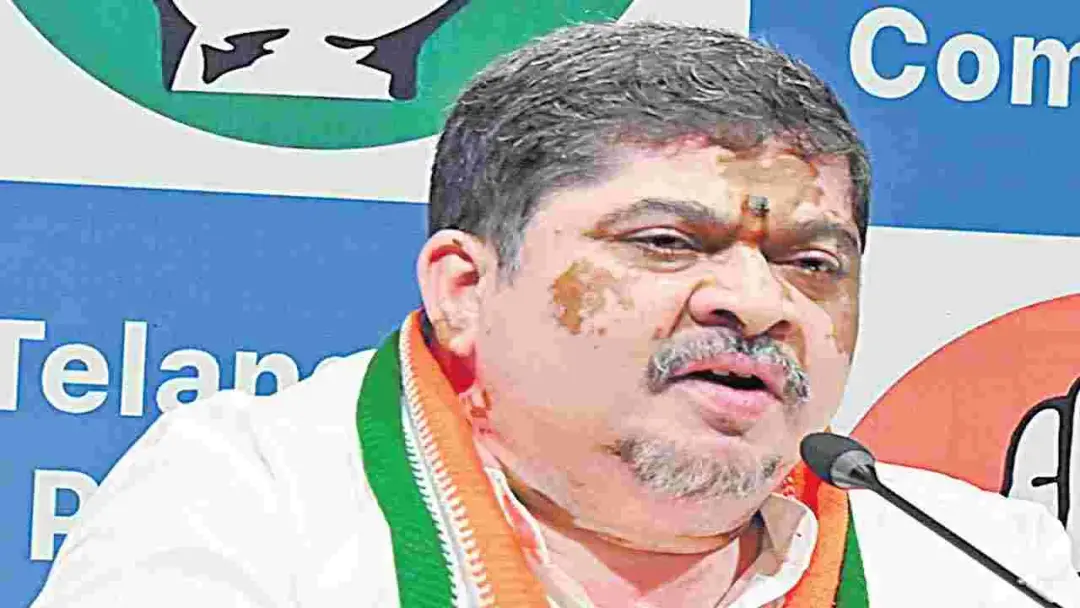
Have BJP leaders ever said Om Namah Shivaya, asks Ponnam
Minister Ponnam Prabhakar, after visiting the Bhimeshwara Swamy temple at Vemulawada in Rajanna Sircilla district on Tuesday morning, asked whether BJP leaders had ever said 'Om Namah Shivaya'. He said the Chief Minister had described Shiva as the god of the poor, that his party opposed no deity, and that Shiva was the deity of southerners. Government whips Adi Srinivas, CH Vijayaramana Rao and Vemula Veresham accompanied him. Madhu Yashki Goud said BJP leaders practise politics in god's name.
Source
Politics · read the original report ↗
Desk check · compared with the source
What the desk checked (4)
- Minister Ponnam Prabhakar asked whether BJP leaders had ever said 'Om Namah Shivaya' — Directly attributed to Ponnam Prabhakar in the source
- Ponnam visited Vemulawada Bhimeshwara Swamy temple on Tuesday morning with government whips Adi Srinivas, CH Vijayaramana Rao and Vemula Veresham — Detail appears in source with names; no independent confirmation possible
- Bandi Sanjay responded to CM Revanth Reddy's remarks — Stated by Ponnam Prabhakar; Bandi Sanjay's own words not quoted in source
- Madhu Yashki Goud said BJP leaders do politics using god's name and challenged Bandi Sanjay to take an oath at Charminar Bhagyalakshmi temple that he did not seek votes in the name of Ram Mandir — Attributed to Madhu Yashki Goud; a political challenge, not a verifiable fact
Analysts’ view opinion
By foregrounding Shiva, Congress leaders are signalling they will not concede devotional ground to the BJP in Telangana. Minister Ponnam Prabhakar's amplification of the Chief Minister's line that Shiva is the god of the poor tries to hold the argument inside a frame of faith plus social justice. At the same time, the claim that "we are Dravidians" and that Shiva is the deity of the South draws a political line between regions and between deities — a double-edged move that also hands the BJP campaign material.
- The temple visit accompanied by government whips suggests a coordinated party message rather than a purely personal act of worship.
- Saying there is nothing wrong with the BJP's "Jai Shri Ram" lets Congress dodge the charge of religious hostility while shifting the fight to the narrower question of seeking votes in god's name.
- The Dravidian-Shiva framing borrows a familiar southern political idiom that casts a national party's agenda as imported from outside.
- Madhu Yaskhi Goud's oath challenge to Bandi Sanjay moves the debate from policy to personal dare, which is an attention-holding tactic more than an argument.
- Congress carries the risk that the BJP reframes these remarks as an attempt to rank or divide Hindu deities.
What to watch — Watch whether Bandi Sanjay and the wider BJP state leadership answer the "Om Namah Shivaya" taunt directly, and whether this settles as a one-day war of words or escalates into competing temple tours.
The story records only claims and counterclaims; it does not establish the full context of the Chief Minister's original remark, the substance of Bandi Sanjay's response, or how voters are reacting.
Deep dive
Research brief · 8 facts · 3 dates · exam-readyThe brief
Context
A political row has broken out in Telangana over the use of religious invocations in politics. Chief Minister A Revanth Reddy described Shiva as "the god of the poor", drawing a response from BJP leader Bandi Sanjay. Congress minister Ponnam Prabhakar, after visiting the Bhimeshwara Swamy temple at Vemulawada in Rajanna Sircilla district, asked whether BJP leaders had ever said "Om Namah Shivaya", while Congress leader Madhu Yashki Goud accused the BJP of doing politics in god's name.
Key facts
- Minister Ponnam Prabhakar asked: 'Have BJP leaders ever said Om Namah Shivaya?', echoing the CM's remark that Shiva is the god of the poor.
- Ponnam Prabhakar visited the Vemulawada Bhimeshwara Swamy temple in Rajanna Sircilla district on Tuesday morning (report dated September 29).
- He was accompanied by government whips Adi Srinivas, CH Vijayaramana Rao and Vemula Veresham.
- Ponnam said doing politics in the name of god is not good for anyone, and that his side opposes no deity.
- He said 'we are Dravidians' and that Shiva is the deity worshipped by all those belonging to the South.
- He said BJP leader Bandi Sanjay had responded to CM Revanth Reddy's remarks; he added there is nothing wrong in BJP members saying 'Jai Shri Ram' as religious belief is personal.
- Madhu Yashki Goud said it is BJP leaders who use god's name as a shield to do politics while chanting 'Jai Shri Ram'.
- Madhu Yashki challenged Bandi Sanjay to come to the Bhagyalakshmi temple at Charminar and swear that he never sought votes in the name of the Ram temple.
Timeline
- Before the temple visit (date not stated in the source)CM Revanth Reddy says Shiva is the god of the poor; BJP's Bandi Sanjay responds to the remarks.
- Tuesday morning (reported September 29)Minister Ponnam Prabhakar, with government whips Adi Srinivas, CH Vijayaramana Rao and Vemula Veresham, visits the Vemulawada Bhimeshwara Swamy temple and questions the BJP.
- Same day, from New Delhi/Vemulawada datelinesMadhu Yashki Goud accuses BJP of politics in god's name and challenges Bandi Sanjay to take an oath at the Charminar Bhagyalakshmi temple.
Who has a stake
- Ponnam Prabhakar, Telangana minister — Leads the Congress counter-attack, framing Shiva worship as a southern/Dravidian tradition and questioning BJP's religious credentials.
- Chief Minister Revanth Reddy — His remark that Shiva is the god of the poor triggered the exchange and is being defended by his ministers.
- Bandi Sanjay and BJP leaders — Accused of using 'Jai Shri Ram' and the Ram temple to seek votes; challenged to take an oath at the Charminar Bhagyalakshmi temple.
- Madhu Yashki Goud, Congress leader — Sharpens the charge that the BJP practises politics in god's name.
- Government whips Adi Srinivas, CH Vijayaramana Rao, Vemula Veresham — Accompanied the minister, lending official weight to the temple visit and the political message.
- Devotees of Vemulawada Bhimeshwara Swamy temple and Charminar Bhagyalakshmi temple — Their places of worship are being drawn into a partisan contest over religious identity.
Why it matters
The exchange shows how competing claims over deities — Shiva versus 'Jai Shri Ram' — are becoming a template for political mobilisation in Telangana, with each side accusing the other of mixing faith and votes. It also revives the older regional framing of a 'Dravidian' or southern devotional identity as a counter to a north-centric religious idiom. For citizens, the contest raises the question of where legitimate expression of personal faith ends and electoral exploitation of religion begins.
UPSC angle
Prelims pointers
- Vemulawada Bhimeshwara Swamy temple is located in Rajanna Sircilla district, Telangana.
- The Bhagyalakshmi temple referred to in the row is at Charminar, Hyderabad.
- Ponnam Prabhakar is a minister in the Telangana government; Revanth Reddy is the Chief Minister.
- Bandi Sanjay is the BJP leader who responded to the Chief Minister's remarks on Shiva.
- Government whips named in the story: Adi Srinivas, CH Vijayaramana Rao and Vemula Veresham.
- Madhu Yashki Goud is the Congress leader who challenged Bandi Sanjay to take an oath at the Charminar Bhagyalakshmi temple.
Mains framing
The Vemulawada episode illustrates how religious symbolism is deployed in competitive electoral politics in Telangana. The proximate cause is the Chief Minister's characterisation of Shiva as the god of the poor and the BJP's response, which allowed the Congress to recast the debate along a regional axis — Ponnam Prabhakar's claim that Shiva is the deity of all southerners and that 'we are Dravidians', against the BJP's 'Jai Shri Ram' idiom. The implications are twofold: first, the contest normalises the use of temples and deities as political stages, as seen in ministerial temple visits accompanied by government whips and in the challenge to take an oath at a named temple; second, it risks reducing personal faith, which Ponnam himself conceded is individual, to an electoral loyalty test. A way forward lies in political parties confining religious expression to the private sphere and competing on governance and welfare outcomes, while enforcement of existing norms against appeals to religion for votes remains the constitutional check — though the source does not detail any specific action taken.
Key terms
- Om Namah Shivaya
- A traditional invocation of Lord Shiva, used by Ponnam Prabhakar as a test of the BJP's devotional credentials.
- Jai Shri Ram
- A chant invoking Lord Ram, which Congress leaders say the BJP uses as a political slogan; Ponnam said saying it is not wrong in itself.
- Vemulawada Bhimeshwara Swamy temple
- A Shiva temple in Rajanna Sircilla district, Telangana, visited by the minister on Tuesday morning.
- Bhagyalakshmi temple, Charminar
- Hyderabad shrine where Madhu Yashki challenged Bandi Sanjay to swear he never sought votes in the Ram temple's name.
- Government whip
- A ruling-party legislator tasked with ensuring party discipline in the legislature; three whips accompanied the minister.
Practice questions
- Critically examine the use of religious symbols and invocations in Indian electoral politics, with reference to recent political exchanges in Telangana.
- Discuss how regional identity claims — such as the framing of Shiva as a 'southern' or Dravidian deity — interact with national political narratives.
- Should the use of deities' names in political campaigning be regulated more strictly? Present arguments on both sides.
Grounded only in the source report — figures and dates are the source's, not inferred.