
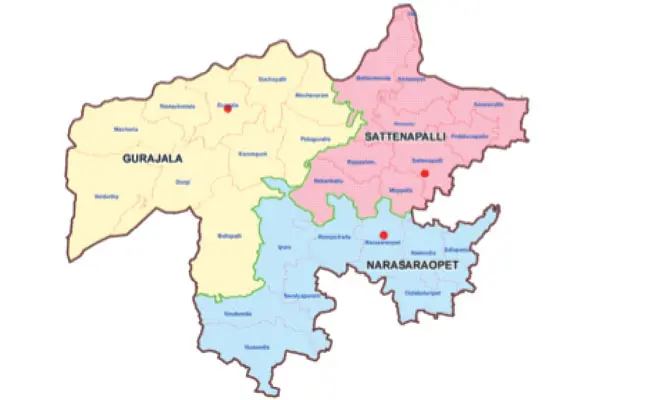
Palnadu district sees irrigation push, wide commercial crop sowing
Palnadu, formed after the reorganisation of districts in Andhra Pradesh, houses the Nagarjuna Sagar and Pulichintala projects. On Friday Sagar's level touched 544.90 feet, or 198.6870 TMC, while Pulichintala held 41.8813 TMC. Releases were 4,459 cusecs to the right canal, 6,097 to the left canal, 1,650 to SLBC and 300 to the flood canal. The Varikapudisela lift scheme, when complete, will serve 73,000 acres. Chilli was sown on 2,66,640 acres and cotton on 2,73,950 acres this year.
Source
Palnadu — నీరు · సాగునీరు · read the original report ↗
Desk check · some claims need care
What the desk checked (5)
- Pulichintala project storage stands at 41.8813 TMC and Nagarjuna Sagar reached 544.90 feet (198.6870 TMC) on Friday — Figures appear in the source; no irrigation department or official is named as the source.
- Releases from Nagarjuna Sagar: 4,459 cusecs to the right canal, 6,097 to the left canal, 1,650 to SLBC and 300 to the flood canal — Specific figures present in the source, unattributed.
- Varikapudisela lift scheme, once complete, will secure water for 73,000 acres, over 25,000 acres in Bollapalli mandal, and solve drinking water problems in Vinukonda and Pullalacheruvu mandal — Projection stated in source without attribution to an official or project document.
- Chilli sown on 2,66,640 acres this year, about 2 lakh acres in Palnadu; cotton on 2,73,950 acres against a normal 4,23,750 acres due to pink bollworm — Acreage figures appear in the source; no agriculture department attribution given.
- Credit for irrigation gains attributed to the YSRCP government and blame for delays to the previous government — Evaluative claim presented without attribution; reads as opinion rather than reported fact.
Analysts’ view opinion
Palnadu is essentially a case study in how water availability reshapes a local economy. With Nagarjuna Sagar and Pulichintala reported full and canal releases running, water risk for this season is lower — and that is precisely what emboldens farmers to commit capital to high-cost commercial crops like chilli and cotton. But shifting to higher-value crops raises returns and risk together: the story itself notes cotton fell to 2.73 lakh acres against a normal 4.23 lakh acres because of pink bollworm pressure. If Varikapudisela eventually waters 73,000 acres, its real economic value is less about extra acreage than about income stability for those farmers.
- Full reservoirs and steady canal releases lower the perceived risk of investing in seed, fertiliser and labour — water certainty is itself a form of credit confidence.
- With roughly 2.66 lakh acres under chilli and 2.73 lakh acres under cotton, district income is heavily exposed to the price behaviour of just two commodities.
- Commercial crops are labour-intensive per acre, so local demand for farm labour and allied work in transport, ginning and cold storage is likely to rise.
- The pink bollworm-driven shortfall in cotton area shows that irrigation removes one risk but not pest or price risk — and those losses land on the grower first.
- The payoff from public investment, including the proposed Rs 95 crore for five lift irrigation schemes in Nuzendla, depends entirely on execution speed; delays keep the benefit notional.
What to watch — Watch the construction pace on Varikapudisela and the Nuzendla lift schemes alongside chilli and cotton market prices and pest incidence — together they will decide whether Palnadu actually becomes a high-income district.
The story does not establish farmer incomes, yields, total project costs or completion timelines — it gives sown area and reservoir levels, not evidence that the investment has paid off.
Deep dive
Research brief · 8 facts · 5 dates · exam-readyThe brief
Context
Palnadu, historically a drought-prone and backward tract of the erstwhile Guntur district in Andhra Pradesh, became a separate district after the state's district reorganisation. Unusually, the major irrigation projects of the old Guntur region — Nagarjuna Sagar (in Macherla constituency) and Pulichintala (in Pedakurapadu constituency) — now fall within the new district. Three successive years of good rainfall have kept these reservoirs nearly full, and the newly sanctioned Varikapudisela lift scheme is expected to expand the ayacut further. Palnadu is also the hub of commercial crops, accounting for about 90 per cent of the cotton and chilli grown in the composite Guntur district.
Key facts
- Nagarjuna Sagar reservoir level reached 544.90 feet on Friday, equal to 198.6870 TMC.
- Pulichintala project held a water level of 41.8813 TMC.
- Releases from Sagar: 4,459 cusecs to the right canal, 6,097 cusecs to the left canal, 1,650 cusecs to SLBC and 300 cusecs to the flood canal.
- The Varikapudisela lift scheme, once complete, will secure irrigation for 73,000 acres.
- The scheme will irrigate over 25,000 acres in Bollapalli mandal and solve drinking water problems in Vinukonda constituency and Pullalacheruvu mandal of Prakasam district.
- Five lift irrigation schemes worth Rs 95 crore are planned in Nuzendla mandal to irrigate 10,000 acres; survey completed for sites at Kambhampadu, Kothapalem, Puvvada, Mulakaluru and Uppalapadu.
- Chilli was sown on a record 2,66,640 acres this year, of which about two lakh acres were in the Palnadu region.
- Cotton's normal area in the district is 4,23,750 acres, but only 2,73,950 acres were sown this year due to pink bollworm intensity; Palnadu region accounted for 2.81 lakh acres of cotton.
Timeline
- After district reorganisation in Andhra PradeshPalnadu district formed, bringing Nagarjuna Sagar and Pulichintala projects within its boundaries.
- Past three yearsGood rainfall keeps the projects nearly full, easing irrigation supply.
- After the YSRCP government took officeFunds sanctioned for Varikapudisela and green signal given to begin works.
- This year (current season)Record 2,66,640 acres of chilli sown; cotton restricted to 2,73,950 acres due to pink bollworm.
- FridayNagarjuna Sagar level touched 544.90 feet (198.6870 TMC); canal releases under way.
Who has a stake
- Farmers of Palnadu — Assured canal water instead of past crop failures; dependent on chilli and cotton incomes.
- Andhra Pradesh government (YSRCP) — Credited in the source with sanctioning Varikapudisela funds and expanding ayacut in the region.
- Bollapalli, Nuzendla and Vinukonda areas — Direct beneficiaries of the lift schemes for irrigation and drinking water.
- Prakasam district (Pullalacheruvu mandal) — Expected resolution of irrigation and drinking water problems from the Varikapudisela scheme.
- District administration — New officialdom tasked with steering Palnadu towards becoming a high-revenue district through commercial crops.
- Cotton growers — Lost sowing area of nearly 1.5 lakh acres below normal because of pink bollworm attack.
Why it matters
Palnadu's shift from a drought-scarred tract to an irrigated commercial-crop belt shows how reservoir storage plus lift irrigation can reset a region's farm economy, since the Krishna river flowed nearby but water never reached fields. With 90 per cent of composite Guntur's cotton and chilli grown here, the district could emerge among the state's highest-revenue districts. At the same time, the pink bollworm-driven shortfall in cotton area is a reminder that water security alone does not guarantee crop security.
UPSC angle
Prelims pointers
- Nagarjuna Sagar project lies in Macherla constituency; Pulichintala project in Pedakurapadu constituency — both in Palnadu district.
- Nagarjuna Sagar at 544.90 feet equals 198.6870 TMC of storage.
- SLBC (Srisailam Left Bank Canal) received 1,650 cusecs from Sagar releases.
- Varikapudisela lift scheme target ayacut: 73,000 acres.
- Nuzendla mandal: 5 lift irrigation schemes at Rs 95 crore for 10,000 acres.
- Palnadu district normal cropped area: 7,13,142 acres; chilli 2,66,640 acres and cotton 2,73,950 acres this year.
Mains framing
Palnadu's story illustrates the classic Indian paradox of water-abundant geography with water-scarce agriculture: despite the Krishna flowing alongside and the Buggavagu reservoir existing, the source notes crops dried up because water did not reach fields in time. The corrective has been twofold — storage-based canal irrigation from Nagarjuna Sagar and Pulichintala, aided by three good monsoon years, and lift irrigation to raise water to higher, rain-fed uplands through the Varikapudisela scheme (73,000 acres) and five Rs 95-crore lifts in Nuzendla mandal. The economic payoff is visible in commercial cropping: record chilli on 2,66,640 acres and cotton on 2,73,950 acres, with Palnadu accounting for about 90 per cent of composite Guntur's output of both, positioning it as a potential high-revenue district. Yet the cotton area fell far short of the 4,23,750-acre normal because of pink bollworm, showing that irrigation expansion must be paired with pest surveillance, resistant seed and extension support, along with timely canal scheduling and completion of sanctioned lift works, so that assured water translates into assured farm income rather than concentrated risk in two commercial crops.
Key terms
- TMC
- Thousand million cubic feet, the standard unit for measuring reservoir storage in India.
- Cusec
- Cubic feet per second — the rate at which water is released into a canal.
- Ayacut
- The command area of land that an irrigation project is designed to serve.
- SLBC
- Srisailam Left Bank Canal, one of the channels receiving releases (1,650 cusecs) from Nagarjuna Sagar.
- Lift irrigation scheme
- A system that pumps water up from a river or reservoir to fields at higher elevation, as in Varikapudisela and Nuzendla.
- Pink bollworm
- A cotton pest whose intensity this year cut sown cotton area in the district well below its normal extent.
Practice questions
- Examine how storage-based canal irrigation and lift irrigation schemes together can transform a drought-prone tract, using the case of Palnadu district.
- "Assured irrigation encourages commercial cropping but also concentrates risk." Discuss with reference to chilli and cotton cultivation in Palnadu.
- What institutional and agronomic measures are needed to contain pest outbreaks such as pink bollworm in cotton-growing regions?
Grounded only in the source report — figures and dates are the source's, not inferred.