
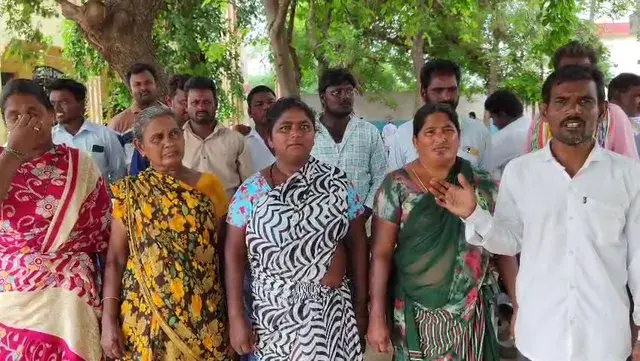
Dalit groups seek action against land mafia over threats
Dalit organisations alleged that some people are opposing the government's development of Dalits' common burial ground and drinking water tank lands at Pichukalapalem in Savalyapuram mandal, near Narasaraopet. They said land mafia group leader Amrithapudi Abraham, along with four unidentified persons, photographed houses and residents in the Dalit colony and issued threats, targeting Kalapakuri Ganesh, Amrithapudi Erraiah and Narayana. They demanded police protection for victims and action against the accused, warning of agitation otherwise.
Source
Narasaraopet — స్థానికం · read the original report ↗
Desk check · some claims need care
What the desk checked (4)
- The government is developing Dalits' common burial ground and drinking water tank lands in Pichukalapalem, Savalyapuram mandal, and some people are opposing it. — Attributed to Dalit organisations; no official or government confirmation in source.
- Land mafia group leader Amrithapudi Abraham, along with four unidentified persons, photographed houses and residents in the Dalit colony and issued threats. — Allegation attributed to Dalit organisations; accused named without any response or police statement; unverified.
- Kalapakuri Ganesh, Amrithapudi Erraiah and Narayana were specifically targeted with threats. — Names appear in source as stated by Dalit organisations; no independent corroboration.
- Dalit organisations demanded police protection for victims and action against the accused, warning of agitation otherwise. — Stated demand attributed to the organisations; consistent within the source.
Analysts’ view opinion
At this stage this is a set of allegations by Dalit organisations, not established fact, but the allegations as described would fall squarely within India's statutory framework for protecting Scheduled Castes — intimidation targeting named individuals inside a Dalit habitation, allegedly linked to a dispute over common burial ground and drinking-water tank land. The legal questions that matter now are procedural: whether a complaint has been registered, under which provisions, and whether the demand for police protection is formally processed. The underlying land question is separate from the criminal one: common-use land such as a burial ground and water body is ordinarily public or community land, and private claims over it would have to be tested through revenue and civil processes, not on the ground.
- The conduct alleged — threats and photographing of homes and persons in a Dalit colony to deter them — is the kind of fact pattern that, if substantiated, engages both ordinary penal provisions on criminal intimidation and the special protective law for Scheduled Castes and Scheduled Tribes.
- Under the special SC/ST framework, registration of a complaint ordinarily triggers mandatory investigative steps and a designated special court route, so whether an FIR exists and under what sections is the single most consequential unknown here.
- The demand for police protection rests on administrative and constitutional duty — the state's obligation to protect life and personal liberty — rather than on any automatic entitlement; such requests are normally assessed on a threat-perception basis.
- Burial grounds and drinking-water tanks are classified as common or public purpose land in revenue records, so any competing private claim would have to be established through revenue proceedings or civil suit, and self-help on the ground has no legal standing.
- The word 'land mafia' is an allegation and a political characterisation, not a legal finding; the named person has not been shown in this story to have been charged, and is entitled to the presumption of innocence.
What to watch — Watch for whether an FIR is registered and under which provisions, whether the district administration grants protection, and whether the revenue department issues any clarification on the classification and title of the burial ground and tank land.
The story does not establish that any FIR, charge, inquiry finding or court order exists, nor does it carry any response from the person named or from the police and revenue authorities.
Deep dive
Research brief · 8 facts · 3 dates · exam-readyThe brief
Context
Dalit organisations in Andhra Pradesh's Palnadu region have alleged intimidation by a "land mafia" at Pichukalapalem village in Savalyapuram mandal, near Narasaraopet. The dispute centres on government development work on lands earmarked for the Dalit community's common burial ground and a drinking water tank. The groups say the development is being opposed by certain individuals, who have resorted to photographing homes and residents in the Dalit colony and issuing threats. They have asked police for protection for the targeted residents and action against the accused.
Key facts
- Dalit organisations alleged that some people are opposing the government's development of the Dalits' common burial ground (smashana vatika) and drinking water tank lands at Pichukalapalem.
- The village Pichukalapalem falls in Savalyapuram mandal, near Narasaraopet.
- The named accused is Amrithapudi Abraham, described by the Dalit groups as a land mafia gang leader.
- Abraham is alleged to have acted along with four other unidentified persons.
- The group allegedly entered the Dalit colony, photographed houses and residents, and issued threats.
- Those specifically targeted with threats, as per the allegation, are Kalapakuri Ganesh, Amrithapudi Erraiah and Narayana.
- The organisations demanded police protection for the victims and action against the accused.
- They warned that they would launch an agitation if action is not taken. Report dated Oct 06, 2026, 08:10 IST.
Timeline
- Date not stated in the sourceGovernment takes up development of the Dalits' common burial ground and drinking water tank lands at Pichukalapalem; some persons oppose it.
- Date not stated in the sourceAmrithapudi Abraham with four unidentified persons allegedly photograph houses and residents in the Dalit colony and threaten Kalapakuri Ganesh, Amrithapudi Erraiah and Narayana.
- Oct 06, 2026Dalit organisations publicly allege land mafia threats, demand police protection and action, and warn of agitation.
Who has a stake
- Dalit residents of Pichukalapalem colony — Safety of their homes and persons; continued access to a common burial ground and drinking water tank land.
- Dalit organisations — Pressing for police protection and action against the accused; have threatened agitation if ignored.
- Kalapakuri Ganesh, Amrithapudi Erraiah and Narayana — Named as the specific targets of the alleged threats; seeking protection.
- Amrithapudi Abraham and four unidentified persons — Accused by the Dalit groups of leading a land mafia gang, photographing residents and issuing threats; action sought against them.
- Police and local administration — Expected to provide protection, investigate the allegations and maintain order if an agitation begins.
- State government — Is carrying out the development of the burial ground and water tank lands that is reportedly being opposed.
Why it matters
Common burial grounds and drinking water sources are basic civic entitlements that Dalit settlements have historically struggled to secure, so encroachment pressure on such land is both a law-and-order and a social-justice question. The allegation that residents were photographed and threatened for supporting a government works project raises the issue of protection for witnesses and complainants in caste-related disputes. How quickly the police respond will decide whether the matter is resolved administratively or escalates into street agitation.
UPSC angle
Prelims pointers
- Pichukalapalem village is in Savalyapuram mandal, near Narasaraopet, Andhra Pradesh.
- The disputed lands: Dalits' common burial ground and a drinking water tank, being developed by the government.
- Accused named by Dalit groups: Amrithapudi Abraham plus four unidentified persons.
- Alleged threat victims: Kalapakuri Ganesh, Amrithapudi Erraiah, Narayana.
- Demands made: police protection for victims and action against the accused.
- Dalit groups warned of agitation if no action is taken; report dated October 6, 2026.
Mains framing
Disputes over community land assigned for Dalit burial grounds and drinking water tanks sit at the intersection of land administration, caste discrimination and policing. In this case, Dalit organisations allege that government development of such land at Pichukalapalem is being resisted by a land mafia gang whose leader, with four unidentified associates, photographed houses and residents in the Dalit colony and threatened three named individuals. The causes typically lie in the high commercial value of village common land, weak records and the vulnerability of marginalised communities who lack the means to defend collective entitlements; the implication is intimidation that can chill community participation in public works and deter complainants from approaching the law. The immediate way forward sought by the petitioners is twofold: protective policing for the identified victims and prompt action against the accused, with the organisations signalling agitation as the fallback if the administration does not move. A longer view, consistent with the facts available, would involve securing the land records of the burial ground and water tank, completing the development work under administrative protection, and ensuring that complaints of threats in Dalit habitations are registered and investigated without delay. The source does not state whether a formal case has been registered or what the police response has been.
Key terms
- Land mafia
- Term used in the story for an organised group alleged to grab or illegally control land, here accused of threatening Dalit residents.
- Smashana vatika (common burial ground)
- The shared cremation/burial ground of the Dalit community at Pichukalapalem, one of the two parcels being developed by the government.
- Drinking water tank land
- Land attached to a village drinking water tank at Pichukalapalem, also part of the government development work under dispute.
- Mandal
- An administrative sub-district unit in Andhra Pradesh; Savalyapuram is the mandal in which Pichukalapalem lies.
- Dalitavada (Dalit colony)
- The habitation of Dalit families in the village, where houses and residents were allegedly photographed and threatened.
Practice questions
- Encroachment of village common land disproportionately affects Dalit communities. Examine the administrative and policing measures needed to protect such land, using the Pichukalapalem case.
- Why do complainants in caste-related land disputes often need explicit police protection? Discuss with reference to the demands made by Dalit organisations in this case.
- Discuss how weak land records and high land values combine to create 'land mafia' pressure on community assets such as burial grounds and water tanks.
Grounded only in the source report — figures and dates are the source's, not inferred.