
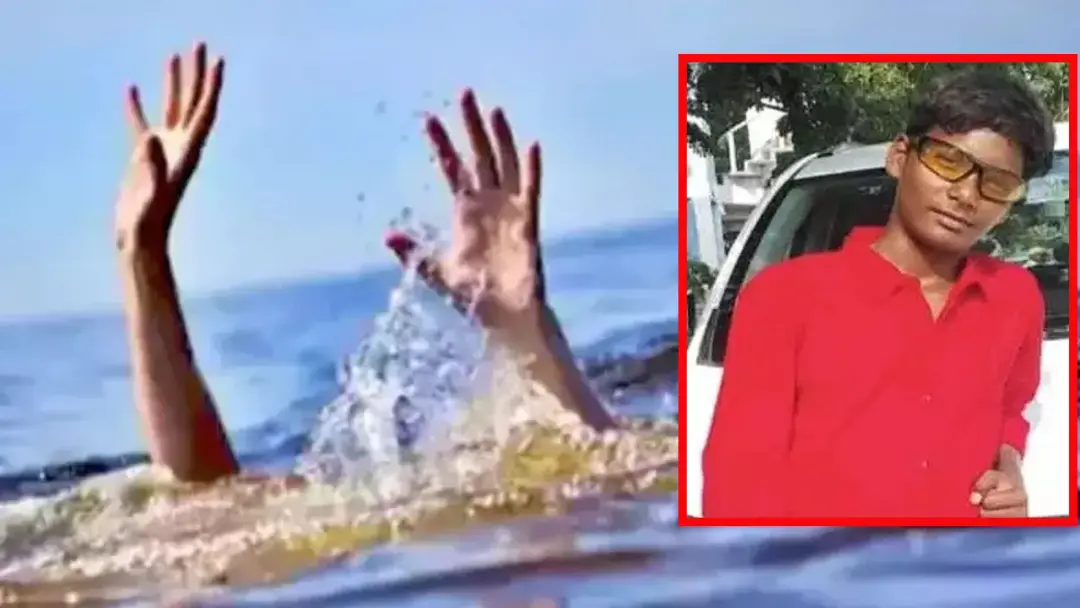
Boy, 14, drowns in pond in Nalgonda district village
Kagita Akhil, 14, drowned while swimming with friends in a pond at Pulipalupula village in Munugode mandal of Nalgonda district on Thursday (May 14) afternoon. Police said he slipped into a deeper part of the pond. Villagers searched for about an hour before recovering the body. Tahsildar Naresh and Sub-Inspector Ravi inspected the site, and the body was sent to the Nalgonda government hospital for post-mortem. A case will be registered once the family files a complaint.
Source
Nalgonda — వార్తలు · read the original report ↗
Desk check · compared with the source
What the desk checked (5)
- Kagita Akhil (14), son of Kagita Lakshman, drowned in a pond at Pulipalupula village on Thursday (May 14). — Attributed to police details cited in the source; name, age and date appear in the source.
- Akhil had recently completed Class 7 at Shantiniketan school in Gudapur village. — Stated in the source without separate attribution; school-record verification not possible here.
- Villagers searched for about an hour before recovering the body. — Figure appears in the source, based on local accounts.
- Munugode Tahsildar Naresh and SI Ravi visited the spot; body sent to Nalgonda government hospital for post-mortem. — Attributed to the source's account of official action.
- No formal complaint has been received from the family so far; a case will be registered once it is. — Directly attributed to Munugode SI Ravi.
Analysts’ view opinion
On the facts reported, this reads as an accidental drowning — no criminal allegation appears anywhere in the story. Even so, because it is the unnatural death of a 14-year-old, police are ordinarily expected to conduct an inquest and establish the cause of death from the post-mortem, independent of whether the family lodges a complaint. The SI's remark that a case will be registered once a complaint is received reflects common practice, but in unnatural-death matters the process does not hinge on a complainant.
- As described, the incident is an accident; nothing in the story indicates allegations of negligence or criminal intent against any person.
- In unnatural deaths the post-mortem report and inquest proceedings become the core legal record, and firm conclusions on cause should await them.
- The presence of both the Tahsildar and the Sub-Inspector at the scene is consistent with routine revenue–police coordination in such deaths.
- Whether warning signage or safety measures existed at the water body could become relevant to any future civil liability or ex-gratia claim, but the story says nothing on that point.
- Recurring child drownings raise a broader policy question about safety obligations at public water bodies, which goes beyond this single incident.
What to watch — Watch for the post-mortem findings, the closure of the inquest, and what kind of case is registered if and when the family files a complaint.
The story does not establish whether any individual or authority was negligent, what safety arrangements existed at the tank, or whether any compensation is available.
Deep dive
Research brief · 8 facts · 6 dates · exam-readyThe brief
Context
A 14-year-old boy, Kagita Akhil, drowned while swimming with friends in a village pond at Pulipalupula in Munugode mandal of Nalgonda district, Telangana, on Thursday (May 14) afternoon. He had just finished Class 7 at Shantiniketan School in nearby Gudapur and was at home during the summer holidays. Such summer-vacation drownings in unfenced village ponds and tanks are a recurring seasonal hazard for children in rural Telangana, and the case is being handled as an accidental death pending a family complaint.
Key facts
- The deceased is Kagita Akhil, 14, second son of Kagita Lakshman of Pulipalupula village, Munugode mandal, Nalgonda district.
- Akhil had recently completed Class 7 at Shantiniketan School in the nearby village of Gudapur and was at home for the summer holidays.
- The drowning occurred on Thursday (May 14) afternoon when he went to the local pond to swim with friends.
- Police said Akhil accidentally slipped and moved into a deeper part of the pond while swimming.
- His friends tried to rescue him but failed because of the depth; they then ran to the bank and alerted villagers.
- Villagers searched the pond for about an hour before the body was recovered.
- Locals concluded he had already died, having been submerged nearly an hour with water entering his stomach and no air.
- Munugode Tahsildar Naresh and Sub-Inspector Ravi visited the spot; the body was sent to the government general hospital in Nalgonda for post-mortem.
Timeline
- Recently, before the incidentAkhil completed Class 7 at Shantiniketan School, Gudapur, and stayed home as summer holidays began.
- Thursday, May 14, afternoonAkhil went with friends to the local pond in Pulipalupula to swim; he slipped into a deeper area and went under.
- Immediately afterFriends failed to rescue him, came to the bank and informed villagers, who began searching the pond.
- About an hour laterAkhil's body was recovered from the pond; locals found he had already died.
- After the recoveryTahsildar Naresh and SI Ravi reached the site, questioned villagers, and shifted the body to Nalgonda government hospital for post-mortem.
- As of the reportNo complaint received from the family; police said a case would be registered on receipt of a complaint.
Who has a stake
- Kagita Akhil's family (father Kagita Lakshman, parents and relatives) — Lost a 14-year-old son; must file the complaint that will trigger formal registration of the case.
- Akhil's friends who were swimming with him — Witnesses to the drowning who attempted rescue; likely to be questioned during the inquiry.
- Villagers of Pulipalupula — Conducted the hour-long search and recovery; the village is in mourning and faces the risk of the unsafe pond.
- Munugode police, Sub-Inspector Ravi — Completed preliminary inspection; responsible for registering a case and investigating once a complaint arrives.
- Munugode Tahsildar Naresh and revenue staff — Local administration's role in inspecting the accident site and follow-up procedure.
- Nalgonda government general hospital — Conducting the post-mortem that will establish the cause of death.
Why it matters
Summer-vacation drownings of school-age children in unguarded village ponds are a recurring rural safety failure, and this death shows how quickly a routine swim turns fatal when no trained rescuer, barrier or warning exists at the water body. The one-hour search before recovery also underlines the absence of any local emergency rescue capacity. For governance, it raises questions on water-body safety norms, school-level swimming and safety awareness, and the procedural fact that even an accidental death awaits a family complaint before formal registration.
UPSC angle
Prelims pointers
- Incident location: Pulipalupula village, Munugode mandal, Nalgonda district, Telangana; date Thursday, May 14.
- Victim: Kagita Akhil, 14, had just completed Class 7 at Shantiniketan School, Gudapur.
- Officials named: Munugode Tahsildar Naresh and Sub-Inspector Ravi inspected the site.
- Body sent for post-mortem to the government general hospital, Nalgonda.
- Police position: case to be registered only after the family files an official complaint.
- Villagers searched the pond for roughly one hour before recovering the body.
Mains framing
The drowning of a 14-year-old in a village pond in Nalgonda district illustrates a low-visibility but repetitive category of preventable deaths: children swimming unsupervised in irrigation tanks and ponds during summer holidays, where sudden changes in depth, absence of fencing or warning signage, and the lack of any trained rescue response convert play into fatality. The source shows the entire rescue effort rested on the victim's friends and then on villagers, who took about an hour to locate the body, indicating no institutional emergency mechanism at the local level; the administration's role began only after the recovery, with the Tahsildar and Sub-Inspector conducting a preliminary inspection and the body being sent for post-mortem. The procedural detail that a case will be registered only once the family lodges a complaint highlights how such accidental deaths may go under-documented, weakening the data base on which any preventive policy would rest. A grounded way forward, consistent with what the story reveals, would involve mapping and marking dangerous stretches of village water bodies, panchayat-level warnings and supervision during summer months, swimming and water-safety awareness for school children, and systematic recording of drowning deaths so that local bodies can act on identified hotspots.
Key terms
- Mandal
- An administrative sub-district unit in Telangana; here Munugode mandal in Nalgonda district.
- Tahsildar
- The revenue officer in charge of a mandal; Munugode Tahsildar Naresh inspected the accident site.
- Sub-Inspector (SI)
- Police officer in charge of local investigation; SI Ravi handled the preliminary inspection at Pulipalupula.
- Post-mortem
- Medico-legal autopsy to determine cause of death; conducted at Nalgonda government general hospital in this case.
- Complaint-based case registration
- Police here said a case would be formally registered and investigated only after the family submits an official complaint.
Practice questions
- Drowning deaths of children in village ponds during summer spike every year. Suggest measures panchayats and district administrations can take to prevent such accidents.
- Discuss how reliance on a family complaint for registering cases of accidental death can affect official data and preventive policy on drowning.
- Examine the role of local revenue and police officials in responding to accidental deaths in rural areas, with reference to this Nalgonda incident.
Grounded only in the source report — figures and dates are the source's, not inferred.