
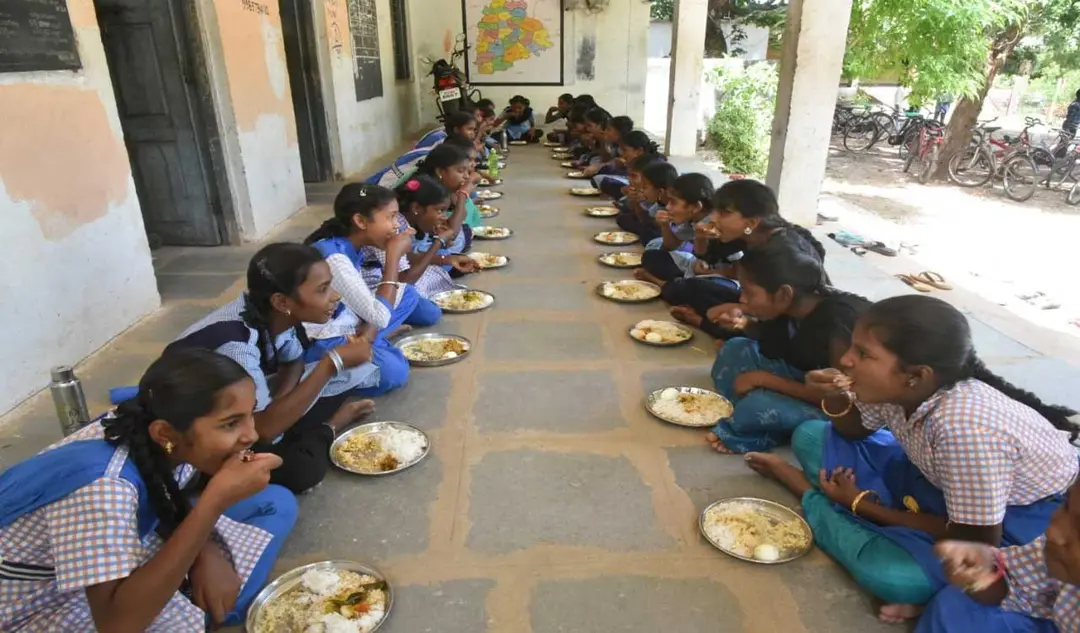
Centralised kitchen to serve 7,972 students in four Nalgonda mandals
A centralised community kitchen able to prepare meals for nearly 60,000 students a day is being developed at Syedmujavarpet in Suryapet district, with efforts on to make it operational in 100 days. Singareni Collieries (SCCL) contributed Rs 9.6 crore under CSR, with support from the Hari Krishna Movement Charitable Foundation. It will serve about 1,029 government schools and junior colleges. Nalgonda Collector B Chandrasekhar said 131 institutions with 7,972 students in Nakrekal, Sali Gouraram, Kethepally and Vemulapally mandals will also be covered.
Source
Nalgonda — news · read the original report ↗
Desk check · compared with the source
What the desk checked (5)
- A centralised community kitchen at Syedmujavarpet in Suryapet district will supply meals to nearly 60,000 students a day and serve about 1,029 government schools and junior colleges. — Figures appear in the source; no individual official named for these specific numbers.
- SCCL contributed Rs 9.6 crore under its corporate social responsibility programme. — Figure appears in source and is referenced by Irrigation Minister N Uttam Kumar Reddy.
- 131 government educational institutions in Nakrekal, Sali Gouraram, Kethepally and Vemulapally mandals, with 7,972 students, will be served. — Attributed to Nalgonda District Collector B Chandrasekhar.
- The facility is to be made operational within the next 100 days. — Stated in source as an ongoing effort; a forward-looking timeline, not a confirmed completion date.
- The project is implemented with support of the Hari Krishna Movement Charitable Foundation (HKMCF). — Appears in source; no further sourcing detail given.
Analysts’ view opinion
This is a structural shift in how the school meal programme is delivered — from meals cooked school by school to a single centralised kitchen supplying thousands of institutions. The reliance on Rs 9.6 crore of SCCL's CSR money and a charitable foundation partner is efficient resource-pooling, but it leaves open the question of who owns the long-term running cost and accountability. Extending supply across district lines to four Nalgonda mandals shows the scale advantage of the model, while also raising its logistical difficulty.
- The scale — nearly 60,000 students and around 1,029 institutions — is where centralisation pays off: lower unit costs, standardised nutrition and easier hygiene oversight.
- The core risk of centralisation is the last mile: getting cooked food out hot and on time, especially to 131 institutions located in a neighbouring district.
- The funding model is hybrid — public-sector CSR, a non-profit implementer and the government school system — and the story does not spell out the accountability or grievance-redress arrangements within it.
- Centralised kitchens are not new in India, and their effect on locally engaged cooks and helpers is always part of the debate; this story does not address that dimension.
- The 100-day target signals political intent, but construction, trial runs and setting up delivery routes make it a tight timeline.
What to watch — Watch whether the kitchen actually opens within the stated 100 days, and who is then held responsible for meal quality, punctuality and recurring operating costs.
The story does not establish who bears the recurring running cost, the total project outlay, or what happens to existing school-level cooking arrangements and the staff engaged in them.
Deep dive
Research brief · 8 facts · 2 dates · exam-readyThe brief
Context
A large centralised community kitchen is being built at Syedmujavarpet in Telangana's Suryapet district to cook and supply nutritious meals to nearly 60,000 government school and junior college students every day. Singareni Collieries Company Limited (SCCL) has put in Rs 9.6 crore under its corporate social responsibility programme, and the Hari Krishna Movement Charitable Foundation (HKMCF) is supporting implementation. The kitchen will cater to about 1,029 government schools and junior colleges, and its reach will extend beyond Suryapet into four mandals of neighbouring Nalgonda district. Officials are working to make the facility operational within 100 days.
Key facts
- The centralised community kitchen at Syedmujavarpet, Suryapet district, is designed to prepare meals for nearly 60,000 students a day.
- SCCL has contributed Rs 9.6 crore to the project under its corporate social responsibility programme.
- The project is being implemented with the support of the Hari Krishna Movement Charitable Foundation (HKMCF).
- The kitchen will serve around 1,029 government schools and junior colleges.
- Nalgonda District Collector B Chandrasekhar said 131 government educational institutions in Nakrekal, Sali Gouraram, Kethepally and Vemulapally mandals will be served.
- Those 131 institutions in Nalgonda district together have 7,972 students.
- Efforts are under way to make the facility operational within the next 100 days.
- Irrigation Minister N Uttam Kumar Reddy thanked SCCL for the Rs 9.6 crore CSR contribution.
Timeline
- As reported (news update dated 29 September 2026)Centralised community kitchen under development at Syedmujavarpet, Suryapet district; SCCL's Rs 9.6 crore CSR contribution acknowledged by Minister N Uttam Kumar Reddy.
- Within the next 100 daysTarget for making the kitchen operational, supplying meals to nearly 60,000 students daily across about 1,029 institutions.
Who has a stake
- Students of government schools and junior colleges — Nearly 60,000 students daily, including 7,972 in 131 Nalgonda institutions, stand to receive nutritious meals.
- Singareni Collieries Company Limited (SCCL) — Funder of Rs 9.6 crore under CSR; its contribution underwrites the project's capital cost.
- Hari Krishna Movement Charitable Foundation (HKMCF) — Implementation support partner for the centralised kitchen.
- Nalgonda district administration / Collector B Chandrasekhar — Coordinating coverage of 131 institutions in four mandals from a kitchen located in another district.
- Suryapet district administration and government institutions — Host district of the kitchen; about 1,029 schools and junior colleges to be served.
- Irrigation Minister N Uttam Kumar Reddy — Political sponsor who publicly acknowledged the CSR funding and the project's expected model status.
Why it matters
Centralised kitchens promise standardised, hygienic and nutritious meals at scale for government school students, and this one is expected to become a model facility for Suryapet and adjoining Nalgonda. It also shows how public sector CSR funds and a charitable foundation can be combined with district administration to deliver a school nutrition service across district boundaries.
UPSC angle
Prelims pointers
- Centralised community kitchen located at Syedmujavarpet, Suryapet district, Telangana; capacity nearly 60,000 meals a day.
- SCCL (Singareni Collieries Company Limited) contribution: Rs 9.6 crore under CSR.
- Implementation support: Hari Krishna Movement Charitable Foundation (HKMCF).
- Coverage: about 1,029 government schools and junior colleges; 131 institutions with 7,972 students in Nalgonda district.
- Nalgonda mandals covered: Nakrekal, Sali Gouraram, Kethepally and Vemulapally.
- Target timeline for becoming operational: 100 days; Nalgonda Collector is B Chandrasekhar.
Mains framing
The Syedmujavarpet project illustrates the shift from decentralised, school-level cooking to large centralised kitchens for school meal delivery: one facility designed for nearly 60,000 meals a day, serving about 1,029 government schools and junior colleges, and extending across district lines to 131 institutions with 7,972 students in four Nalgonda mandals. The financing model is notable — Rs 9.6 crore from a state public sector undertaking, SCCL, under corporate social responsibility, with a charitable foundation, HKMCF, providing implementation support, and the district administration coordinating coverage. Such consolidation can improve hygiene, nutritional standardisation and cost efficiency, and the source says the facility is expected to emerge as a model centralised kitchen. The implicit challenges, which the source does not detail, relate to execution within the stated 100-day deadline and sustained daily delivery to institutions spread across two districts. The way forward as indicated in the source is to complete the facility on schedule and deliver nutritious food to students across Suryapet and adjoining Nalgonda every school day.
Key terms
- Centralised community kitchen
- A single large facility that cooks meals in bulk and supplies them to many schools, instead of each school cooking separately.
- SCCL (Singareni Collieries Company Limited)
- Coal company that contributed Rs 9.6 crore to the kitchen project under its CSR programme.
- CSR (Corporate Social Responsibility)
- Company spending on social development activities; here the route through which SCCL funded the kitchen.
- HKMCF (Hari Krishna Movement Charitable Foundation)
- Charitable organisation supporting the implementation of the Syedmujavarpet centralised kitchen.
- Mandal
- An administrative sub-district unit in Telangana; four Nalgonda mandals will be served by this kitchen.
Practice questions
- Examine how corporate social responsibility funds from public sector undertakings can strengthen school nutrition delivery, using the Syedmujavarpet centralised kitchen as an example.
- Centralised kitchens versus school-level cooking: discuss the advantages and the operational risks of consolidating mid-day meal preparation at scale.
- How can district administrations coordinate service delivery that crosses district boundaries, as in the case of a Suryapet kitchen serving 131 institutions in Nalgonda?
Grounded only in the source report — figures and dates are the source's, not inferred.