
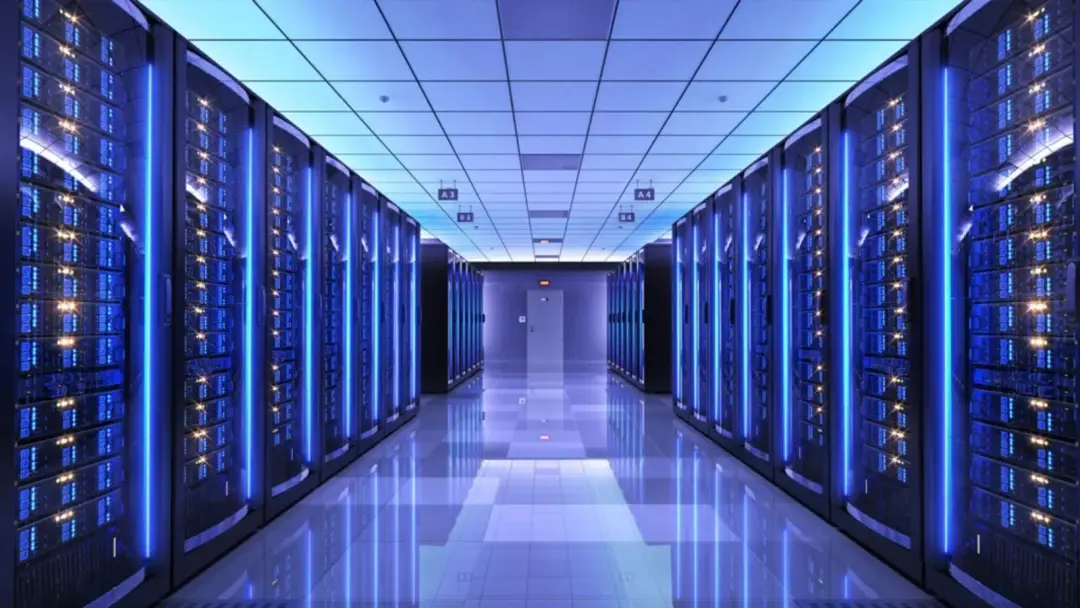
Karnataka clears data centre policy with 1 GW target by 2031
The Karnataka Cabinet on Friday cleared the Sustainable Data Centre Policy 2026-2031, a five-year framework aimed at making the state a global hub for digital infrastructure. It targets 1 GW of cumulative data centre IT load and 10-12 per cent of India's AI-ready capacity by 2031, with a revised budget of Rs 1,300.45 crore. IT Minister Priyank Kharge called it a "course correction" balancing growth with sustainability, stressing renewable energy, new cooling technologies and water management.
Source
Indian Express — Cities · read the original report ↗
Desk check · compared with the source
What the desk checked (5)
- Karnataka Cabinet cleared the Sustainable Data Centre Policy 2026-2031 on Friday. — Stated in source as a Cabinet decision; no official document cited beyond the minister's announcement.
- Policy targets 1 GW cumulative data centre IT load and 10-12% of India's AI-ready capacity by 2031. — Figures appear in the source as policy targets.
- Revised implementation budget of Rs 1,300.45 crore over five years. — Figure appears in source; no supporting budget document referenced.
- Quotes calling the policy a 'course correction' balancing growth with sustainability. — Attributed directly to IT Minister Priyank Kharge.
- The Indian Express reported in March that Karnataka was considering such a policy. — Self-referential attribution to the publication's earlier report.
Analysts’ view opinion
Karnataka's new policy is less about chasing capacity and more about acknowledging that power, water and siting are the real bottlenecks of the AI-era data centre build-out. Tying a 1 GW IT load target and a 10-12 per cent share of India's AI-ready capacity by 2031 to a Rs 1,300.45 crore outlay suggests the state is betting on clearances and infrastructure coordination rather than subsidy size. IT Minister Priyank Kharge calling it a "course correction" is itself an admission that the earlier growth-first approach needed rebalancing.
- Writing PUE and WUE monitoring into the policy at a time when AI workloads are pushing rack density and power draw upward signals that sustainability is becoming a measurable condition, not a talking point.
- Bringing parks, edge centres and cable landing stations under one framework points to a shift from a Bengaluru-centric model toward a distributed network.
- Karnataka's competition is other Indian states courting the same investment, and where incentives converge, talent depth, ecosystem and single-window speed become its real differentiators.
- For hyperscalers and AI firms, renewable availability and water rules are now site-selection criteria on par with cost.
- Rs 1,300.45 crore is small relative to gigawatt-scale infrastructure, so it can only work as a catalyst for private capital, not a substitute for it.
What to watch — Watch for the implementation guidelines, where the Sustainable Data Centre Zones are located, and how strictly the PUE/WUE benchmarks are set and enforced.
The story does not detail the specific incentives, the numerical PUE/WUE thresholds, the power and water supply arrangements, or any industry response — these are stated targets, not achieved outcomes.
Deep dive
Research brief · 8 facts · 4 dates · exam-readyThe brief
Context
Data centres — the physical facilities that house servers powering cloud computing and AI — are energy and water intensive, and their rapid growth has raised sustainability concerns in Indian states. Karnataka, an early mover in courting data centre investment, has now approved a Sustainable Data Centre Policy 2026–2031. The five-year framework, cleared by the state Cabinet on Friday, seeks to make Karnataka a global hub for next-generation digital infrastructure while curbing power and water stress. The Indian Express had reported in March that the state was working on such a policy.
Key facts
- The Karnataka Cabinet cleared the Sustainable Data Centre Policy 2026–2031 on Friday, a five-year framework for next-generation digital infrastructure.
- The policy targets 1 GW of cumulative Data Centre IT load by 2031.
- It aims for Karnataka to account for 10–12 per cent of India's AI-ready Data Centre capacity by 2031.
- A revised budget of Rs 1,300.45 crore has been set aside for implementation over five years.
- The policy covers data centre parks, edge centres, cable landing stations and allied infrastructure.
- It mandates monitoring of Power Usage Effectiveness (PUE) and Water Usage Effectiveness (WUE).
- It provides for Sustainable Data Centre Zones/Parks and a Centre of Excellence for research and innovation.
- IT Minister Priyank Kharge called the policy a 'course correction' to balance growth with sustainability.
Timeline
- MarchThe Indian Express reported that Karnataka was working on a sustainable data centre policy to address high water and power usage by the industry.
- Friday (policy clearance)Karnataka Cabinet cleared the Sustainable Data Centre Policy 2026–2031; Minister Priyank Kharge announced the decision.
- 2026–2031Five-year implementation window with a revised budget of Rs 1,300.45 crore.
- By 2031Targets of 1 GW cumulative data centre IT load and 10–12 per cent of India's AI-ready capacity.
Who has a stake
- Government of Karnataka / State Cabinet — Cleared the policy; seeks to position the state as a global hub for digital infrastructure while managing power and water stress.
- Department of Electronics, IT, Biotechnology and Science & Technology — Nodal department that will roll out the policy.
- Karnataka Innovation and Technology Society (KITS) — Will serve as the registration and implementation interface for the policy.
- Karnataka Udyoga Mitra — Designated single window clearance agency for data centre proposals.
- Data centre operators and investors — Gain investment facilitation across parks, edge centres and cable landing stations, but must meet PUE/WUE and sustainability norms.
- Priyank Kharge, IT Minister — Political ownership of the 'course correction' framing — right capacity, right locations, right infrastructure.
Why it matters
Data centres are the backbone of India's AI and cloud ambitions, but they consume large volumes of electricity and water, putting them in direct competition with other users. Karnataka's policy is an attempt to tie incentives to measurable sustainability metrics such as PUE and WUE rather than chase capacity alone. Its success or failure will shape how other states design digital infrastructure policy.
UPSC angle
Prelims pointers
- Karnataka Sustainable Data Centre Policy 2026–2031: cleared by the state Cabinet; budget Rs 1,300.45 crore.
- Targets: 1 GW cumulative data centre IT load and 10–12% of India's AI-ready data centre capacity by 2031.
- PUE (Power Usage Effectiveness) and WUE (Water Usage Effectiveness) are the efficiency metrics to be monitored.
- Nodal department: Department of Electronics, IT, Biotechnology and Science & Technology, Karnataka.
- Karnataka Innovation and Technology Society is the registration and implementation interface; Karnataka Udyoga Mitra is the single window clearance agency.
- Policy scope includes data centre parks, edge centres, cable landing stations and a Centre of Excellence.
Mains framing
Karnataka's Sustainable Data Centre Policy 2026–2031 illustrates the emerging tension between India's digital infrastructure ambitions and resource constraints. The demand driver is AI-ready capacity — Karnataka wants 1 GW of IT load and 10–12 per cent of national AI-ready capacity by 2031 — while the constraint is the industry's high power and water consumption, a concern flagged as early as March. The policy's response is threefold: steer siting and capacity ('the right capacity, in the right locations'), mandate renewable energy, advanced cooling and water management with monitoring of PUE and WUE, and lower transaction costs through a single window (Karnataka Udyoga Mitra) and a dedicated implementation interface (Karnataka Innovation and Technology Society), backed by Rs 1,300.45 crore. The way forward hinges on execution: whether efficiency metrics are enforced and disclosed rather than treated as advisory, whether Sustainable Data Centre Zones/Parks come with credible renewable and water sourcing, and whether the Centre of Excellence translates into deployable cooling and water-reuse technology. The source does not detail incentive structures, land allocation or enforcement penalties.
Key terms
- Data Centre IT load
- The power capacity dedicated to IT equipment in data centres; Karnataka targets 1 GW cumulatively by 2031.
- AI-ready Data Centre capacity
- Data centre capacity equipped for AI workloads; Karnataka aims for 10–12 per cent of India's share by 2031.
- Power Usage Effectiveness (PUE)
- Efficiency metric comparing total facility power to IT equipment power; to be monitored under the policy.
- Water Usage Effectiveness (WUE)
- Metric of water consumed per unit of IT energy used, tracking a data centre's water efficiency.
- Edge centres and cable landing stations
- Smaller distributed compute facilities and coastal points where submarine internet cables come ashore; both covered by the policy.
- Karnataka Udyoga Mitra
- State agency designated as the single window clearance agency for data centre proposals.
Practice questions
- Discuss the environmental challenges posed by the rapid expansion of data centres in India and evaluate how state-level policies can address them.
- How can metrics such as Power Usage Effectiveness and Water Usage Effectiveness be used to regulate digital infrastructure? Examine with reference to Karnataka's Sustainable Data Centre Policy 2026–2031.
- Single window clearance mechanisms are central to state investment policies. Critically assess their role in attracting data centre investment while ensuring sustainability compliance.
Grounded only in the source report — figures and dates are the source's, not inferred.