
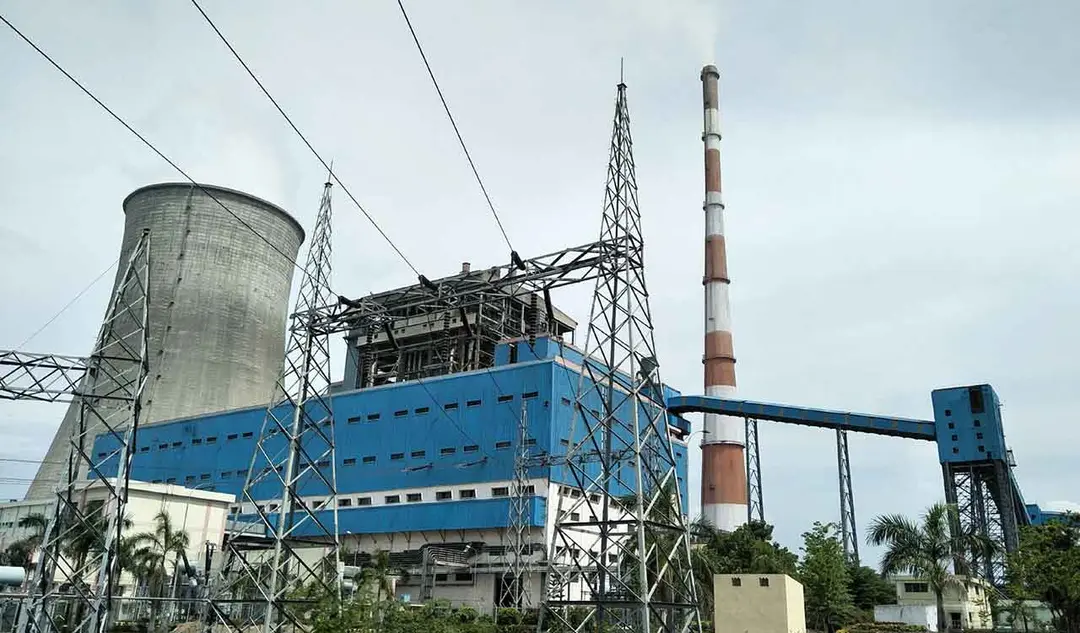
Paloncha groups demand new 2x800 MW thermal plant at KTPS site
Retired engineers, trade unions and local associations are demanding a new 2x800 MW thermal plant at the Kothagudem Thermal Power Station site in Paloncha. The Nutana Vidyut Kendra Sadhana Committee has been formed under Jammula Sitarama Reddy, a retired KTPS foreman. TSGENCO, on Union Environment Ministry directions, decommissioned eight units totalling 720 MW in 2020. The committee plans petitions and protests, with another meeting set for June 20 in Paloncha.
Source
Bhadradri Kothagudem — development · read the original report ↗
Desk check · compared with the source
What the desk checked (5)
- A committee named Nutana Vidyut Kendra Sadhana Committee has been formed under Jammula Sitarama Reddy, a retired KTPS foreman, to demand a 2x800 MW plant at the KTPS site. — Attributed to the committee leader, who spoke to Telangana Today; internally consistent.
- TSGENCO, on directions from the Union Ministry of Environment, decommissioned eight thermal units of 720 MW combined capacity in 2020. — Figure appears in source text and photo caption consistently; no independent document cited.
- The retired units were built in phases between 1965 and 1978 and closed due to technical, economic and environmental constraints. — Stated in source without named official attribution.
- Another meeting is scheduled for June 20 in Paloncha; petitions will go to KTPS Chief Engineers, District Collector, TSGENCO CMD and elected representatives. — Forward-looking plan attributed to the committee; outcome unverifiable.
- Forum for Better Paloncha, led by Nukala Ranga Rao, demands an 800 MW plant plus an IT hub and industrial park. — Attributed to the named forum; no separate corroboration in source.
Analysts’ view opinion
The Paloncha demand is essentially an attempt to rebuild a local economy that shrank after the 720 MW of old units were retired in 2020 and staff were transferred elsewhere, as the story describes. A large thermal build would generate construction-phase work, transport demand and small-business turnover; but 2x800 MW supercritical capacity is a heavy capital decision tied to the finances of the state power utility. So the real trade-off is local jobs and revival against state-level investment and environmental cost.
- The story indicates local purchasing power fell once workers and officials moved out, so contract labour, artisans and small traders are the groups that absorbed the loss.
- The gainers from a new plant are clear: local employment, the coal–transport–civil works chain, and Paloncha's property and services sector.
- The cost, however, sits at state level — plant capex and the resulting power purchase cost eventually show up in tariffs or government subsidy, and no such figures appear in the story.
- The story says the old units were retired on technical, economic and environmental grounds, which means clearances could be the binding constraint on new capacity at the same site.
- The parallel demand from the Forum for Better Paloncha for an IT hub and industrial park hints at a town starting to think about diversifying beyond a single-employer economy.
What to watch — Watch how TSGENCO and the state government respond to the feasibility case the committee plans to submit after the June 20 meeting, and what stance emerges on central environmental clearances.
The story does not establish any government commitment, any project cost, job numbers, or the current environmental clearance position — at this stage it is a demand, not a decision.
Deep dive
Research brief · 8 facts · 5 dates · exam-readyThe brief
Context
The Kothagudem Thermal Power Station (KTPS) at Paloncha in Telangana's Bhadradri Kothagudem region was one of the state's oldest coal-based generating stations. In 2020, Telangana Power Generation Corporation Limited (TSGENCO), acting on directions from the Union Ministry of Environment, retired eight old units with a combined capacity of 720 MW built in phases between 1965 and 1978, citing technical, economic and environmental constraints. With workers and officials shifted to newer stations, Paloncha's local economy weakened. Retired engineers, trade unions and local associations have now formed a committee demanding a new 2x800 MW plant at the same site.
Key facts
- Local groups are demanding a new thermal power plant of 2x800 MW capacity at the existing KTPS site in Paloncha.
- TSGENCO, on directions from the Union Ministry of Environment, decommissioned eight thermal units of 720 MW combined capacity.
- The retired units were built in phases between 1965 and 1978 and were shut down in 2020 on technical, economic and environmental grounds.
- A body named Nutana Vidyut Kendra Sadhana Committee has been formed under Jammula Sitarama Reddy, a retired KTPS foreman.
- After the closures, workers and officials were transferred to newer power stations, causing a decline in economic activity in Paloncha and nearby areas.
- Phase one of the campaign: petitions to KTPS Chief Engineers, the District Collector, the TSGENCO CMD, and MLAs and Ministers.
- Phase two: seeking support from like-minded organisations; a Joint Action Committee (JAC) may be formed for protests and hunger strikes.
- The Forum for Better Paloncha, led by Nukala Ranga Rao, seeks an 800 MW plant plus an IT hub and industrial park.
Timeline
- 1965-1978Eight thermal power units at KTPS, Paloncha, built in phases.
- 2020TSGENCO decommissions the eight units (720 MW) on Union Environment Ministry directions, citing technical, economic and environmental constraints.
- After 2020Workers and officials transferred to newer power stations; economic activity in Paloncha declines.
- Recently (before 14 June 2025)Nutana Vidyut Kendra Sadhana Committee formed under Jammula Sitarama Reddy; meeting of unions, engineers, retired staff, artisans and contract workers held.
- June 20Next meeting scheduled in Paloncha to plan the agitation.
Who has a stake
- Nutana Vidyut Kendra Sadhana Committee — Leads the demand for a 2x800 MW plant at the KTPS site; plans to compile technical feasibility data, petitions and protests.
- TSGENCO (Telangana Power Generation Corporation Limited) — Owner-operator that decommissioned the 720 MW units; its CMD is among those to be petitioned for new capacity.
- Union Ministry of Environment — Issued the directions under which the old, polluting units were retired; any new plant would face environmental scrutiny.
- Retired KTPS engineers, employees, artisans and contract workers — Loss of livelihood and local work opportunities after units closed and staff were transferred.
- Residents of Paloncha and surrounding areas — Decline in economic activity and development; seek revival through new power units and infrastructure.
- Forum for Better Paloncha (Nukala Ranga Rao) — Runs a parallel campaign for an 800 MW plant, IT hub, industrial park and other infrastructure.
- District administration and elected representatives (Collector, MLAs, Ministers) — Recipients of petitions; expected to press the state government for a decision.
Why it matters
The KTPS case shows how retiring old, polluting coal units - a climate and efficiency imperative - can hollow out single-industry towns whose economies were built around them. Paloncha's demand for a 2x800 MW replacement plant, alongside calls for an IT hub and industrial park, captures the tension between environmental compliance and local livelihoods. How governments handle such transitions will shape the politics of India's energy shift.
UPSC angle
Prelims pointers
- KTPS = Kothagudem Thermal Power Station, located at Paloncha, Telangana.
- TSGENCO = Telangana Power Generation Corporation Limited, the state's power generation utility.
- Eight KTPS units totalling 720 MW, built between 1965 and 1978, were decommissioned in 2020.
- The decommissioning followed directions from the Union Ministry of Environment.
- Demand: a new 2x800 MW thermal plant at the existing KTPS site.
- Nutana Vidyut Kendra Sadhana Committee is headed by Jammula Sitarama Reddy, a retired KTPS foreman.
Mains framing
The Paloncha agitation illustrates the local economic cost of retiring ageing thermal capacity. Eight KTPS units of 720 MW, commissioned between 1965 and 1978, were shut in 2020 by TSGENCO on Union Environment Ministry directions because of technical, economic and environmental constraints; workers and officials were transferred to newer stations, and economic activity in Paloncha declined. Residents expected replacement capacity at the same site, but with no progress, retired engineers, trade unions and local associations have formed the Nutana Vidyut Kendra Sadhana Committee to demand a 2x800 MW plant, planning technical feasibility documentation, petitions to KTPS Chief Engineers, the District Collector, the TSGENCO CMD and elected representatives, and, if needed, a Joint Action Committee for protests and hunger strikes. A parallel Forum for Better Paloncha widens the demand to an IT hub and industrial park, pointing to the real way forward: any decision must weigh grid and environmental considerations against a credible diversification plan for the town, so that the closure of legacy units is accompanied by alternative economic anchors rather than only a demand for like-for-like replacement.
Key terms
- KTPS
- Kothagudem Thermal Power Station at Paloncha, Telangana, whose eight old units were retired in 2020.
- TSGENCO
- Telangana Power Generation Corporation Limited, the state generation utility that operated and decommissioned the KTPS units.
- Decommissioning
- Permanent retirement of power units from service; here done on technical, economic and environmental grounds.
- Nutana Vidyut Kendra Sadhana Committee
- Committee of retired engineers, unions and locals led by Jammula Sitarama Reddy demanding a new 2x800 MW plant.
- Joint Action Committee (JAC)
- A coalition of organisations formed to coordinate agitation such as protests and hunger strikes.
- Forum for Better Paloncha
- Local body led by Nukala Ranga Rao seeking an 800 MW plant plus an IT hub, industrial park and infrastructure.
Practice questions
- Retiring old thermal units is necessary for environmental compliance but imposes heavy local costs. Discuss with reference to the decommissioning of 720 MW at KTPS, Paloncha.
- Examine the role of state generation companies like TSGENCO in balancing power demand, plant efficiency and regional employment.
- How should governments plan for economic diversification in towns dependent on a single public sector power or mining unit? Illustrate with the Paloncha example.
Grounded only in the source report — figures and dates are the source's, not inferred.