
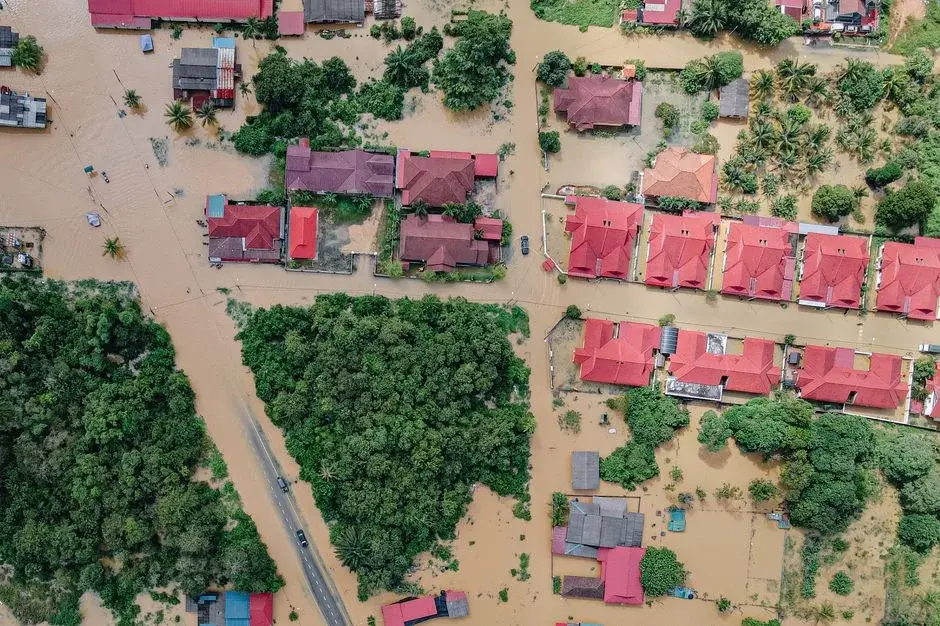
Srikakulam floods cause estimated ₹150 crore damage
Floods in Andhra Pradesh's Srikakulam district have caused damage estimated at ₹150 crore, according to preliminary government estimates. The deluge followed a deep depression over the Bay of Bengal that crossed the coast near Kalingapatnam, submerging about 30,000 acres of paddy, maize and cotton belonging to 28,885 farmers in 382 villages. Paddy on 1,100 acres was damaged at Allina village in Burja mandal. Around 53 villages were cut off. Minister K. Atchannaidu assured compensation.
Source
Srikakulam — agriculture · read the original report ↗
Desk check · compared with the source
What the desk checked (5)
- Flood damage in Srikakulam district estimated at ₹150 crore. — Attributed in source to preliminary government estimates; figure appears consistently twice in the text.
- About 30,000 acres inundated, affecting 28,885 farmers in 382 villages. — Figures appear in source without naming the issuing department; consistent within the article.
- Paddy on 1,100 acres damaged at Allina village, Burja mandal, due to Nagavali river water stagnation. — Source reports this with named local farmers Pativada Bhaskara Rao and Varada Rambabu; attribution is local, not official.
- ₹10 lakh sanctioned for temporary causeway repair; a bridge estimated at ₹50 lakh proposed. — Figures appear in source; sanctioning authority not specified.
- Minister K. Atchannaidu has assured compensation; damage being enumerated via APAIMS app. — Attributed to the minister and agriculture officials in the source; no quote provided.
Analysts’ view opinion
This is not simply a crop loss story — it is a second blow to an agrarian district that had already suffered a rainfall deficit earlier in the Kharif season. For a farmer who spent ₹9,500–15,000 an acre expecting about ₹60,000 in returns, the damage is twofold: sunk costs plus forgone income. The ₹150 crore figure is a preliminary official estimate, and it does not capture the indirect hit to tenant farmers, farm labourers and local trade.
- With 30,000 acres and 28,885 farmers affected, average holdings work out to roughly an acre each — meaning the burden falls hardest on small and marginal cultivators with the least capacity to absorb it.
- On the story's own numbers, expected earnings of ₹60,000 an acre against ₹9,500–15,000 of input spending mean the real damage is lost income and the likely need to borrow to replant.
- With 53 villages cut off and a causeway damaged, transport costs rise and produce that cannot reach the market risks fetching lower farmgate prices.
- ₹10 lakh for a temporary repair versus about ₹50 lakh for a permanent bridge is a textbook case of recurring stop-gap spending being costlier over time than a one-off durable asset.
- Damage enumeration through the APAIMS app aids transparency, but the story does not state how much compensation will be paid or when — and speed of payout largely decides whether Rabi sowing can be financed.
What to watch — Watch the size and speed of the compensation payout and the progress of field drainage, since together they will shape Rabi acreage, rural wage work and farm debt levels.
The ₹150 crore figure is preliminary; the story does not establish final losses, the compensation amount, insurance coverage, or whether tenant farmers will qualify for relief.
Deep dive
Research brief · 8 facts · 5 dates · exam-readyThe brief
Context
A deep depression over the Bay of Bengal crossed the coast near Kalingapatnam, triggering flash floods in Andhra Pradesh's Srikakulam district and the wider North Andhra region. Heavy inflows into the Nagavali, Vamsadhara and Bahuda rivers submerged standing Kharif crops — paddy, maize, cotton, sugarcane, banana and papaya — at critical growth stages. Preliminary government estimates put the damage at around ₹150 crore. The blow comes after parts of Srikakulam had already faced drought-like conditions earlier in the Kharif season due to a rainfall deficit.
Key facts
- Preliminary government estimates place total flood loss in Srikakulam district at around ₹150 crore.
- About 30,000 acres of agricultural land were inundated, affecting an estimated 28,885 farmers across 382 villages.
- Paddy across 1,100 acres was damaged at Allina village in Burja mandal due to stagnation of Nagavali river water.
- Farmers had invested ₹9,500 to ₹15,000 per acre, against expected earnings of around ₹60,000 per acre.
- Approximately 53 villages in Srikakulam district were cut off, as per the district administration.
- ₹10 lakh was sanctioned for temporary repair of one damaged causeway; a bridge as a long-term solution is estimated at around ₹50 lakh.
- Across Srikakulam, Vizianagaram and Parvathipuram-Manyam districts, over 13,550 hectares of agriculture and 1,030 hectares of horticulture crops were damaged.
- In Srikakulam alone, 12,400 hectares of agriculture crops and 762 hectares of horticulture crops suffered damage.
Timeline
- Earlier in the Kharif seasonMany areas of Srikakulam faced drought-like conditions due to a rainfall deficit; farmers invested in seeds and fertilizers.
- Before the floodsA deep depression formed over the Bay of Bengal and crossed the coast near Kalingapatnam.
- During the floodsHeavy inflows into the Nagavali, Vamsadhara and Bahuda rivers inundated about 30,000 acres; a causeway at Allina village was damaged and around 53 villages were cut off.
- After the floods₹10 lakh sanctioned for temporary causeway repair; roads cleared of fallen trees and power supply restored; crop damage enumeration begun on the APAIMS app.
- Expected nextSenior agriculture scientists to visit fields and recommend measures to protect salvageable standing crops; Minister K. Atchannaidu has assured compensation.
Who has a stake
- 28,885 affected farmers in 382 villages — Loss of paddy, maize, cotton, sugarcane, banana and papaya crops after investing ₹9,500–₹15,000 per acre; livelihoods and repayment capacity at risk.
- Srikakulam district administration (Collector Swapnil Dinakar Pundkar) — Leading relief and restoration, damage assessment and reconnecting the roughly 53 cut-off villages.
- Minister K. Atchannaidu — Has assured compensation to affected farmers; accountable for timely delivery of aid.
- Agriculture and horticulture departments — Enumerating crop damage via the APAIMS app, including bank details and photographs of damaged crops.
- Irrigation department — Under farmer pressure to expedite drainage of stagnant Nagavali water to prevent complete crop loss.
- Vizianagaram and Parvathipuram-Manyam districts — Part of the over 13,550 hectares of agriculture and 1,030 hectares of horticulture crop damage in North Andhra.
Why it matters
North Andhra is predominantly agrarian, so a ₹150 crore hit concentrated in one Kharif season directly erodes rural incomes and household debt capacity. The back-to-back sequence of a rainfall deficit followed by flash floods shows how climate variability can wipe out a crop twice in the same season. How quickly drainage, causeway repair and app-based compensation are delivered will determine whether losses translate into lasting distress.
UPSC angle
Prelims pointers
- Deep depression over the Bay of Bengal crossed the coast near Kalingapatnam, triggering the Srikakulam floods.
- Rivers involved: Nagavali, Vamsadhara and Bahuda — all in the North Andhra region.
- APAIMS = Andhra Pradesh Agriculture Information Management System app, used for crop damage enumeration.
- Srikakulam damage: about 30,000 acres, 28,885 farmers, 382 villages; estimated loss ₹150 crore.
- Crops hit: paddy, maize, cotton, sugarcane, banana and papaya — a Kharif season loss.
- North Andhra districts affected: Srikakulam, Vizianagaram and Parvathipuram-Manyam.
Mains framing
The Srikakulam floods illustrate the double exposure of Indian rainfed agriculture: the same Kharif crop faced a rainfall deficit and drought-like conditions early in the season, and then flash floods from a deep depression at the critical growth stage. The immediate causes are cyclonic weather over the Bay of Bengal and heavy inflows into the Nagavali, Vamsadhara and Bahuda, but the damage was aggravated by prolonged waterlogging and weak drainage, as farmers' appeals to the irrigation department at Allina village show. The implications are economic and structural — an investment of ₹9,500–₹15,000 per acre against expected returns of ₹60,000 per acre means losses fall hardest on smallholders in a predominantly agrarian region, while infrastructure gaps (a causeway repaired temporarily for ₹10 lakh when a bridge costing about ₹50 lakh is needed) cut off roughly 53 villages from markets and services. The way forward, as suggested by the response itself, lies in rapid field drainage, transparent digital damage enumeration through the APAIMS app to speed compensation, scientist-led advisories to salvage standing crops, guidance on alternative cropping, and durable connectivity assets instead of repeated stopgap repairs.
Key terms
- Deep depression
- An intense low-pressure system over the sea; this one crossed the coast near Kalingapatnam and caused the heavy rain and floods.
- APAIMS
- Andhra Pradesh Agriculture Information Management System app, used to upload crop damage details, farmers' bank accounts and photographs.
- Mandal
- An administrative sub-district unit in Andhra Pradesh; Burja mandal contains Allina village where 1,100 acres of paddy was damaged.
- Kharif season
- The monsoon cropping season; Srikakulam's Kharif crops suffered first a rainfall deficit and then flood inundation.
- Causeway
- A low road crossing over a water channel; the damaged Allina causeway disrupted links to Burja, Palakonda and Srikakulam town.
- Nagavali, Vamsadhara, Bahuda
- North Andhra rivers whose heavy inflows contributed to the flooding of farmland in Srikakulam.
Practice questions
- Discuss how successive weather extremes within a single cropping season, as seen in Srikakulam, expose the vulnerability of rainfed agriculture, and suggest mitigation measures.
- Examine the role of digital tools such as the APAIMS app in crop damage assessment and compensation delivery. What are their advantages and limitations?
- 'Flood damage to rural infrastructure amplifies agricultural losses.' Analyse this statement with reference to the Srikakulam floods.
Grounded only in the source report — figures and dates are the source's, not inferred.