
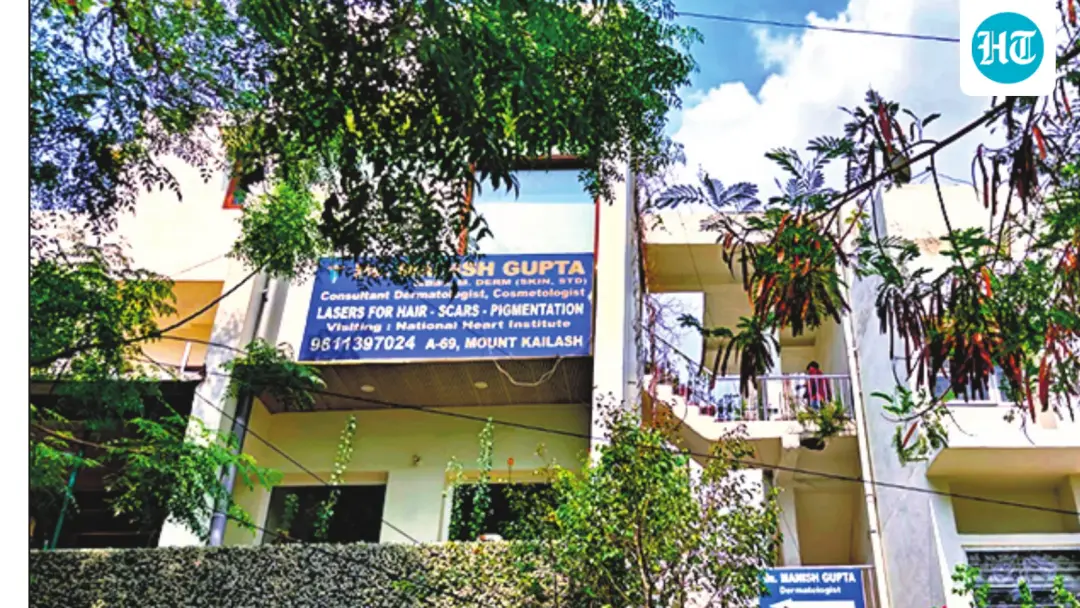
Delhi doctor charge-sheeted in domestic help's murder over clinic dispute
Delhi Police on Monday filed a 340-page charge sheet against dermatologist Manish Gupta, 50, in the June 18 murder of domestic help Meena Haldar, 45, in southeast Delhi's Kailash Hills. Police allege Gupta was enraged that Haldar prioritised his wife's instructions and left his clinic unclean, then struck her with a bat and stabbed her six times in the neck. Police rejected his mental-health defence. The charge sheet names 43 witnesses. His counsel called the allegations false.
Source
Hindustan Times — India · read the original report ↗
Desk check · some claims need care
What the desk checked (5)
- Dermatologist Manish Gupta, 50, allegedly killed domestic help Meena Haldar, 45, on June 18 in Kailash Hills — Attributed to Delhi Police charge sheet filed before a Saket magistrate; not yet tested in court
- Motive was anger that Haldar prioritised his wife's instructions and left his clinic unclean — Attributed to police charge sheet, supported by statement of victim's son as recorded by police
- Police rejected Gupta's mental-health defence after psychiatric evaluation found no concrete proof of recent behavioural change — Quoted directly from the charge sheet as cited in the source
- Charge sheet is 340 pages, names 43 witnesses, and blood on Gupta's clothes matched the victim's — Figures and forensic claim appear in the source, attributed to police
- Defence says police theories are false and no eyewitness saw Gupta commit the murder — Directly quoted from Gupta's counsel, advocate Kamal Nayan Tiwari
Analysts’ view opinion
This is, on the police's own account, a case built substantially on circumstantial evidence. Indian courts have long held that in such cases the chain of circumstances must be complete and point unerringly to the accused, leaving no reasonable gap. The defence's counter — that there is no eyewitness to the act and that the terrace had multiple points of access — goes precisely to that chain, and is a matter for trial rather than something resolvable now.
- A charge sheet is the investigating agency's case, not proof of guilt; the accused remains presumed innocent until a court holds otherwise.
- The September 18 date is for consideration of cognisance, a threshold judicial check on whether there is enough material to proceed, not an assessment of guilt.
- Police rejecting the mental-health defence does not close it — the insanity defence under Indian criminal law requires showing incapacity to understand the nature of the act at the time of the offence, not merely a history of treatment.
- The forensic blood match on the accused's clothes and the neighbour's account from the ninth floor appear central to the prosecution; how both hold up under cross-examination will be decisive.
- The police statement that the weapons were not procured for the purpose could open argument on premeditation versus sudden provocation, an issue that can bear on the nature of the offence and sentencing.
What to watch — Watch whether the magistrate takes cognisance on September 18, and then how the mental-health defence is pressed once the case is committed and charges are framed before the sessions court.
The story sets out the police's allegations and the defence's denial only; it does not establish who committed the killing or whether the mental-health claim has merit.
Deep dive
Research brief · 8 facts · 9 dates · exam-readyThe brief
Context
On June 18, 2025, Meena Haldar, a 45-year-old domestic help who had worked for a family in southeast Delhi's Kailash Hills for around 16 years, was found dead in a pool of blood on the terrace of Mount Kailash Apartments. Her employer, 50-year-old dermatologist Manish Gupta, who ran a clinic adjoining his flat, was arrested the same day. On Monday, Delhi Police filed a 340-page charge sheet before a Saket court alleging Gupta killed her in rage because she prioritised his wife's instructions and left his clinic unclean. Police rejected the mental-health defence advanced by Gupta and his family; his counsel says the police theories are false.
Key facts
- Delhi Police filed a 340-page charge sheet on Monday before Saket judicial magistrate first class Deepika Thakran; consideration of cognisance fixed for September 18.
- Accused: Manish Gupta, 50, a dermatologist running a clinic adjoining his flat at Mount Kailash Apartments, Kailash Hills, southeast Delhi.
- Victim: Meena Haldar, 45, domestic help who had worked for Gupta's family for about 16 years.
- Police allege Gupta struck Haldar on the head with a bat in the terrace storeroom and, when she fled, stabbed her six times in the neck.
- Timeline on June 18: Gupta's wife left at 10am for her Ayurvedic clinic in Karol Bagh; Haldar arrived around 10.30am; a neighbour made the first PCR call around 11.40am.
- The charge sheet names 43 witnesses and relies substantially on circumstantial evidence, including a neighbour who allegedly saw the attack from the ninth floor.
- Police said blood recovered from Gupta's clothes matched Haldar's blood, and that the weapons were not procured specifically for the murder.
- Psychiatric evaluation and past medical records were examined; police said no concrete proof of any recent behavioural change was found.
Timeline
- About 16 years before the incidentMeena Haldar began working as domestic help for Manish Gupta's family.
- Period before June 18Gupta was allegedly unhappy with Haldar's work and repeatedly asked his wife to remove her from employment.
- June 18, 10amGupta's wife left for her Ayurvedic clinic in Karol Bagh; their 18-year-old son was asleep at home.
- June 18, around 10.30amHaldar arrived at the house for routine work; Gupta allegedly asked her to clean the clinic before 11am customers.
- June 18, shortly afterFinding the clinic unclean, Gupta allegedly reprimanded her, then attacked her with a bat in the terrace storeroom and stabbed her six times in the neck.
- June 18, around 11.40amA neighbour spotted Haldar lying in a pool of blood on the terrace and made the first PCR call.
- June 18Gupta was arrested from his apartment; he remains in judicial custody.
- Monday (charge sheet filing)340-page charge sheet filed naming 43 witnesses; police rejected the mental-health defence.
- September 18Matter fixed before the Saket court for consideration of cognisance.
Who has a stake
- Meena Haldar's family (including her son) — Seek justice; her son's statement that Gupta was frequently dissatisfied and often scolded her is part of the police case.
- Manish Gupta, accused dermatologist — Faces murder prosecution; in judicial custody; his mental-health defence has been rejected by police.
- Delhi Police — Must sustain a case built substantially on circumstantial evidence, forensic blood match and 43 witnesses.
- Advocate Kamal Nayan Tiwari, Gupta's counsel — Argues police theories are false, that no eyewitness saw Gupta commit the murder and the terrace had multiple entry and exit points.
- Saket court (JMFC Deepika Thakran) — To decide on taking cognisance of the charge sheet on September 18.
- Domestic workers in urban India — The case highlights the vulnerability of live-out household workers in employer homes with little oversight.
Why it matters
The case spotlights the precarious position of India's domestic workers, who labour inside private homes with minimal legal protection or supervision, and where routine friction over instructions can turn fatal. It also tests how courts treat a claimed psychiatric history as a defence when police say medical records show no recent behavioural change. With no direct eyewitness to the killing asserted by the defence, the prosecution's reliance on circumstantial and forensic evidence will be closely watched.
UPSC angle
Prelims pointers
- Charge sheet: 340 pages, 43 witnesses, filed before Saket judicial magistrate first class (JMFC) Deepika Thakran.
- Cognisance of the charge sheet is fixed for consideration on September 18.
- Incident date: June 18; location Mount Kailash Apartments, Kailash Hills, southeast Delhi.
- First information came through a PCR call by a neighbour at around 11.40am on June 18.
- Police cited a forensic blood match between stains on the accused's clothes and the victim's blood.
- Accused's psychiatric evaluation and past prescriptions were examined; police found no concrete proof of recent behavioural change.
Mains framing
The Kailash Hills case turns a single household dispute into a window on two systemic issues: the legal invisibility of domestic workers and the evidentiary handling of mental-illness claims in criminal law. Haldar had served the family for about 16 years yet, as her son's statement suggests, grievances over scolding and dissatisfaction had no forum outside the home; the alleged trigger, an unclean clinic before 11am patients, illustrates how workplace-and-home overlap leaves such workers without witnesses, contracts or complaint channels. On the criminal-justice side, the prosecution has rejected the defence of long-term antidepressant use and distress over the son's studies, saying psychiatric evaluation and past records showed no recent behavioural change and no conclusive link to the offence, an approach that will be tested when the court considers cognisance on September 18. Since the case rests substantially on circumstantial evidence, one neighbour's account from the ninth floor and a blood match on the accused's clothes, the defence's argument that the terrace had multiple entries and no eyewitness named Gupta goes directly to the standard of proof. The way forward lies in registration and grievance mechanisms for domestic workers, rigorous forensic and chain-of-custody documentation in circumstantial cases, and structured, record-based psychiatric assessment rather than assertions of illness by either side.
Key terms
- Charge sheet
- Final police report filed in court after investigation, listing allegations, evidence and witnesses; here 340 pages with 43 witnesses.
- Cognisance
- The stage at which a magistrate formally takes note of the offence and the charge sheet; fixed here for September 18.
- Judicial Magistrate First Class (JMFC)
- Lower-court magistrate before whom the charge sheet was filed, here Deepika Thakran at Saket court.
- Circumstantial evidence
- Indirect evidence from which guilt is inferred, rather than direct eyewitness testimony to the act; the mainstay of this charge sheet.
- PCR call
- Police Control Room emergency call; a neighbour's PCR call around 11.40am first alerted police.
- Judicial custody
- Detention of an accused in jail under a court's authority pending trial; Gupta remains in judicial custody.
Practice questions
- Discuss the legal and social vulnerabilities of domestic workers in urban India, using the Kailash Hills case to illustrate gaps in protection and grievance redress.
- How should courts evaluate a claimed history of mental illness as a defence in criminal trials? Examine the evidentiary standards involved.
- Convictions based wholly on circumstantial evidence require the chain of circumstances to be complete. Critically examine with reference to forensic and eyewitness evidence in this case.
Grounded only in the source report — figures and dates are the source's, not inferred.