
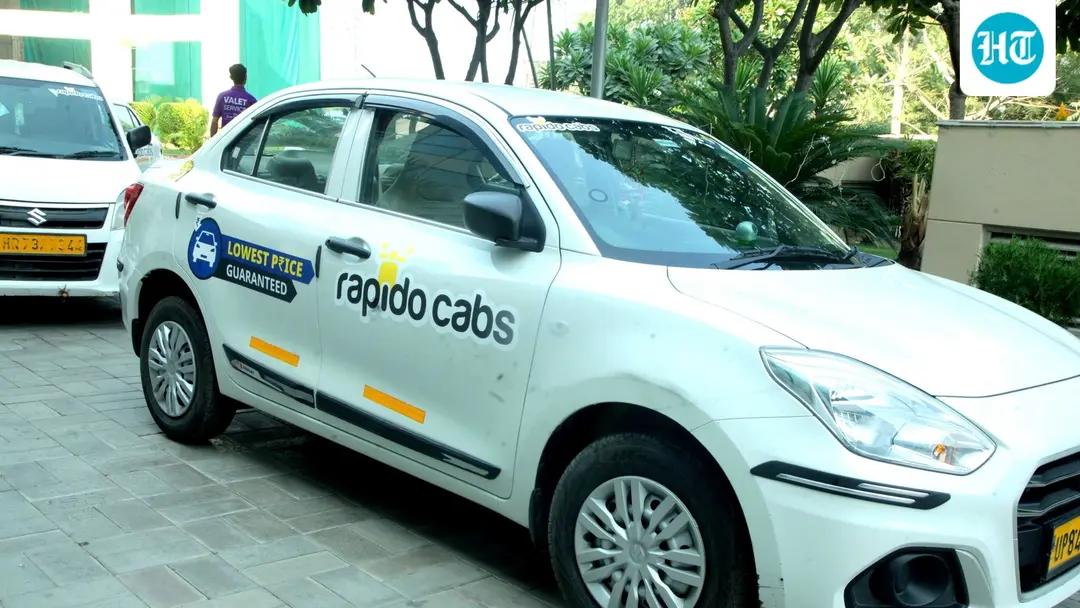
CCPA fines Rapido operator ₹10 lakh over pay-more prompts
The Central Consumer Protection Authority has imposed a ₹10 lakh penalty on Roppen Transportation Services Pvt Ltd, which operates Rapido, and directed it to stop prompts suggesting that paying more improves the chance of getting a ride. The order, dated August 31, 2026, held the company liable for misleading advertising, unfair trade practice, unfair contract and dark patterns. The authority also questioned seeking a 'tip' at booking. Rapido has 15 days to file a compliance report; scrutiny of Uber and Ola continues.
Source
Hindustan Times — India · read the original report ↗
Desk check · compared with the source
What the desk checked (5)
- CCPA imposed a ₹1 million (₹10 lakh) penalty on Roppen Transportation Services Pvt Ltd, which operates Rapido. — Attributed to the CCPA order in the source; figure appears consistently in the text.
- The order, dated August 31, 2026, found Rapido guilty of misleading advertising, unfair trade practice, unfair contract and use of dark patterns. — Attributed to the order; date as stated in source and not independently checkable here.
- Prompts such as 'Captains aren't accepting at ₹60. Try adding +10, +20, +30' were classified as 'Confirm Shaming'. — Quoted from CCPA investigation findings in the source.
- Motor Vehicle Aggregator Guidelines, 2025 allow a tipping option only after the journey ends. — Attributed to CCPA's citation of the guidelines; text of guidelines not reproduced.
- Examination of Uber and Ola is ongoing; Rapido has 15 days to file a compliance report. — Attributed to a government ministry release and the order.
Analysts’ view opinion
A ₹10 lakh penalty is not a material financial blow to a platform of Rapido's size — the real impact is on the revenue mechanics. Prompts saying a higher payment improves your chances, and a 'tip' asked for at the booking stage, are a cheap way of pushing peak-time price discovery onto the consumer; remove them and the cost of attracting drivers may shift back onto the platform's own incentive spending. Riders should get clearer pricing in the short run, but base fares or peak-hour wait times could edge up instead.
- The fine is small, but the order to redesign the interface touches the pricing mechanism itself — that is where the cost sits.
- The CCPA noted the company produced no data showing extra payment actually raised the chance of a confirmed ride, implying consumers may have paid more without a demonstrated benefit.
- If the burden of pulling in supply during driver shortages moves from rider 'tips' to platform incentives, margins come under pressure.
- With Uber and Ola still under examination, this is a sector-wide signal on how fares may be displayed, not a single-company issue.
- Absent statutory fare regulation for private cab aggregators, regulation is effectively targeting how price is presented rather than how high it goes.
What to watch — Watch the compliance report due within 15 days, how Rapido adjusts base fares and driver incentives, and where the ongoing Uber and Ola examination lands.
The story does not establish how much fares, wait times or driver earnings will actually change, nor whether the company will contest the order.
Deep dive
Research brief · 8 facts · 5 dates · exam-readyThe brief
Context
Ride-hailing apps in India have been showing prompts while searching for a driver that suggest riders raise their fare or add a "tip" to get a ride faster. Acting on a user complaint, the Central Consumer Protection Authority (CCPA) — the regulator set up under the Consumer Protection Act to act against misleading ads and unfair trade practices — investigated Rapido's interface. It found the wording and colour-coded price slider amounted to "dark patterns", design features that manipulate consumer choice, listed under the government's 2023 dark-pattern guidelines. The order fines Rapido's operator and orders the prompts stopped, while similar scrutiny of Uber and Ola continues.
Key facts
- CCPA imposed a penalty of ₹1 million (₹10 lakh) on Roppen Transportation Services Pvt Ltd, which operates Rapido.
- The order is dated August 31, 2026, and holds Rapido guilty of misleading advertising, unfair trade practice, unfair contract and use of dark patterns.
- The complaint came through a user representation dated May 16 alleging an upfront 'tip' feature and arbitrary, excessive peak-hour pricing.
- Prompts found on the app included 'Higher the price, higher the chance of getting a ride' and 'Captains aren't accepting at ₹60. Try adding +10, +20, +30.'
- CCPA classified the prompts as 'Confirm Shaming', one of the dark patterns identified under the government's 2023 guidelines.
- The 'Set your price' slider, showing green for higher prices and red/orange warnings for lower ones with more room to raise than lower, was classified as 'Interface Interference'.
- Rapido produced no data showing that an additional payment actually increased the likelihood of a ride being confirmed.
- Rapido has been given 15 days from receipt of the order to submit a compliance report; CCPA's examination of Uber and Ola is still ongoing.
Timeline
- 2023Government issues guidelines identifying dark patterns, including 'Confirm Shaming' and 'Interface Interference'.
- 2025Motor Vehicle Aggregator Guidelines provide that a voluntary tipping option must appear only after the journey is completed.
- May 16A user representation alleges Rapido prompts a pre-booking 'tip' to expedite rides and charges arbitrary peak-hour prices.
- August 31, 2026CCPA order imposes ₹1 million penalty on Roppen Transportation Services and directs it to stop the pay-more prompts.
- Within 15 days of receipt of orderRapido must submit a compliance report to CCPA.
Who has a stake
- Central Consumer Protection Authority (CCPA) — Enforcing consumer protection against dark patterns and misleading representations across ride-hailing platforms.
- Roppen Transportation Services Pvt Ltd (Rapido) — Faces a ₹1 million penalty, must redesign its fare interface and file a compliance report in 15 days.
- Riders/consumers — Protection from pressure to pay more at the moment of booking and from misleading claims about ride confirmation.
- Drivers ('Captains') — Their earnings are affected by platform-set fares and by tipping being moved to after the trip.
- Uber and Ola — Under ongoing CCPA examination for similar dark-pattern practices.
- Government/Ministry (consumer affairs) — Said the action is part of wider scrutiny of dark patterns in ride-hailing and bike-taxi platforms.
Why it matters
The order tests whether platform interface design — colours, sliders and nudges — can itself be treated as a misleading representation, not just the words on screen. It also rejects the claim that aggregators are neutral intermediaries when they generate the fare and control both rider and driver sides, which has implications for how the gig economy prices services. With Uber and Ola still under examination, the ruling could reset booking flows across ride-hailing.
UPSC angle
Prelims pointers
- CCPA (Central Consumer Protection Authority) imposed a ₹10 lakh penalty on Roppen Transportation Services Pvt Ltd, operator of Rapido; order dated August 31, 2026.
- 'Confirm Shaming' and 'Interface Interference' are dark patterns identified under the government's 2023 dark-pattern guidelines.
- Motor Vehicle Aggregator Guidelines, 2025: a voluntary tipping option should be visible only after the journey is completed, not at booking or during the ride.
- CCPA grounds of liability in the order: misleading advertising, unfair trade practice, unfair contract, dark patterns.
- Rapido must file a compliance report within 15 days of receiving the order.
- CCPA's examination of Uber and Ola remains ongoing, per the government.
Mains framing
The CCPA's Rapido order marks a shift from policing advertising claims to policing interface architecture. The regulator found that prompts such as 'Captains aren't accepting at ₹60. Try adding +10, +20, +30' and a slider that rewarded higher prices with green while flagging lower prices in red or orange manipulated consumer choice at the most vulnerable moment — while the ride was still unconfirmed — without any data showing extra payment actually improved confirmation. Two structural causes stand out: the absence of statutory fare regulation for private cab aggregators, which leaves surge and peak pricing largely to platform discretion, and the platform's dual control over rider and driver sides, which the CCPA said disqualified Rapido from claiming to be a neutral intermediary reflecting 'real-time negotiation'. The implications extend beyond one firm: if design itself can constitute a misleading representation, every choice-architecture element in Indian consumer apps becomes reviewable. The way forward suggested by the order is compliance with the 2023 dark-pattern guidelines and the Motor Vehicle Aggregator Guidelines, 2025 — tipping only after a completed trip, transparent fare composition, and interfaces that do not asymmetrically favour higher payment — backed by the pending examination of Uber and Ola to ensure sector-wide, not firm-specific, remedies.
Key terms
- CCPA
- Central Consumer Protection Authority, the regulator that acted against misleading advertising, unfair trade practices and dark patterns in this case.
- Dark patterns
- Design features that manipulate or influence a consumer's choice, as defined in the CCPA's order and the government's 2023 guidelines.
- Confirm Shaming
- A dark pattern where the app makes the consumer feel that refusing to pay more could mean losing the ride or waiting longer.
- Interface Interference
- A dark pattern where visual design — here colour coding and an asymmetric price slider — pushes the consumer towards a higher price.
- Motor Vehicle Aggregator Guidelines, 2025
- Rules providing that a voluntary tipping option should appear only after the journey ends, not at booking or during the ride.
- Roppen Transportation Services Pvt Ltd
- The company that operates the Rapido ride-booking platform and was fined ₹1 million by the CCPA.
Practice questions
- Discuss how 'dark patterns' in digital platform design challenge conventional consumer protection law. Illustrate with the CCPA's 2026 order against Rapido.
- Aggregators claim to be neutral intermediaries. Examine this claim in light of the CCPA's finding that Rapido generated the fare and controlled both rider and driver sides of the transaction.
- In the absence of statutory fare regulation for private cab aggregators, what regulatory tools exist to protect consumers from arbitrary peak-hour pricing? Evaluate critically.
Grounded only in the source report — figures and dates are the source's, not inferred.