
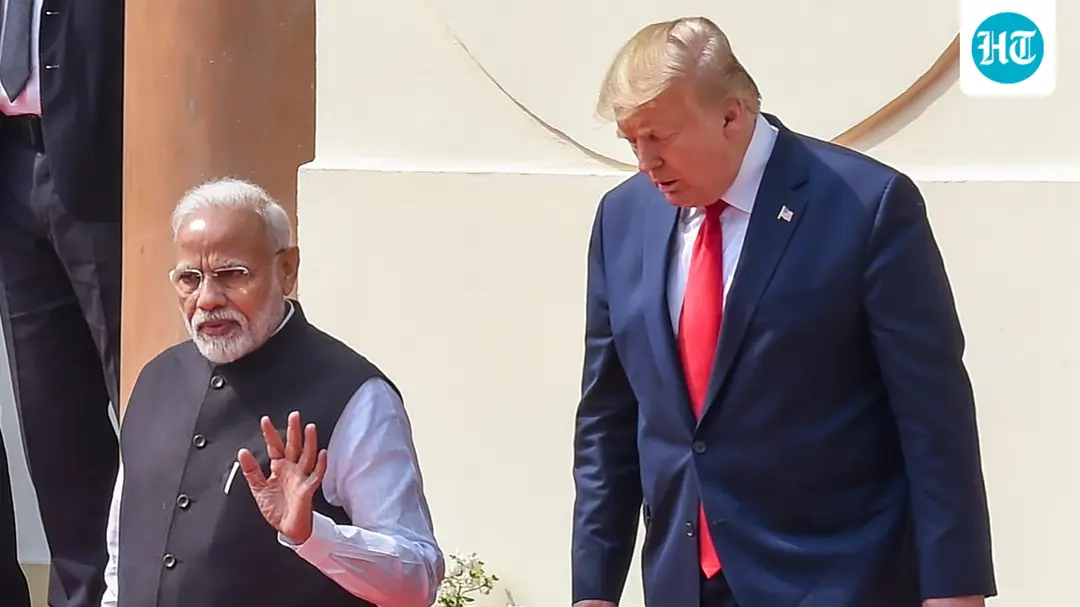
US House advances Russia sanctions bill; India faces 100% tariff threat
The US House of Representatives on Wednesday advanced, by a narrow 214-211 margin, a bill that could allow tariffs of up to 100% on India and four other countries over purchases of Russian energy, with a final vote set for Thursday. The Lindsey O Graham Sanctioning Russia and Iran Act 2026 would currently target China, India, Slovakia, Hungary and Azerbaijan, senators said. The Senate passed the bill in August.
Source
Hindustan Times — India · read the original report ↗
Desk check · some claims need care
What the desk checked (5)
- US House advanced the Russia sanctions bill by a 214-211 margin on Wednesday — Specific figure appears in source; no vote record cited beyond the report itself.
- The Lindsey O Graham Sanctioning Russia and Iran Act 2026 allows tariffs of up to 100% on the five largest buyers of Russian oil or gas — Named legislation described in source; tariff rate attributed to the bill's text, not independently sourced.
- Tariffs would currently target China, India, Slovakia, Hungary and Azerbaijan — Attributed in source to clarification by senators; individual senators not named.
- Final vote expected Thursday and expected to pass — Attributed to unnamed 'persons aware of the matter' who spoke to HT.
- Senator Lindsey Graham has died, boosting the bill's prospects — Stated without attribution in the source; a significant claim an editor should verify.
Analysts’ view opinion
The bill is aimed at Russia, but the cost would land on the countries buying Russian energy — India among them. The razor-thin 214-211 margin, with objections from both parties, shows even Washington is divided on whether this is a cheap instrument to use. For New Delhi this is not merely a trade file; it touches core questions of energy sourcing and strategic autonomy.
- The story notes the tariff rate for each country would be set by the US Trade Representative, so passage would create authority rather than automatic tariffs — leaving the executive with leverage it may choose to bargain with.
- The target list reportedly includes not just China and India but Slovakia, Hungary and Azerbaijan, meaning the measure could strain relations inside the Western alliance as well as with Asia.
- The story cites Russia's envoy offering 'as much oil as India needs' and criticising 'pressure tactics', suggesting Moscow will try to convert this pressure into deeper, discounted, longer-term supply arrangements.
- Republican worries about domestic energy prices and Democratic reluctance to hand the President more tariff power indicate internal friction is likely to persist into the implementation stage.
- US business groups reportedly warned senators against the bill, showing sections of American industry fear blowback on their own commercial interests.
What to watch — Watch Thursday's final vote and then how much discretion the administration shows on rates and exemptions — that will shape the tone of India-US trade talks more than the text of the law.
The story does not establish the outcome of the final vote, what rate would apply to India, when any tariff would take effect, or how New Delhi will formally respond.
Deep dive
Research brief · 8 facts · 5 dates · exam-readyThe brief
Context
The US Congress is moving on legislation that would let the Trump administration impose tariffs of up to 100% on the largest buyers of Russian oil and natural gas, with India named among the five current targets. The bill, called the Lindsey O Graham Sanctioning Russia and Iran Act 2026, passed the US Senate in August with an overwhelming majority after more than a year of negotiations. On Wednesday the House of Representatives cleared a procedural vote to advance it by a razor-thin 214-211 margin, setting up a final vote on Thursday that is widely expected to pass.
Key facts
- The US House advanced the Russia sanctions bill on Wednesday by a 214-211 margin, with a final vote set for Thursday.
- The Lindsey O Graham Sanctioning Russia and Iran Act 2026 would authorise tariffs of up to 100% on the five largest purchasers of Russian oil or natural gas.
- Senators have clarified the tariffs would currently target China, India, Slovakia, Hungary and Azerbaijan over their oil purchases.
- The bill also allows tariffs on the five countries doing the most to help Russia evade existing sanctions.
- The exact tariff rate for each country would be determined by the US Trade Representative.
- The US Senate passed the bill in August with an overwhelming majority after more than a year of negotiations and debate.
- The bill faced opposition from members of both parties in the House: Democrats objected to giving President Trump greater tariff authority, while some Republicans cited risks to domestic energy prices.
- The House Rules Committee cleared a key procedural hurdle on Monday, allowing the legislation to move towards a vote sooner than expected.
Timeline
- AugustThe US Senate passes the bill with an overwhelming majority after more than a year of negotiations.
- Last weekA House vote was widely expected to be delayed until after the midterm elections, as Republican leadership cut the legislative session short by two weeks for campaigning.
- MondayThe House Rules Committee clears a key procedural hurdle, unexpectedly allowing the bill to move towards a vote this week.
- WednesdayThe House advances the bill by 214-211 in a procedural vote, with backing from enough Republicans and Democrats.
- ThursdayFinal House vote scheduled; passage widely expected, per persons aware of the matter.
Who has a stake
- India — Named among the five current targets; faces potential US tariffs of up to 100% over its purchases of Russian oil.
- China, Slovakia, Hungary, Azerbaijan — The other four countries currently identified by senators as targets of the proposed tariffs over Russian oil purchases.
- Trump administration — Would gain authority to impose tariffs of up to 100% on the largest buyers of Russian energy.
- US Trade Representative — Would determine the exact tariff rate applied to each targeted country.
- US House Republicans and Democrats — Split: Democrats resist expanding Trump's tariff powers; some Republicans fear the sanctions will raise domestic energy prices.
- Russia — Target of the sanctions regime; its envoy has said Russia is ready to supply as much oil as India needs and has criticised 'pressure tactics'.
- US business groups — Have warned senators about the Russia sanctions bill targeting India and others.
Why it matters
If enacted, the law would hand the US executive discretionary power to tariff India at up to 100% purely on account of its energy sourcing, injecting fresh uncertainty into India-US trade ties. India's discounted Russian crude imports have been central to its energy security calculus, so a punitive tariff would force a trade-off between cheaper oil and access to the US market. The narrow 214-211 procedural margin also shows how contested the measure is within American politics itself.
UPSC angle
Prelims pointers
- Bill name: Lindsey O Graham Sanctioning Russia and Iran Act 2026; passed the US Senate in August.
- It authorises tariffs of up to 100% on the five largest purchasers of Russian oil or natural gas.
- Countries currently identified as targets: China, India, Slovakia, Hungary, Azerbaijan.
- The exact tariff rate per country would be set by the US Trade Representative (USTR).
- House procedural vote to advance the bill passed 214-211; the House Rules Committee cleared the hurdle on Monday.
- The bill also permits tariffs on the five countries doing the most to help Russia evade existing sanctions.
Mains framing
The proposed Lindsey O Graham Sanctioning Russia and Iran Act 2026 illustrates how secondary sanctions and tariff instruments are increasingly used to enforce a third country's foreign-policy objectives on sovereign energy choices. India, named alongside China, Slovakia, Hungary and Azerbaijan, faces a potential tariff of up to 100% because of its purchases of Russian oil — a sourcing decision driven by price advantage and energy security rather than strategic alignment. The bill's design compounds the uncertainty: it delegates wide discretion to the executive, with the US Trade Representative setting the actual rate, making outcomes contingent on political bargaining rather than predictable rules. Domestic American resistance is instructive — Democrats objected to expanding presidential tariff authority and some Republicans warned of higher domestic energy prices, producing a bare 214-211 margin on the procedural vote. For India, the way forward, as suggested by the source, lies in diplomatic engagement with the US Congress and administration (US business groups have themselves warned senators), diversification of crude sources, and weighing Russia's offer, conveyed by its envoy, to supply as much oil as India needs while resisting what Moscow terms "pressure tactics".
Key terms
- Lindsey O Graham Sanctioning Russia and Iran Act 2026
- US bill authorising tariffs of up to 100% on the five biggest buyers of Russian oil or gas and on countries aiding Russian sanctions evasion.
- US House Rules Committee
- House panel that sets the terms for floor consideration of a bill; it cleared the procedural hurdle for this bill on Monday.
- US Trade Representative (USTR)
- US agency that would determine the exact tariff rate applicable to each targeted country under the bill.
- Procedural (rule) vote
- A vote to allow a bill to proceed to final consideration; here it passed narrowly, 214-211.
- Secondary tariffs on Russian energy buyers
- Penalties imposed not on Russia but on third countries such as India for purchasing Russian oil or gas.
Practice questions
- Discuss how the use of secondary sanctions and tariffs by major powers affects the strategic autonomy of countries like India in securing their energy needs.
- Examine the implications for India-US relations if legislation authorising tariffs of up to 100% on buyers of Russian oil becomes US law.
- The proposed US bill delegates the determination of tariff rates to the executive. What does such delegation imply for predictability in international trade?
Grounded only in the source report — figures and dates are the source's, not inferred.