
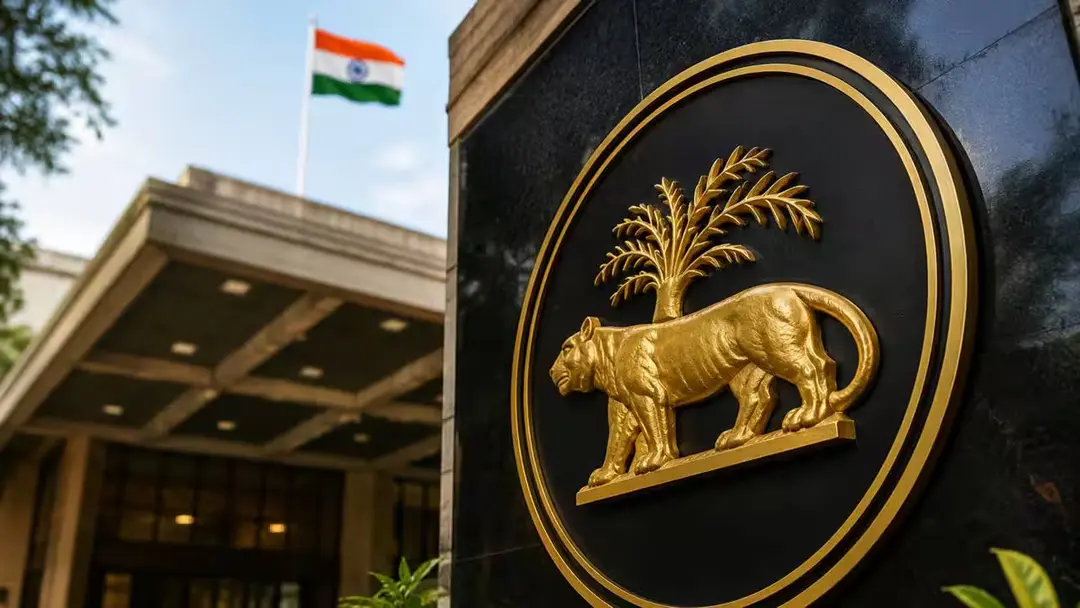
Economists expect RBI repo rate hike at October meeting
Broadening inflation, resilient growth and global rate increases have strengthened the case for a Reserve Bank of India rate hike, with 35 of 61 economists polled by Reuters expecting a 25-basis-point rise to 5.50% at the October 5-7 meeting. The RBI held the repo rate at 5.25% in August. Nearly half the inflation basket rose 4% or more year-on-year, the economy grew about 8% in April-June and bank credit growth topped 19% in July.
Source
RBI · read the original report ↗
Desk check · compared with the source
What the desk checked (5)
- 35 of 61 economists polled by Reuters expect a 25 bps hike to 5.50% at the October 5-7 meeting — Attributed to a Reuters poll; figure appears in source.
- RBI held the repo rate at 5.25% for a fourth consecutive review in August — Stated in source without separate attribution; internally consistent with the 5.50% post-hike figure.
- Prices for nearly half of India's inflation basket rose 4% or more year-on-year, up from about a third in March — Attributed to data in source; no specific dataset named.
- India's economy grew nearly 8% in April-June; bank credit growth exceeded 19% in July — Figures appear in source; no issuing agency cited.
- Overseas investors withdrew nearly $26 billion from Indian stocks in 2026 so far — Figure appears in source with no source agency given.
Analysts’ view opinion
The question in front of the RBI is no longer whether to hike, but how far. With prices for nearly half the inflation basket rising 4% or more year-on-year (up from about a third in March), growth near 8% in April-June and bank credit expanding more than 19% in July, the central bank has the space to prioritise its inflation mandate without worrying about propping up demand. Thirty-five of 61 economists polled expect a 25 bps move to 5.50%; the one-year OIS market has already priced 90 bps of hikes over 12 months.
- Borrowers pay, savers gain: EMIs on floating-rate home and MSME loans reprice quickly, while deposit rates typically follow with a lag.
- Barclays' analysis cited in the story suggests the 19% credit surge is not just consumption froth but is also funding production, investment and the higher nominal cost of doing business — which means a modest hike need not bite hard into growth.
- The external channel matters as much as the domestic one: a shrinking rate differential with advanced economies can deter foreign inflows into Indian debt, at a time when overseas investors have already pulled nearly $26 billion from local equities in 2026.
- A 25 bps 'modest' move is as much about credibility as arithmetic — reinforcing the RBI's inflation-fighting record, supporting the rupee and complementing ongoing liquidity absorption.
- Because markets have already priced 90 bps, a single 25 bps hike is unlikely to be a shock; bond yields and the rupee will react more to the RBI's forward guidance than to the number itself.
What to watch — Watch the October 5-7 meeting not just for the size of the hike but for the stance language and any hint of whether this is a one-off or the start of a cycle, and then how fast banks pass it into lending and deposit rates.
The story does not establish what the RBI will actually do — these are survey expectations and market pricing, and the latest headline inflation reading, the RBI's own projections and the precise growth cost of a hike are not spelled out.
Deep dive
Research brief · 8 facts · 7 dates · exam-readyThe brief
Context
India's Reserve Bank has held its benchmark repo rate at 5.25% for four consecutive bi-monthly reviews, saying in August it wanted clearer evidence that inflation pressures were becoming generalised before acting. Since then, price rises have spread across the inflation basket, growth has stayed near 8% and several major central banks have tightened policy. A Reuters poll now shows most economists expect a 25-basis-point hike to 5.50% at the October 5-7 meeting.
Key facts
- 35 of 61 economists polled by Reuters (about 60%) expect a 25-basis-point repo rate hike to 5.50% at the October 5-7 RBI meeting.
- The RBI kept the repo rate at 5.25% at its August meeting, the fourth consecutive bi-monthly review with no change.
- Prices for nearly half of India's inflation basket rose 4% or more year-on-year, up from about a third of the basket in March.
- India's economy expanded nearly 8% in the April-June quarter.
- Bank credit growth rose to more than 19% in July, nearly doubling from a year earlier.
- India's one-year overnight index swap is pricing in 90 bps of hikes over the next 12 months.
- Overseas investors have withdrawn nearly $26 billion from Indian stocks in 2026 so far.
- Central banks in the US, Japan, Europe, Indonesia, the Philippines and South Korea have raised rates since the US-Israeli war on Iran began in late February.
Timeline
- MarchAround a third of India's inflation basket was recording year-on-year price rises of 4% or more.
- Late FebruaryUS-Israeli war on Iran begins; global central banks subsequently raise borrowing costs.
- April-June quarterIndian economy grows nearly 8%.
- JulyBank credit growth rises to more than 19%, nearly double a year earlier.
- August meetingRBI holds repo rate at 5.25% for a fourth straight review, awaiting evidence of generalised inflation.
- September 28, 2026Reuters poll reported: 35 of 61 economists expect a 25 bps hike in October.
- October 5-7RBI monetary policy meeting at which a hike to 5.50% is widely expected.
Who has a stake
- Reserve Bank of India — Must weigh broadening inflation, near-8% growth and global tightening against the cost of raising borrowing costs; its inflation-fighting credibility is at issue.
- Borrowers and banks — Credit growth above 19% in July would face costlier funding if the repo rate rises to 5.50%.
- Foreign portfolio investors — Shrinking rate differentials against advanced economies can hurt inflows into Indian debt; nearly $26 billion has already exited local stocks in 2026.
- Economists and analysts (ICICI Securities PD, Barclays, State Street) — Abhishek Upadhyay urges the "prudent course" of a 25 bps hike; Krishna Bhimavarapu says the RBI may find it hard to stay on the sidelines.
- Rupee and equity markets — The weakening rupee and lagging Indian stocks are cited as reasons a modest hiking cycle could help; swaps already price 90 bps of hikes.
Why it matters
The repo rate sets the floor for borrowing costs across the economy, so a hike would raise loan and deposit rates at a time when credit growth is above 19%. It also signals that the RBI is prioritising its inflation mandate now that growth near 8% removes the need to prop up demand, and that India cannot ignore a global tightening cycle without risking further capital outflows and rupee weakness.
UPSC angle
Prelims pointers
- Repo rate is the RBI's benchmark policy rate; currently 5.25%, expected to rise 25 bps to 5.50%.
- Monetary policy is reviewed bi-monthly; the meeting in question runs October 5-7.
- One basis point = 0.01 percentage point; 25 bps = 0.25 percentage point.
- Overnight index swap (OIS) rates are the closest market gauge of interest rate expectations; one-year OIS prices 90 bps of hikes.
- Reuters poll: 35 of 61 economists expect a hike; nearly half the inflation basket shows 4%+ year-on-year price rises.
- FPI outflows from Indian equities in 2026 so far: nearly $26 billion.
Mains framing
The case for an October repo rate hike rests on three converging pressures: inflation has broadened, with nearly half the basket rising 4% or more year-on-year against about a third in March; growth of nearly 8% in April-June and bank credit expansion above 19% in July indicate firm domestic demand that no longer needs monetary support; and a less accommodating global backdrop, with the US, Japan, Europe, Indonesia, the Philippines and South Korea all tightening, is narrowing India's interest rate differential and threatening portfolio flows already hit by nearly $26 billion of equity outflows in 2026. Analysts frame a modest hiking cycle as prudent insurance — reinforcing the RBI's inflation-fighting credentials, supporting a weakening rupee and complementing ongoing liquidity absorption. The counterweights are elevated crude prices that a rate move cannot address, the risk of dearer credit when incremental lending, per Barclays, is financing production and investment, and the fact that markets have already priced in 90 bps of hikes, leaving the RBI to manage expectations carefully. The way forward, on the evidence in the source, is a calibrated 25-basis-point move accompanied by clear communication on the extent of the cycle.
Key terms
- Repo rate
- The RBI's benchmark rate at which it lends to banks; held at 5.25% in August, expected to go to 5.50%.
- Basis point (bps)
- One-hundredth of a percentage point; a 25 bps hike equals 0.25 percentage point.
- Inflation basket
- The set of goods and services whose prices are tracked for inflation; nearly half now shows 4%+ annual rises.
- Overnight index swap (OIS)
- A derivative whose rate reflects market expectations of future policy rates; India's one-year OIS prices 90 bps of hikes.
- Interest rate differential
- The gap between Indian and advanced-economy rates; its shrinking can reduce foreign inflows into Indian debt.
- Liquidity absorption
- Central bank operations that drain surplus cash from the banking system, which a rate hike would complement.
Practice questions
- Examine the factors that shift a central bank's balance from supporting growth to prioritising its inflation mandate, using the RBI's October 2026 policy context.
- How do global interest rate cycles and capital flows constrain monetary policy autonomy in an emerging economy like India? Discuss with reference to recent FPI outflows and the rupee.
- Bank credit growth above 19% can signal either productive investment or overheating. Discuss how policymakers should read such data while setting the repo rate.
Grounded only in the source report — figures and dates are the source's, not inferred.