
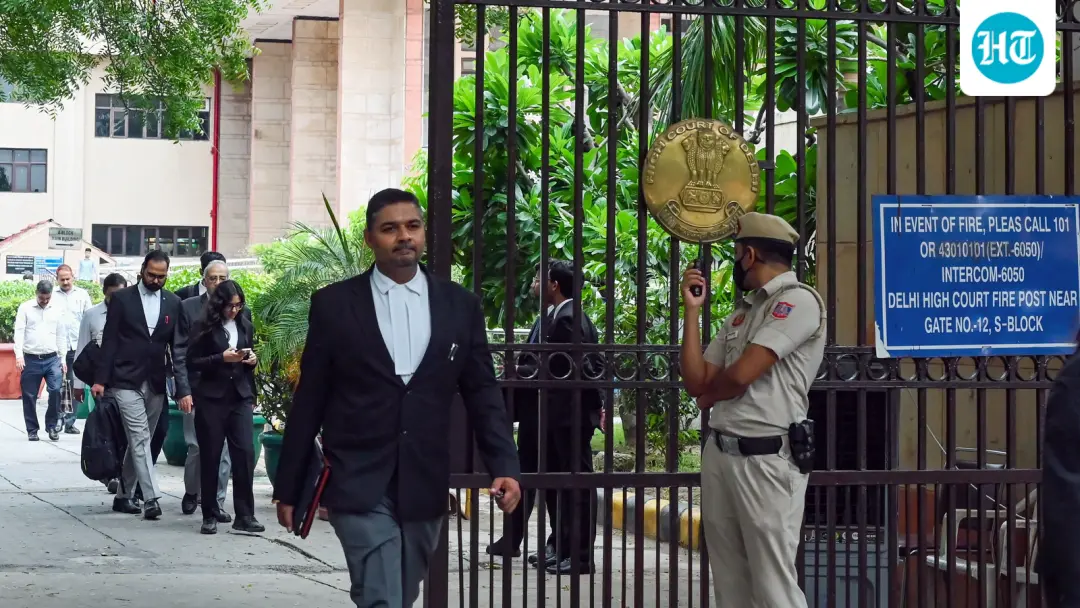
Delhi HC sets aside seven ITAT orders in Patanjali tax case
The Delhi High Court has set aside seven orders passed by the Income Tax Appellate Tribunal in cross-appeals involving Patanjali Ayurved Limited. A bench of justices Dinesh Mehta and Rajneesh Kumar Gupta, in a September 10 judgment uploaded on September 15, objected to seven separate appeals being disposed of through a common order of fewer than seven paragraphs. The court said Members showed "undue haste, rather recklessness" and called the procedural lapses a "shocking picture". It noted four appeals were recorded as heard and pronounced on August 6, 2025, and three revenue appeals on August 13, 2025.
Source
Hindustan Times — India · read the original report ↗
Desk check · compared with the source
What the desk checked (4)
- Delhi High Court set aside seven ITAT orders in cross-appeals involving Patanjali Ayurved Limited — Attributed to the September 10 judgment uploaded on September 15; figure appears in source.
- Bench of justices Dinesh Mehta and Rajneesh Kumar Gupta described proceedings as a 'shocking picture' of procedural lapses — Direct quotation from the judgment as reported in the source.
- ITAT disposed of all seven matters through an order of fewer than seven paragraphs without addressing the assessee's contentions — Attributed to the High Court's observations; no independent copy of the ITAT order cited.
- Four appeals were shown as heard and pronounced on August 6, 2025 and three revenue appeals on August 13, 2025 — Dates appear in the source as recorded by the court; internally consistent.
Analysts’ view opinion
Technically this is a tax dispute, but politically it cuts both ways. The Patanjali brand name alone gives the ruling extra political salience — the opposition could frame it as a "soft landing for the powerful", though the high court's criticism was aimed at the tribunal's functioning, not the company. The immediate loser here is the institutional credibility of the ITAT; the immediate gainer is the income tax department, which took the matter up and won.
- What the high court struck down was the process behind the tribunal's orders — the story makes clear it delivered no finding on Patanjali's tax liability itself.
- Judicial language like "undue haste" and a "shocking picture" is an open invitation to political debate on tribunal appointments, workload and accountability.
- The Revenue's success in getting the ITAT orders set aside cuts against the charge that the tax department was overreaching in this case.
- For Patanjali this is only a procedural setback, but a revived proceeding means the adverse news cycle may run longer.
- Delay in final resolution leaves space for political interpretation on both sides — until facts are settled, allegation remains the main weapon.
What to watch — Watch for any formal response from the government or opposition on tribunal order quality and reform, and for where the case lands on rehearing.
The judgment does not establish whether Patanjali's tax position was right or wrong, and the story does not say why the tribunal erred or whether anyone will face consequences.
Deep dive
Research brief · 8 facts · 4 dates · exam-readyThe brief
Context
The Income Tax Appellate Tribunal (ITAT) is the highest fact-finding appellate body in direct tax disputes, hearing appeals from both assessees and the Revenue Department. In cross-appeals involving Patanjali Ayurved Limited and the Income Tax Department, the ITAT disposed of seven separate appeals through a single common order, quashing assessment proceedings against Patanjali. The Income Tax commissioner challenged those orders before the Delhi High Court, which has now set aside all seven ITAT orders for non-application of mind and procedural lapses.
Key facts
- The Delhi High Court set aside seven orders passed by the ITAT in cross-appeals involving Patanjali Ayurved Limited.
- The bench comprised justices Dinesh Mehta and Rajneesh Kumar Gupta; the judgment was dated September 10 and uploaded on September 15.
- The ITAT disposed of all seven matters through a common order comprising fewer than seven paragraphs.
- Four appeals were recorded as heard and pronounced on August 6, 2025, while three revenue appeals were shown as heard and pronounced on August 13, 2025.
- The High Court said the Members showed "undue haste, rather recklessness" while passing and signing the order.
- The court described the appeals as portraying a "rather shocking picture of the procedural lapses and opaqueness" at the ITAT.
- The court held the ITAT neither addressed the assessee's contentions nor examined the issues involved in the appeals.
- The ITAT's August 6 and 13 orders had quashed assessment proceedings against Patanjali and allowed its appeals; the Income Tax commissioner appealed against them.
Timeline
- August 6, 2025Four appeals recorded as heard and pronounced by the ITAT; assessment proceedings against Patanjali quashed and its appeals allowed.
- August 13, 2025Three revenue appeals shown as heard and pronounced, though dealt with in the same common ITAT order.
- September 10Delhi High Court bench of justices Dinesh Mehta and Rajneesh Kumar Gupta delivers judgment setting aside the seven ITAT orders.
- September 15The judgment is uploaded.
Who has a stake
- Income Tax Appellate Tribunal (ITAT) — Its orders were set aside and its Members and staff were criticised for haste, non-application of mind and opaque procedure.
- Patanjali Ayurved Limited — The assessee whose appeals had been allowed and assessment proceedings quashed by the ITAT; those orders now stand set aside.
- Income Tax Department / Revenue — Filed appeals both before the ITAT and, through the Income Tax commissioner, before the High Court against the ITAT orders.
- Delhi High Court — Exercised appellate oversight over the tribunal and laid down expectations of reasoned orders from fact-finding authorities.
- Tribunal staff — Faulted for failing to bring the errors to the Members' notice while getting the order signed.
Why it matters
The ITAT is the final fact-finding forum in income tax litigation, so unreasoned or hastily signed orders can force high-value disputes back to square one and delay revenue collection as well as taxpayer certainty. The High Court's criticism of "zeal rather over-anxiety of disposing the cases" points to a tension between disposal targets and the duty to give reasons. It also underlines that discrepancies in recorded hearing and pronouncement dates go to the transparency of tribunal proceedings.
UPSC angle
Prelims pointers
- ITAT is described in the judgment as the highest fact-finding body in the income tax appellate hierarchy.
- Delhi High Court bench: justices Dinesh Mehta and Rajneesh Kumar Gupta; judgment dated September 10, uploaded September 15.
- Seven cross-appeals of Patanjali Ayurved Limited and the Revenue Department were disposed of by one ITAT order of fewer than seven paragraphs.
- ITAT dates in question: four appeals heard and pronounced August 6, 2025; three revenue appeals August 13, 2025.
- The appeals before the High Court were filed by the Income Tax commissioner against the ITAT orders quashing assessment proceedings against Patanjali.
- Key phrases used by the court: "shocking picture", "undue haste, rather recklessness", "non-application of mind".
Mains framing
The Delhi High Court's setting aside of seven ITAT orders in the Patanjali Ayurved cross-appeals raises the question of how quasi-judicial tribunals balance the pressure of pendency and disposal with the constitutional duty to pass reasoned orders. The court found that a common order of fewer than seven paragraphs disposed of seven distinct appeals filed separately by the assessee and the Revenue, without addressing the assessee's contentions or examining the issues, and despite different pronouncement dates having been fixed; four appeals were recorded as heard and pronounced on August 6, 2025 and three revenue appeals on August 13, 2025. Such lapses, described as "opaqueness" and "non-application of mind", have real costs: high-value tax disputes are remitted afresh, litigation cycles lengthen, and confidence in the tribunal as the highest fact-finding forum erodes. The court also faulted tribunal staff for not flagging the errors before signature, indicating that the failure is institutional and not merely individual. The way forward suggested by the judgment's logic lies in strict internal checks before orders are signed, accurate recording of hearing and pronouncement dates, separate reasoned treatment of separate appeals, and appellate scrutiny by constitutional courts where reasoning is absent.
Key terms
- ITAT (Income Tax Appellate Tribunal)
- Appellate body in direct tax disputes, described in the judgment as the highest fact-finding body in the appellate hierarchy.
- Cross-appeals
- Appeals filed against the same order by both sides — here by Patanjali Ayurved Limited and the Revenue Department.
- Assessee
- The taxpayer whose income is assessed; in this case Patanjali Ayurved Limited, whose contentions the court said were not addressed.
- Assessment proceedings
- Income tax department process of determining a taxpayer's liability; the ITAT had quashed such proceedings against Patanjali.
- Non-application of mind
- Legal ground that an authority passed an order without genuinely considering the issues, reasoning or material before it.
- Set aside
- Judicial annulment of a lower authority's order, leaving the matter to be decided afresh.
Practice questions
- Why are reasoned orders considered essential for quasi-judicial bodies such as the ITAT? Discuss with reference to the Delhi High Court's criticism in the Patanjali Ayurved cross-appeals.
- Examine how the pressure of case disposal targets can conflict with procedural fairness in India's tax tribunals, and suggest institutional safeguards.
- Discuss the role of High Courts in supervising tribunals that function as the highest fact-finding authority in their domain.
Grounded only in the source report — figures and dates are the source's, not inferred.