
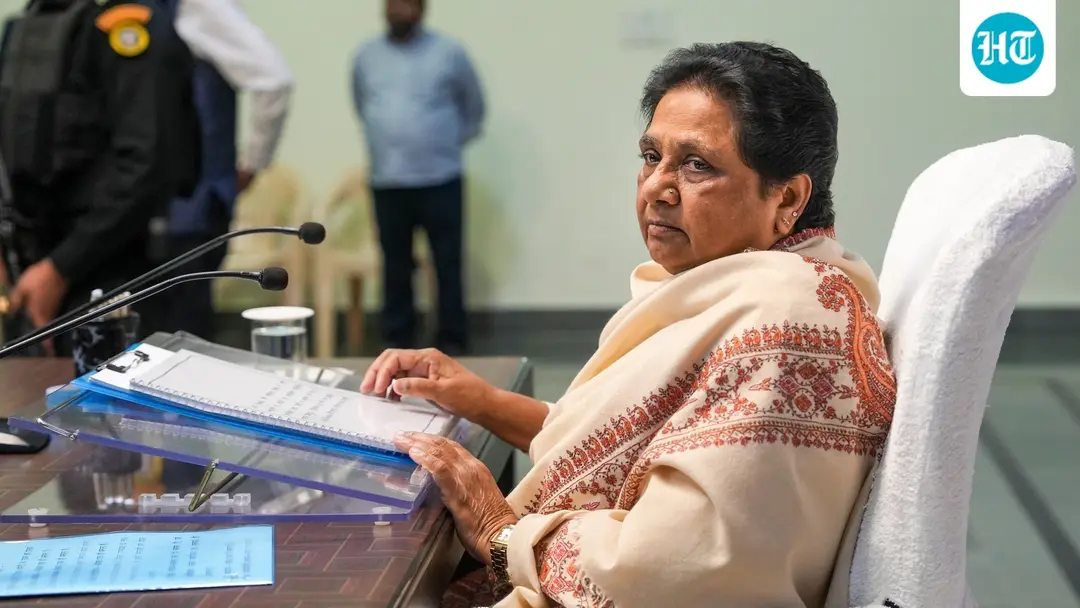
BSP to have no Parliament presence after November 25
The BSP will have no member in either House of Parliament after November 25, when the six-year term of its lone Rajya Sabha MP, Ramji Gautam, ends. It is the first such instance since the party's Parliament debut in 1989. The Election Commission on Tuesday announced polls to 10 vacant Rajya Sabha seats from Uttar Pradesh, with the BJP set to win eight and the Samajwadi Party two. The BSP has no MLA in the 403-member assembly.
Source
Hindustan Times — India · read the original report ↗
Desk check · compared with the source
What the desk checked (5)
- BSP will have no Rajya Sabha member after November 25, when lone MP Ramji Gautam's six-year term ends. — Date and name appear in the source; no external document cited.
- Election Commission announced polls to 10 vacant Rajya Sabha seats from Uttar Pradesh on Tuesday. — Attributed to the Election Commission in the source; exact date not given beyond 'Tuesday'.
- BJP is set to win eight of the 10 seats and the Samajwadi Party the remaining two. — Projection stated in the source without attribution to a named official.
- BSP vote share fell from 6.17% (2009) to 4.19% (2014), 3.67% (2019) and 2.06% (2024). — Figures appear in the source; consistent with the narrative of decline.
- SC voters make up an estimated 21% of UP, with Jatavs over 54% of them. — Presented as an estimate in the source with no agency named.
Analysts’ view opinion
The BSP having no member in either House of Parliament after November 25 is more than an arithmetic footnote — it is a structural turning point in a Dalit political project that began its parliamentary journey in 1989. With not a single MLA in the 403-member assembly, the party simply lacks the numbers to re-enter the Rajya Sabha, so this vacuum cannot be filled quickly. Coming just as Uttar Pradesh heads towards assembly elections, it sharpens the contest between the BJP, the SP and the Azad Samaj Party for the SC vote that was once the BSP's bedrock.
- Absence from Parliament costs the party national voice and visibility — a political loss that tends to feed into cadre morale, resource mobilisation and media standing.
- The story's own numbers — 206 seats down to 80 in 2012, zero Lok Sabha seats in 2014, and vote share sliding to 2.06% in 2024 — describe a long decline rather than a single bad election.
- The BJP, set to win eight of the 10 seats, gains both numbers and narrative momentum; the SP's two seats reinforce its position as the principal opposition pole in the state.
- With SC voters estimated at 21% of UP and Jatavs over 54% of that bloc, whether a weakened BSP's base consolidates behind one rival or splits is the key variable for the next assembly contest.
- The pending Election Commission review, which could cost the BSP its national party status, adds a symbolic and institutional blow on top of the electoral one.
What to watch — Watch whether the BSP sticks to going it alone or moves towards an alliance before the UP polls, and what the Election Commission's review means for its national party status.
Having no MPs does not by itself prove the BSP's voter base has dissolved on the ground; the story offers no evidence of where Jatav voters are shifting, nor any indication of the party's own strategy in response.
Deep dive
Research brief · 8 facts · 10 dates · exam-readyThe brief
Context
The Bahujan Samaj Party, founded in 1984 by Kanshi Ram to give Dalits political representation, will lose its last seat in Parliament when Rajya Sabha MP Ramji Gautam's six-year term ends on November 25. The party already has no Lok Sabha MP and, after the death of its Rasra MLA Uma Shankar Singh in August, no legislator in Uttar Pradesh's 403-member assembly. This is the first time since the BSP entered Parliament in 1989 that it will be absent from both Houses. The Election Commission has announced polls to 10 vacant Rajya Sabha seats from poll-bound UP, where the BJP is set to win eight and the Samajwadi Party two.
Key facts
- BSP's lone Rajya Sabha MP Ramji Gautam completes his six-year term on November 25, leaving the party with no MP in either House.
- It is the first time since the BSP's Parliament debut in 1989 that it will have no representation in both Houses.
- The BSP was formed in 1984 by Kanshi Ram, whose slogan was 'jisiki jitni sankhya bhaari, uski utni hissedari'.
- The Election Commission on Tuesday announced elections to 10 vacant Rajya Sabha seats from Uttar Pradesh; BJP is set to win eight and the Samajwadi Party two.
- After the death of three-term Rasra (Ballia) MLA Uma Shankar Singh in August, the BSP has no MLA in the 403-member UP assembly.
- In the 2012 UP assembly polls the BSP's tally fell from 206 to 80 seats, ending Mayawati's fourth term as chief minister.
- BSP's Lok Sabha record: 21 seats and 6.17% votes in 2009; zero seats with 4.19% in 2014; 10 seats with 3.67% in 2019; zero seats with 2.06% in 2024.
- UP's SC vote is estimated at 21% of the electorate, with Jatavs estimated to be over 54% of that bloc.
Timeline
- 1984Kanshi Ram founds the Bahujan Samaj Party to secure political representation for Dalits.
- 1989BSP makes its Parliament debut.
- 2009 Lok Sabha pollsBSP wins 21 seats with a 6.17% vote share.
- 2012 UP assembly electionsBSP's tally falls from 206 to 80 seats; party is ousted from power, marking the turning point in its decline.
- 2014 Lok Sabha pollsBSP wins no seat (4.19% votes); BJP takes 303 seats nationally and 71 of UP's 80 seats.
- 2019 Lok Sabha pollsBSP wins 10 seats with 3.67% votes as part of the opposition Mahagathbandhan with SP and RLD.
- 2024 Lok Sabha pollsContesting unallied with NDA and the Congress-led INDI alliance, BSP wins no seat; vote share falls to 2.06%.
- August (this year)Death of MLA Uma Shankar Singh leaves the BSP with no legislator in the UP assembly.
- TuesdayElection Commission announces polls to 10 vacant Rajya Sabha seats from Uttar Pradesh.
- November 25Ramji Gautam's Rajya Sabha term ends; BSP left with no presence in Parliament.
Who has a stake
- Bahujan Samaj Party and chief Mayawati — Loses all parliamentary presence, has no UP MLA, and faces possible loss of national party status in the EC's review.
- Ramji Gautam — BSP's lone Rajya Sabha MP, retiring on November 25 at the end of his six-year term.
- Bharatiya Janata Party — Set to win eight of UP's 10 Rajya Sabha seats and is courting non-Jatav Dalits to prevent Dalit vote consolidation.
- Samajwadi Party — Set to win two of the 10 UP Rajya Sabha seats and is competing for the SC vote ahead of assembly polls.
- Election Commission of India — Announced the Rajya Sabha polls and conducts the periodic review of parties' national/state status.
- Scheduled Caste voters, particularly Jatavs — Their 21% share of UP's electorate is being contested by BJP, SP and Azad Samaj Party (Kanshi Ram).
Why it matters
A party that once held an absolute majority in India's largest state and 21 Lok Sabha seats will have no voice in Parliament, marking a structural shift in Dalit political representation. With the BSP's core Jatav and non-Jatav Dalit base now contested by the BJP, SP and Azad Samaj Party, the outcome will shape the UP assembly elections. The BSP also risks losing national party status because it no longer meets the Election Commission's criteria.
UPSC angle
Prelims pointers
- BSP founded in 1984 by Kanshi Ram; Parliament debut in 1989; slogan 'jisiki jitni sankhya bhaari, uski utni hissedari'.
- Rajya Sabha members serve six-year terms; BSP's Ramji Gautam retires on November 25.
- Uttar Pradesh assembly has 403 seats; BSP won 206 in the election before 2012 and fell to 80 in 2012.
- National party criteria: 6% valid votes in four or more states plus at least four MPs; or 2% of Lok Sabha seats from at least three states; or recognised state party in at least four states.
- BSP vote share in Lok Sabha polls: 6.17% (2009), 4.19% (2014), 3.67% (2019), 2.06% (2024).
- UP's SC electorate estimated at 21%, of which Jatavs are over 54%; Azad Samaj Party (Kanshi Ram) is a competing claimant.
Mains framing
The BSP's exit from Parliament after November 25 illustrates how identity-based mobilisation can erode when it is not renewed organisationally or electorally. Founded in 1984 on Kanshi Ram's proportional-share principle, the party peaked with 206 UP MLAs and 21 Lok Sabha seats in 2009, but the 2012 assembly rout and the BJP's 2014 sweep of UP (71 of 80 seats) signalled a decisive shift of Dalit votes. Its 2019 revival came within the Mahagathbandhan with the SP and RLD, while its solo 2024 contest outside both the NDA and the INDI alliance produced zero seats and a 2.06% vote share. The absence of any MLA in the 403-member assembly after Uma Shankar Singh's death closes the Rajya Sabha route as well, and the Election Commission's periodic status review may strip its national party tag. Analytically, the case raises questions about whether Dalit interests are better served through a standalone party, coalition bargaining, or absorption into larger formations now that the BJP, SP and Azad Samaj Party (Kanshi Ram) all court the 21% SC vote. The way forward, on the source's evidence, lies in the BSP rebuilding its base among Jatav and non-Jatav Dalits and reconsidering alliance strategy ahead of the UP assembly elections.
Key terms
- Bahujan Samaj Party (BSP)
- Party founded in 1984 by Kanshi Ram for Dalit political representation; grew from regional force to national party status.
- National party status
- EC recognition requiring 6% votes in four-plus states with four MPs, or 2% of Lok Sabha seats from three states, or state party status in four states.
- Mahagathbandhan
- Opposition bloc in the 2019 general elections that included the BSP, Samajwadi Party and Rashtriya Lok Dal.
- Jatavs
- Sub-group within UP's Scheduled Castes, estimated at over 54% of the state's 21% SC vote, and the BSP's core base.
- Azad Samaj Party (Kanshi Ram)
- Party competing with the BJP and SP for Scheduled Caste support in Uttar Pradesh.
Practice questions
- Trace the electoral decline of the Bahujan Samaj Party from 2009 to 2024 and examine what it reveals about the limits of identity-based party politics in India.
- Discuss the Election Commission's criteria for recognising national parties and the consequences for a party that loses this status.
- How has the competition for the Scheduled Caste vote in Uttar Pradesh among the BJP, SP, BSP and Azad Samaj Party reshaped Dalit political representation?
Grounded only in the source report — figures and dates are the source's, not inferred.