
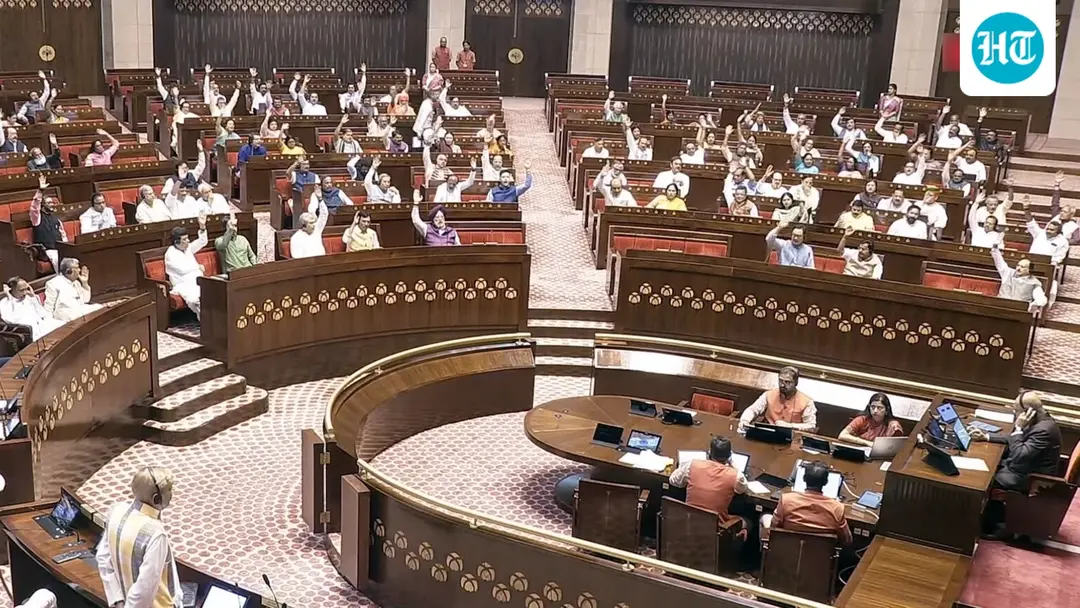
BJP set to gain a Rajya Sabha seat; BSP may lose representation
The Election Commission on Tuesday announced October 16 voting for biennial elections to 10 Rajya Sabha vacancies in Uttar Pradesh and one in Uttarakhand, along with a bypoll for one West Bengal seat. The BJP, with 116 MPs and the single largest party in the Upper House, is expected to win eight UP seats and the Samajwadi Party two. The BJP is also placed to win the Uttarakhand and Bengal seats, taking the NDA tally to 154. The BSP, with no MLAs, will lose its only seat, its first absence since 1994.
Source
Hindustan Times — India · read the original report ↗
Desk check · some claims need care
What the desk checked (5)
- The Election Commission announced October 16 voting for 10 Rajya Sabha vacancies in Uttar Pradesh, one in Uttarakhand and a West Bengal bypoll. — Attributed to the Election Commission of India announcement on Tuesday; dates and numbers appear consistently in the source.
- BJP has 116 Rajya Sabha MPs and is the single largest party in the Upper House. — Figure appears twice in the source but no source is cited for the count.
- BJP is expected to win eight of the 10 UP seats and the Samajwadi Party two, a gain of one for SP. — Presented as a projection without attribution; internally consistent with the stated SP strength of 101 MLAs.
- BSP, with no MLAs, will lose its only Rajya Sabha seat for the first time since its 1994 debut. — Unattributed historical claim in the source; consistent with the report's note that BSP member Ramji's term ends.
- NDA's strength in the House is expected to be 154, and BJP is unlikely to renominate retiring members. — The tally is an unsourced projection; the renomination claim is attributed only to an unnamed party leader.
Analysts’ view opinion
On paper this is a modest arithmetic shift — one net seat for the BJP and an NDA tally expected around 154 — but its political meaning is larger than the number. The Rajya Sabha is where legislative traffic slows down, and every incremental seat reduces the ruling alliance's dependence on floor management and fence-sitters. The more striking story is the BSP's projected exit from the Upper House for the first time since 1994, a symbolic marker of how far the party's electoral base has eroded in Uttar Pradesh. With UP assembly elections due next year, the BJP's choice of nominees becomes a caste-signalling exercise as much as a parliamentary one.
- The BJP's expected one-seat gain is incremental rather than transformative, but it consolidates its position as the single largest party and pushes the NDA's count to a reported 154.
- The BSP's loss of representation flows directly from having no MLAs in the UP assembly — Rajya Sabha strength is a lagging indicator of state-level collapse, and this is a visible milestone in that decline.
- The Samajwadi Party's projected gain of one seat, on the back of 101 MLAs, is a reminder that opposition consolidation in UP has largely been a transfer of Dalit and OBC votes rather than a net gain against the BJP.
- A ruling-party leader's anonymous suggestion that no retiring member may be repeated means the nominee list will be read as a pre-election caste and community balance sheet ahead of the UP polls.
- The Bengal by-poll flipping from TMC to BJP is a function of assembly arithmetic following a resignation, not fresh voter sentiment, and should not be over-read as a shift in the state's politics.
What to watch — Watch the BJP's UP nominee list for caste and regional signalling ahead of next year's assembly election, and whether the BSP frames its Rajya Sabha exit as a rallying point or quietly absorbs it.
These are projections based on assembly arithmetic ahead of an October 16 vote — no candidates, no results and no cross-voting outcomes are established, and the story does not tell us how any party will actually campaign on this.
Deep dive
Research brief · 8 facts · 7 dates · exam-readyThe brief
Context
The Election Commission has announced biennial Rajya Sabha elections for 10 seats from Uttar Pradesh and one from Uttarakhand, plus a by-poll for one West Bengal seat, all voting on October 16. Rajya Sabha members are elected by MLAs of state assemblies, so a party's strength in a state legislature determines its haul. The BJP, already the single largest party in the Upper House with 116 MPs, is projected to win eight of the 10 UP seats, and the Uttarakhand and Bengal seats as well. The Bahujan Samaj Party, which has no MLAs in the UP assembly, is set to lose its lone Rajya Sabha member — its first absence from the House since its 1994 debut there.
Key facts
- The Election Commission announced on Tuesday that voting for 10 Rajya Sabha vacancies from Uttar Pradesh, one from Uttarakhand and a West Bengal by-poll will be held on October 16.
- The BJP has 116 Rajya Sabha MPs and is the single largest party in the Upper House.
- Of the 10 UP seats at stake, the BJP is expected to win 8 and the Samajwadi Party 2 — a gain of one seat for the SP.
- The BJP-led NDA's strength in the Rajya Sabha is expected to reach 154 after these elections.
- Nine UP seats fall vacant when incumbents' terms end on November 25; the tenth fell vacant with Dinesh Sharma's resignation on September 11 after his appointment as L-G, Andaman and Nicobar.
- The nine retiring UP members are Arun Singh, Geeta alias Chandraprabha, Neeraj Shekhar, Brijlal, BL Verma, Seema and Union minister Hardeep Singh Puri (BJP), Ram Gopal Yadav (SP) and Ramji (BSP).
- The Samajwadi Party has 101 MLAs in the Uttar Pradesh assembly; the BSP has no MLAs.
- The Uttarakhand seat falls vacant on completion of Naresh Bansal's term on November 25; the Bengal seat fell vacant on TMC member Rukmini Mallick's resignation in July.
Timeline
- 1994The BSP makes its debut in the Rajya Sabha; it has had continuous representation since then.
- JulyTMC's Rukmini Mallick resigns, creating the West Bengal Rajya Sabha vacancy that will be filled by by-poll.
- September 11Dinesh Sharma resigns his UP Rajya Sabha seat after being appointed Lieutenant Governor of Andaman and Nicobar.
- Tuesday (announcement day)Election Commission announces the poll schedule for 10 UP seats, one Uttarakhand seat and the Bengal by-poll.
- October 16Voting for all 12 seats — 10 in UP, one in Uttarakhand and the West Bengal by-poll.
- November 25Terms of nine UP incumbents and of Uttarakhand's Naresh Bansal end.
- Next yearUttar Pradesh assembly elections are scheduled, raising the stakes on BJP's candidate choices.
Who has a stake
- Bharatiya Janata Party — Already the single largest party with 116 MPs; set to win eight UP seats plus the Uttarakhand and Bengal seats, gaining one seat overall.
- NDA — Its Rajya Sabha tally is expected to rise to 154, strengthening the government's hand in the Upper House.
- Samajwadi Party — With 101 MLAs in the UP assembly, it is positioned to win two seats — a gain of one.
- Bahujan Samaj Party — Having no MLAs, it loses its single member (Ramji) and will be absent from the Rajya Sabha for the first time since 1994.
- Trinamool Congress — Loses the West Bengal seat vacated by Rukmini Mallick's resignation, which the BJP is expected to win.
- Election Commission of India — Conducts the biennial elections and the by-poll, announcing October 16 as the polling date.
- Retiring members including Union minister Hardeep Singh Puri and Ram Gopal Yadav — Their terms end on November 25; a party leader indicated the BJP may not renominate any retiring member.
Why it matters
Rajya Sabha arithmetic decides how easily the government can pass legislation, and the NDA's projected rise to 154 seats consolidates its position in the Upper House. For the BSP, losing its last Rajya Sabha member after having no MLAs left in the UP assembly marks a stark measure of its decline since 1994. With UP assembly elections due next year, the BJP's caste calculus in choosing new nominees will be closely watched.
UPSC angle
Prelims pointers
- Rajya Sabha biennial elections and by-polls for 10 UP seats, one Uttarakhand seat and one West Bengal seat: voting on October 16.
- BJP has 116 Rajya Sabha MPs and is the single largest party; NDA tally expected to reach 154.
- Rajya Sabha members from states are elected by the elected MLAs of the respective state assemblies.
- SP has 101 MLAs in the UP assembly; BSP has none, costing it its only Rajya Sabha seat.
- BSP will be absent from the Rajya Sabha for the first time since its 1994 debut in the House.
- Dinesh Sharma resigned his Rajya Sabha seat on September 11 after appointment as Lieutenant Governor, Andaman and Nicobar.
Mains framing
The October 16 Rajya Sabha elections illustrate how the Upper House mirrors, with a lag, the balance of power in state assemblies: because members are chosen by MLAs, the BJP's assembly dominance in Uttar Pradesh translates into eight of ten seats, the Samajwadi Party's 101 MLAs yield two, and the BSP — with no MLAs at all — loses its single member and its presence in the House for the first time since 1994. The West Bengal by-poll, caused by TMC member Rukmini Mallick's resignation, and the Uttarakhand vacancy on Naresh Bansal's retirement, further add to the BJP's count, lifting the NDA to an expected 154. The implications are twofold: a stronger treasury position in a chamber designed as a revising body and a federal council, and the continued shrinking of smaller parties' voice in it. The story also underlines the Rajya Sabha's role as a channel for accommodation — retiring members include a Union minister, one seat fell vacant on a member's appointment as Lieutenant Governor, and with UP polls due next year the BJP's nominations will be read as caste-balancing signals, with a party leader suggesting no retiring member may be repeated. The way forward, on the source's own terms, lies in how parties use nominations to reflect representational breadth rather than only electoral arithmetic.
Key terms
- Biennial elections (Rajya Sabha)
- Periodic polls held as one-third of Rajya Sabha members retire on completion of their terms, here for seats ending November 25.
- Rajya Sabha by-poll
- Election to fill a seat vacated mid-term, as with the Bengal seat after Rukmini Mallick's resignation in July.
- Election Commission of India
- Constitutional body that announced the October 16 schedule for the UP, Uttarakhand and West Bengal Rajya Sabha polls.
- NDA
- The BJP-led alliance, whose Rajya Sabha strength is expected to rise to 154 after these elections.
- BSP
- Bahujan Samaj Party; with no MLAs in UP it loses its lone Rajya Sabha member, Ramji, ending representation held since 1994.
Practice questions
- How does the method of electing Rajya Sabha members from states link the Upper House's composition to state assembly outcomes? Illustrate with the October 16 elections in Uttar Pradesh.
- The BSP's loss of its only Rajya Sabha seat reflects the decline of smaller parties in the Upper House. Discuss the implications for the Rajya Sabha's role as a federal chamber.
- Examine how caste representation and political accommodation shape party nominations to the Rajya Sabha, with reference to Uttar Pradesh ahead of the 2026 assembly elections.
Grounded only in the source report — figures and dates are the source's, not inferred.