
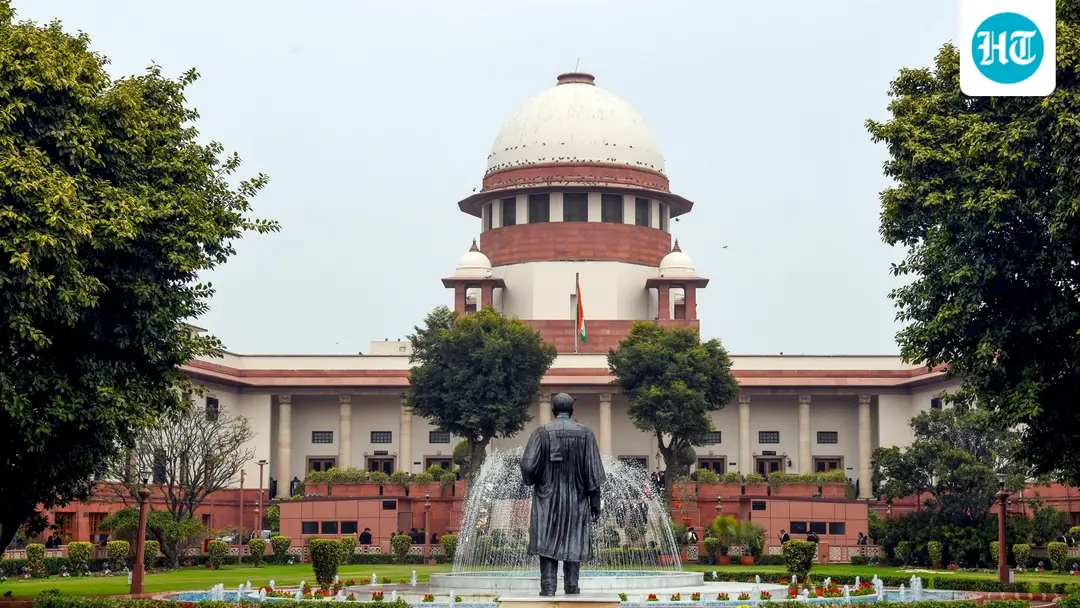
Supreme Court asks EC to address voter concerns over Delhi SIR
The Supreme Court on Tuesday asked the Election Commission to inspire confidence among voters in Delhi's ongoing special intensive revision (SIR) of electoral rolls. The bench of CJI Surya Kant and justices Joymalya Bagchi and V Mohana said notices to over 33 lakh electors were going "almost mechanically...as if they are computer-generated". It asked the EC to clarify the "logical discrepancy" category and file a status report. Delhi's August 31 draft roll excluded 47.56 lakh names.
Source
Hindustan Times — India · read the original report ↗
Desk check · compared with the source
What the desk checked (5)
- A bench of CJI Surya Kant, Justice Joymalya Bagchi and Justice V Mohana said notices were going "almost mechanically...as if they are computer-generated". — Direct quote attributed to the bench in the source; not externally verified.
- 33,12,919 voters in Delhi's draft roll have been flagged under "no mapping" (1,379,785) and "logical discrepancies" (1,933,134). — Figures appear in the source as presented before the court; internally consistent with the 3.3 million/33 lakh references.
- 4,756,722 names were excluded from Delhi's draft roll published on August 31, which lists 9,753,577 electors against 14,510,299 earlier. — Figures given in source; arithmetic is internally consistent.
- EC told the court 14,000 BLOs and 1,200 EROs are deployed, the deadline is October 29 and the final roll is due November 4. — Attributed to EC through senior advocate DS Naidu in the source.
- The court upheld the constitutional validity of the Bihar SIR "in May this year". — Stated in source without attribution; timeline sits oddly with the reported August-November Delhi schedule and should be checked by an editor.
Analysts’ view opinion
The Supreme Court has not halted the SIR, but by questioning how it is being executed it has opened a politically useful gap. The headline numbers — 4.76 million names out of the draft roll and over 3.3 million voters flagged — hand the opposition a ready-made "protect your vote" campaign line. At the same time, the court's earlier upholding of the Bihar SIR gives the Election Commission and the ruling establishment procedural cover, so this is a course correction rather than a verdict of winners and losers.
- The bench's remark that notices are going out "almost mechanically" as if "computer-generated" is the kind of judicial observation that travels fastest into opposition messaging.
- The absence of a publicly defined "logical discrepancy" category — covering 1.93 million voters — leaves the EC exposed to charges of arbitrariness even if its intent is purely administrative.
- If the Bihar template of deploying recognised parties' booth-level agents is applied in Delhi, the party with the strongest ground machinery gains the most from the remedial process itself.
- The extra verification burden on migrants and on those holding little beyond Aadhaar touches a demographically significant slice of Delhi's electorate.
- The EC's assurances that no voter will be deleted without due process and that the timeline can be extended read as an attempt to lower the political temperature.
What to watch — Watch whether the October 29 disposal deadline and November 4 final roll date slip, and whether the EC's status report concedes publication of a searchable list of noticed voters.
The story does not establish that notices or exclusions have targeted any particular community or party's base, nor that they will alter electoral outcomes; the court's concern so far is procedural clarity, not motive.
Deep dive
Research brief · 8 facts · 6 dates · exam-readyThe brief
Context
The Election Commission is conducting a Special Intensive Revision (SIR) of electoral rolls in Delhi, a door-to-door style re-verification exercise that compares current electors against the 2002 electoral roll. Delhi's draft roll published on August 31 dropped 47.56 lakh names and flagged another 33.12 lakh electors still on the roll for possible discrepancies, prompting notices to them. Activists Anjali Bhardwaj and Amrita Johri petitioned the Supreme Court alleging the EC and Delhi Chief Electoral Officer failed to disclose who received notices and why. On Tuesday, a bench of CJI Surya Kant and justices Joymalya Bagchi and V Mohana asked the EC to make the process comprehensible and to "inspire confidence" among voters, and to file a status report.
Key facts
- Delhi's draft electoral roll published on August 31 contains 97,53,577 electors, against 1,45,10,299 names before the revision.
- 47,56,722 names were excluded from the draft roll under the categories absent, shifted, dead and duplicate.
- 33,12,919 voters who remain on the draft roll have been flagged: 13,79,785 as having "no mapping" with the 2002 electoral roll and 19,33,134 under "logical discrepancies".
- The bench said notices were going "almost mechanically...as if they are computer-generated" and asked the EC to clarify the "logical discrepancy" category.
- EC, through senior advocate DS Naidu, said every notice contained the reason and that the 12 prescribed documents were not exhaustive.
- 14,000 booth level officers (BLOs) and 1,200 electoral registration officers (EROs) are deployed for the Delhi exercise.
- Claims and objections in Delhi run till September 30, disposal of notices is expected by October 29, and the final roll is to be published on November 4.
- In the Bihar SIR, the court had directed that Aadhaar be accepted as the 12th document for identity, while clarifying it is not proof of citizenship.
Timeline
- August 31Delhi's draft electoral roll published; 47,56,722 names excluded, 33,12,919 electors flagged for discrepancies.
- May this yearSupreme Court upheld the constitutional validity of the Bihar SIR, holding it within EC's powers subject to statutory safeguards.
- Tuesday (date of hearing)SC bench of CJI Surya Kant, Justices Joymalya Bagchi and V Mohana asks EC to inspire voter confidence and file a status report.
- September 30Scheduled end of the claims and objections process in Delhi.
- October 29Deadline for disposal of notices; EC said the timeline could be extended if required.
- November 4Scheduled publication of Delhi's final electoral roll.
Who has a stake
- Election Commission of India — Must defend the SIR process, clarify the "logical discrepancy" category, file a status report and ensure no voter is deleted without due process.
- 33.12 lakh flagged Delhi electors — Face notices requiring them to explain discrepancies or risk exclusion from the final roll published on November 4.
- 47.56 lakh excluded from the draft roll — Names dropped as absent, shifted, dead or duplicate; must use claims and objections to be restored.
- Supreme Court bench (CJI Surya Kant, Justices Bagchi and Mohana) — Balancing EC's power to purify rolls with voters' right to notice, reasons and an effective opportunity to respond.
- Petitioners Anjali Bhardwaj and Amrita Johri (advocate Prashant Bhushan) — Seek a consolidated, searchable list of noticed electors with precise reasons and public disclosure of criteria for "logical discrepancies".
- BLOs and EROs — 14,000 BLOs and 1,200 EROs are the field machinery expected to help voters respond, possibly from ward offices.
- Migrant and "shifted" voters — May need to prove earlier registration or residence in another city; some hold little documentation beyond Aadhaar.
Why it matters
The electoral roll determines who can vote, so mass exclusions and mechanically issued notices affecting over 80 lakh Delhi entries raise questions about whether due process precedes disenfranchisement. The Supreme Court's insistence on reasons, clarity and practical assistance sets a procedural template that carries over from Bihar and West Bengal to Delhi and future SIRs. For migrants and the poorly documented, the burden of proof in such exercises can decide whether they remain on the rolls at all.
UPSC angle
Prelims pointers
- SIR = Special Intensive Revision of electoral rolls, conducted by the Election Commission; Delhi's exercise maps electors against the 2002 roll.
- Delhi draft roll (August 31): 97,53,577 electors, down from 1,45,10,299; 47,56,722 excluded as absent, shifted, dead or duplicate.
- Flagged categories in Delhi: "no mapping" (13,79,785) and "logical discrepancies" (19,33,134), totalling 33,12,919.
- In the Bihar SIR, the SC directed Aadhaar be accepted as the 12th document for identity but held it is not proof of citizenship.
- Delhi SIR calendar: claims and objections till September 30, notice disposal by October 29, final roll on November 4.
- Field machinery in Delhi: 14,000 Booth Level Officers (BLOs) and 1,200 Electoral Registration Officers (EROs).
Mains framing
The Delhi SIR illustrates the tension between the Election Commission's constitutional mandate to maintain accurate electoral rolls and the procedural fairness owed to individual electors. The scale of the exercise, 47.56 lakh names excluded from the August 31 draft roll and 33.12 lakh electors flagged under "no mapping" and "logical discrepancies", combined with notices the Supreme Court described as going "almost mechanically...as if they are computer-generated", suggests that automated flagging can outrun the capacity of voters and field officials to resolve objections meaningfully. The petitioners' grievance is essentially about transparency: absence of a consolidated searchable list of noticed electors, undisclosed criteria for "logical discrepancies", and documents that cannot logically answer flags such as age gaps between an elector and parents or siblings. Delhi's migrant character sharpens the problem, since shifted voters must explain earlier registration elsewhere and many possess little documentation beyond Aadhaar. The way forward indicated by the bench is procedural rather than adversarial: clarify the discrepancy categories, prepare standard responses for the 15-20 recurring query types, use mobile numbers to tell voters what evidence suffices, station BLOs at ward offices, extend timelines if needed, and apply the safeguards already ordered in the Bihar and West Bengal SIR cases, where notice, opportunity to respond and a reasoned determination were held essential before exclusion becomes final.
Key terms
- Special Intensive Revision (SIR)
- An EC exercise re-verifying electoral rolls; in Delhi electors are mapped against the 2002 electoral roll.
- Logical discrepancy
- A flag category covering 19,33,134 Delhi electors; the Supreme Court asked the EC to explain what it means.
- No mapping
- Category for 13,79,785 Delhi electors whose entries could not be matched with the 2002 electoral roll.
- Booth Level Officer (BLO)
- Field official attached to a polling booth; 14,000 are deployed in Delhi and may help voters respond to notices.
- Electoral Registration Officer (ERO)
- Officer responsible for preparing and revising the roll of a constituency; 1,200 are working on the Delhi SIR.
- Claims and objections
- The window, till September 30 in Delhi, for voters to seek inclusion or contest entries before the final roll.
Practice questions
- Critically examine the balance between the Election Commission's power to conduct intensive revisions of electoral rolls and the procedural safeguards necessary to prevent wrongful disenfranchisement.
- The Delhi SIR has flagged 33.12 lakh electors and excluded 47.56 lakh names from the draft roll. Discuss the challenges such exercises pose for migrant and poorly documented voters, and suggest remedies.
- How have Supreme Court interventions in the Bihar and West Bengal SIR cases shaped the transparency and accessibility standards now sought in Delhi?
Grounded only in the source report — figures and dates are the source's, not inferred.