
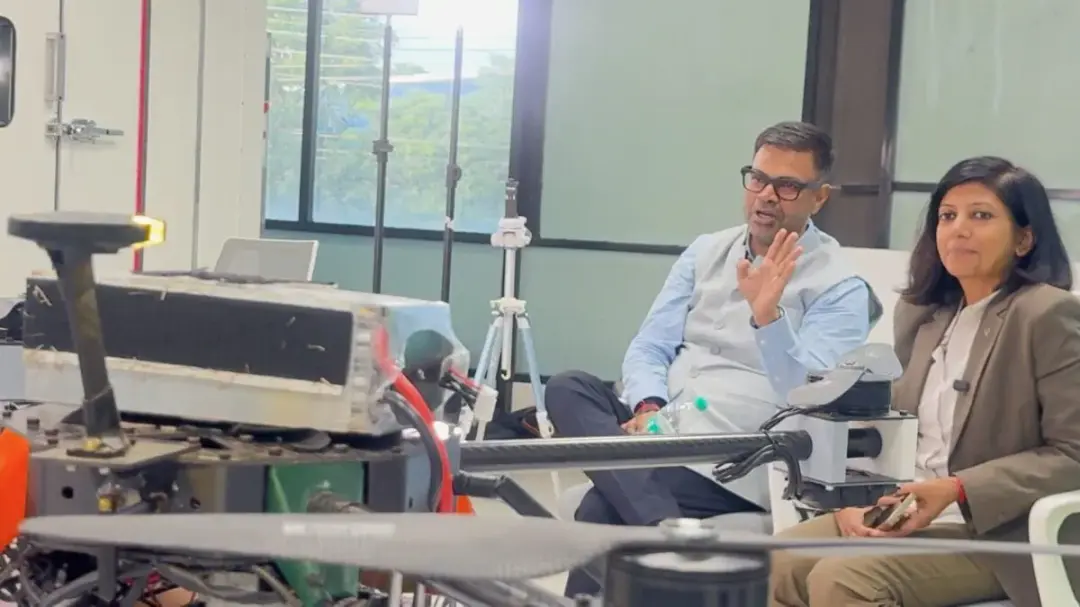
Noida startup building drones, satellites for armed forces with IDEX funds
Professors Akash and Jyoti Sinha, who returned to India after more than 12 years in the United States, are running Omnipresent Robot Technologies in Noida's Sector 80, building drones and satellites for the Indian Army and Air Force. Funded by the Ministry of Defence's IDEX grant and selected from 75 bidders, the firm is developing a satellite due for launch next year, a 3D mapping constellation and AI technology for the Air Force. It is also working on Bird X to cut bird hits at airports.
Source
News18 — India · read the original report ↗
Desk check · some claims need care
What the desk checked (5)
- Omnipresent Robot Technologies, founded by Akash and Jyoti Sinha in Noida, is building drones and satellites for the Indian Army and Air Force with Ministry of Defence IDEX funding. — Attributed to the founders in the source report; figures and scheme name appear in the source.
- The firm was selected out of 75 bidders for the satellite project and its satellite is likely to launch next year. — Stated in the source, sourced to the company; no ministry confirmation cited.
- iDEX has seen procurement worth over Rs 2,400 crore approved and projects worth over Rs 1,500 crore sanctioned, with 676 start-ups engaged and 551 contracts signed as of March 2026. — Source attributes these figures to government data; not independently verified here.
- The company developed mapping and navigation software for the Chandrayaan Pragyan rover and mapped over 10,000 villages in the Saumitra mission. — Direct claim by co-founder Akash Sinha; no third-party corroboration in the source.
- Defence Secretary Rajesh Kumar Singh said 25% of DRDO's R&D budget is earmarked for industry, start-ups and academia. — Direct quote attributed to the Defence Secretary in the source.
Analysts’ view opinion
ఇది ఒక్క స్టార్టప్ కథ కంటే ఎక్కువ — భారత రక్షణ సాంకేతిక సేకరణ నమూనా మారుతున్నదానికి సూచన. ప్రోటోటైప్ దశలోనే నిధులు, ఒప్పందంలోనే హామీ ఇచ్చిన కనీస ఆర్డర్ పరిమాణం (MOQ) కలిపి ఇవ్వడం వల్ల, భారత్లో దశాబ్దాలుగా డీప్-టెక్ హార్డ్వేర్ సంస్థలను చంపేసిన "ప్రయోగశాల నుంచి ఆర్డర్ దాకా" లోయ కొంత తగ్గుతోంది. అదే సమయంలో సాంకేతిక వాదనలు — మీటర్ లోపు రిజల్యూషన్ 3డీ మ్యాపింగ్ కూటమి, జీపీఎస్ లేని పరిస్థితుల్లో పనిచేసే డ్రోన్ నావిగేషన్ — ఇంకా ప్రయోగాత్మక దశలోనే ఉన్నాయి; నిర్ధారణ కక్ష్యలో, క్షేత్రంలో మాత్రమే జరుగుతుంది.
- ఐడెక్స్ తరహా పథకాల అసలు మార్పు నిధులు కాదు — ఒప్పందంలోనే MOQ రాయడం, అది పెట్టుబడిదారులకు డిమాండ్ రిస్క్ను తగ్గించి, పెద్ద సంస్థల ఆధిపత్యాన్ని కొంత సమతుల్యం చేస్తుంది.
- మ్యాపింగ్, స్పేస్ రంగాలను ప్రైవేటుకు తెరవడం వల్ల ఉపగ్రహాలు, డ్రోన్లు, ఏఐ సాఫ్ట్వేర్ ఒకే సంస్థ కింద కలిపే 'ఫుల్-స్టాక్' మోడల్ సాధ్యమవుతోంది — ప్రపంచవ్యాప్త డిఫెన్స్-టెక్ ధోరణి ఇదే.
- జీపీఎస్/జీఎన్ఎస్ఎస్ నిరోధిత పరిస్థితుల్లో నావిగేషన్ అనేది ఇప్పుడు ప్రపంచంలో అత్యంత డిమాండ్ ఉన్న సామర్థ్యం; ఇది ఒక ఉత్పత్తి కాకుండా ఇతర డ్రోన్ తయారీదారులకు అమ్మే సబ్సిస్టమ్ కావడం వ్యాపారపరంగా తెలివైన స్థానం.
- బర్డ్ ఎక్స్ లాంటి 'చిన్న' పరిష్కారాలు ముఖ్యం — వాటి ద్వారా వినియోగదారుడితో (వైమానిక దళం) నిరంతర ఫీడ్బ్యాక్ లూప్ ఏర్పడుతుంది, ఇది రక్షణ సేకరణలో అసలైన పోటీ కందకం.
- అమెరికా వీసా కఠినత్వం భారత డీప్-టెక్కు ప్రతిభను చేరువ చేస్తోందన్న 'రివర్స్ బ్రెయిన్ డ్రెయిన్' వాదన ఆకర్షణీయమే కానీ ఈ కథనంలో అది వ్యక్తిగత అనుభవాల ఆధారంగానే ఉంది, పరిమాణాత్మక ధోరణి కాదు.
What to watch — వచ్చే ఏడాది ప్రతిపాదిత ఉపగ్రహ ప్రయోగం, ప్రోటోటైప్ తర్వాత MOQ ఆర్డర్లు నిజంగా అమలవుతాయా — ఐడెక్స్ నమూనా పనిచేస్తుందా లేదా అనేది తేలేది అక్కడే.
"ప్రపంచంలోనే అత్యధిక రిజల్యూషన్", "80% పక్షుల ఢీ తగ్గింపు" వంటివి సంస్థ స్వయంగా చెప్పిన లక్ష్యాలు మాత్రమే; స్వతంత్ర ధ్రువీకరణ, ఆదాయం, ఒప్పంద విలువలు, ప్రయోగ తేదీ ఈ కథనంలో నిర్ధారించబడలేదు.
Deep dive
Research brief · 8 facts · 6 dates · exam-readyThe brief
Context
Omnipresent Robot Technologies, a drone and space-tech start-up in Noida's Sector 80, is run by husband-wife professors Akash and Jyoti Sinha, who returned to India after more than 12 years in the United States, where they built robots and gadgets for the US army. The firm builds drones and satellites for the Indian Army and Air Force with seed funding from the Ministry of Defence's iDEX grant. Its work sits inside a wider push, since the defence sector was opened to private players and start-ups, to fund defence innovation through schemes such as iDEX, ADITI and RDI funds. The company earlier built mapping and navigation software for the Pragyan rover of the Chandrayaan project.
Key facts
- Omnipresent Robot Technologies, based in Noida's Sector 80, is building a satellite likely to go into space next year with Ministry of Defence funding.
- The firm was selected out of 75 firms that bid for the satellite project and received funding to build prototypes.
- iDEX (Innovations for Defence Excellence) was launched by the government in 2018 to promote innovation and self-reliance in defence and aerospace.
- Government data: procurement worth over Rs 2,400 crore approved from start-ups and MSMEs; projects worth over Rs 1,500 crore sanctioned for new technologies.
- 676 start-ups and innovators have engaged through iDEX, with 551 contracts signed as of March 2026.
- Defence Secretary Rajesh Kumar Singh said 25% of the DRDO R&D budget is earmarked for industry, start-ups and academia, with about 11 centres of excellence in academic institutions.
- The company developed mapping and navigation software for the Pragyan rover; under the Saumitra mission it mapped more than 10,000 villages with 3D mapping drones.
- Its Bird X solution, first trialled and installed at a vital air base, targets an 80% reduction in bird hits at airports.
Timeline
- 2018Government launches the iDEX framework to fund defence and aerospace innovation by start-ups, MSMEs, academia and R&D institutes.
- After graduating from Delhi College of EngineeringAkash and Jyoti Sinha leave for the US for master's degrees at Carnegie Mellon and MIT; spend over 12 years there building robots for the US army.
- After returning to IndiaBoth teach at a private university in Noida, then start Omnipresent Robot Technologies as the defence sector opens to private players.
- Chandrayaan project, then Saumitra missionFirm builds mapping and navigation software for the Pragyan rover, then maps over 10,000 Indian villages with 3D mapping drones.
- As of March 2026551 iDEX contracts signed; 676 start-ups and innovators engaged, per government data.
- Next year (from report dated September 15, 2026)Company's MoD-funded satellite is slated to go into space.
Who has a stake
- Omnipresent Robot Technologies (Akash and Jyoti Sinha) — iDEX seed funding, prototype-to-order pipeline and assured minimum order quantity determine its ability to scale satellite and drone products.
- Ministry of Defence — Uses iDEX/ADITI to source cutting-edge technologies the armed forces need and to build self-reliance in defence.
- Indian Army and Indian Air Force — End users of the firm's satellites, border mapping, AI technology under trial at a major air base, and Bird X anti-bird-hit system.
- DRDO — Has earmarked 25% of its R&D budget for industry, start-ups and academia, and runs about 11 centres of excellence.
- Defence start-ups and MSMEs — Assured MOQ signed within iDEX/ADITI contracts protects them from being outbid by large players and reassures investors.
- Engineering talent (IIT Delhi, IIT Kanpur, IIST, returnees from the US) — Domestic deep-tech jobs; founders cite reverse brain drain amid US work-visa curbs.
Why it matters
The story shows how opening defence procurement to private start-ups, with seed grants and an assured minimum order quantity built into contracts, is producing indigenous capability in satellites, 3D mapping and drone autonomy. Technologies like sub-metre 3D mapping over mountainous terrain and navigation for kamikaze drones in GPS-denied conditions address direct operational gaps for the armed forces. It also signals a reverse brain drain, with mid-level and topper-level engineers relocating from the US to Indian deep-tech firms.
UPSC angle
Prelims pointers
- iDEX (Innovations for Defence Excellence): launched 2018 by the government to spur defence and aerospace innovation via start-ups, MSMEs, academia and R&D institutes.
- iDEX record per government data: over Rs 2,400 crore procurement approved from start-ups/MSMEs; over Rs 1,500 crore of projects sanctioned; 551 contracts as of March 2026.
- DRDO earmarks 25% of its R&D budget for industry, start-ups and academia; around 11 centres of excellence in academic institutions.
- MOQ (Minimum Order Quantity) is now signed as part of the iDEX/ADITI contract itself; government expects 50% funding from industry.
- Omnipresent Robot Technologies developed mapping and navigation software for the Chandrayaan Pragyan rover.
- Only one 3D constellation for precise 3D mapping and geolocalisation exists globally, called the Leo constellation, per the founders.
Mains framing
The opening of India's defence and space sectors to private participation, backed by funding vehicles such as iDEX, ADITI and RDI, has created a route for small deep-tech firms to move from prototype to assured procurement — a shift the founders of Omnipresent Robot Technologies compare to US-style research funding. The Noida firm's portfolio illustrates the operational demand pull: satellites and border mapping for the armed forces, AI trials at an air base, a sub-metre-resolution 3D mapping and geolocalisation constellation, Bird X to cut airport bird hits by a targeted 80%, and navigation for kamikaze drones in GPS/GNSS-denied or jammed conditions. Structural enablers matter as much as grants: the assured minimum order quantity now signed into the contract gives investors comfort against the 50% industry co-funding requirement and shields start-ups from being outbid by large incumbents, while DRDO's 25% R&D earmark and centres of excellence widen the innovation base. The Defence Secretary's point about repeat orders for technologies co-developed with the services, for a period such as five years, is the pending piece in procurement reform. Challenges remain in scaling from prototypes to sustained production and in retaining talent, though visa curbs abroad are currently aiding reverse brain drain from institutions like Carnegie Mellon and MIT to Indian firms recruiting from IITs and IIST.
Key terms
- iDEX
- Innovations for Defence Excellence, a 2018 government framework giving seed money to start-ups, MSMEs and academia for defence and aerospace technologies.
- MOQ (Minimum Order Quantity)
- An assured order volume now written into the iDEX/ADITI contract, guaranteeing purchase once the prototype meets ministry specifications.
- ADITI
- A defence ministry funding scheme named alongside iDEX and RDI funds under which contracts with assured MOQ are signed; details not stated in the source.
- 3D mapping constellation with geolocalisation
- A satellite group that builds 3D terrain models and gives exact GPS coordinates; the firm claims under one-metre resolution even in mountains.
- Bird X
- The start-up's system deployed at airports and air bases to cut bird hits, targeting an 80% reduction; first trialled at a vital air base.
- GPS/GNSS-denied navigation
- Technology letting drones, including kamikaze drones, reach targets when satellite navigation is jammed or spoofed.
Practice questions
- Assess how procurement-linked instruments such as iDEX and assured minimum order quantities have changed the participation of start-ups and MSMEs in India's defence manufacturing.
- "Indigenous innovation in dual-use space technologies is now a strategic necessity." Discuss with reference to 3D mapping constellations and GPS-denied drone navigation.
- Examine the drivers of reverse brain drain in Indian deep-tech, and what policy support is needed to sustain it.
Grounded only in the source report — figures and dates are the source's, not inferred.