
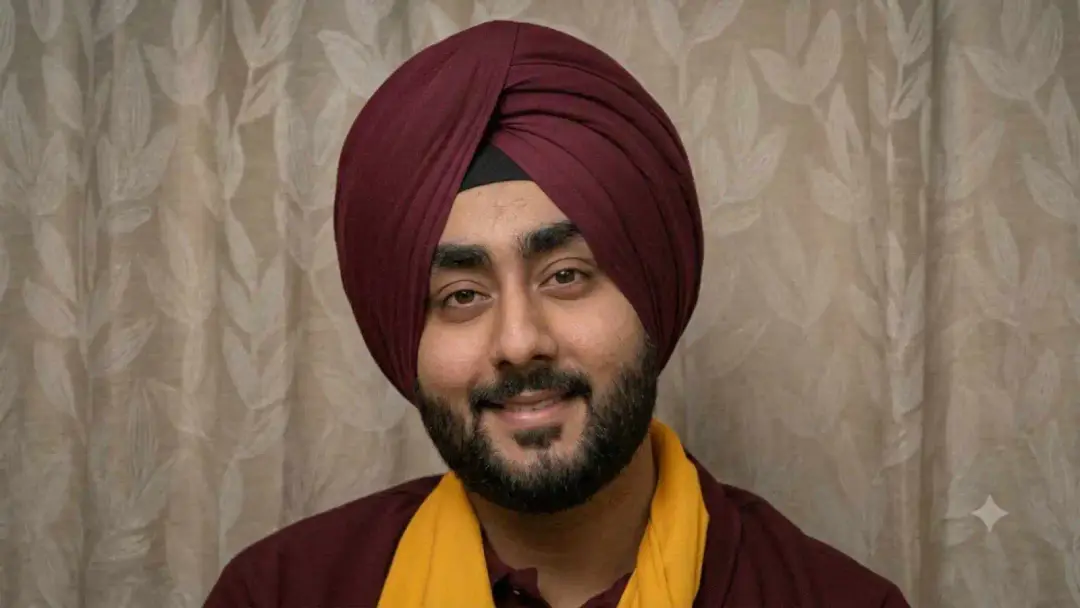
Police suspect Delhi man was targeted for appearing well-off
Investigators suspect the accused in the killing of Delhi resident Yuvraj Singh Manchanda (31) targeted him after a social media post led them to believe he was well-off, a police source said Monday. Former colleague Anya Vats and her partner Sanyam Sachdeva allegedly shot him in a car in Gurugram on September 6 and dumped the body in a Badshahpur drain on September 8. Three cases, including cheating and domestic violence, exist against Anya. Both were arrested at Kainchi Dham, Uttarakhand.
Source
Indian Express — Cities · read the original report ↗
Desk check · some claims need care
What the desk checked (5)
- Accused may have targeted Yuvraj Singh Manchanda after a social media post suggested he was well-off — Attributed to an unnamed police source as a suspicion, not an established finding.
- Yuvraj Singh Manchanda (31) was shot inside a car in Gurugram on September 6; body dumped in a Badshahpur drain on September 8 and recovered September 10 — Dates and sequence attributed to police in the source; internally consistent.
- Three cases, including a Punjab National Bank complaint, a Greater Noida cheating case and a domestic violence complaint by Sanyam's first wife, surfaced against Anya Vats — Attributed to police background check; figures appear in the source.
- Texts were sent from the victim's phone for two days after the murder to mislead family — Stated as an allegation; police only 'suspect' Anya sent them.
- Accused arrested at Kainchi Dham, Uttarakhand; gun, car and phone recovered — Attributed to police; source spells the place both 'Kianchi Dham' and 'Kainchi Dham'.
Analysts’ view opinion
This remains squarely at the investigation stage — the 'motive' attributed by police sources (targeting him because a social media post suggested he was well-off) is an investigative theory, not an established fact. Legally, the significant elements beyond the killing itself are the alleged retention and disposal of the body and the messages allegedly sent from the deceased's phone, which can attract separate charges of destroying evidence and misleading investigators. The accused's earlier cheating and domestic violence cases are background material, not proof in this case.
- The claimed financial motive is still an unverified suspicion and would need independent corroboration to hold up at trial.
- The reported recovery of a gun, the victim's car and his phone matters less than how those recoveries were made and what forensic and ballistic reports establish.
- Disposing of the body and allegedly sending reassuring texts from the victim's phone could support additional charges relating to destruction of evidence and giving false information.
- The three pre-existing cases against the accused cannot be used to show a criminal disposition — evidence law places clear limits on such prior-conduct material.
- With events spanning Delhi and Gurugram and an arrest in Uttarakhand, questions of investigative jurisdiction and transit remand procedure naturally arise.
What to watch — Watch the sections invoked in the chargesheet filed within the statutory period, what the forensic and ballistic findings show, and how courts treat any bail applications.
Every detail here rests on police sources; the accused's version and their counsel's response are absent, and nothing in the story establishes guilt.
Deep dive
Research brief · 8 facts · 7 dates · exam-readyThe brief
Context
Yuvraj Singh Manchanda, a 31-year-old Delhi resident, was shot dead on the evening of September 6 this year, allegedly by his former colleague Anya Vats and her partner Sanyam Sachdeva, inside their car in Gurugram. Police say the two had lost touch with Yuvraj until December last year, when Anya came across one of his social media posts and resumed contact — investigators suspect the post made them believe he was well-off. The body was dumped in a drain in Badshahpur on September 8 and recovered on September 10; the accused were arrested at Kainchi Dham in Uttarakhand after their vehicle was traced.
Key facts
- Yuvraj Singh Manchanda, 31, a Delhi resident, was killed on the evening of September 6 this year, according to police.
- The accused are his former colleague Anya Vats and her partner Sanyam Sachdeva; Yuvraj and Anya worked in the same company till 2022.
- Police say a background check threw up three cases against Anya: one at Parliament Street police station on a Punjab National Bank complaint, a cheating case in Greater Noida, and a domestic violence case at Shahdara police station filed by Sanyam's first wife.
- Yuvraj and Anya had lost touch but resumed talking in December last year after Anya came across one of his posts, a police source said.
- On September 6, Anya allegedly called Yuvraj to meet in the name of closing a "deal with a prospective client"; police are yet to verify the meeting's purpose.
- Yuvraj was shot inside the accused's car in Gurugram; the body was allegedly kept in the vehicle for two days and dumped in a Badshahpur drain on September 8, and recovered on September 10.
- Text messages were allegedly sent from Yuvraj's phone for two days after the murder saying he was fine and might travel to Bengaluru; police suspect Anya sent them.
- A gun, Yuvraj's car and his mobile phone were recovered from the accused, who were arrested after their vehicle was traced to Kainchi Dham, Uttarakhand.
Timeline
- Till 2022Yuvraj Singh Manchanda and Anya Vats worked together in the same company.
- December last yearThe two, who had lost touch, resumed contact after Anya came across one of Yuvraj's social media posts.
- September 6, this yearAnya allegedly called Yuvraj for a meeting over a "deal with a prospective client"; he met her and Sanyam in Gurugram and was shot inside their car.
- September 6-8Body allegedly kept in the vehicle; messages sent from Yuvraj's phone to his family saying he was fine and might travel to Bengaluru.
- September 8The body was dumped in a drain in Badshahpur; the accused then travelled to Vrindavan and multiple locations before reaching Kainchi Dham, Uttarakhand.
- September 10The body was recovered.
- Monday (as reported)A police source said the accused may have targeted Yuvraj after a social media post led them to believe he was well-off.
Who has a stake
- Yuvraj Singh Manchanda's family — Lost a 31-year-old member; had earlier alleged Anya took money from him when they worked together, and were misled by texts from his phone.
- Anya Vats and Sanyam Sachdeva (accused) — Arrested at Kainchi Dham; face the murder investigation, with three prior cases against Anya surfacing in a background check.
- Delhi and Gurugram police / investigators — Must establish motive, verify whether Anya sought to dupe Yuvraj, and prove the chain of evidence including the recovered gun, car and phone.
- Punjab National Bank — Its complaint led to a case being registered against Anya at Parliament Street police station.
- Sanyam Sachdeva's first wife — Complainant in an alleged domestic violence case registered at Shahdara police station.
Why it matters
The case suggests that publicly visible social media posts can be read as signals of wealth and make individuals targets for financial crime and violence. It also shows how digital traces work both ways: the accused allegedly used the victim's phone to mislead his family, while police traced their vehicle to make the arrest.
UPSC angle
Prelims pointers
- Victim: Yuvraj Singh Manchanda, 31, Delhi resident; killed on September 6 this year.
- Accused: former colleague Anya Vats and her partner Sanyam Sachdeva; arrested at Kainchi Dham, Uttarakhand.
- Body dumped in a drain at Badshahpur on September 8 and recovered on September 10.
- Three cases against Anya: Parliament Street (on a Punjab National Bank complaint), Greater Noida (cheating), Shahdara (alleged domestic violence).
- Recoveries from the accused: a gun, the victim's car and his mobile phone.
Mains framing
The Manchanda case illustrates how ordinary digital self-presentation can convert into criminal risk: police suspect the accused reconnected with the victim in December last year after a social media post suggested he was well-off, and lured him on September 6 with the pretext of closing a \"deal with a prospective client\". The investigative dimensions are instructive — a background check surfaced three prior cases against one accused, including a bank-initiated case and a cheating case, pointing to the value of criminal-record integration across jurisdictions; the alleged sending of reassuring texts from the victim's phone for two days shows how devices are used to manufacture false alibis and delay detection; and vehicle tracing across Vrindavan and other locations to Kainchi Dham demonstrates how mobility and electronic footprints enable arrest. The way forward, on the evidence in this case, lies in careful verification of motive rather than assumption (police themselves are yet to verify the purpose of the meeting), forensic corroboration of the recovered gun, car and phone, and public awareness that visible displays of affluence online can invite targeting.
Key terms
- Cheating (as a criminal case)
- The offence alleged against Anya Vats in at least two registered cases, including one in Greater Noida.
- Background check
- Police verification of an accused's record, which in this case surfaced three earlier cases against Anya Vats.
- Badshahpur
- The location of the drain where the accused allegedly dumped Yuvraj's body on September 8.
- Kainchi Dham
- Place in Uttarakhand where the accused stayed in a paying guest accommodation and were arrested after their vehicle was traced.
- Punjab National Bank complaint
- The complaint that led to a case against Anya Vats being registered at Parliament Street police station.
Practice questions
- How do digital footprints and social media disclosures create new vulnerabilities to financial crime and violence? Discuss with reference to recent cases.
- Examine the role of inter-state and inter-jurisdiction record-sharing in policing, using the surfacing of multiple prior cases against an accused during a background check as an illustration.
- In cases where an accused uses the victim's mobile phone to mislead investigators and family, what investigative and forensic challenges arise? Suggest measures.
Grounded only in the source report — figures and dates are the source's, not inferred.