
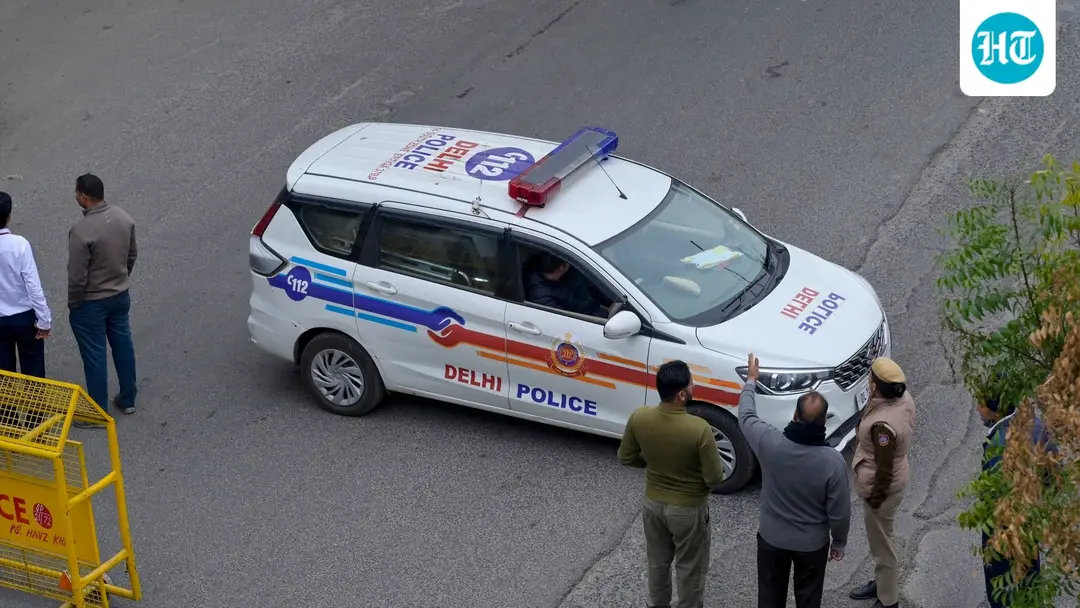
Minor allegedly gangraped by three posing as cops in Delhi
A 17-year-old girl was allegedly gangraped by three men posing as policemen inside Astha Kunj park in southeast Delhi's Kalkaji area on Monday evening, police said on Tuesday. The girl had visited Kalkaji Mandir with her 17-year-old friend and was sitting in the park when the accused, aged 25 to 30, threatened them. One held the boy while the others assaulted her. A PCR call came at 8:45pm. A case was registered under POCSO and BNS; one accused has been arrested.
Source
Hindustan Times — India · read the original report ↗
Desk check · some claims need care
What the desk checked (5)
- A 17-year-old girl was gangraped by three men posing as policemen in Astha Kunj park, Kalkaji, on Monday evening. — Attributed to police; allegation stage, not judicially established.
- The accused are aged between 25 and 30 and one of them held the girl's 17-year-old friend while the others assaulted her. — Attributed to police in source.
- A PCR call was received around 8:45pm and the girl was taken for medical examination. — Figure and sequence appear in source, attributed to police.
- One accused was arrested on Tuesday morning; two remain at large and CCTV footage is being scanned. — Attributed to police; no names or further identification given.
- A case has been registered under the POCSO Act and BNS. — Stated in source as police action; specific sections not listed.
Analysts’ view opinion
This is a case that will be driven almost entirely by procedure: because the survivor is 17, the POCSO Act overlays the ordinary criminal law read with the BNS, bringing child-specific protections, special court trial and strict timelines into play. The allegation that the men impersonated policemen and threatened arrest is legally significant — it goes to how consent is negated by coercion and, on the story's facts, opens the door to additional impersonation-related charges, though the police have not specified those. With one arrest made and two accused still at large, the immediate legal action shifts to identification evidence and the integrity of the survivor's statement and medical examination.
- Because the complainant is a minor, POCSO governs: it mandates child-sensitive recording of the statement, a designated special court, and treats the victim's age — not consent — as decisive.
- The reported impersonation of police officers and threat of arrest is central to establishing coercion, and under general criminal law such impersonation is itself an offence, though the story does not list the exact sections invoked.
- The story indicates the two core evidentiary pillars are already in place — the survivor's statement and a medical examination — and these, with CCTV and witness canvassing, will likely determine the strength of the case.
- Restraining the male friend while the assault occurred would ordinarily attract liability for all three as participants in the common act, but that is a matter for the investigation and trial to establish.
- Legally, all three remain accused persons presumed innocent; the arrest of one does not establish guilt, and identification of the two absconding men will be the contested battleground.
What to watch — Watch for whether the remaining two accused are traced through the CCTV review, and whether the chargesheet is filed within the timelines POCSO cases are expected to follow.
The account is based solely on the police version at an early stage; the specific sections invoked, the identity of the accused, the medical findings and any defence version are not established in this story.
Deep dive
Research brief · 8 facts · 6 dates · exam-readyThe brief
Context
A 17-year-old girl was allegedly gangraped by three men who posed as policemen inside Astha Kunj park in the Kalkaji area of southeast Delhi on Monday evening. She had gone to Kalkaji Mandir with a 17-year-old male friend to offer prayers and the two were sitting in the park, which lies close to both Kalkaji Mandir and the ISKCON temple, when the men approached them claiming to be police officers. The accused, aged between 25 and 30, allegedly threatened the pair, held the boy back while the girl was assaulted, and left after threatening the teenagers with arrest. Police registered a case under the POCSO Act and the Bharatiya Nyaya Sanhita (BNS) and arrested one accused on Tuesday morning.
Key facts
- The survivor is a 17-year-old girl; her companion, a male friend, is also 17.
- The alleged gangrape took place inside Astha Kunj park, Kalkaji, southeast Delhi, on Monday evening.
- Three accused men, aged between 25 and 30, approached the teenagers claiming to be policemen.
- The girl and her friend visited Kalkaji Mandir around 7pm and moved to the park around 7:30pm.
- A PCR call about the incident was received around 8:45pm, after which a police team reached the spot.
- One of the accused held the boy while the others sexually assaulted the girl; they left after threatening the teens with arrest.
- One accused was arrested on Tuesday morning; two remain at large.
- The case has been registered under the POCSO Act and the BNS; the girl was taken for medical examination and her statement recorded.
Timeline
- Monday, around 7pmThe 17-year-old girl and her 17-year-old friend visit Kalkaji Mandir to offer prayers.
- Monday, around 7:30pmThe two sit in Astha Kunj park, near Kalkaji Mandir and the ISKCON temple, where three men approach them posing as policemen.
- Monday eveningOne accused holds the boy while the others allegedly assault the girl; the men leave after threatening the teenagers with arrest.
- Monday, around 8:45pmA PCR call is received; a police team reaches the spot and the girl is taken for medical examination.
- Tuesday morningPolice arrest one of the three accused.
- TuesdayPolice disclose the case, registered under POCSO and BNS; teams deployed and CCTV footage scanned to trace the two absconding accused.
Who has a stake
- The 17-year-old survivor — Access to justice, medical care and protections available to a child victim under the POCSO Act.
- The 17-year-old male friend — Was held back and threatened with arrest; is a key witness to the incident.
- Delhi Police (southeast district) — Must trace two absconding accused, scan CCTV footage and build a case; accountability for park safety and impersonation of police.
- The three accused (one arrested, two at large) — Face charges under POCSO and BNS, including alleged impersonation of policemen.
- Visitors to Kalkaji Mandir, ISKCON temple and Astha Kunj park — Public safety in a heavily visited temple-adjacent public space, especially after dark.
Why it matters
The case shows how the authority of a police uniform or identity can itself be weaponised: the accused allegedly used a false claim of being policemen to intimidate two minors and then to deter them from complaining. It also raises questions about the safety and surveillance of public parks adjoining major pilgrimage sites in the capital during evening hours. The invocation of POCSO underlines that the survivor is a child in law, entitling her to special investigative and trial safeguards.
UPSC angle
Prelims pointers
- POCSO Act, 2012: Protection of Children from Sexual Offences Act, applies to victims below 18 years.
- BNS: Bharatiya Nyaya Sanhita, the criminal code that has replaced the Indian Penal Code.
- PCR call: Police Control Room emergency call; in this case received around 8:45pm on Monday.
- Astha Kunj park, Kalkaji (southeast Delhi), lies close to both Kalkaji Mandir and the ISKCON temple.
- Accused in this case were aged 25-30 and allegedly posed as policemen to threaten the minors with arrest.
- One of three accused arrested on Tuesday morning; CCTV footage being scanned to trace the other two.
Mains framing
The Kalkaji case combines three distinct governance failures: the sexual assault of a minor in a public park, the impersonation of police authority as a tool of coercion, and the use of the threat of arrest to silence victims. Impersonation works because citizens, especially teenagers in a public place, are conditioned to comply with anyone claiming police identity; the same fear can suppress immediate reporting, making the PCR call at 8:45pm and the prompt recording of the survivor's statement critical to the case. The invocation of the POCSO Act signals a child-centric process: medical examination, statement recording, and special procedural protections, while the BNS supplies the substantive offences. The investigative response, arrest of one accused within hours, teams deployed for the remaining two, CCTV scanning and canvassing of people present around the park, illustrates standard evidence-building in the absence of independent witnesses. The way forward suggested by the facts lies in strengthening surveillance and lighting in public parks near high-footfall religious sites, verifiable identification norms so that citizens can challenge false claims of police identity, and time-bound POCSO investigation and trial so that the survivor's testimony is not eroded by delay.
Key terms
- POCSO Act
- Protection of Children from Sexual Offences Act, the special law covering sexual offences against persons under 18.
- BNS (Bharatiya Nyaya Sanhita)
- The criminal code under which the substantive offences in this case have been registered.
- PCR call
- An emergency call to the Police Control Room that triggers dispatch of a police team to the spot; received here at about 8:45pm.
- Astha Kunj park
- Public park in Kalkaji, southeast Delhi, situated close to Kalkaji Mandir and the ISKCON temple, where the incident occurred.
- Posing as policemen
- The accused allegedly claimed to be police officers to threaten the teenagers with arrest and intimidate them.
Practice questions
- How does the Protection of Children from Sexual Offences Act alter the investigative and trial process compared with ordinary criminal procedure? Illustrate with reference to a recent case.
- Impersonation of police officers enables both crime and victim silencing. Discuss the institutional measures needed to make police identity verifiable to ordinary citizens.
- Examine the adequacy of safety infrastructure, lighting, surveillance and patrolling, in public parks adjoining high-footfall religious sites in Indian cities.
Grounded only in the source report — figures and dates are the source's, not inferred.