
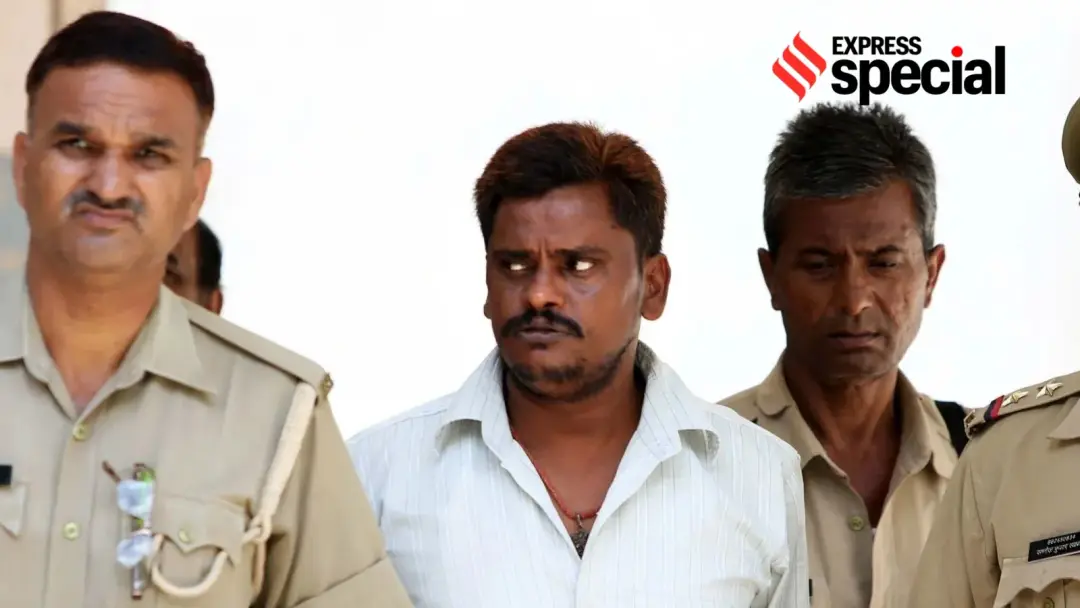
Koli, acquitted in Nithari case, found dead in Haridwar tea stall
Surendra Koli, 53, acquitted in the Nithari serial murders case in November 2025 after nearly two decades in prison, was found dead around 11 am on Friday inside a tea stall he had rented in Bhupatwala, Haridwar. Police said he appeared to have died by suicide, while his brother Chandan Koli, 54, said the family suspects foul play. His last rites were held Saturday at Karkari Ghat. Acquaintances said he struggled for work and money.
Source
Indian Express — India · read the original report ↗
Desk check · some claims need care
What the desk checked (5)
- Surendra Koli, 53, was found dead around 11 am on Friday inside a rented tea stall in Bhupatwala, Haridwar. — Attributed in source to police account and reported details; figure and place appear in source.
- Police said he appeared to have died by suicide. — Attributed to police; no post-mortem finding stated in source.
- His elder brother Chandan Koli, 54, said the family suspects foul play. — Attributed to a named family member; unverified allegation.
- Koli was acquitted in the Nithari serial murders case in November 2025 after nearly two decades in prison. — Stated in source; source internally uses both 'November last year' and 'November 2025', a minor inconsistency editors should note.
- Almora resident Narayan Singh Rawat said Koli asked him for Rs 15,000 shortly before renting the stall. — Attributed to a named acquaintance; figure appears in source.
Analysts’ view opinion
Surendra Koli's death is less the end of a crime story than an exposure of a constitutional gap: an acquittal restored his legal innocence but did nothing to restore the two decades he spent in custody. Indian law has no systematic statutory scheme for compensation or structured rehabilitation for those held for long periods and later cleared, and this case illustrates that void starkly. With police treating it as an apparent suicide and the family alleging foul play, the post-mortem, forensic findings and the inquiry process are now the only things that can settle the difference.
- The courts discharged their function by acquitting him, but the enforceable rights framework around a released prisoner's livelihood, identity documents and social reintegration remains thin in Indian law.
- The story notes he could not furnish an Aadhaar card for police verification to rent accommodation, which raises a legitimate administrative question about whether long-term prisoners are equipped with identity documents at the point of release.
- In unnatural death cases the standard process turns on the post-mortem, forensic examination of the scene, scrutiny of seized material — here, a diary — and statements of those in contact with the deceased.
- Where a family suspects foul play, avenues such as representations to senior police officers or seeking judicial oversight are generally available, though the story does not say any such step has been taken.
- His brother's remark that he was "acquitted but could not prove his innocence in society" captures a real rights problem: the presumption of innocence has little practical force outside the courtroom.
What to watch — Watch whether the post-mortem and forensic reports lead police to close the matter as suicide or to probe the family's suspicions further, and whether the case revives any policy conversation on rehabilitating those released after very long incarceration.
The cause of death is not officially established — suicide is so far only the police's preliminary reading, and the story offers no evidentiary basis for the foul play suspicion.
Deep dive
Research brief · 8 facts · 10 dates · exam-readyThe brief
Context
Surendra Koli was convicted and sentenced to death in the Nithari serial murders case, and spent almost two decades in prison before being acquitted in November 2025. The source describes his life in the ten months after release: moving between Delhi, Almora and Haridwar in search of work and accommodation, often hiding his identity. On Friday, the 53-year-old was found dead inside a small tea stall he had rented days earlier in Bhupatwala, Haridwar. Police said he appeared to have died by suicide; his brother says the family suspects foul play.
Key facts
- Surendra Koli, 53, was acquitted in November 2025 in the Nithari serial murders case after nearly two decades in prison.
- He was found dead around 11 am on Friday inside a rented tea stall in Bhupatwala, opposite Lal Mata Temple in Haridwar's Sapt Sarovar area.
- Police said he appeared to have died by suicide; elder brother Chandan Koli, 54, said the family suspects foul play.
- Koli had been in Haridwar for about one-and-a-half months, and had run the tea stall for only two or three days.
- He rented the tea stall about three days before his death using the identity documents of acquaintance Dharmender Kaushik, per police sources.
- In Roshanabad he could not get accommodation initially as he had no Aadhaar card for police verification; he introduced himself to Jai Kashyap, 28, as 'Sada Ram' from Almora.
- Narayan Singh Rawat, who knew Koli for about 15 years, said Koli asked him for Rs 15,000 shortly before taking up the stall and had been seeking financial help since release.
- A diary with apparent daily expenses and work accounts was found in the shop and collected by police; post-mortem was done at Haridwar District Hospital.
Timeline
- November 2025Koli walks out of prison after acquittal in the Nithari serial murders case, following nearly 20 years in jail.
- After releaseTravels to Bangalore and Chennai, where, per Chandan, some people approached him about a documentary on his life.
- By JuneReturns to Delhi and stays with brother Chandan, his family and Koli's son Shivam, 20; struggles to find work fearing his identity would be revealed.
- JuneTravels with family to ancestral village Mangru Kal in Almora; the house, vacant since their mother's death in 2022, had been broken down.
- June 18The family returns to Delhi.
- JulyKoli goes to Roshanabad in Haridwar district; works as factory security guard, then as apartment security guard via a private firm, leaving both jobs.
- September 7Rawat meets Koli in Haridwar after Koli calls him; also meets Kaushik and Kashyap.
- About three days before deathRents a small tea stall in Bhupatwala using Kaushik's documents and starts living inside it.
- Thursday night (11.30 pm and midnight)Kaushik calls Rawat saying Koli was upset; Koli's phone lacked balance to make calls; Rawat did not answer.
- Friday, around 11 amKoli found dead inside the tea stall; police and forensic teams examine the premises.
Who has a stake
- Surendra Koli — Acquitted after nearly two decades in prison, but struggled for work, money and accommodation before his death.
- Chandan Koli (brother) and Shivam (son, 20) — Family sheltered him in Delhi, suspects foul play in his death, and performed his last rites.
- Haridwar police and forensic teams — Investigating the death, which they say appears to be suicide; collected the diary and material from the shop.
- Dharmender Kaushik and Jai Kashyap — Acquaintances who helped Koli find jobs, accommodation and the tea stall; Kaushik's documents were used to rent the stall.
- Narayan Singh Rawat (Almora resident) — Long-time acquaintance who sent Koli money repeatedly, including a request for Rs 15,000 before Koli took up the stall.
Why it matters
The death raises hard questions about what happens to a person acquitted after nearly 20 years in prison: Koli could not produce an Aadhaar card for police verification, hid behind a false name to get work, and depended on acquaintances for money. His brother's remark that he was \"acquitted but could not prove his innocence in society\" underlines the gap between legal exoneration and social and economic reintegration.
UPSC angle
Prelims pointers
- Surendra Koli was acquitted in the Nithari serial murders case in November 2025 after almost two decades in prison.
- He was found dead on a Friday around 11 am in a tea stall in Bhupatwala, Sapt Sarovar area, Haridwar (Uttarakhand).
- Last rites were performed at Karkari Ghat on the banks of the Ganga in Haridwar; post-mortem at Haridwar District Hospital.
- Aadhaar card was required for police verification for rented accommodation, which Koli could not produce in Roshanabad.
- Koli's ancestral village: Mangru Kal in Almora district, Uttarakhand.
- Police cited apparent suicide; family alleged foul play - an investigation reference point in the source.
Mains framing
Surendra Koli's death after acquittal illustrates the unresolved question of post-acquittal rehabilitation in India's criminal justice system. According to the source, in the ten months after walking free he shuttled between Delhi, Almora and Haridwar, was unable to get accommodation for want of an Aadhaar card, took and left two security jobs, used a false name ('Sada Ram') and another person's identity documents to rent a tea stall, and borrowed money from an acquaintance who says he sent funds \"from time to time\". The causes are layered: nearly two decades of incarceration erodes documentation, skills, savings and social networks, while a notorious case leaves a stigma that survives a court's verdict - captured in his brother's line that he was \"acquitted but could not prove his innocence in society\". The implications extend beyond one person: acquittal, without any structured support for identity documents, livelihood, housing, mental health and protection from stigma, can leave the exonerated destitute. A grounded way forward, consistent with what the story reveals, would focus on restoring basic documentation and identity proofs on release, livelihood and counselling support for long-term prisoners, and a transparent, time-bound police investigation where the family alleges foul play, so that both the death and the years lost are examined on record.
Key terms
- Nithari serial murders case
- The case in which Surendra Koli was imprisoned for nearly two decades and from which he was acquitted in November 2025.
- Acquittal
- A court's finding that clears the accused of charges; Koli was acquitted in November 2025 after almost 20 years in jail.
- Curative petition
- A legal remedy referred to in the source's related reading on Koli's case; specifics not stated in the source.
- Police verification
- Check required for renting accommodation; Koli could not complete it in Roshanabad as he had no Aadhaar card.
- Karkari Ghat
- Ghat on the banks of the Ganga in Haridwar where Koli's last rites were performed on Saturday.
- Post-mortem
- Medical examination of the body, conducted in Koli's case at Haridwar District Hospital before the last rites.
Practice questions
- Legal acquittal does not automatically restore social standing or livelihood. Discuss with reference to the rehabilitation needs of prisoners released after long incarceration in India.
- Examine how the absence of identity documents such as Aadhaar can exclude released prisoners from housing and employment, and suggest institutional remedies.
- What safeguards should govern investigations into custodial or post-release deaths where the family alleges foul play but police cite suicide?
Grounded only in the source report — figures and dates are the source's, not inferred.